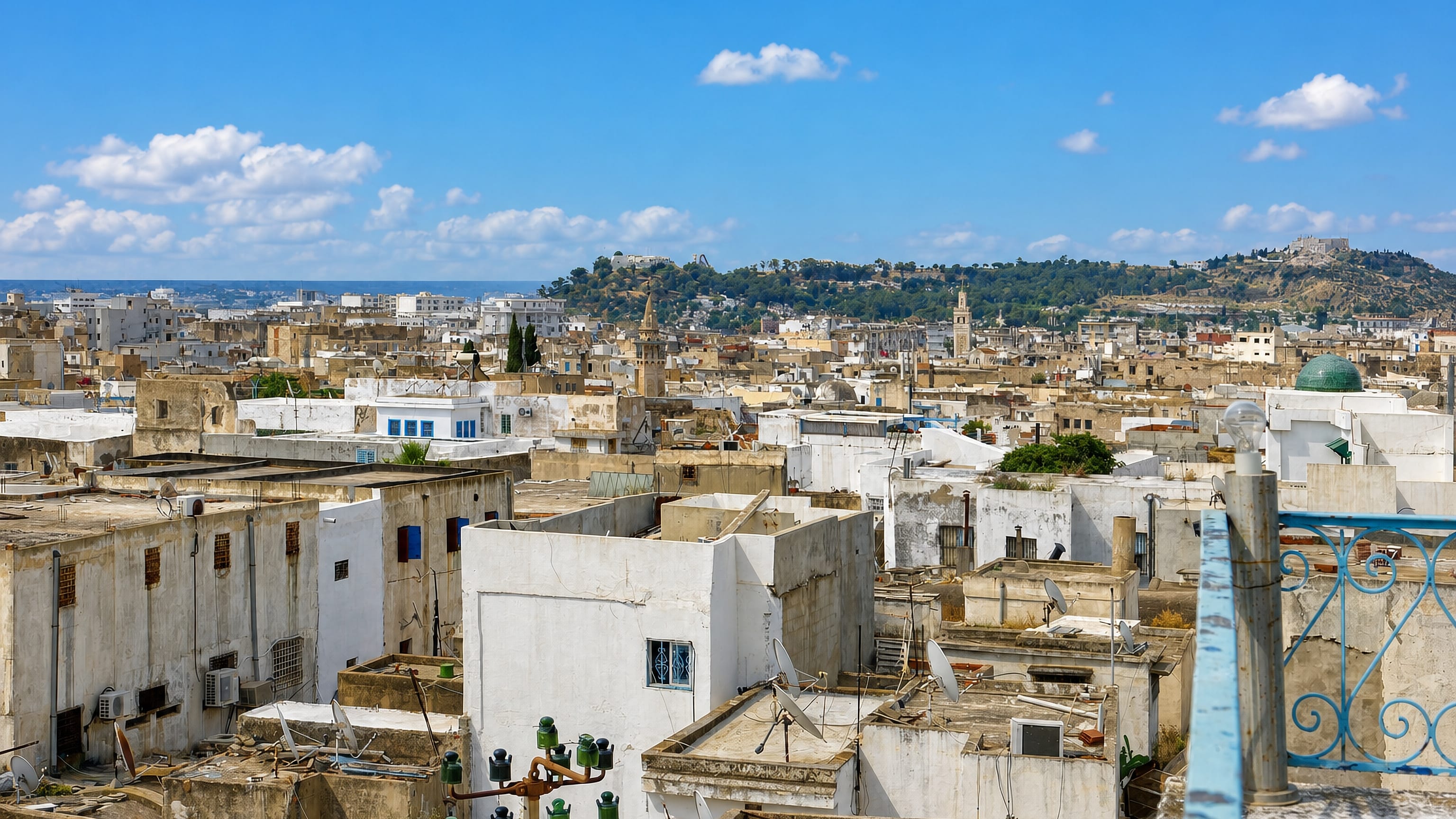
Tunisia: Regions, Cities & Travel Guide
Tunisia is a Mediterranean country at the northern tip of Africa, its coast, ruins, and Sahara reached from the capital, Tunis.
Hotel links are affiliate links: booking through them may earn us a commission, at no extra cost to you. It never affects how places are ranked. How this works


Top destinations in Tunisia
Cities to start from, then drill into areas and hotels.
 Tunisia
Tunis
Tunis is the capital of Tunisia, a North African city whose medina and souq sit within reach of the ruins of Carthage and Kasbah Square.Where to stay →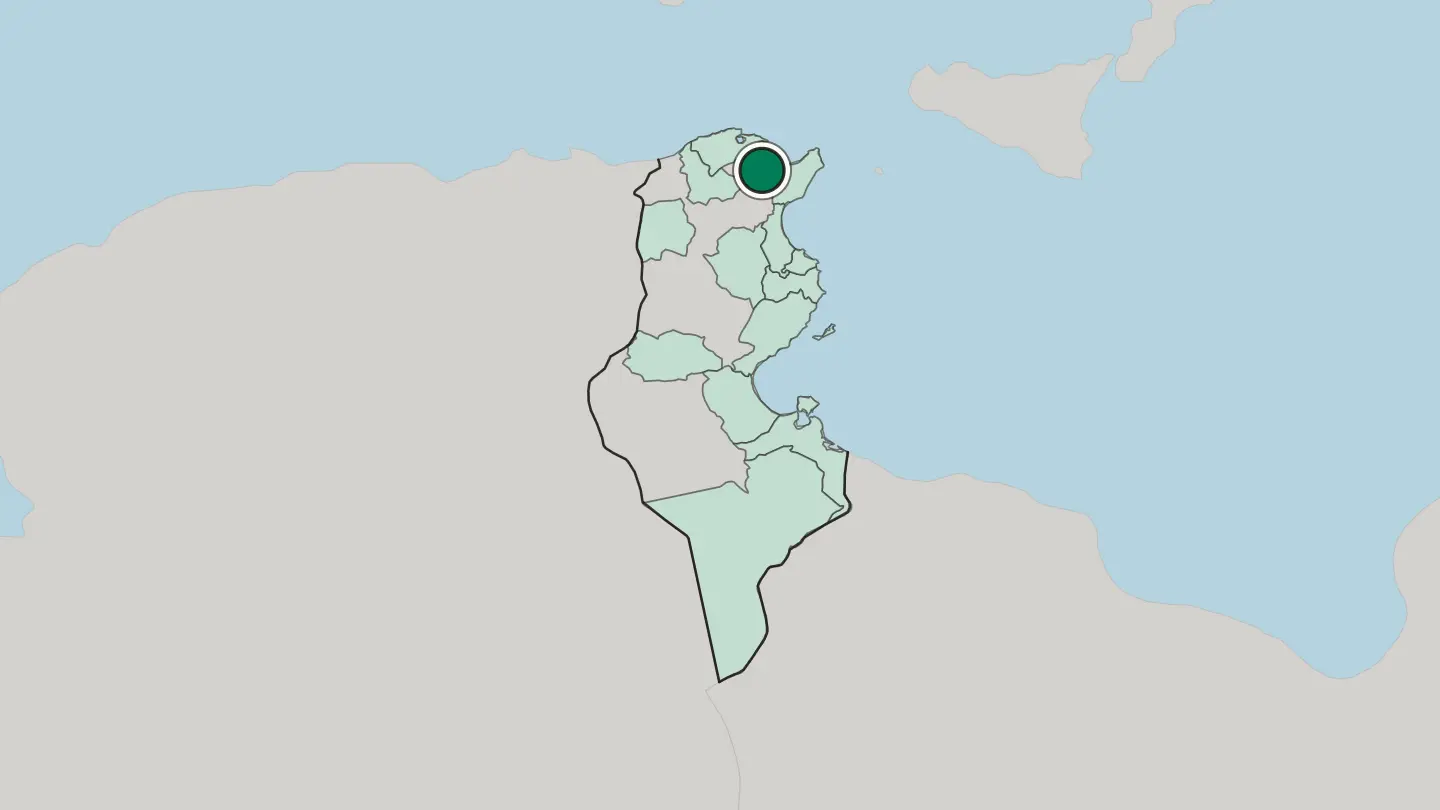
 Tunisia
Sousse
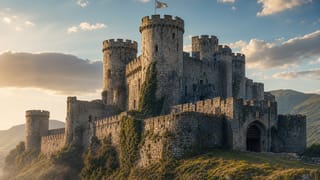
Sousse is a walled port city on the coast of Tunisia, its old medina a fortress town above the sea.Where to stay →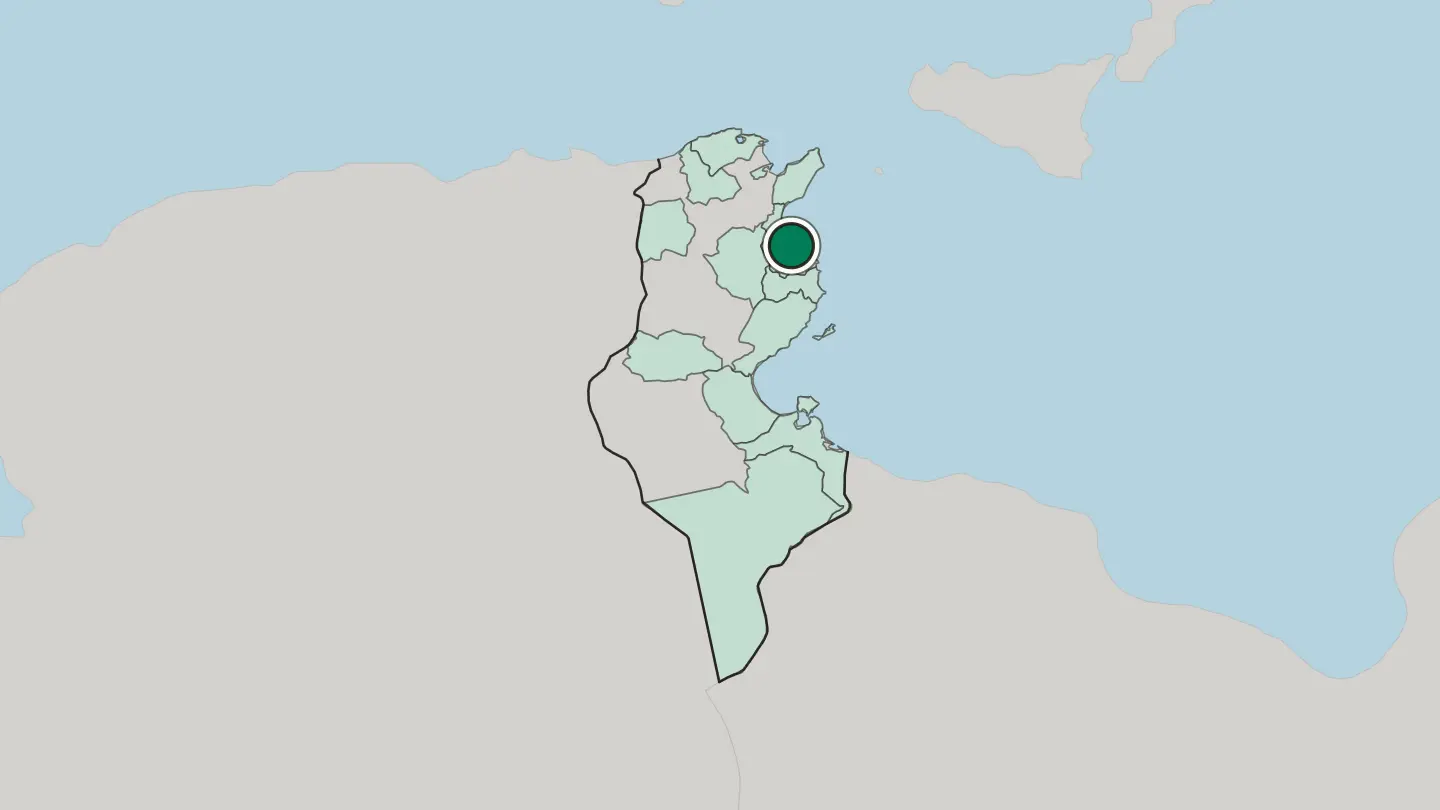
 Tunisia
Kairouan
Kairouan is a holy city on the dry plains of central Tunisia, home to the Great Mosque of Kairouan, one of the oldest in Africa.Where to stay →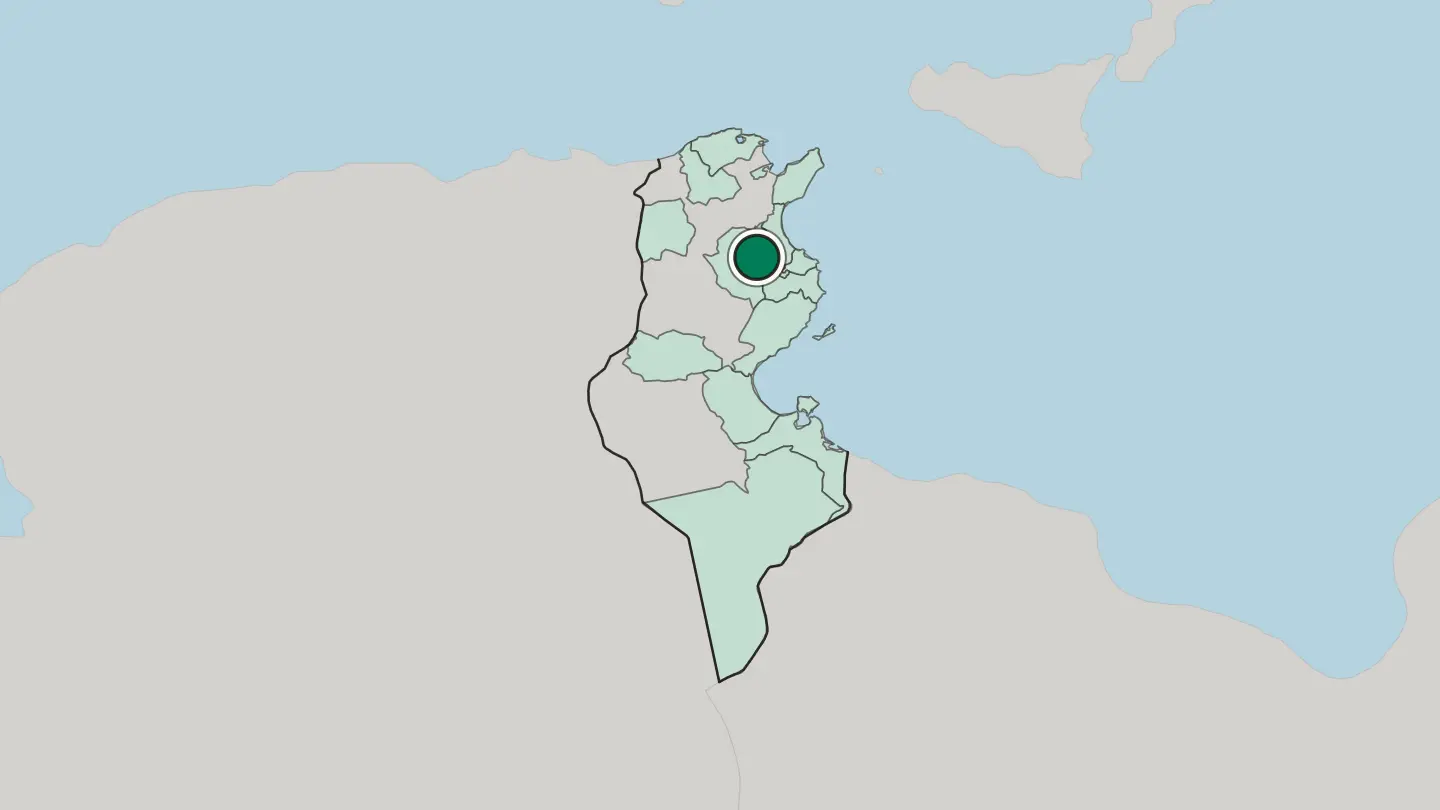
 Tunisia
Monastir
Monastir is a coastal town of the Tunisian Sahel, a beach resort built around a great ribat fortress, the birthplace of the founder of modern Tunisia.Where to stay →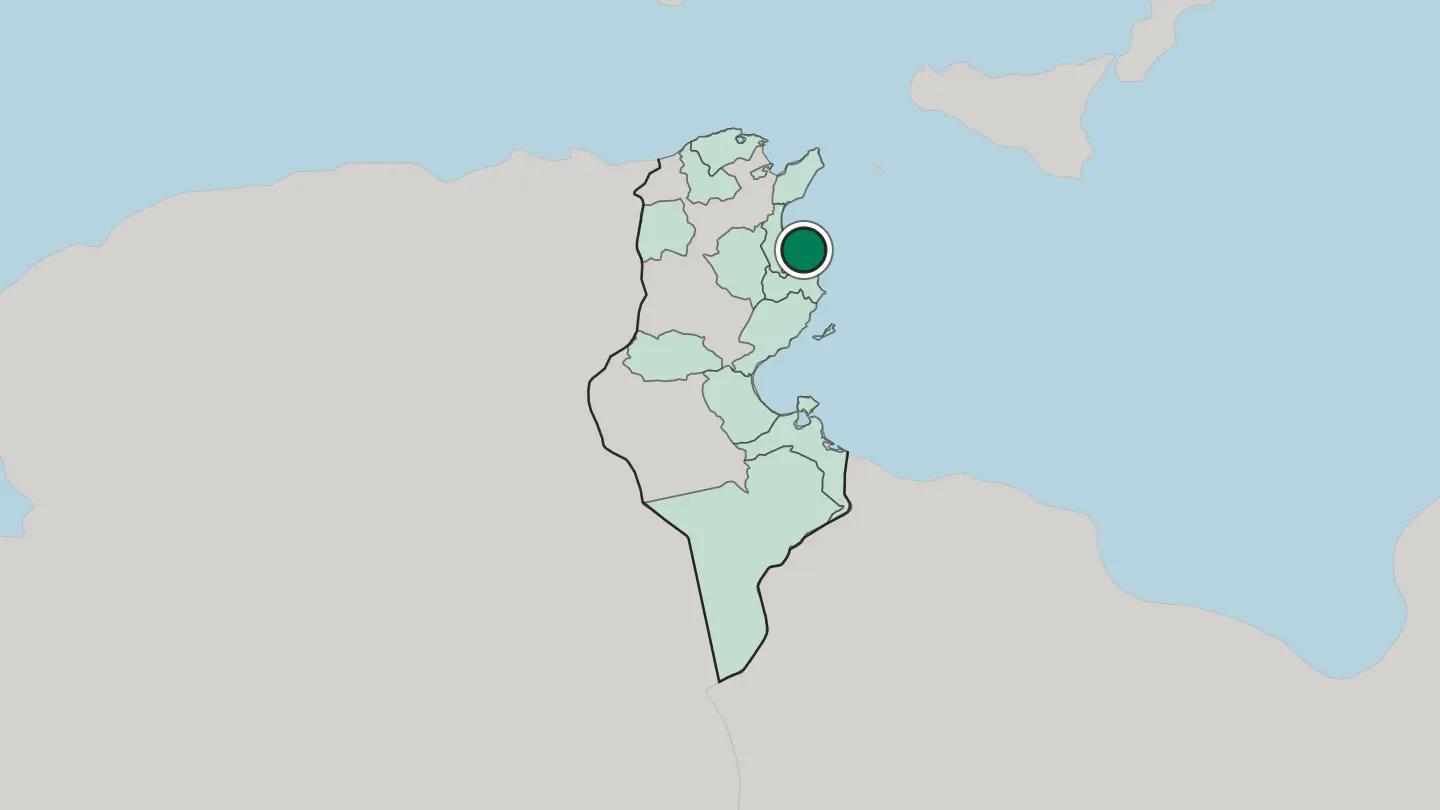
 Tunisia
Sfax
Sfax is Tunisia's great southern port on the Gulf of Gabès, a working city around a well-kept walled medina.Where to stay →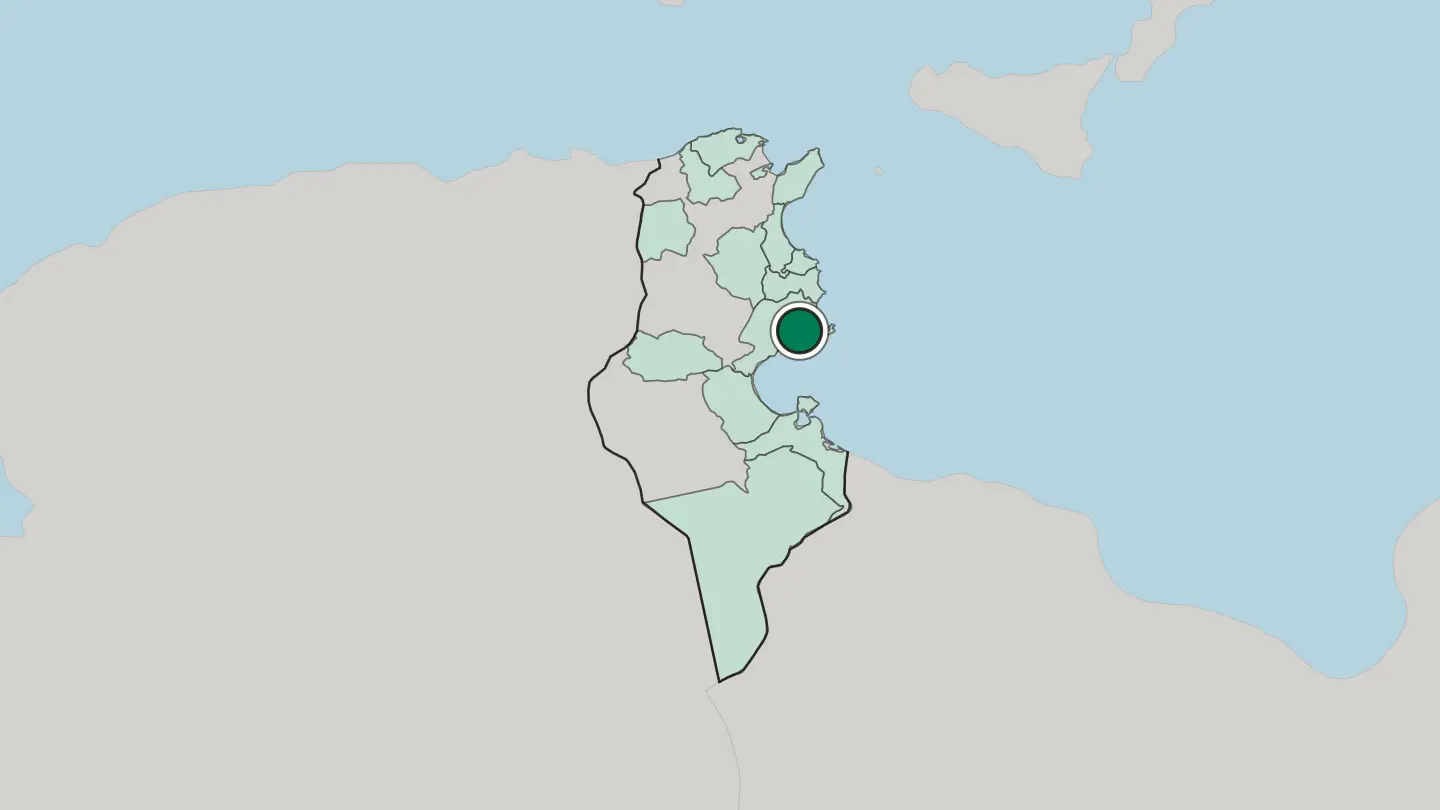
 Tunisia
Hammamet
Hammamet is a beach resort town on the Cap Bon coast of Tunisia, a walled medina by the sea ringed by jasmine gardens and long sands.Where to stay →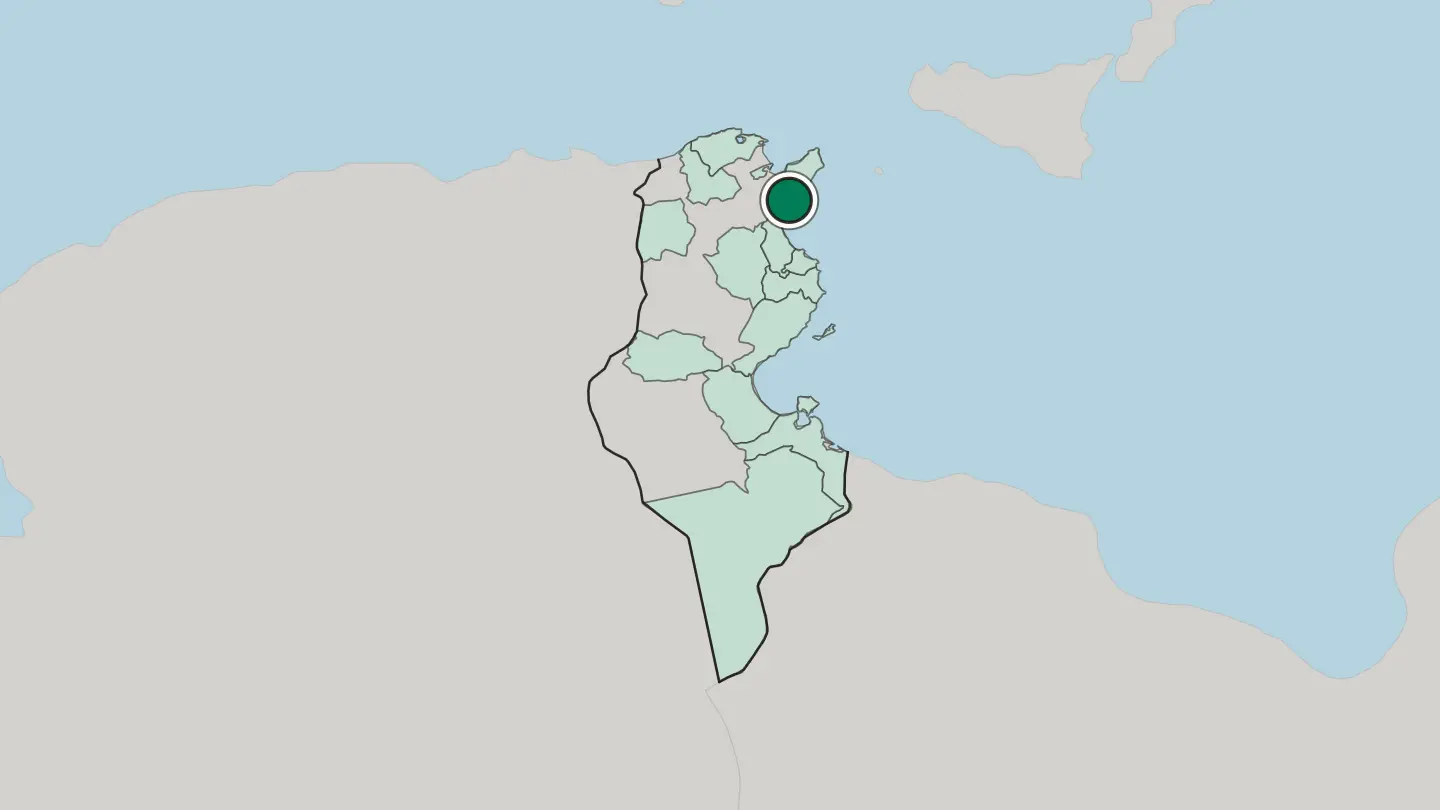
 Tunisia
Bizerte
Bizerte is a port city on the north coast of Tunisia, the northernmost town in Africa, set on a lake and an old harbour below its kasbah.Where to stay →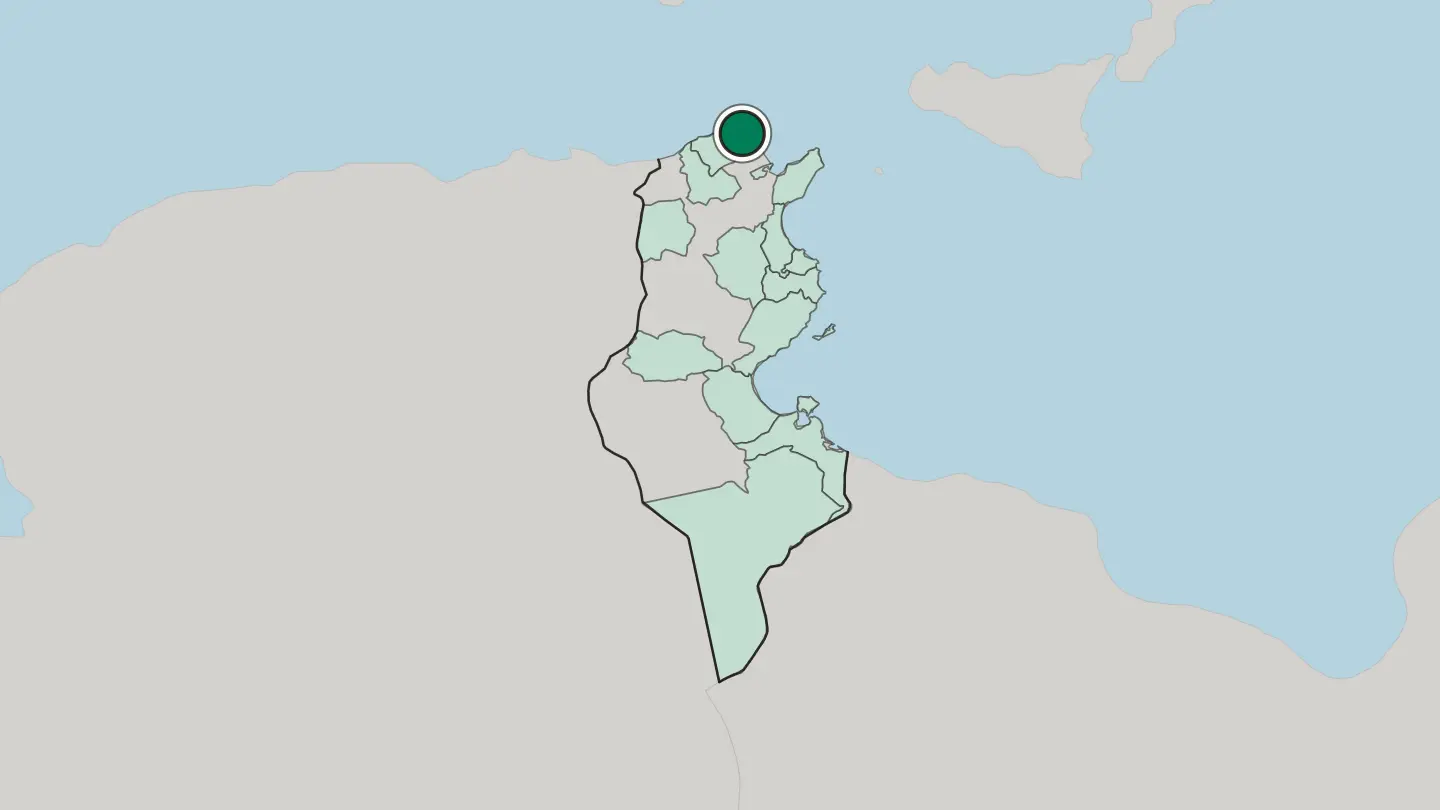
 Tunisia
Mahdia
Mahdia is a Tunisian coastal city south of Monastir, holding the Great Mosque of Mahdia, Skifa El Kahla and the Bordj el Kebir.Where to stay →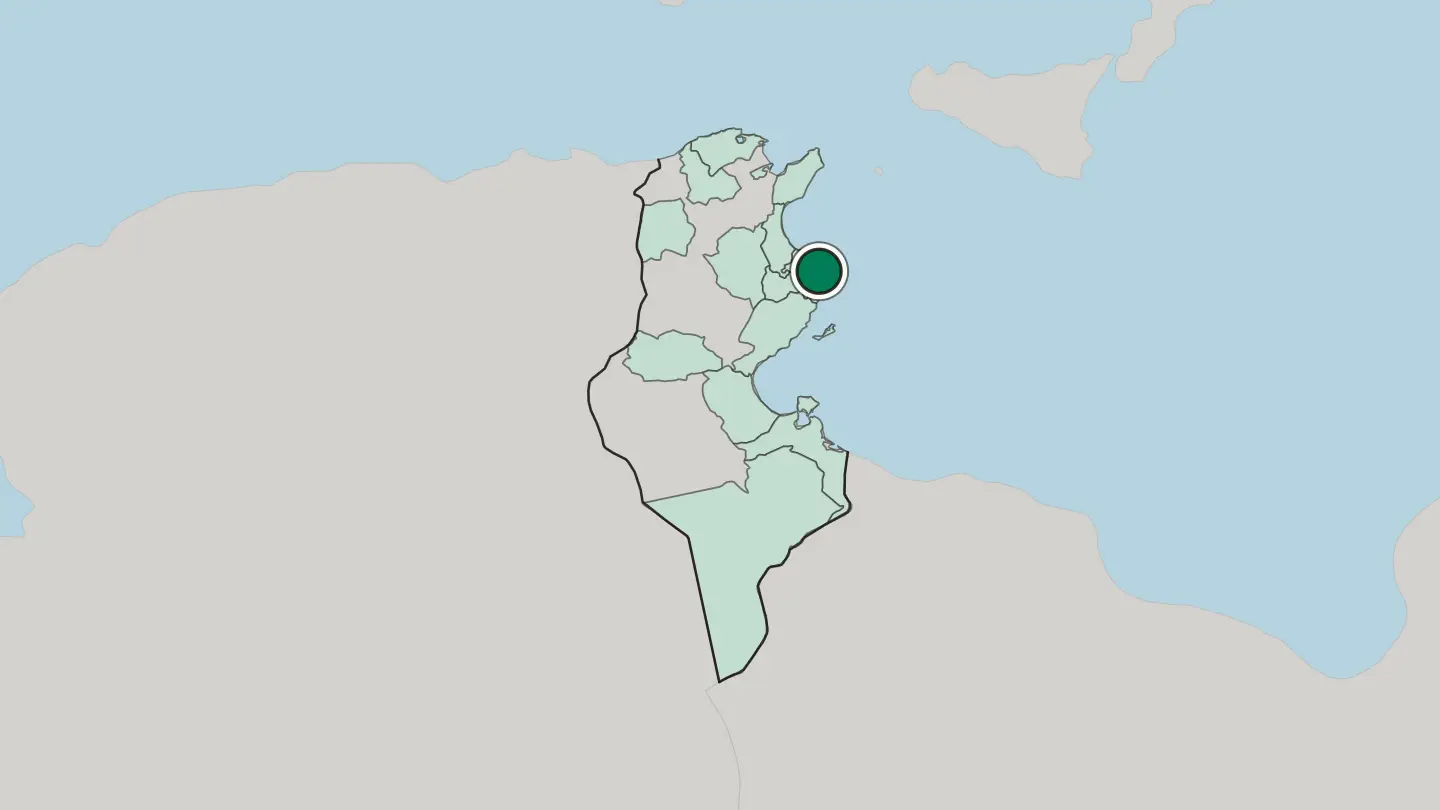
 Tunisia
Tataouine
Tataouine is a desert town of the far south of Tunisia, a market on the edge of the Sahara among hills of fortified Berber granaries.Where to stay →
Hotel links are affiliate links: booking through them may earn us a commission, at no extra cost to you. It never affects how places are ranked. How this works
Regions of Tunisia
 Tunisia
Gafsa Governorate
Gafsa Governorate covers a mining interior of central Tunisia, running to the frontier with Algeria, with the city of Gafsa as its capital.Towns & cities →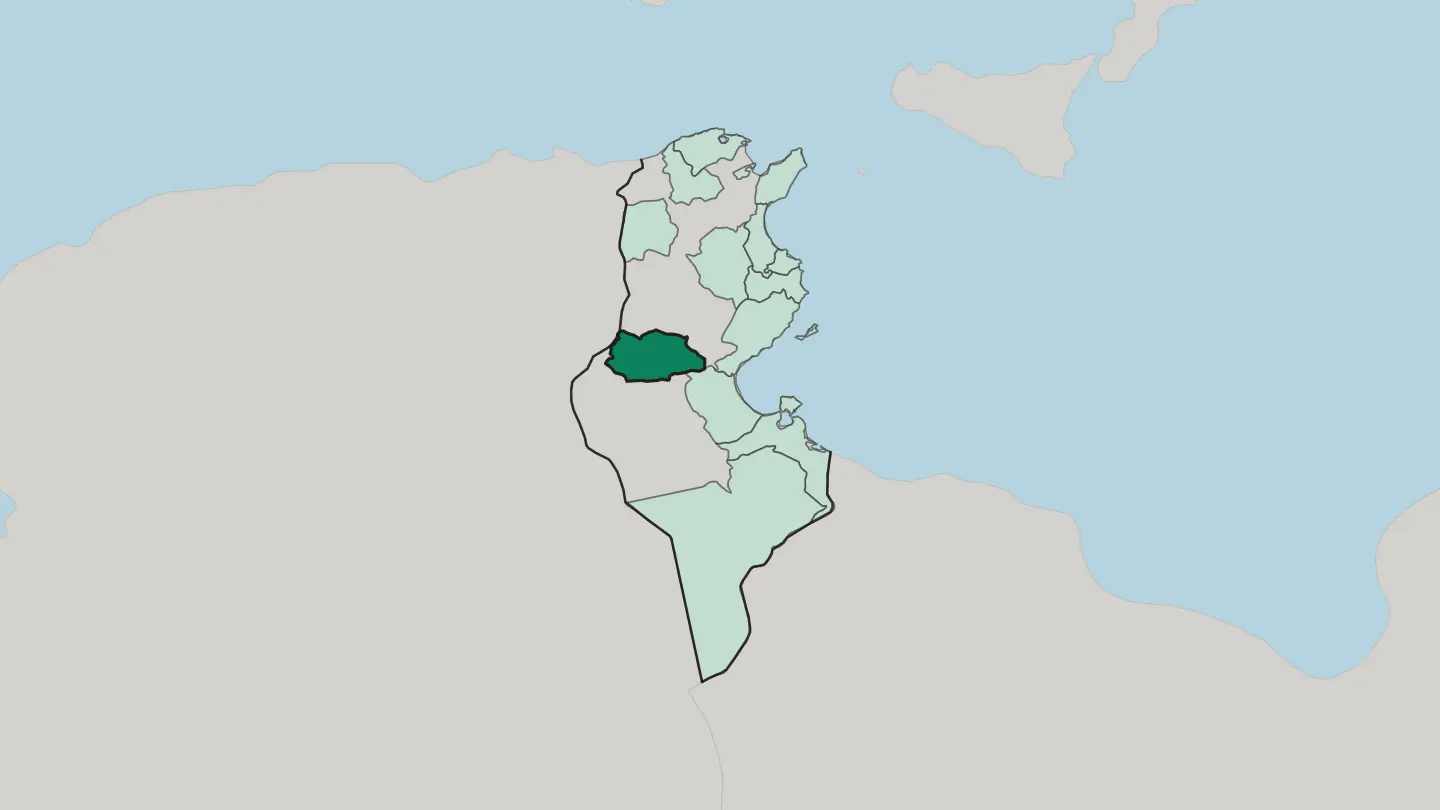 Tunisia
Gouvernorat de Bizerte
The northernmost of the 24 governorates of Tunisia, Bizerte Governorate holds a long north coast, two large lakes, and the ruins of ancient Utica.Towns & cities →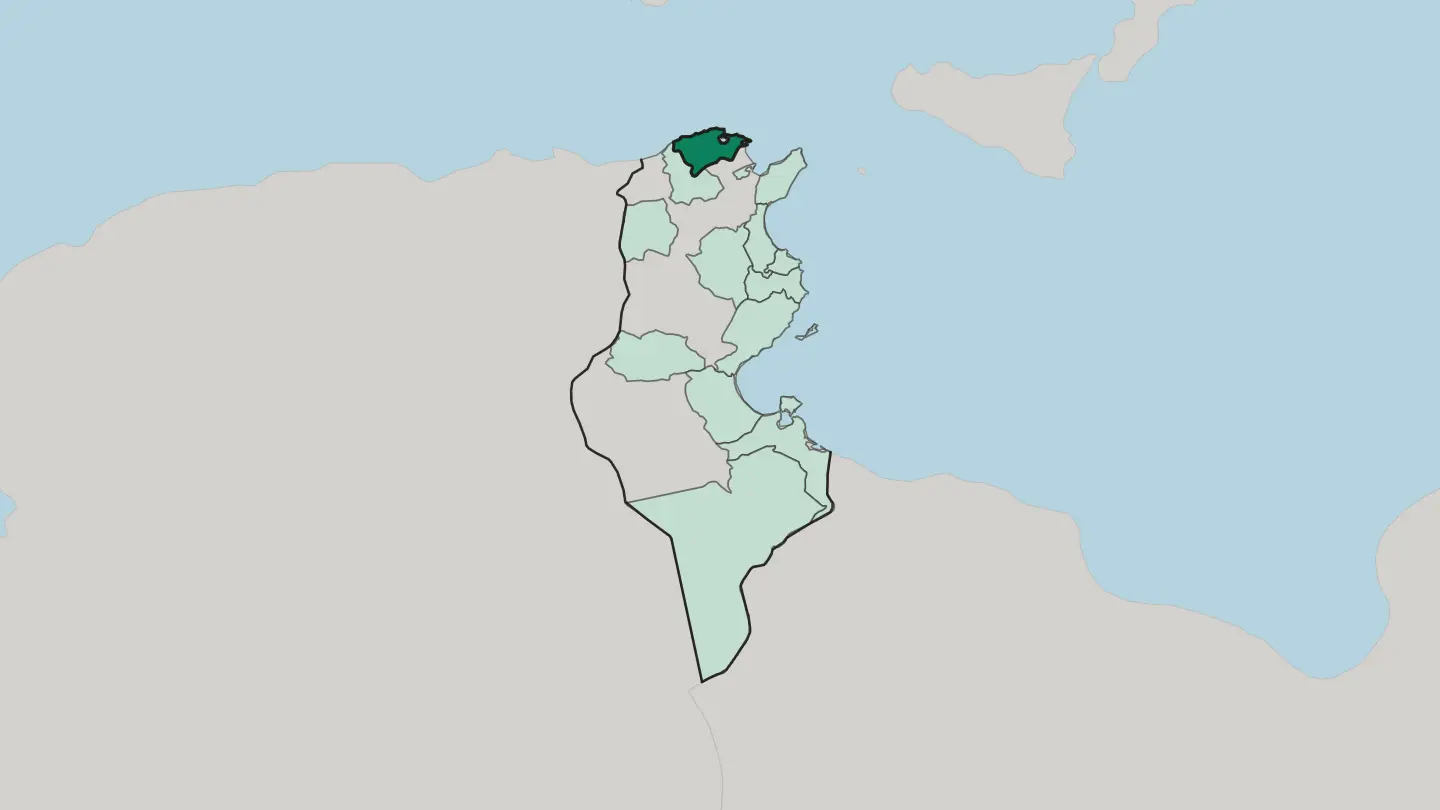
 Tunisia
Gouvernorat de Béja
Béja Governorate covers the Tell Atlas hills of northern Tunisia and part of the plain beyond them, with a brief coastline and Béja as its capital.Towns & cities →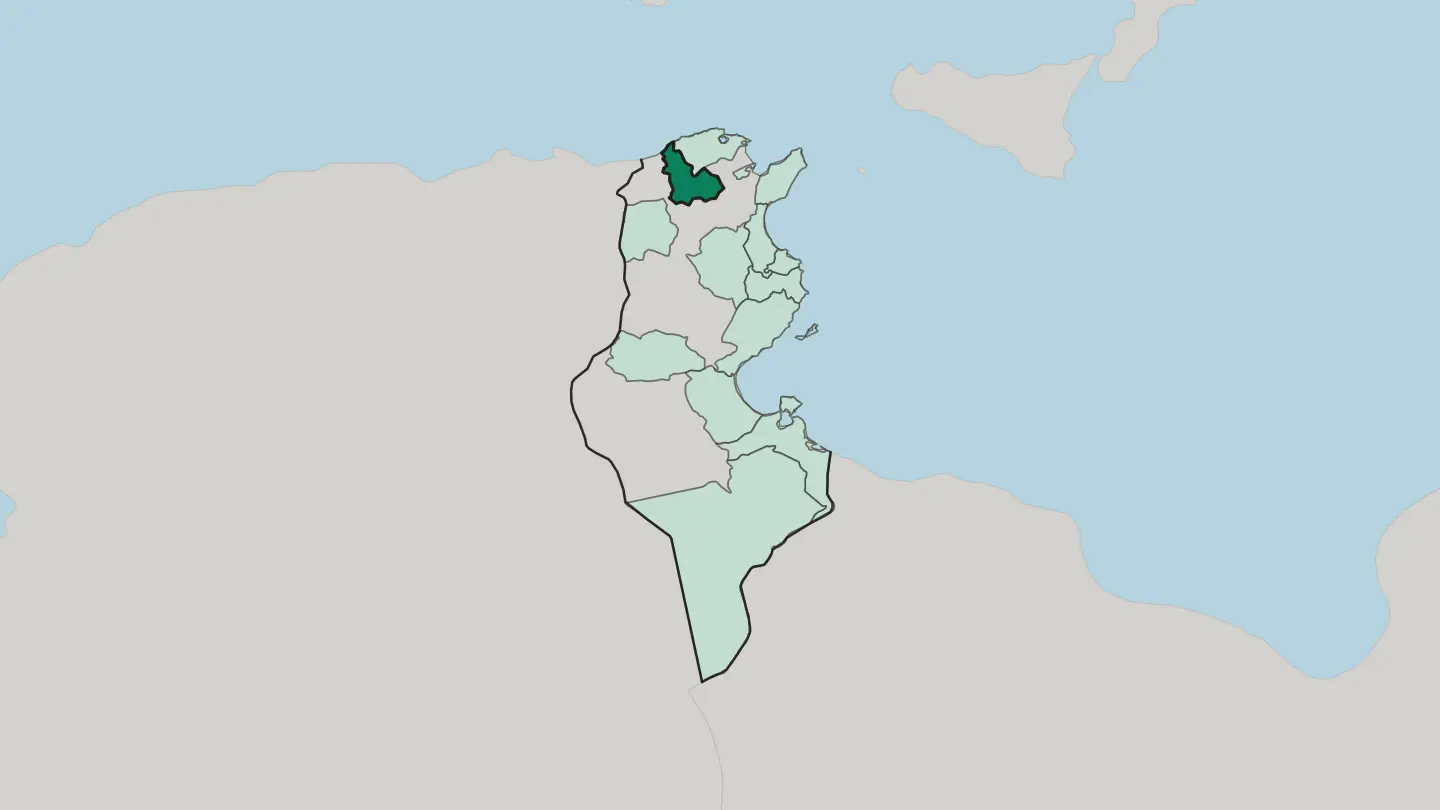 Tunisia
Gouvernorat de Gabès
Gabès Governorate is a wide administrative unit of south-eastern Tunisia, one of the country's 24 governorates, centred on the city of Gabès.Towns & cities →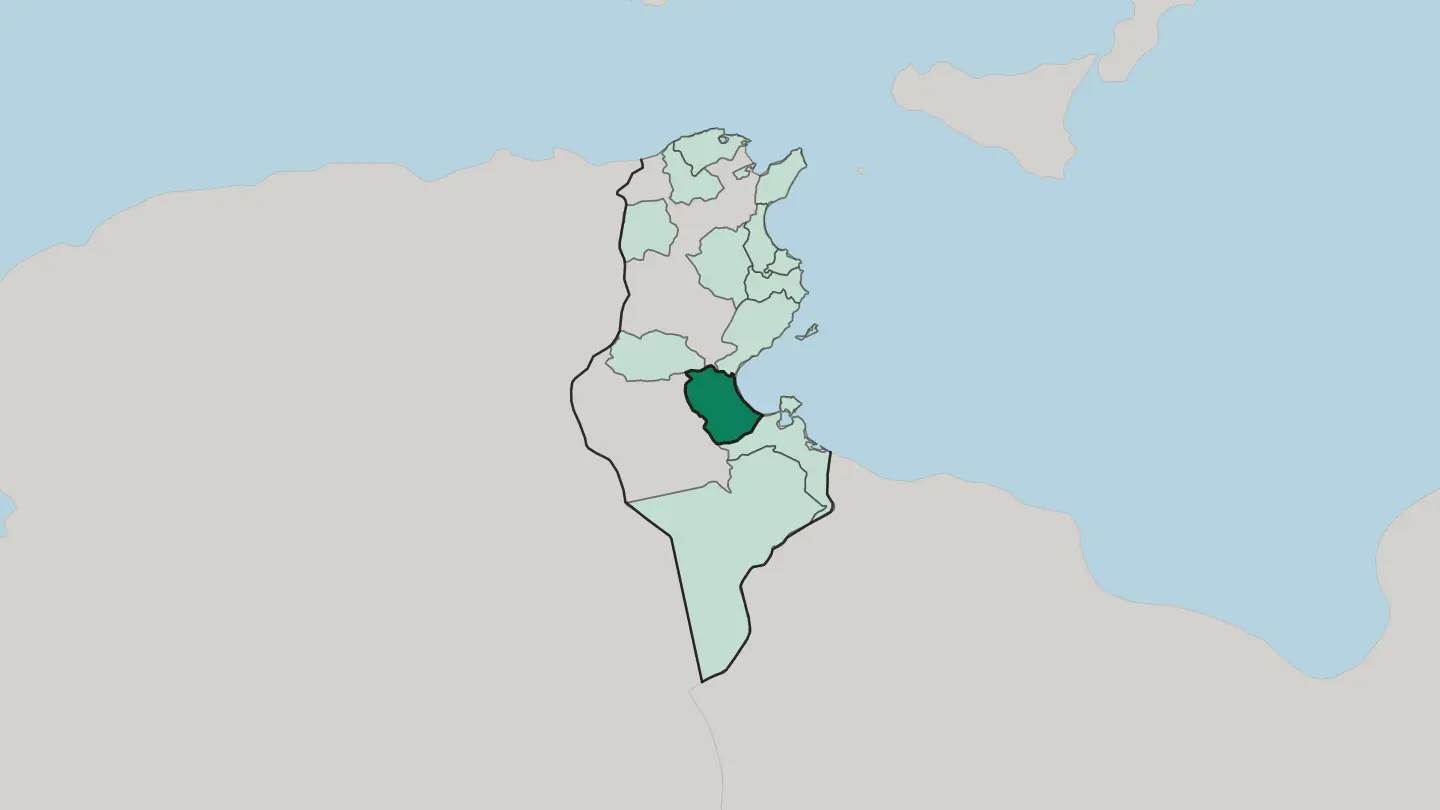 Tunisia
Gouvernorat de Kairouan
Landlocked in the centre-east of the country, Kairouan Governorate runs from semi-arid lowland up to the Djebel Serj and Djebel Zhagdoud parks.Towns & cities →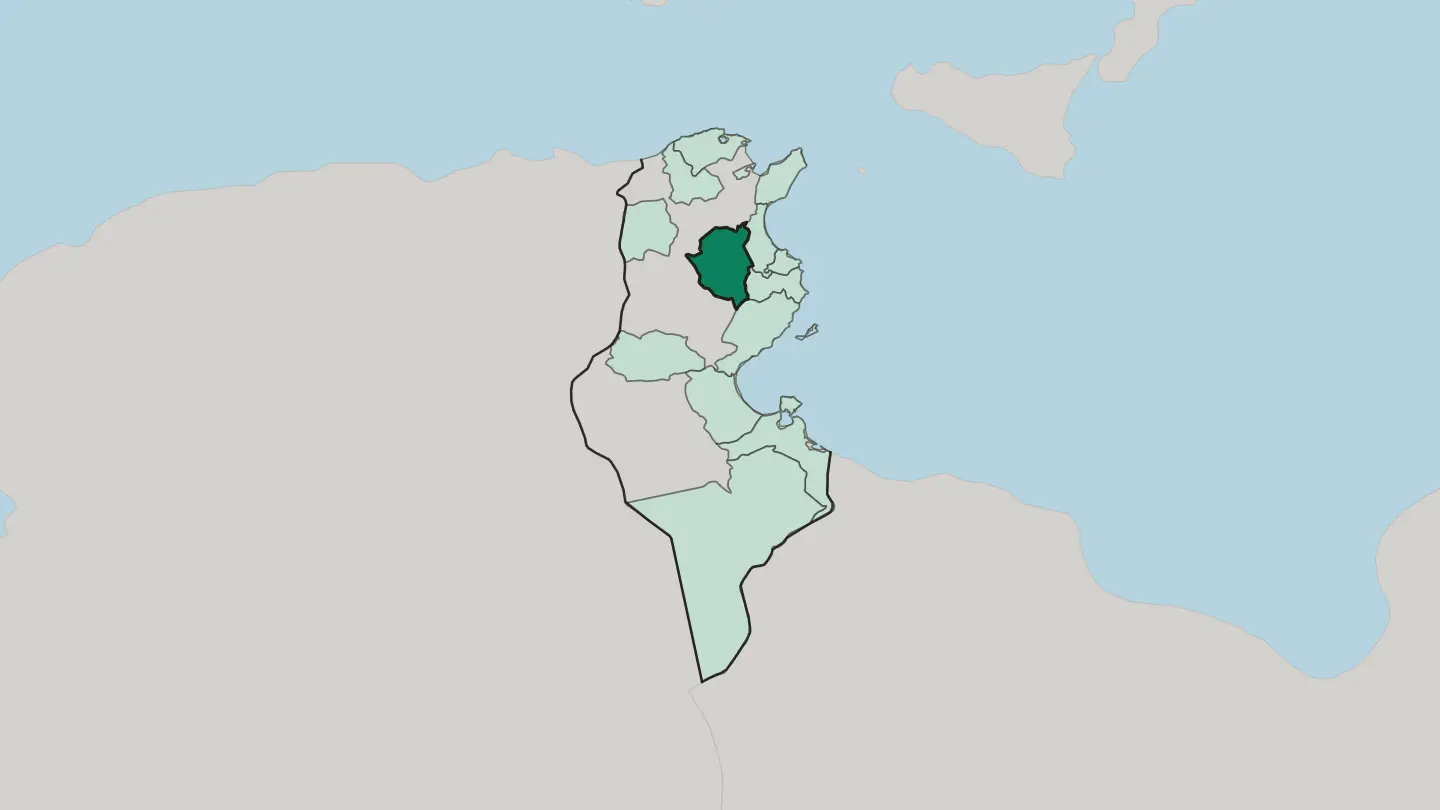
 Tunisia
Gouvernorat de Kef
Kef Governorate takes in the Dorsal Atlas Mountains and their foothills in north-western Tunisia, bordering Algeria, with El Kef as its capital.Towns & cities →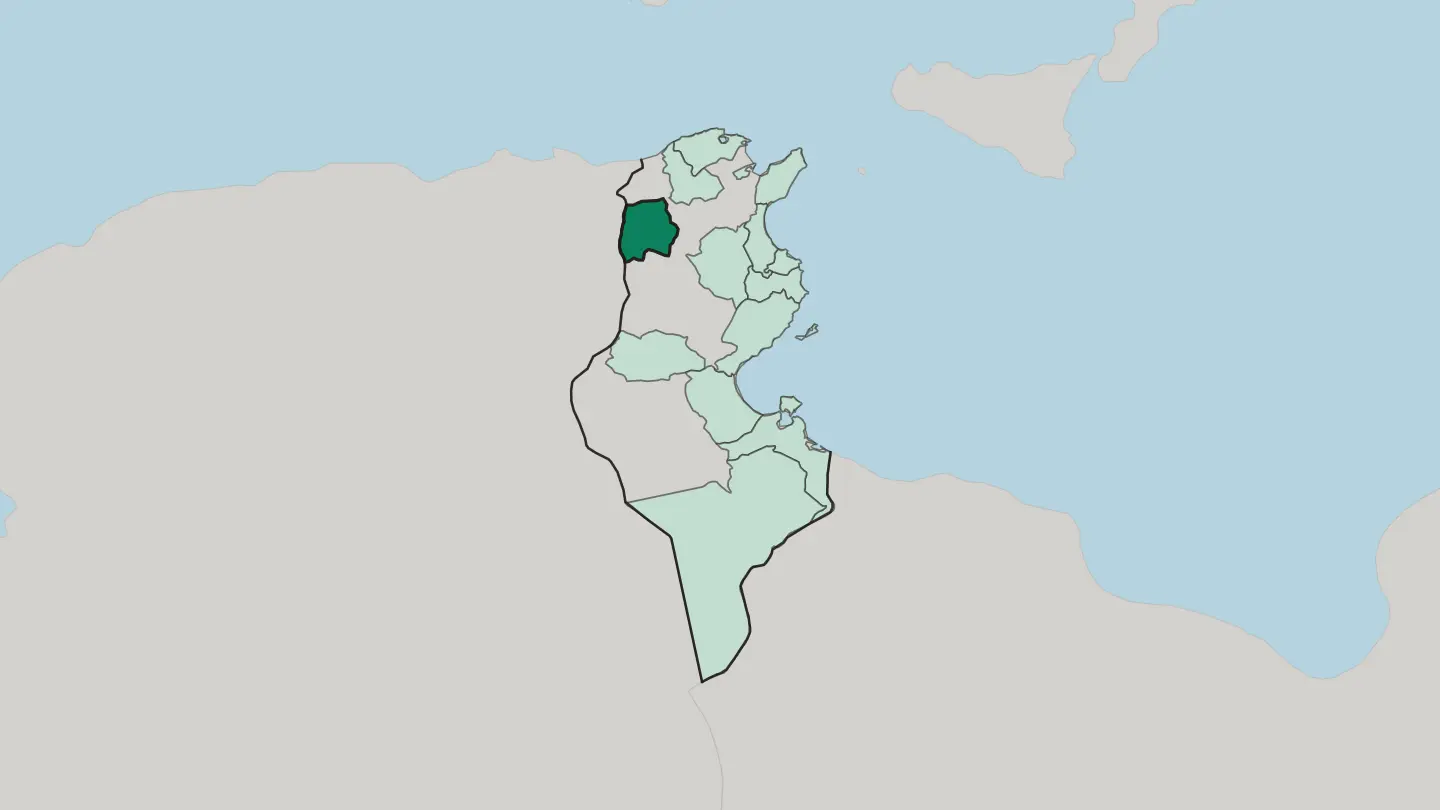 Tunisia
Gouvernorat de Mahdia
Mahdia Governorate is a band of low coastal land in Tunisia that reaches far inland, named for Mahdia, its largest town and administrative centre.Towns & cities →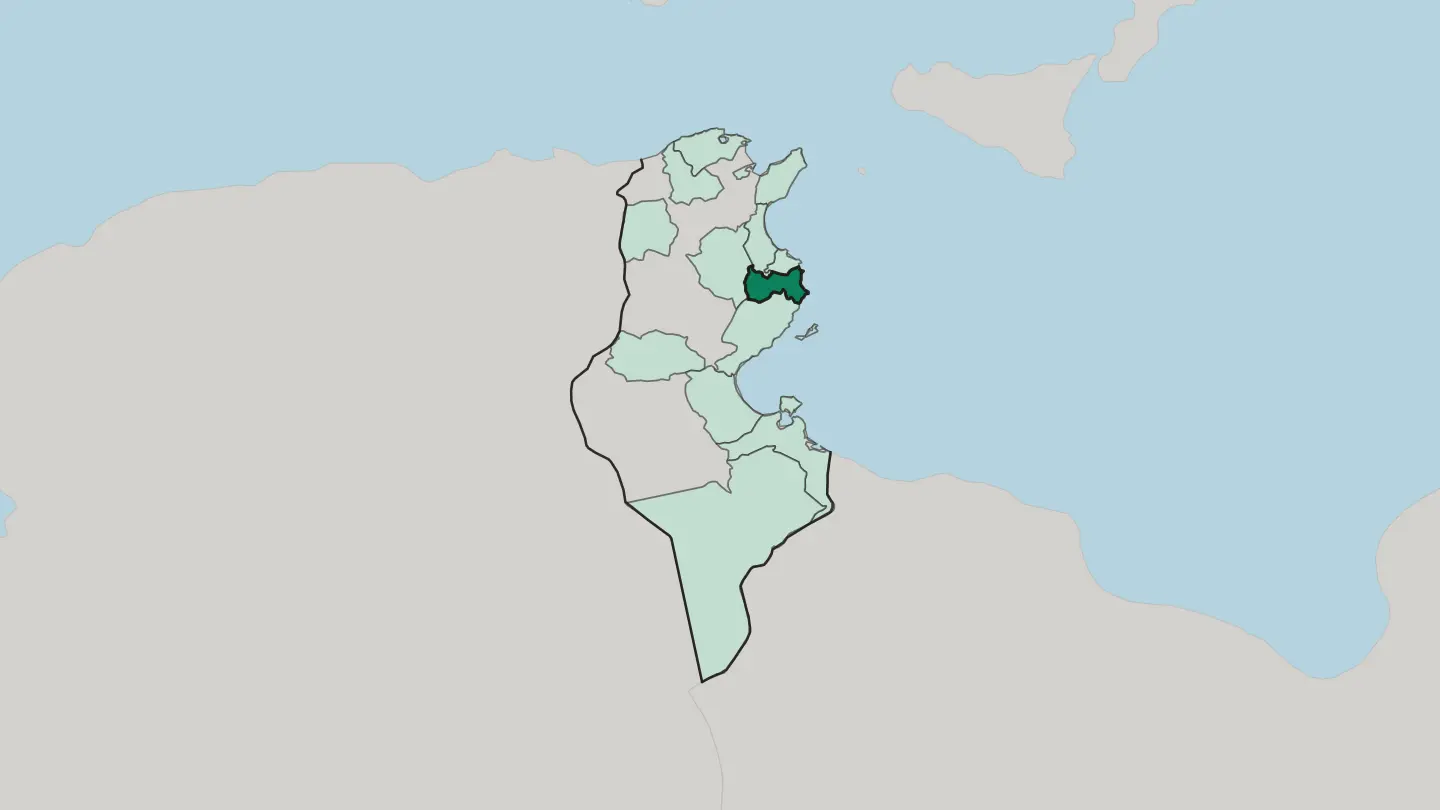 Tunisia
Gouvernorat de Monastir
Monastir Governorate farms most of its land but employs most of its people in textiles, in mill towns like Ksar Hellal around the capital, Monastir.Towns & cities →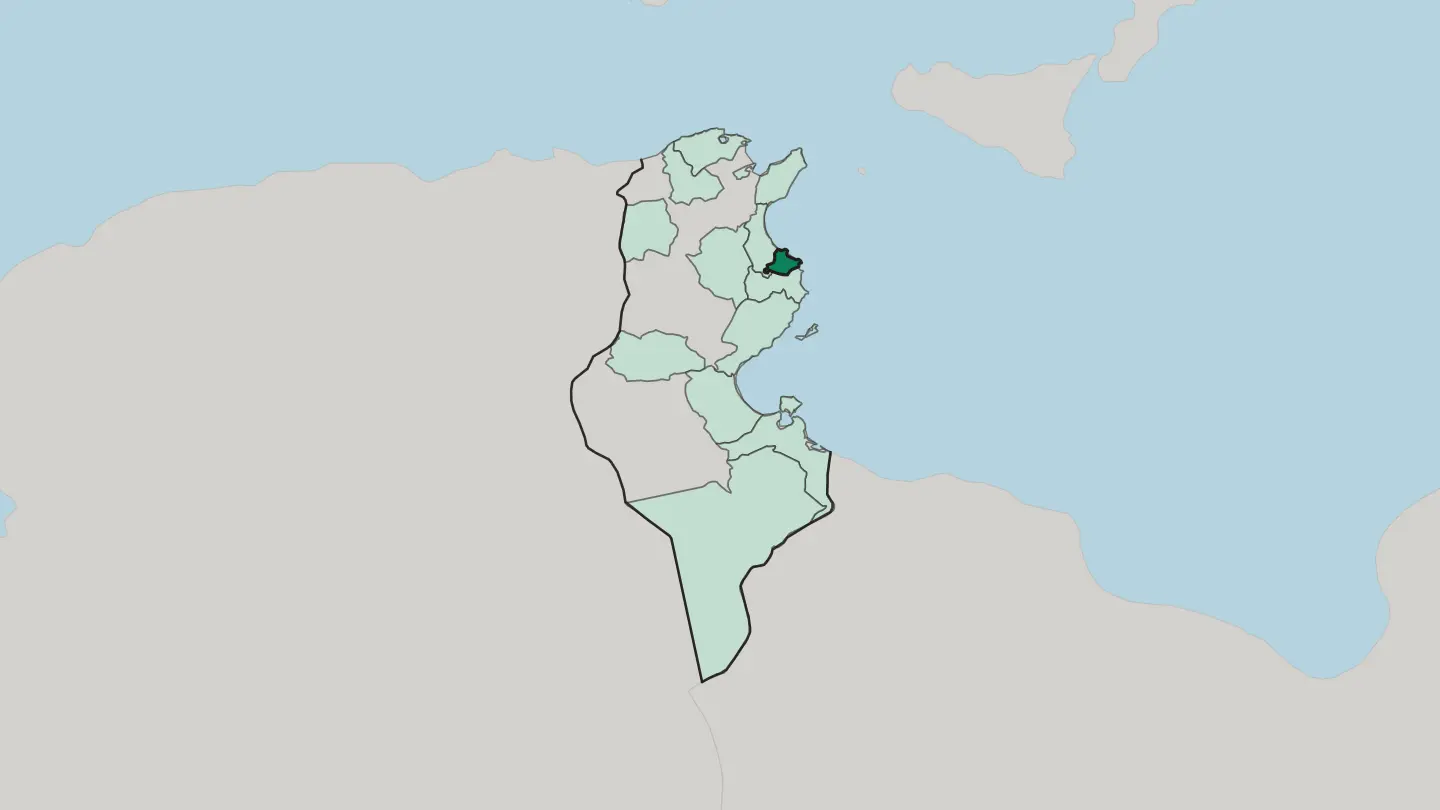 Tunisia
Gouvernorat de Médenine
Médenine Governorate reaches from the island of Djerba east to the border with Libya, with the inland town of Médenine as its capital.Towns & cities →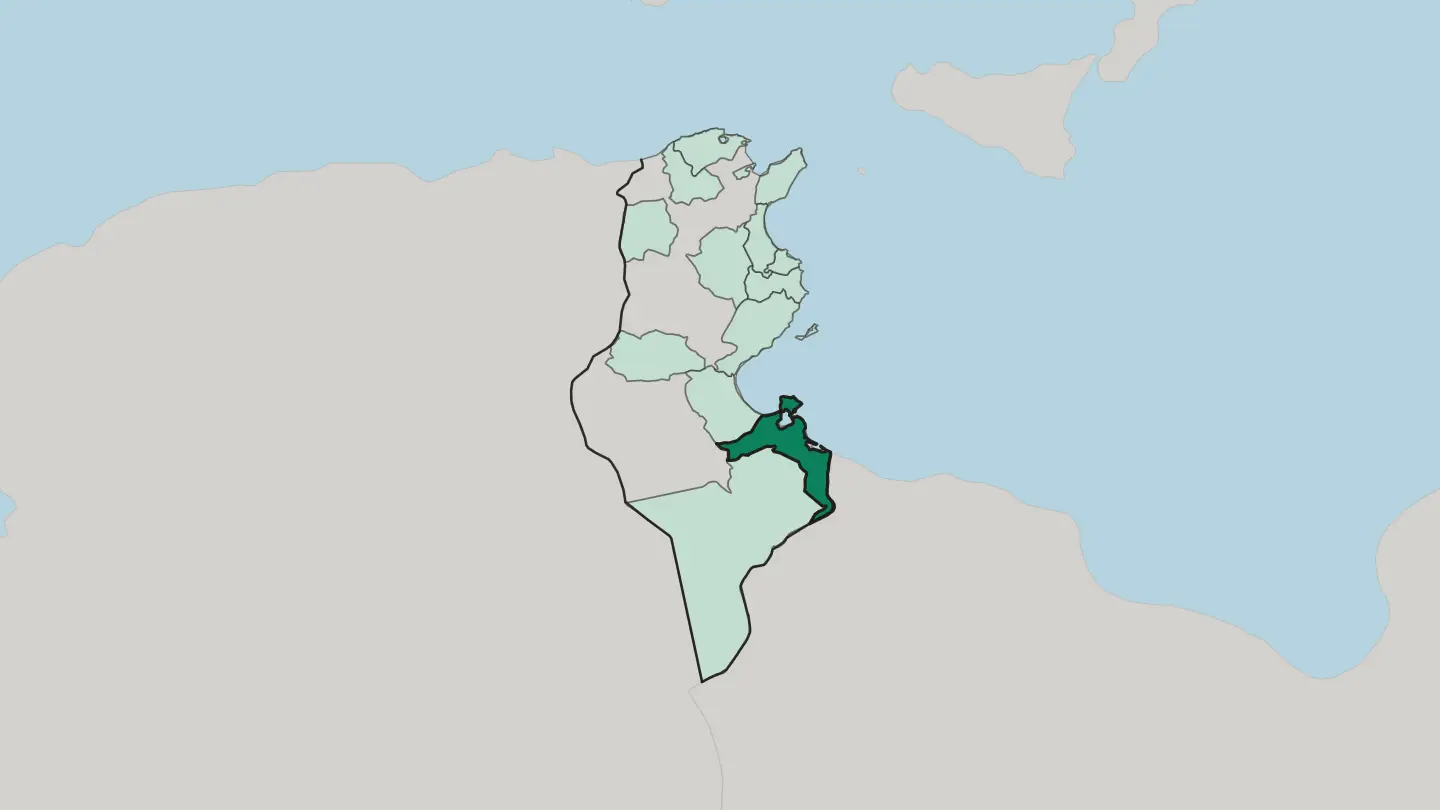 Tunisia
Gouvernorat de Nabeul
The town of Nabeul gives its name to a governorate constituted in 1956, one of the twenty-four provinces into which Tunisia is divided.Towns & cities →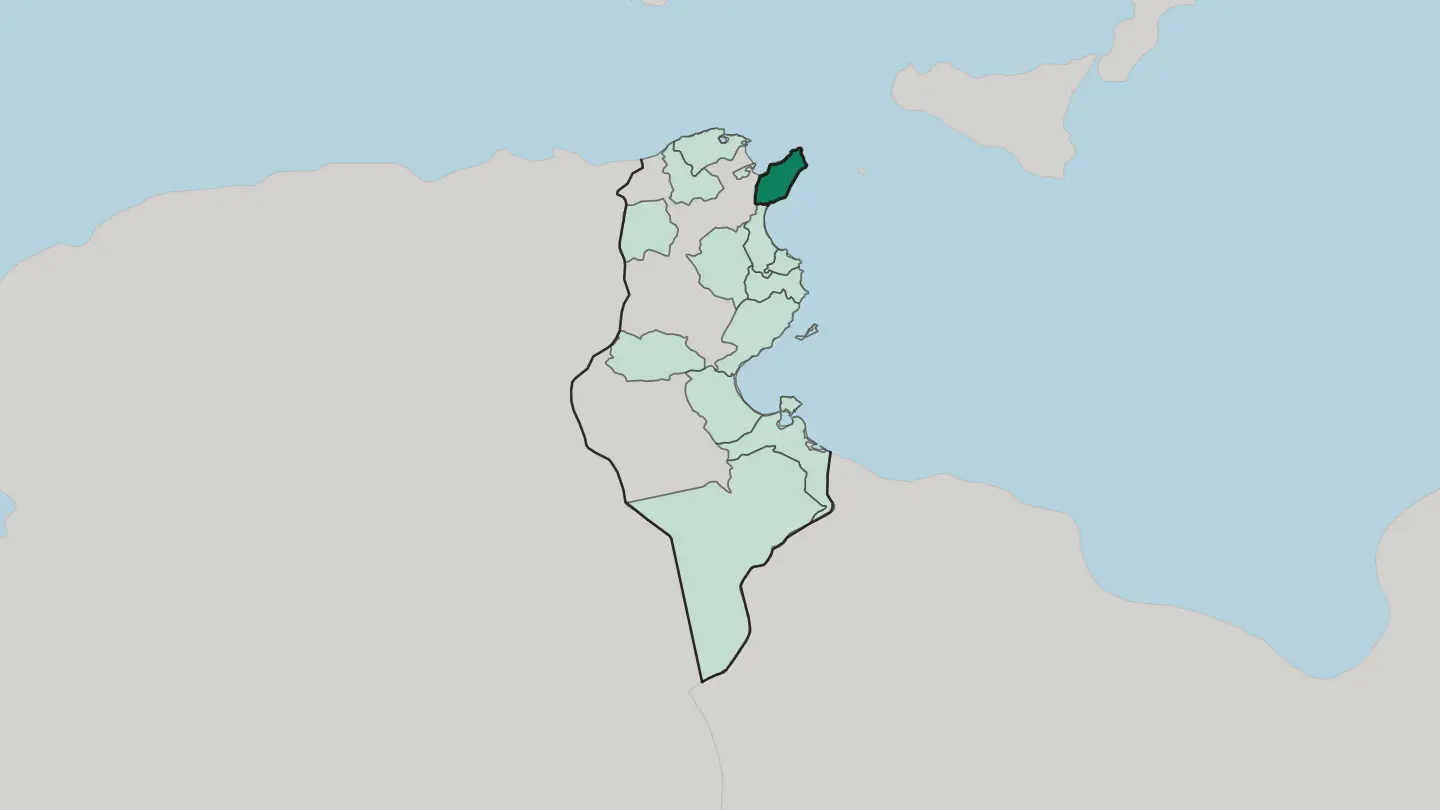 Tunisia
Gouvernorat de Sfax
Sfax Governorate spreads along the Tunisian coast and out to the Kerkennah Islands, taking its name and its administration from the city of Sfax.Towns & cities →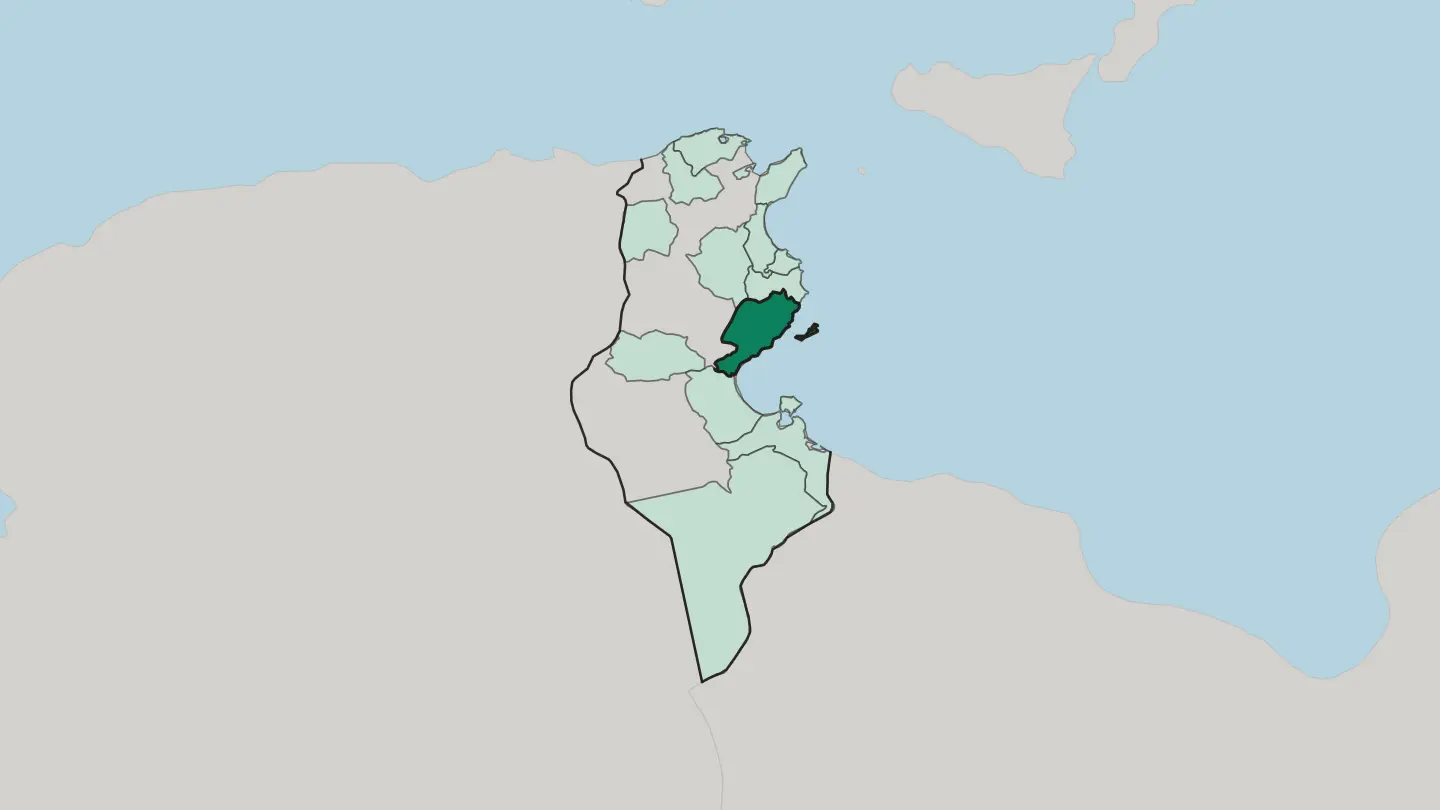 Tunisia
Gouvernorat de Sousse
Sousse Governorate is Tunisia's second largest tourist destination, with beds across Sousse-Jawhara, Sousse-Medina, Sousse-Nord and Sousse-Sud.Towns & cities →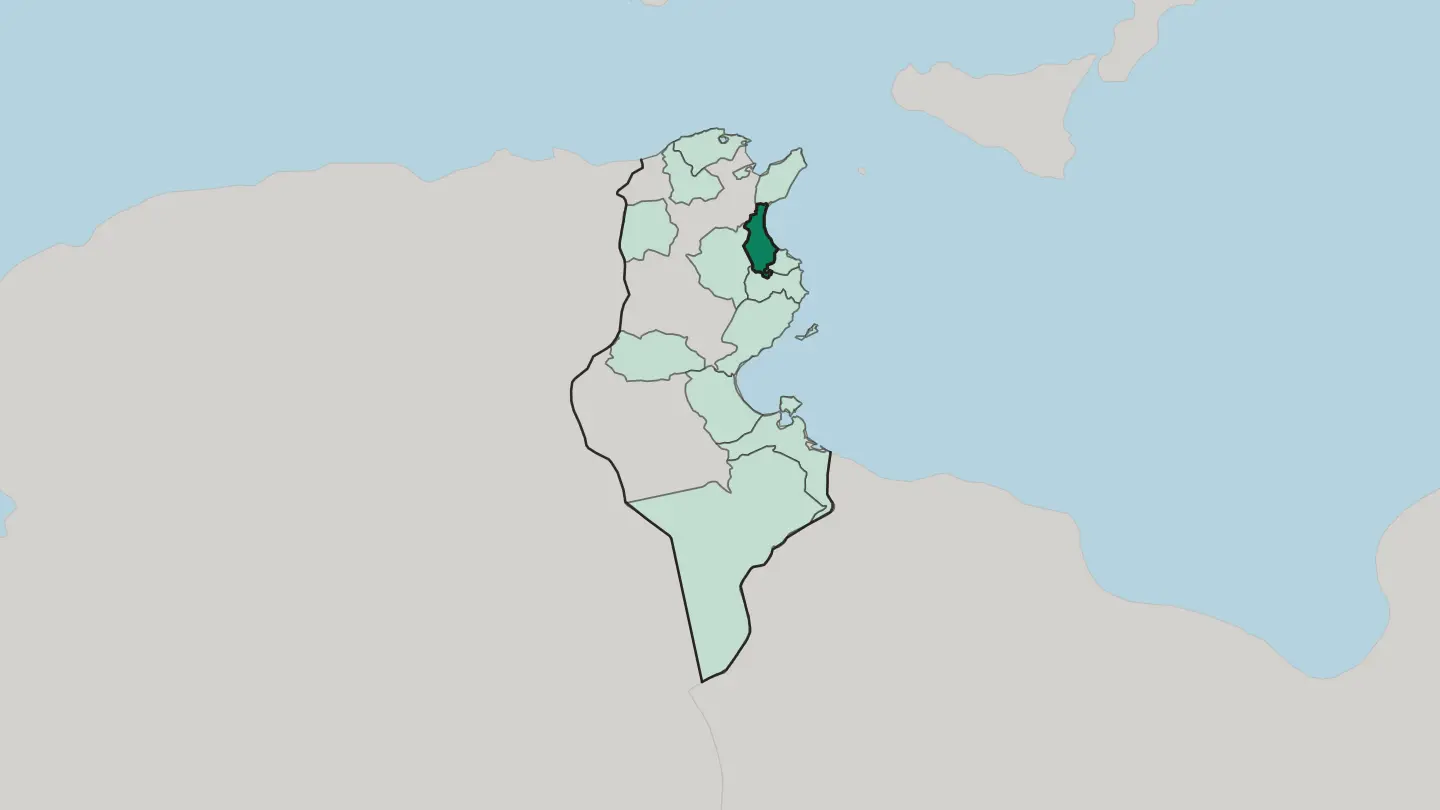 Tunisia
Gouvernorat de Tunis
Gouvernorat de Tunis is the smallest governorate of Tunisia, an urban stretch on the Gulf of Tunis on the northeast coast, built around the capital, Tunis.Towns & cities →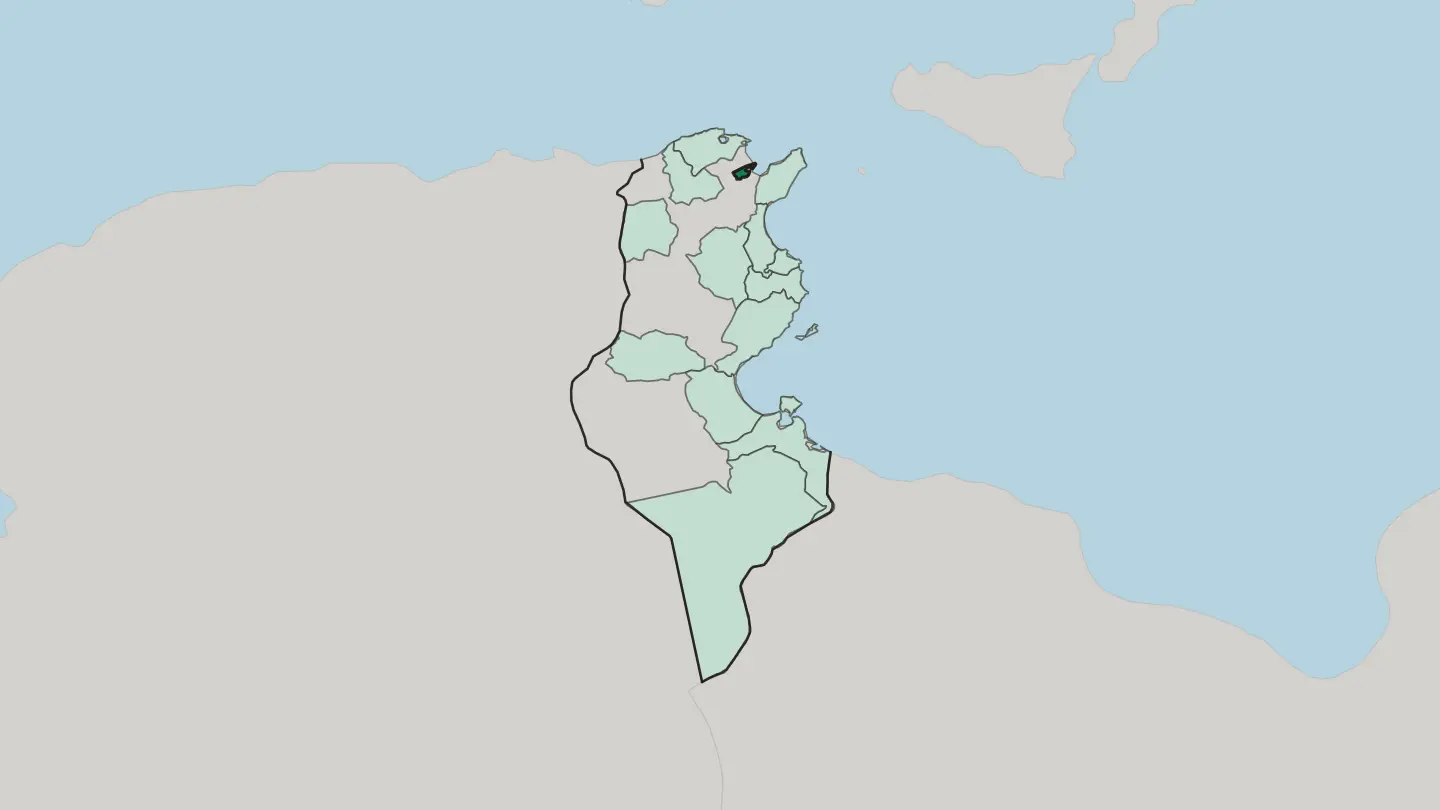 Tunisia
Tataouine
Tataouine is the largest of Tunisia's twenty-four governorates and the only one touching both the Algerian and the Libyan frontier.Towns & cities →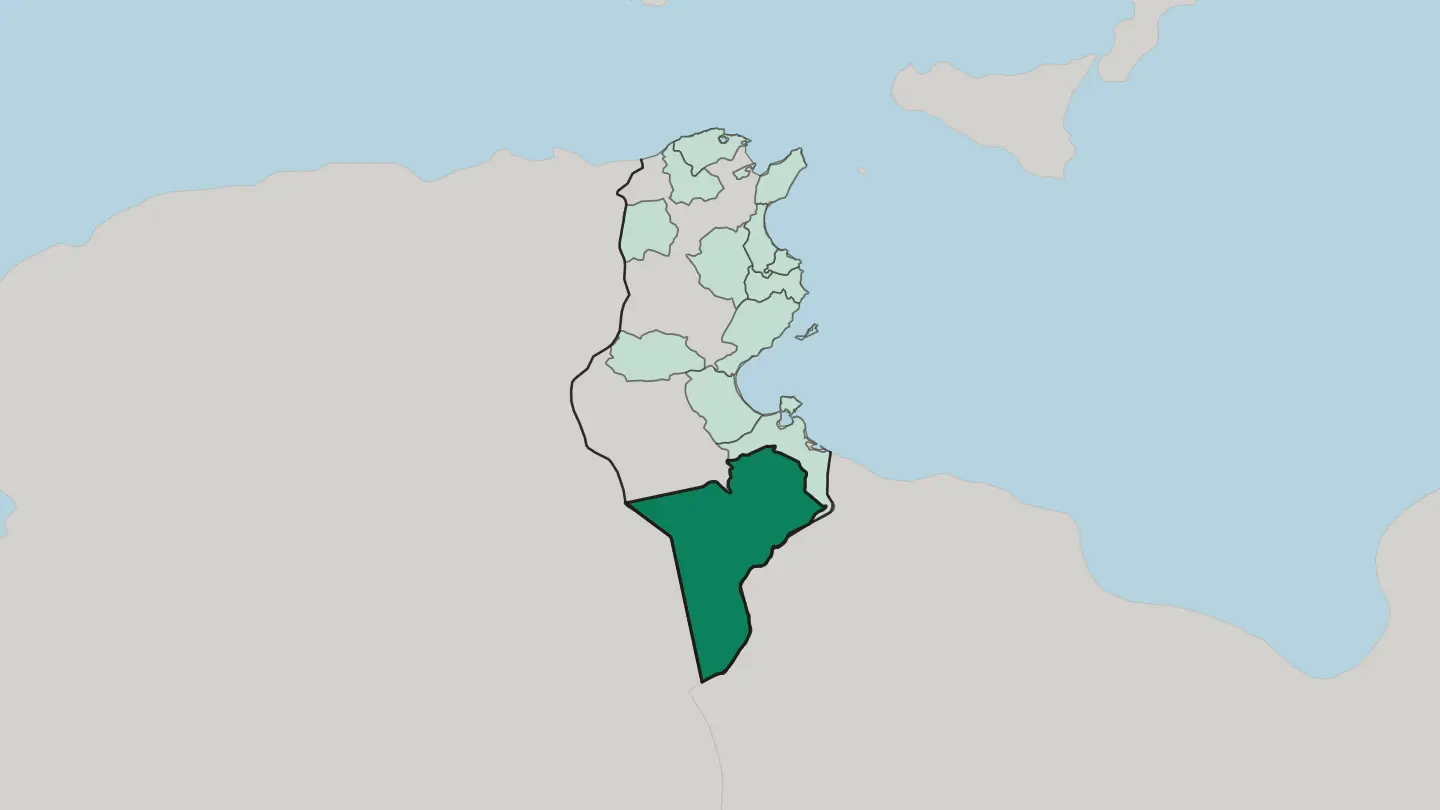
Explore by experience
Not sure which place? Start from how you want to travel.
About Tunisia
Tunisia packs an outsized range into a small country.
What is Tunisia known for?
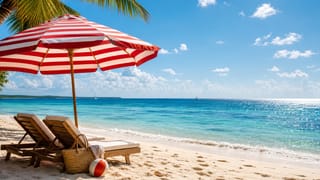
The ruins of Carthage sit above the Gulf of Tunis, the medina of the capital keeps its old souks, and the holy city of Kairouan holds the Great Mosque that anchored Islam in the Maghreb. Its coast runs long. Beach resorts line the Sahel around Sousse, the blue-and-white lanes of Sidi Bou Saïd overlook the sea, and the island of Djerba floats off the south.
Beyond the palm oases the Sahara begins.
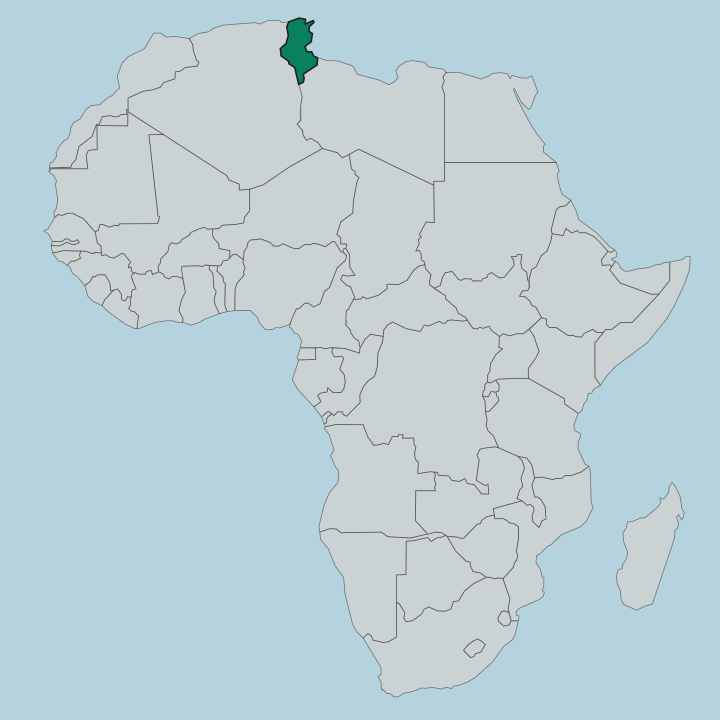
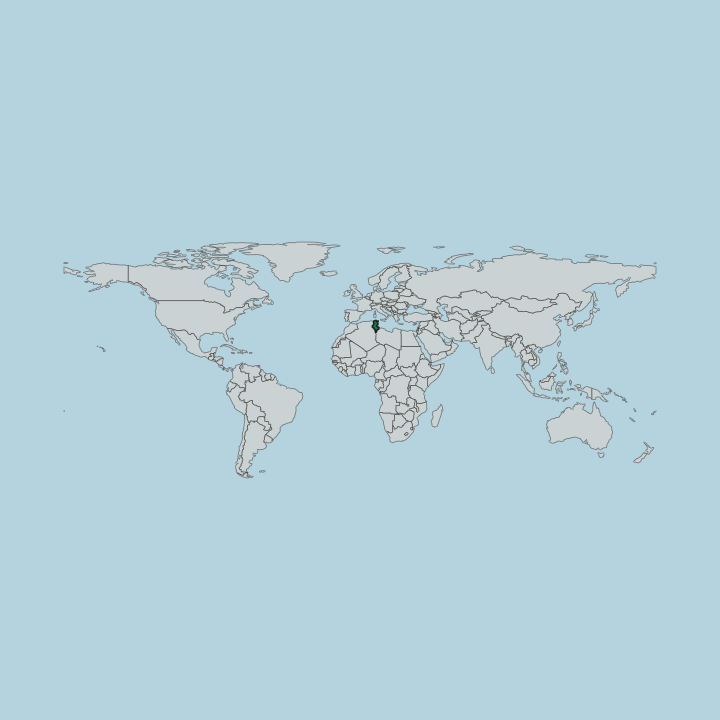
Where is Tunisia?
Tunisia occupies the eastern corner of the Maghreb, where North Africa turns toward the Mediterranean and the coastline swings past Cap Bon toward Sicily. Its shape is a wedge. The north catches the sea and its rain, so this is the green quarter, a country of wooded hills where the Kroumirie ridges rise near the Algerian border and snow can even dust the higher ground in winter.
Through this north the Medjerda River runs east from Algeria to the Gulf of Tunis, and its broad valley is the one great plain, the grain land the Romans once shipped to feed their capital. South of the coastal belt the ground changes hard. The Dorsal, the last northeastern reach of the Atlas Mountains, crosses the country toward the Cap Bon peninsula and marks the divide.
Below it lie the dry central steppes, olive country around the Sahel, and then the salt flats and palm oases that edge the Sahara. Keep going and the towns thin to nothing. The far south is desert proper, sand and rock broken only by springs, with the flat, olive-planted island of Djerba lying just off the coast.
From wet northern hills to bare southern sand, the whole span fits inside one short drive-length country.
What is the history of Tunisia?
Tunisia's past begins with the sea. Phoenician traders from Tyre founded Carthage on the Gulf of Tunis in the ninth century BC, and the city grew into a maritime power that ruled the western Mediterranean until Rome destroyed it in 146 BC. Rome rebuilt Carthage and made this the province of Africa, one of the empire's richest, its wheat and olive oil carried across the sea from the Medjerda valley.
Ruins from that age still stand across the country. Then, in the seventh century, Arab armies swept west and founded Kairouan, which became a seat of Islamic learning and gave the Maghreb its first great mosque. Rule passed through many hands after that.
The territory answered to Berber dynasties, then to the Ottomans, who governed it as a nearly self-standing province from Tunis for three centuries. France made Tunisia a protectorate in 1881, and the long push against colonial rule finally produced independence in 1956. Habib Bourguiba, the lawyer who led that movement, became the first president and set the young state on a secular, modernising course.
That thread still runs through public life. From Phoenician harbour town to modern republic, the country has always faced the water and the wider world.
What is Tunisia like?
Tunisian culture layers Berber roots under Arab, Ottoman, Italian, and French inheritances, and you taste all of it at the table. Couscous is the national dish, fine semolina steamed over a broth of meat and vegetables, served on Fridays and at every celebration. The kitchen runs hot with harissa, the chilli paste that flavours nearly everything.
Brik, a thin pastry folded around egg and fried crisp, turns up at street stalls and family tables alike, and bambalouni doughnuts are sold hot in the lanes of Sidi Bou Saïd. Both couscous and harissa now carry UNESCO recognition. Language tells the same mixed story.
Arabic is the official tongue and Tunisian Arabic the everyday speech, while French, left by the protectorate, still runs through schooling, the press, and business. Faith shapes the calendar and the skyline. Kairouan counts among Islam's holiest cities, its Great Mosque a model for the whole region, and the old walled cores of Tunis, Sousse, and Kairouan are protected as World Heritage.
Craft carries the culture too, from Kairouan's knotted carpets to the blue-shuttered white houses of Sidi Bou Saïd. It is one country with many threads.
What is the climate of Tunisia?
Tunisia's climate splits along the same line as its land. The north and the coast are Mediterranean, with mild, wet winters that green the Kroumirie hills and hot, dry summers that draw beachgoers to the Sahel. Head inland and south and the rain runs out fast.
The central steppes turn semi-arid, and the deep south around the Sahara bakes, with summer days that can climb toward scorching in the oases. The sea keeps the coast gentler than the interior. Spring and autumn suit travel best.
How do you get to Tunisia?
The plane brings most of Tunisia's visitors in. Tunis-Carthage International Airport, beside the capital, is the main gateway and the base of the national carrier, handling the bulk of the country's traffic. The resort coast has its own doors: Enfidha and Monastir serve the Sahel beaches, and Djerba's airport opens the south.
Ferries also cross the Mediterranean from Italian and French ports to Tunis. Once inside, distances are real, so many pair a coastal base with an internal hop or a long drive toward the desert. Pick your arrival to match your region.
Good for
Updated September 2026