
Turkey
Düzce, Turkey — Towns & Travel Guide
Düzce is Turkey's newest province: a hazelnut plain ringed by mountains, opening north to the Black Sea between Istanbul and Ankara.
Hotel links are affiliate links: booking through them may earn us a commission, at no extra cost to you. It never affects how places are ranked. How this works


Towns & cities in Düzce
One town here has its own guide — it links to where to stay.

 Turkey
Düzce
Düzce is the capital of Düzce Province in northwestern Turkey, holding the Konuralp Museum and the ancient city of Prusias ad Hypium.Where to stay →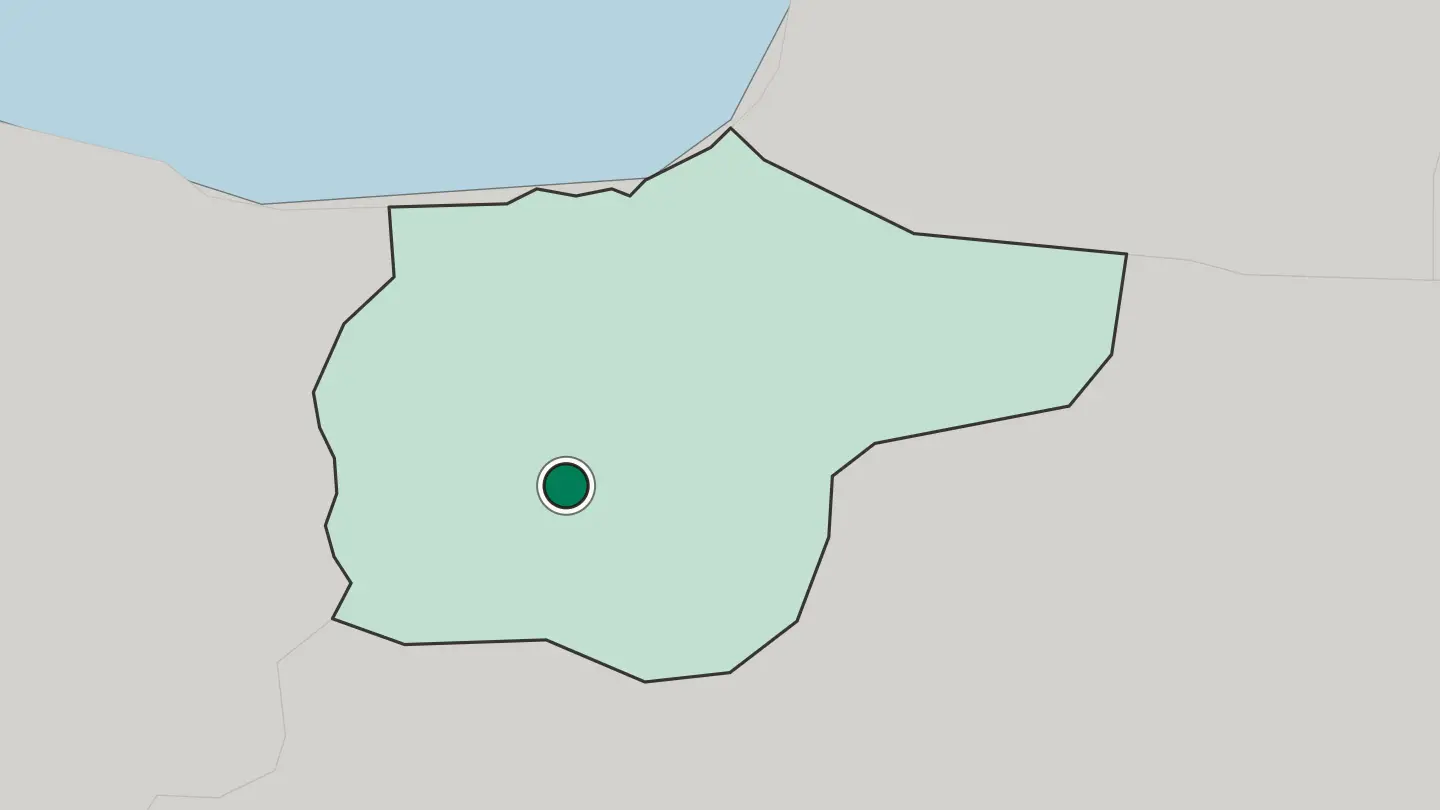
Hotel links are affiliate links: booking through them may earn us a commission, at no extra cost to you. It never affects how places are ranked. How this works
About Düzce
What is Düzce known for?
Düzce is best known as one of Turkey's great hazelnut baskets. The nut is everywhere. Orchards climb the slopes above a flat central plain, and the harvest sets the rhythm of the year across the villages.
Two other draws pull travellers off the highway: the Roman ruins of Prusias ad Hypium at Konuralp, north of the city, and the Black Sea beaches at Akçakoca. Samandere Waterfall drops through forest in the hills to the south.
Where is Düzce?
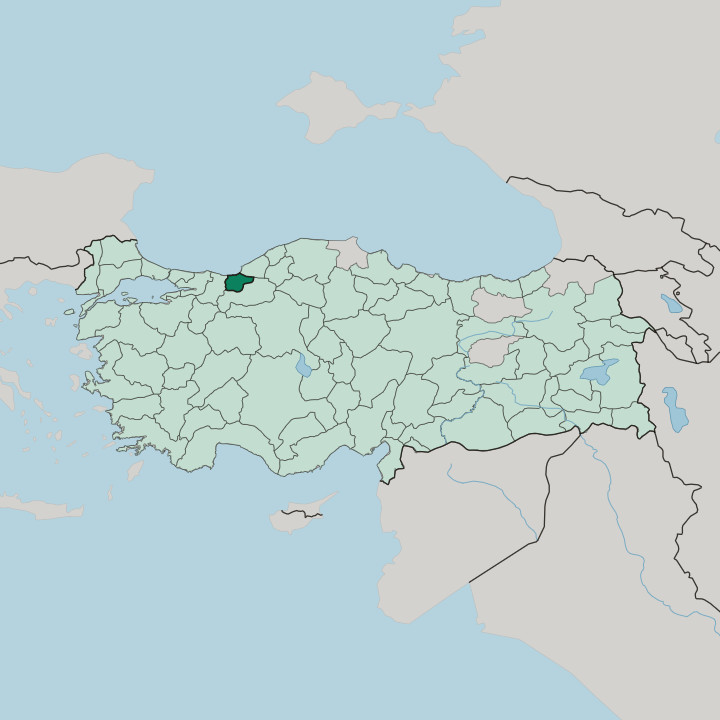
Düzce sits in the Western Black Sea region of northwestern Turkey. Its shape is simple. A flat, fertile plain fills the middle, the Düzce Plain, and a ring of wooded mountains closes around it on almost every side.
Forest covers the higher ground; farmland covers the floor. The Akçakoca Mountains rise to the north, the Bolu Mountains to the east, and the outliers of the Abant range to the south. Only the north opens.
There the plain slips down to a short stretch of Black Sea coast at Akçakoca, the province's one beach town. Three provinces frame the rest. Bolu wraps the eastern and southern edges, Sakarya lies to the west, and Zonguldak reaches down from the northeast.
The land itself was built by movement. The North Anatolian Fault runs along the southern edge of the province, and that same fracture ground out the basin the plain fills. That seismic line is also why the province exists at all.
Streams gather at Lake Efteni before draining north to the sea through the Melen River. It is a small province, easy to cross in a day.
What is Düzce like?
Düzce is one of the most mixed corners of Turkey. Its villages speak many tongues. Circassians and Abkhaz from the Caucasus settled the plain and the surrounding hills in the nineteenth century, founding scores of villages that still carry their names and cooking.
Georgians, Laz, and Manav Turks live alongside them, with Bosniak and Pomak muhacir families who came later from the Balkans. It shows at the table. Abkhaz kitchens turn out cornmeal breads and walnut sauces, and hazelnuts work their way into both the sweets and the daily bread.
The hazelnut harvest is the great communal season. Whole families move to the orchards for it, and a summer festival marks the crop when the picking is done. Düzce University pulls students into the city.
On the coast, Akçakoca keeps a different rhythm, its Georgian and Laz families turned toward the Black Sea and the fishing boats rather than the fields inland. Turkish ties it all together. Many of the old Caucasian villages have thinned as young people leave for Düzce and Istanbul, but the associations, dances, and language classes keep the heritage alive.
What is the history of Düzce?
People have farmed this plain since antiquity. The Romans knew it well. North of the city, at Konuralp, lie the ruins of Prusias ad Hypium, a Bithynian town that grew into a Roman city with a theatre, a bridge, and long stretches of wall.
Rome drained the marshes here and turned the basin into farmland. The Ottoman name came later, from Konur Alp, a commander who took the district in the fourteenth century. The province itself is young.
Düzce broke away from Bolu to become Turkey's eighty-first province in 1999, after a November earthquake tore through the town.
What is the climate of Düzce?
Düzce has a damp, mild Black Sea climate. No season here escapes the rain. The surrounding mountains wring extra moisture out of the sea air, so the hills stay green and wet while the sheltered plain runs a touch drier.
Winters are cool and grey, summers warm and humid, with fog common over the fields. The coast at Akçakoca stays the mildest, cooled by the Black Sea in summer and warmed by it in winter.
How do you get to Düzce?
For Düzce, the road brings almost everyone in. It sits on the main highway between Istanbul and Ankara, roughly halfway along the run, so buses stop through the day and night. The motorway and the old trunk road both cut across the plain.
There is no big airport in the province. The nearest flights land at Istanbul or Ankara, each a few hours away, and drivers carry on from there to the coast at Akçakoca.
Common questions
What is the best area to stay in Düzce?
Düzce: a stopover on the Istanbul-Ankara run. Akçakoca: the Black Sea beaches. Konuralp: the Roman ruins of Prusias ad Hypium. Gölyaka: Lake Efteni and Samandere Waterfall.
Good for
More regions in Turkey
Updated October 2026