Canada
Prince Edward Island, Canada — Towns & Travel Guide
Prince Edward Island is Canada's smallest province, a crescent of red-soil farmland and beaches in the Gulf of Saint Lawrence.
Hotel links are affiliate links: booking through them may earn us a commission, at no extra cost to you. It never affects how places are ranked. How this works


Towns & cities in Prince Edward Island
One town here has its own guide — it links to where to stay.
 Canada
Charlottetown
Charlottetown, capital of Prince Edward Island and seat of Queens County, carries the name of Queen Charlotte and was made a city in 1855.Where to stay →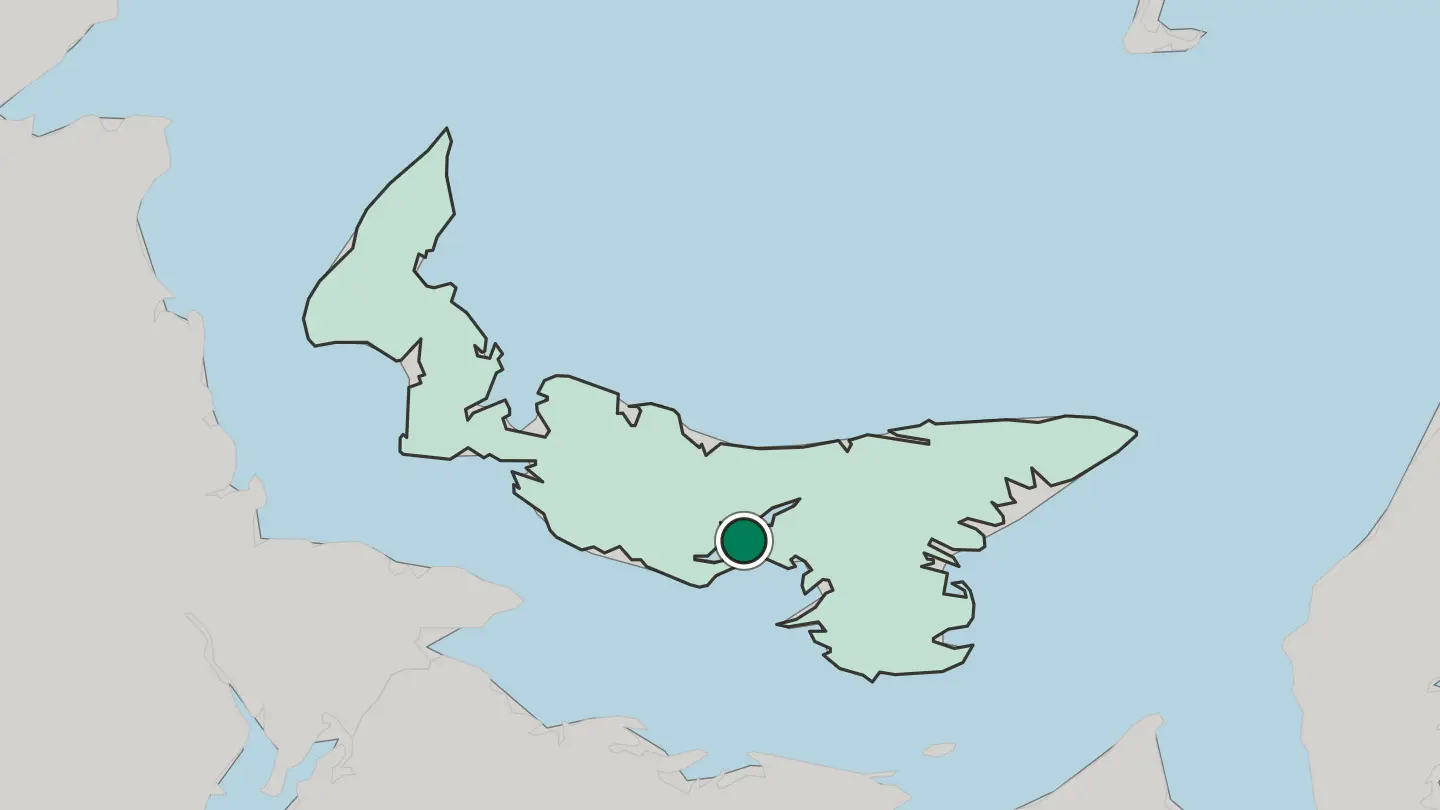
Hotel links are affiliate links: booking through them may earn us a commission, at no extra cost to you. It never affects how places are ranked. How this works
About Prince Edward Island
Anne of Green Gables made this island famous.
What is Prince Edward Island known for?
Lucy Maud Montgomery set her 1908 novel in the farms around Cavendish, and readers still come to walk its red woodland paths. The land itself is the other draw: iron-rich sandstone that stains the beaches rust-red and grows the potatoes the island is built on. Charlottetown, the capital, calls itself the Cradle of Confederation, the town where Canada's founding was first argued out in 1864.
Lobster suppers run all summer. Seafood, farmland, and a slow pace hold it together.
Where is Prince Edward Island?
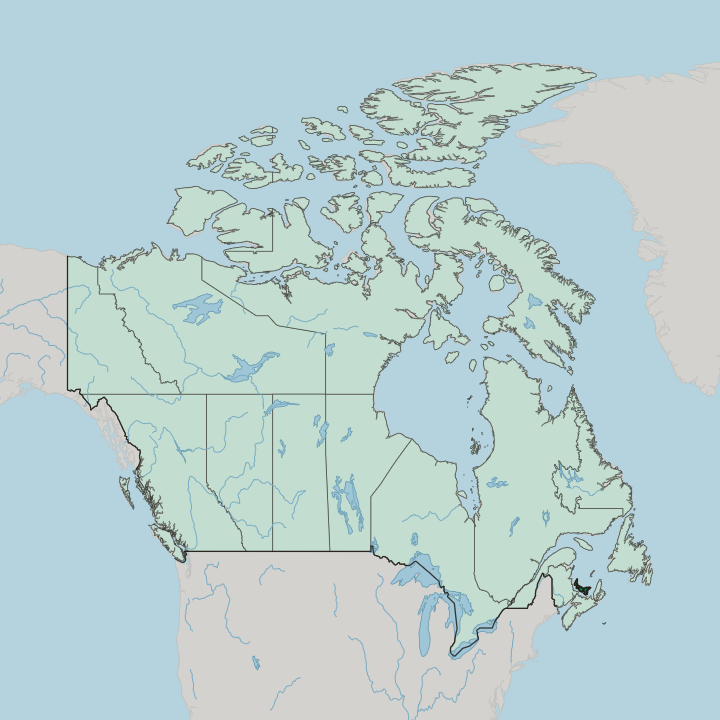
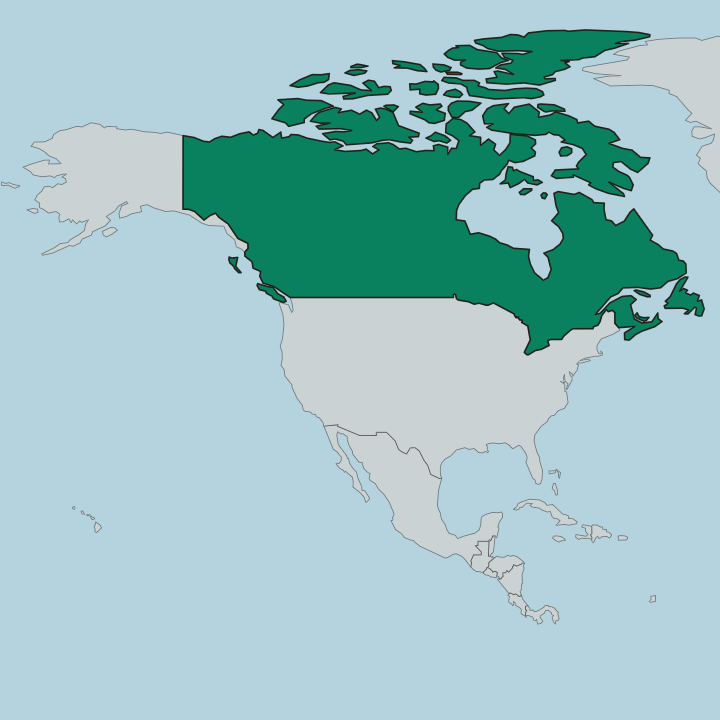
Prince Edward Island lies in the southern Gulf of Saint Lawrence, off Canada's Atlantic coast. It is a single crescent-shaped island, low and rolling, with no point far from salt water. The Northumberland Strait separates it from the mainland, running between the island and the provinces of New Brunswick to the west and Nova Scotia to the south.
That strait is narrow. At its western end the Confederation Bridge crosses nearly nine miles of water to New Brunswick, the longest bridge in the country and the longest anywhere over water that freezes in winter. The island is the smallest of Canada's provinces by both land and people, yet the most densely settled of them.
Its soil is the thing you notice first, a deep iron-red that colours the ploughed fields, the cliffs, and the beaches alike. Charlottetown sits on the south shore, at a sheltered harbour near the middle of the island. The north coast faces the open Gulf of Saint Lawrence, a run of dunes and red-sand beaches from Cavendish eastward.
Everything here is shaped by that surrounding sea.
What is Prince Edward Island like?
Life here runs on the land and the sea, and the calendar follows both. Spring is planting; the island grows more potatoes than any other Canadian province, and the red fields are the backdrop to almost everything. Summer belongs to the water.
Lobster boats work the strait, oyster and mussel beds fill the bays, and the lobster supper becomes a ritual, a long table of chowder, mussels, and boiled crustaceans served in church halls and roadside rooms across the countryside. Anne of Green Gables is woven right through the island's sense of itself. Lucy Maud Montgomery grew up in these northern farms, and her 1908 novel turned Cavendish into a place readers travel across the world to see.
English is the everyday language, though the island carries deep Mi'kmaq roots and an Acadian French heritage older than the province itself. Charlottetown holds the theatres and galleries. But the culture belongs as much to the fishing wharves and the potato fields as to any stage.
What is the history of Prince Edward Island?
The island is old Mi'kmaq land, Epekwitk in their language, long before any European claim. French settlers folded it into the colony of Acadia in the early 1600s and named it Isle Saint-Jean. Britain took it in the 1760s and renamed it for a royal prince.
Its great moment came in 1864, when delegates met at Charlottetown to debate a union of the British colonies, the conference that set Canadian Confederation in motion. The island then refused the deal. It held out as a separate colony until 1873, when debt and a stalled railway finally pushed it to join Canada.
What is the climate of Prince Edward Island?
The island has a humid continental climate with four sharp seasons. Winters are long and cold, colder than the open Atlantic would suggest, because the Gulf of Saint Lawrence freezes over each winter and stops the sea from softening the air. Summers are warm and green, and the shallow gulf water turns swimmable, some of the warmest sea north of the Carolinas.
Spring comes late and muddy. Autumn brings clear days and the potato harvest before the cold closes in again.
How do you get to Prince Edward Island?
Most visitors drive across the Confederation Bridge, the nearly nine-mile fixed link that carries the highway over the Northumberland Strait from New Brunswick. A seasonal ferry crosses the strait from Nova Scotia, running between Wood Islands on the east end and the mainland when the water is open. Flying is quicker.
Charlottetown's airport connects to Toronto, Montreal, Halifax, and Ottawa, and the capital sits within an easy drive of the beaches, the farms, and the Anne of Green Gables country on the north shore.
Common questions
What is the best area to stay in Prince Edward Island?
Charlottetown: an easy introduction to Prince Edward Island. Summerside: the western shore of the island. The Cavendish shore: red-sand beaches and Green Gables country.
Good for
More regions in Canada
Updated September 2026