Canada
Saskatchewan, Canada — Towns & Travel Guide
Saskatchewan is a landlocked prairie province of Western Canada, wheat fields in the south and boreal forest and lakes in the north.
Hotel links are affiliate links: booking through them may earn us a commission, at no extra cost to you. It never affects how places are ranked. How this works


Towns & cities in Saskatchewan
Pick a town or city — each links to where to stay.
 Canada
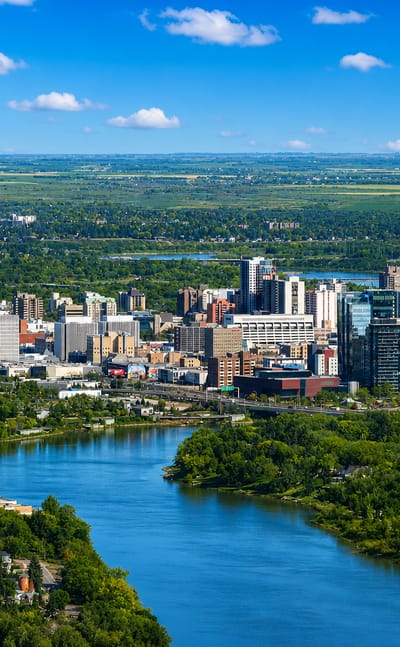
Saskatoon
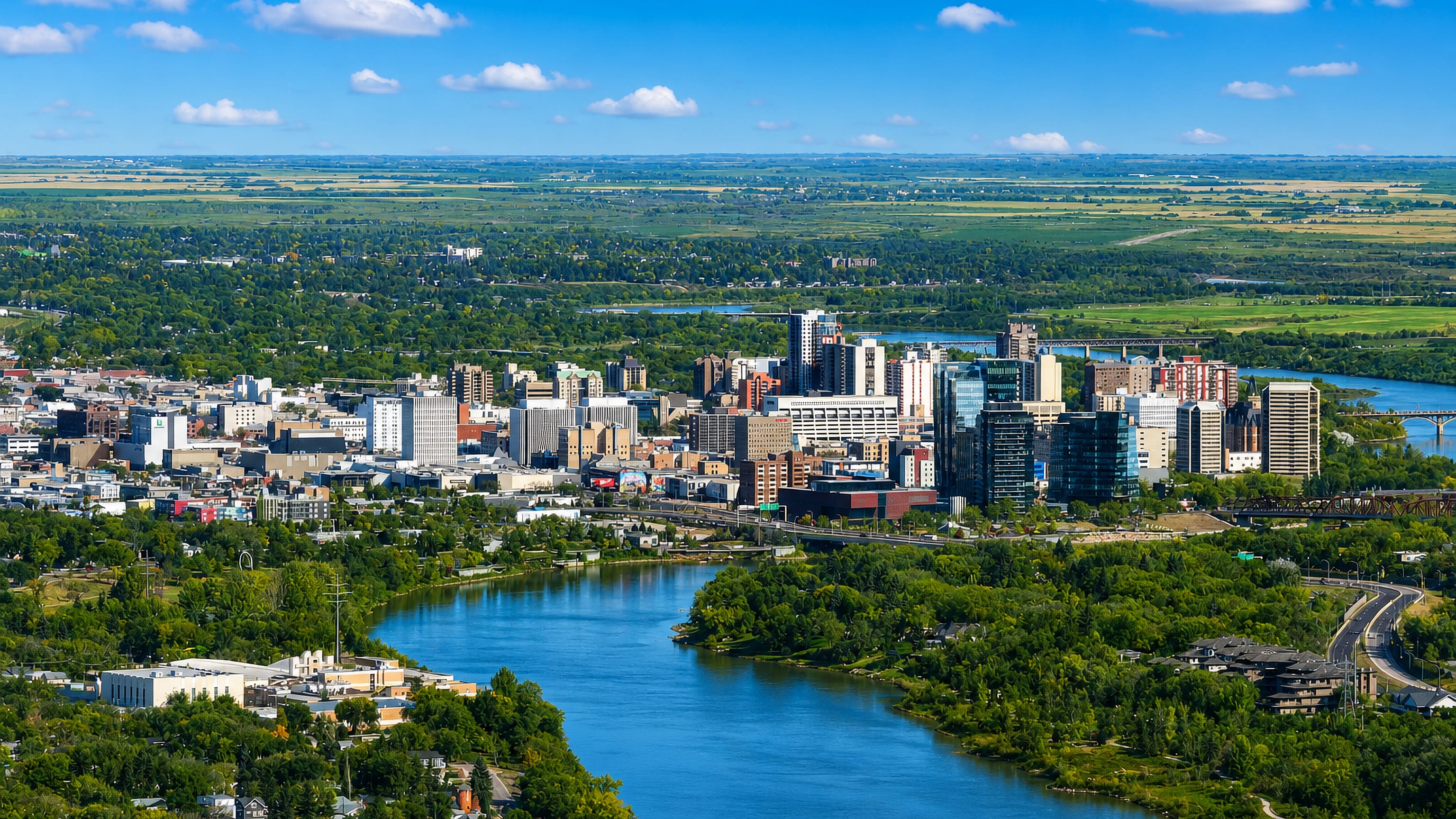
Prairie light fills the galleries of Remai Modern at Saskatoon, a city in Saskatchewan, Canada, known for the Diefenbaker Centre and its heritage homes.Where to stay →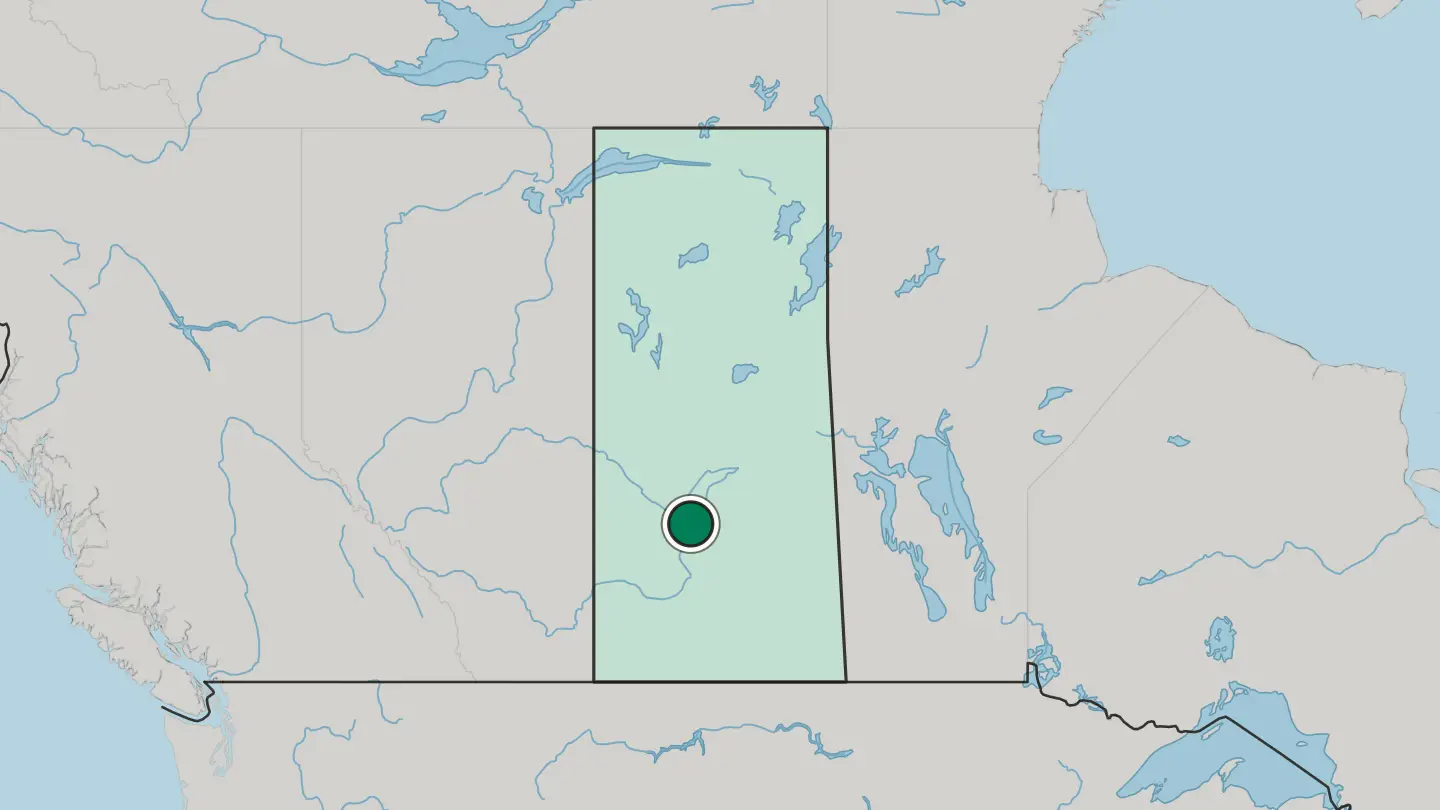
 Canada
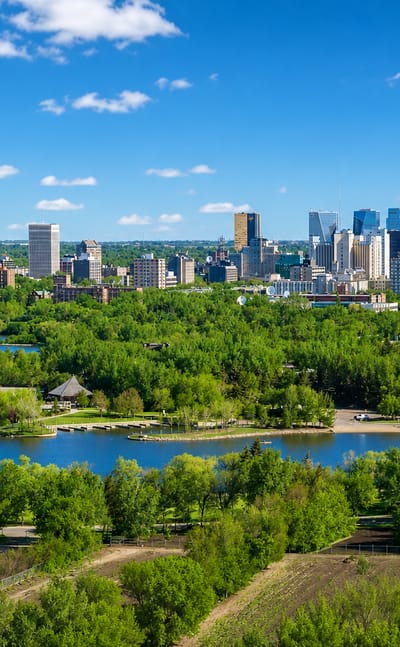
Regina
Wascana Lake mirrors the dome of the Legislative Building at Regina, the capital of Saskatchewan, Canada, known for Wascana Centre and its prairie skyline.Where to stay →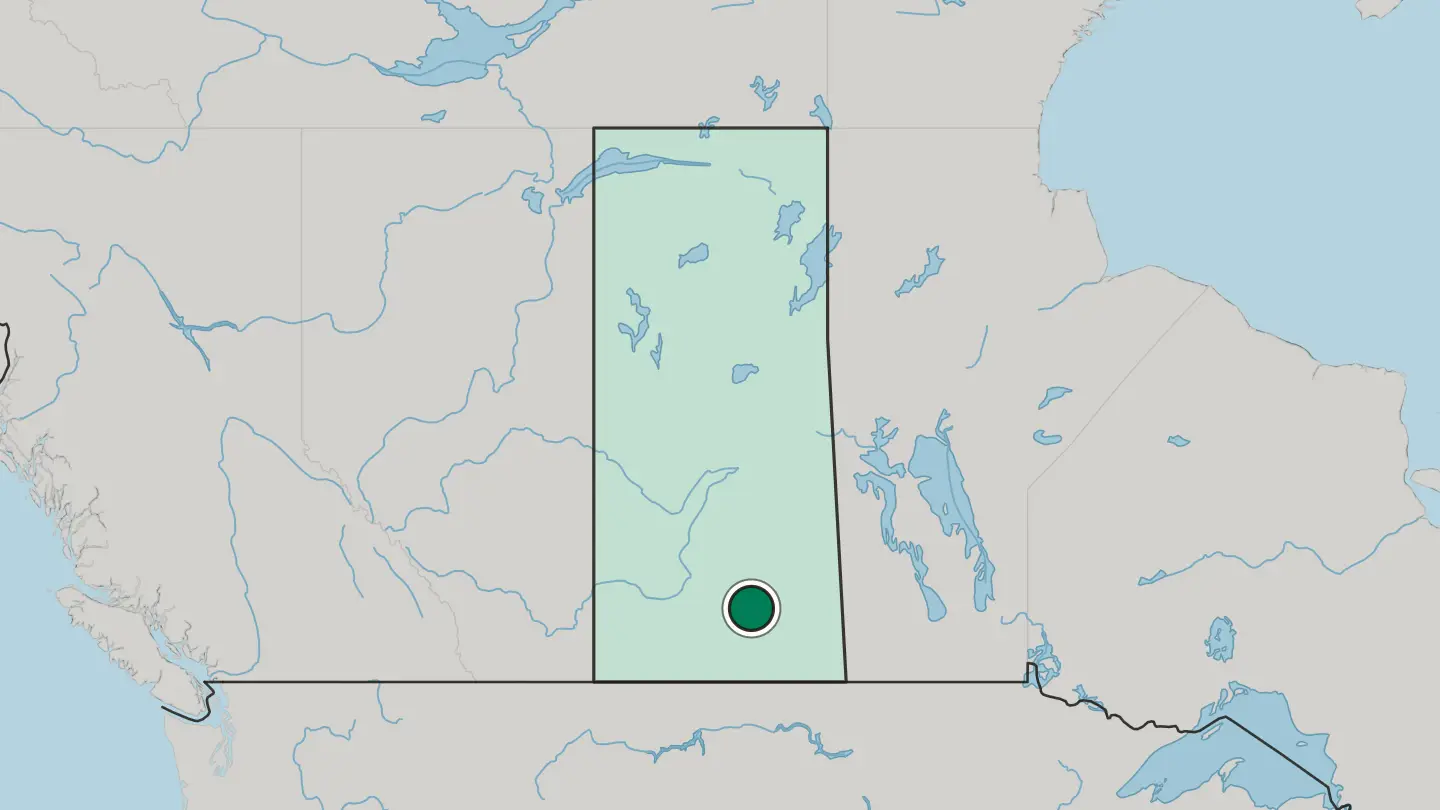
Hotel links are affiliate links: booking through them may earn us a commission, at no extra cost to you. It never affects how places are ranked. How this works
About Saskatchewan
What is Saskatchewan known for?
Saskatchewan is Canada's flat, big-sky prairie. Wheat built it. The southern third is open grain country, some of the most productive farmland on the continent, and beneath that soil lies the world's largest known store of potash.
North of the fields the land tips into boreal forest, lake-strewn and thinly settled, holding most of the province's hundred thousand lakes. Saskatoon, the largest city, and Regina, the capital, both stand on the prairie in the south.
Where is Saskatchewan?
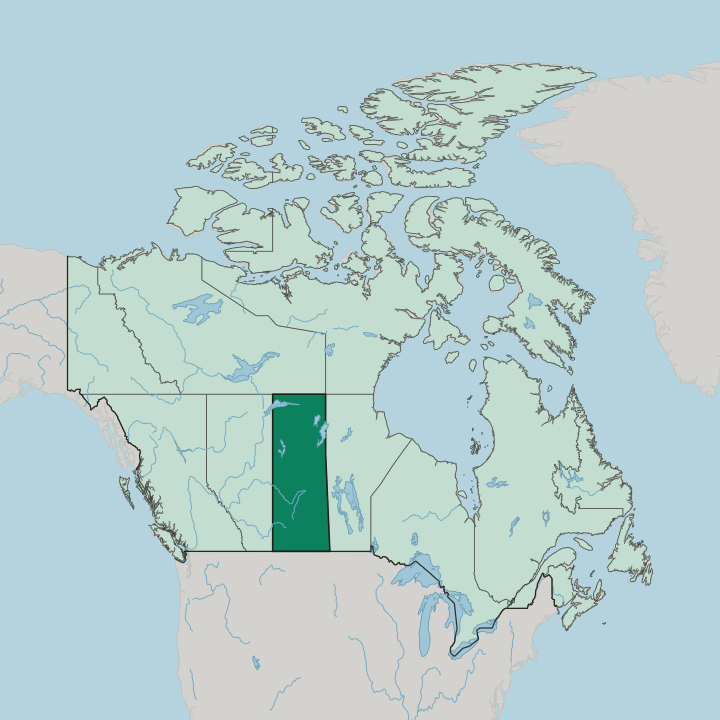
Saskatchewan sits in the middle of Western Canada, one of only two landlocked provinces in the country. Alberta lies to the west and Manitoba to the east, the United States runs along the southern edge, and the Northwest Territories and Nunavut close it off in the north. Its borders are drawn as straight survey lines rather than rivers or coasts, which makes it the one province with no natural boundary on any side. The land divides cleanly into two.
The southern third is prairie, flat grain country under an enormous sky, and the northern two-thirds is boreal forest laid over the ancient rock of the Canadian Shield. Between them a band of aspen parkland marks the change. The North Saskatchewan and South Saskatchewan rivers cross the plains and meet east of Prince Albert before flowing on toward Manitoba.
Nearly a tenth of the province is fresh water. In the far north, the sand dunes on the southern shore of Lake Athabasca are the largest active dunes anywhere at that reach of the world. In the south-western corner the Cypress Hills rise above the plain, escaping the last ice sheet and holding the highest ground in the province.
Little of this land ever feels crowded.
What is Saskatchewan like?
Saskatchewan wears its farming roots plainly. This is grain-elevator country, where wheat and canola and the world's deepest potash mines set the working rhythm, and the culture that grew up around them is unshowy and neighbourly. First Nations and Métis history runs through everything.
Cree, Saulteaux, Dene and Assiniboine peoples lived across these plains and forests long before the survey lines, and the Métis founded river-lot communities such as Batoche along the South Saskatchewan River. That heritage stays present in the province's place names, its powwows and its politics. Football is the closest thing to a shared religion.
The Saskatchewan Roughriders draw green-clad crowds to Regina from every small town on the prairie, and a home game empties the province's living rooms. Away from the cities, the appeal is space and quiet. The prairie sky is enormous and the light pollution slight, so the northern lakes and the grasslands are among the darkest, clearest places in the country for watching the stars.
People here are used to distance. Towns sit far apart, the grain runs to the horizon, and self-reliance is worn as a point of pride rather than complaint.
What is the history of Saskatchewan?
Long before the survey crews came, Cree, Dene, Saulteaux and Assiniboine peoples hunted the bison herds across these plains, and the fur trade later drew European traders and the Métis into the river valleys. Tension over land came to a head in the North-West Rebellion of 1885, when Métis and Cree under Louis Riel resisted the Canadian government and were beaten at the Battle of Batoche on the South Saskatchewan River. The Canadian Pacific Railway had just been driven across the prairie, and it opened the land to a rush of homesteaders from Europe and Ontario.
Saskatchewan became a province in 1905, with Regina as its capital. Grain has carried its story ever since.
What is the climate of Saskatchewan?
Saskatchewan's weather runs to extremes. Sitting near the centre of the continent and far from any ocean, it swings hard between a bitter winter and a hot, dry summer, and the temperature across a single year can move through more than sixty degrees. Winters on the prairie bring deep cold and long clear nights, while July afternoons turn genuinely hot over the grain.
The province counts some of the sunniest skies in the country, with over two thousand hours of sun a year. Chinook winds occasionally soften the western edge near Alberta. Bring layers whatever the season.
How do you get to Saskatchewan?
Most visitors fly in. They land at Saskatoon or Regina, the two cities that carry the province's air links to the rest of Canada. Saskatoon's John G. Diefenbaker International Airport is the busiest gateway, with Regina International Airport handling the south.
By road the Trans-Canada Highway crosses the southern prairie through Regina, linking Alberta in the west with Manitoba in the east, while the Yellowhead route runs the northern arc through Saskatoon. The far north is reached by a handful of highways and bush planes. Driving distances here are long and the horizons wide.
Common questions
What is the best area to stay in Saskatchewan?
Saskatoon: the river city and a base for the north. Regina: the capital and the grain-belt heartland. Prince Albert: reaching the boreal lakes and parkland.
Good for
More regions in Canada
Updated September 2026