Canada
Manitoba, Canada — Towns & Travel Guide
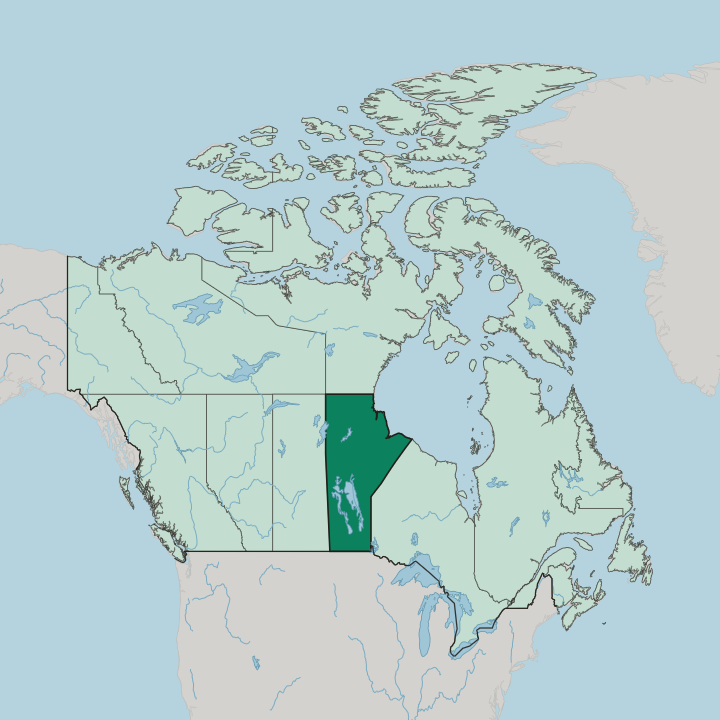
Manitoba is a Prairie province at the longitudinal centre of Canada, spanning prairie, boreal forest and the Hudson Bay coast.
Hotel links are affiliate links: booking through them may earn us a commission, at no extra cost to you. It never affects how places are ranked. How this works


Towns & cities in Manitoba
One town here has its own guide — it links to where to stay.
 Canada
Winnipeg
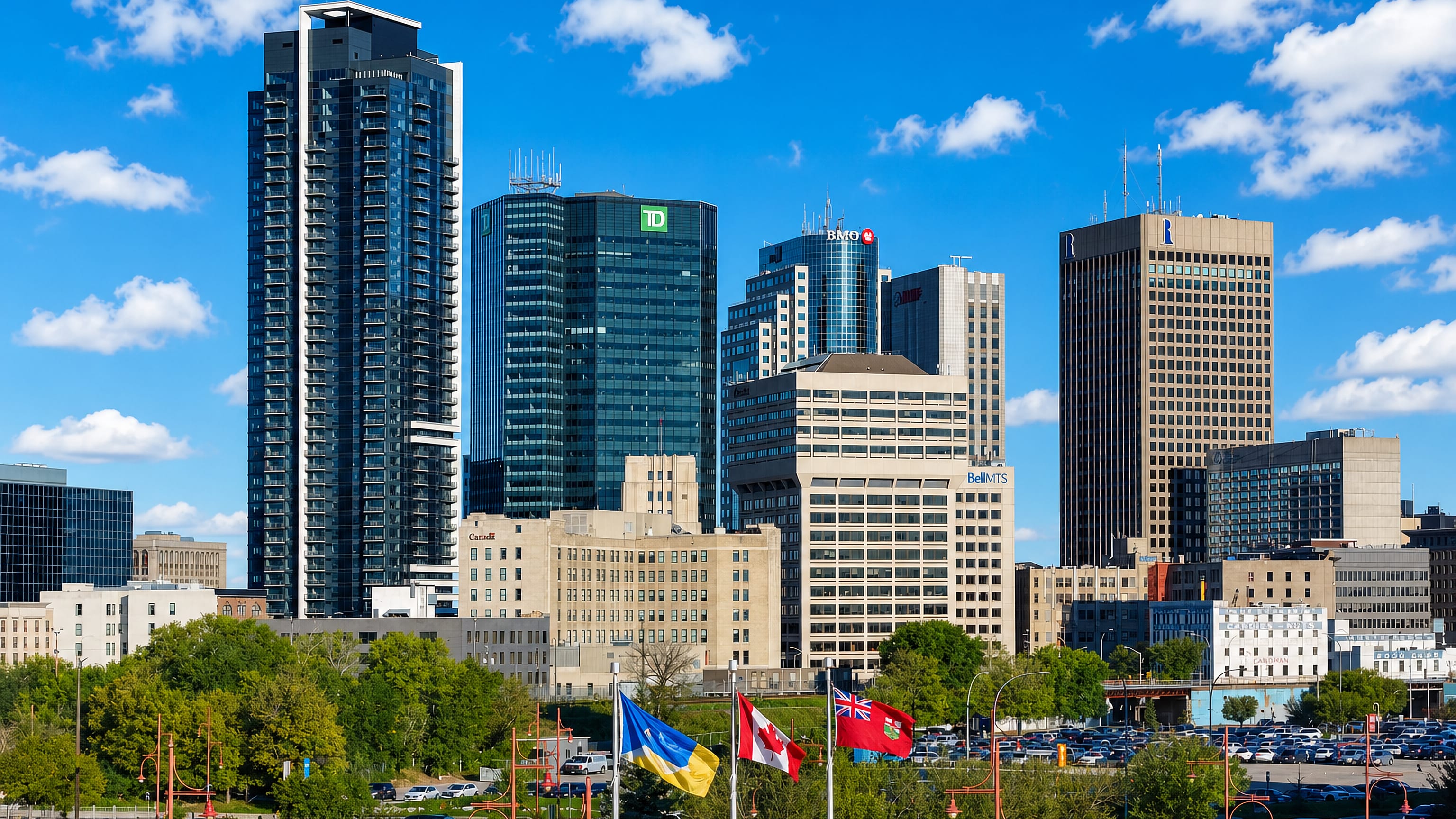
The Red and Assiniboine rivers meet at Winnipeg, the capital of Manitoba, known for the Canadian Museum for Human Rights and its French quarter.Where to stay →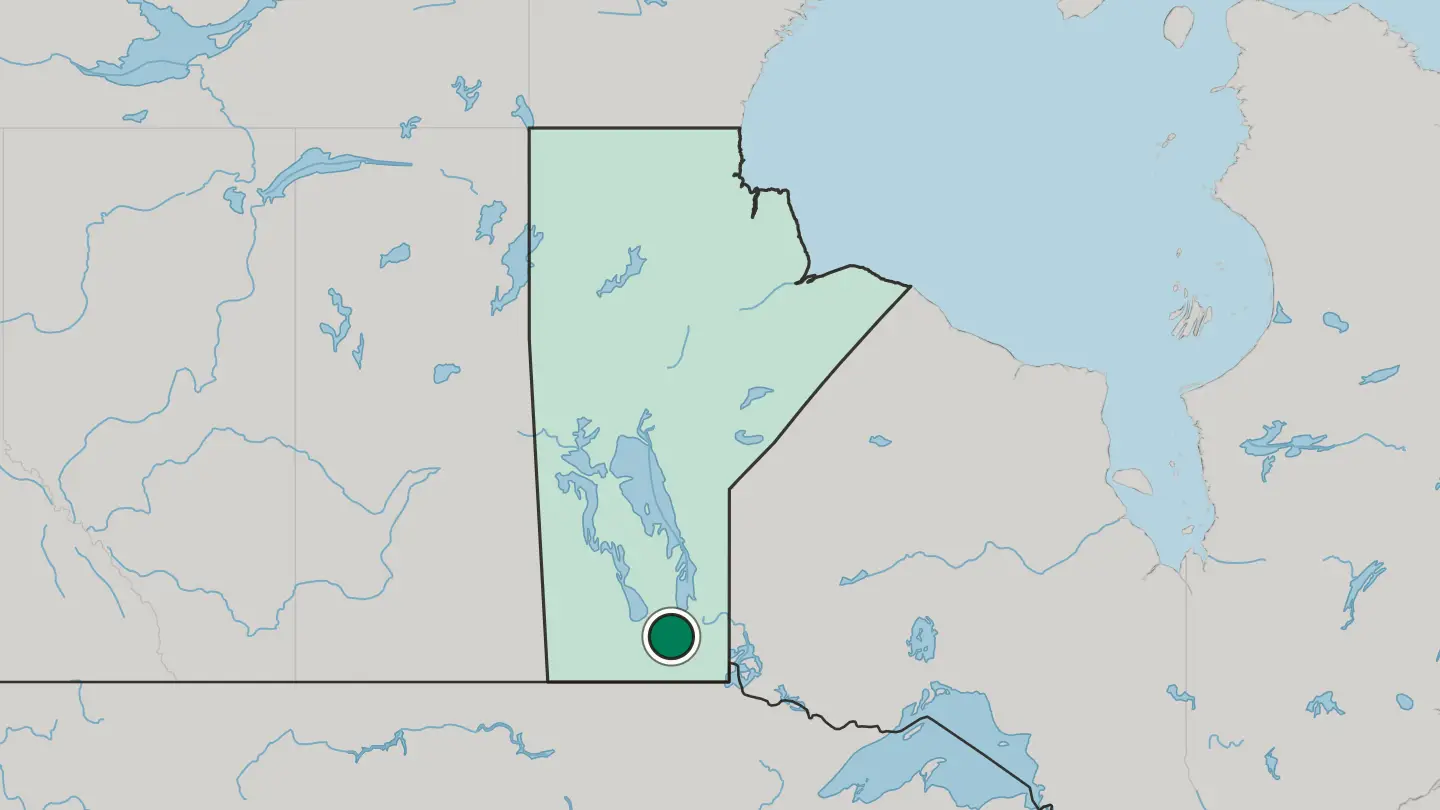
Hotel links are affiliate links: booking through them may earn us a commission, at no extra cost to you. It never affects how places are ranked. How this works
About Manitoba
What is Manitoba known for?
Manitoba is Prairie country, wheat and cattle spread across a flat southern plain that lifts north into boreal forest. Winnipeg anchors it. The capital and largest city sits where the Red River meets the Assiniboine River, the historic forks that gave the province its start.
Far to the north, Churchill draws travellers to the shore of Hudson Bay for its polar bears and beluga whales. Between the two lies Lake Winnipeg, one of the world's largest freshwater lakes.
Where is Manitoba?
Manitoba sits at the longitudinal centre of Canada, one of the three Prairie provinces on the western plains. Saskatchewan borders it on the west and Ontario on the east. To the south run the flat wheatlands that carry straight on across the border into the United States, and to the far north the land opens onto the cold saltwater of Hudson Bay. The province is not one landscape but three stacked from south to north.
The southern third is prairie, level farmland laid down on the bed of a vanished glacial lake, and it is here that most Manitobans live. Above it the boreal forest closes in, dark spruce and countless lakes across the granite of the Canadian Shield. Higher still the trees give out to sub-arctic tundra along the Hudson Bay coast, where Churchill stands almost alone.
Water defines the middle of it all. Lake Winnipeg, one of the largest freshwater lakes on Earth, gathers the Red River from the south and the Winnipeg River from the east, then empties north down the Nelson River to the sea. Winnipeg, the capital, grew at the forks where the Red River meets the Assiniboine River near the province's southern edge.
That junction has ordered Manitoba's geography since long before the railways.
What is Manitoba like?
Manitoba was born bilingual, and that inheritance still marks it. The province came out of the Red River Colony, a settlement of Métis, French and English families at the forks of the Assiniboine River. Louis Riel, the Métis leader who negotiated Manitoba into Canada, wrote French and English protections into its founding.
St. Boniface keeps that thread. The old French town on the east bank of the Red River, now part of Winnipeg, remains the largest francophone community in western Canada, home to a francophone university and to the winter Festival du Voyageur that celebrates the fur-trade past. Indigenous and Métis heritage runs through the whole province, the deepest layer of its story.
Later waves added more. Ukrainian, Mennonite, Icelandic and Filipino settlers all put down roots across the prairie, and their churches, food and festivals still shape small-town Manitoba as much as the cities. Winnipeg carries the cultural weight, with the galleries, orchestras and a national human-rights museum that a provincial capital of its size rarely holds.
Beyond the city the culture is rural and plain-spoken. Grain elevators, hockey rinks and Sunday markets are as much a part of it as anything downtown.
What is the history of Manitoba?
Long before it was a province, this was fur-trade country, its rivers the highways of the Hudson's Bay Company out of Hudson Bay. Fort Garry stood at the forks. When Canada bought the vast Hudson's Bay lands in 1869, the Métis of the Red River Colony rose to defend their rights and formed a provisional government under Louis Riel.
The negotiation that followed produced the Manitoba Act, and in 1870 Manitoba entered Confederation as Canada's fifth province. It joined small, a square around the forks, and grew north and west to its present size over the decades that followed.
What is the climate of Manitoba?
Manitoba runs on a hard continental climate, far from any ocean's moderating reach. Winters bite. On the southern prairie around Winnipeg, January settles well below freezing and the wind crossing the open fields makes it feel colder still, while July can turn hot and humid over the same ground.
The swing between the seasons is the whole point of the place. North toward Churchill and the Hudson Bay coast the cold deepens and the summers shorten into a brief cool window when the bay's ice finally breaks. Clear skies and the northern lights come with the long winters.
How do you get to Manitoba?
Most visitors fly into Winnipeg, whose airport is the province's only international gateway and a transfer hub for central Canada. From there the roads run out across the prairie. Highways connect Winnipeg west to Brandon and on into Saskatchewan, and east into Ontario through the forest and lake country.
The far north is the exception. No road reaches Churchill on Hudson Bay, so travellers arrive by bush plane or aboard the Winnipeg-Churchill train, a two-night run north across the boreal forest and tundra.
Common questions
What is the best area to stay in Manitoba?
Winnipeg: landing point for a first visit to Manitoba. Brandon: the western prairie. Churchill: Hudson Bay wildlife. Riding Mountain National Park: prairie parkland and lakes.
Good for
More regions in Canada
Updated September 2026