Canada
Ontario, Canada — Towns & Travel Guide
Ontario is Canada's second-largest province, set in Central Canada, holding the national capital at Ottawa and the country's largest city, Toronto.
Hotel links are affiliate links: booking through them may earn us a commission, at no extra cost to you. It never affects how places are ranked. How this works


Towns & cities in Ontario
Pick a town or city — each links to where to stay.
 Canada
Toronto
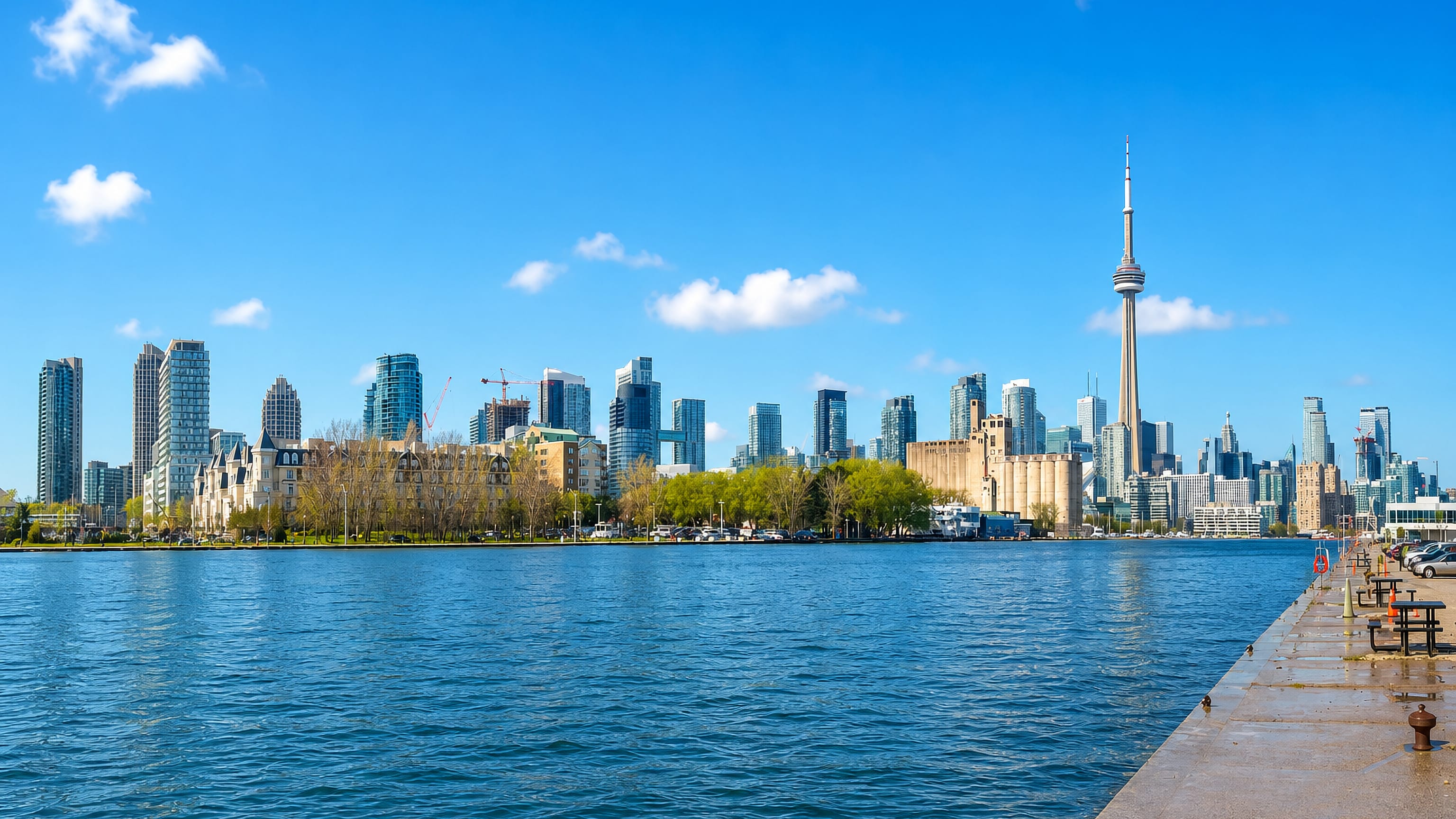
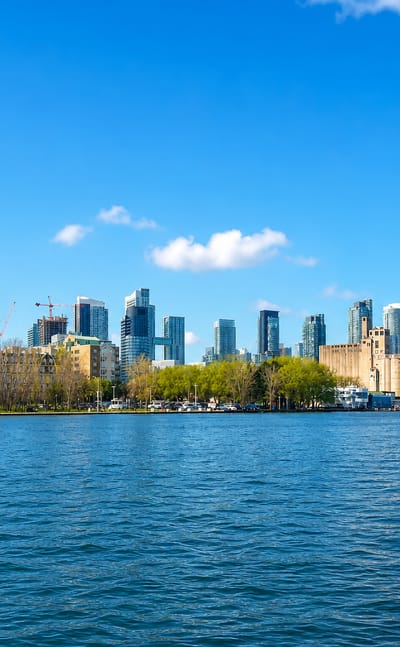
Toronto stands on its harbour at the shore of Lake Ontario, the largest city in Canada and the capital of Ontario, known for the CN Tower.Where to stay →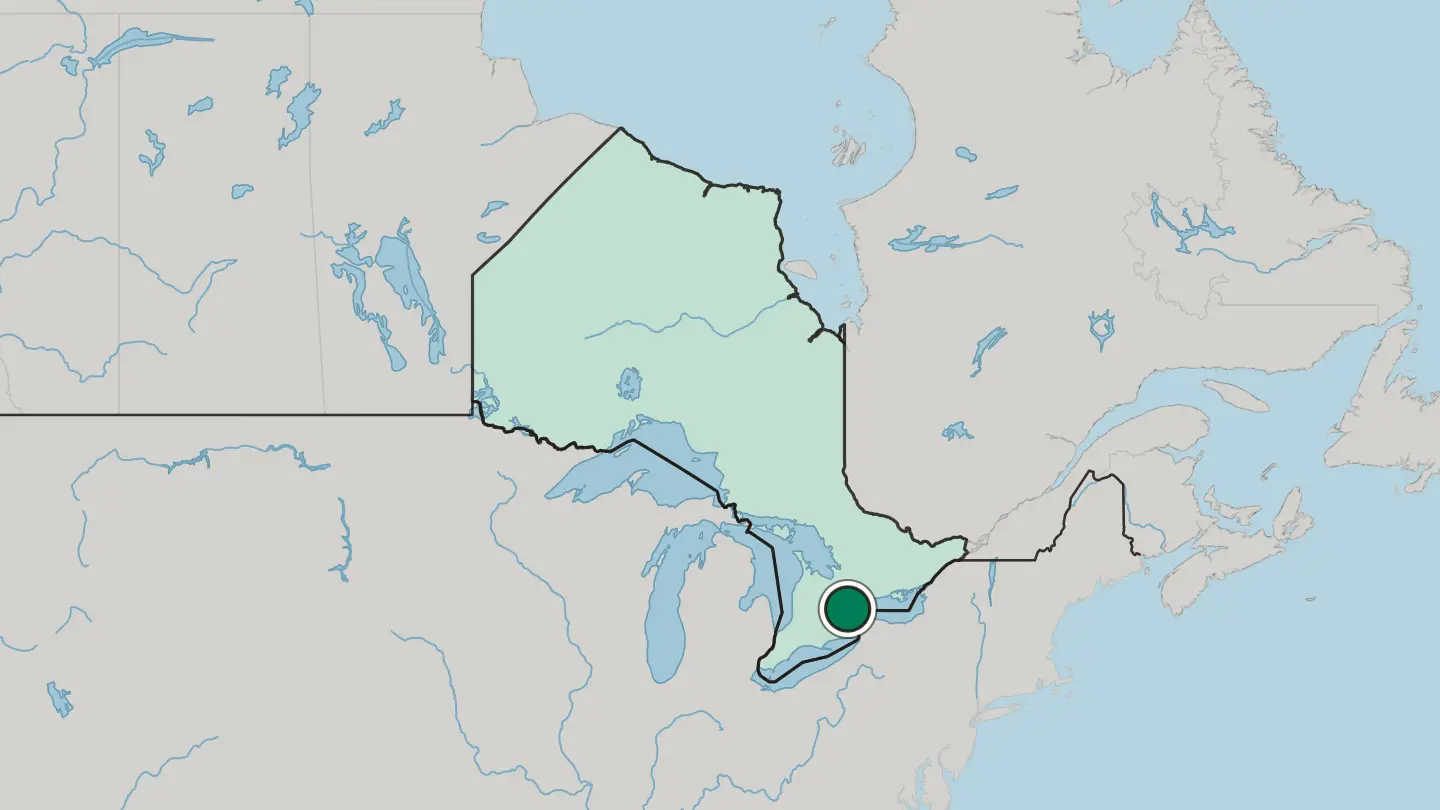
 Canada
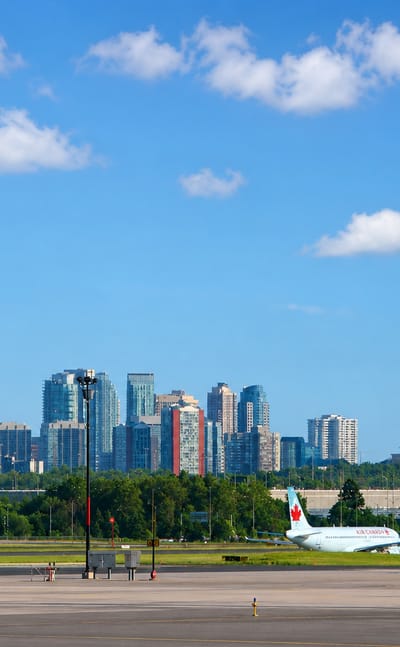
Ottawa
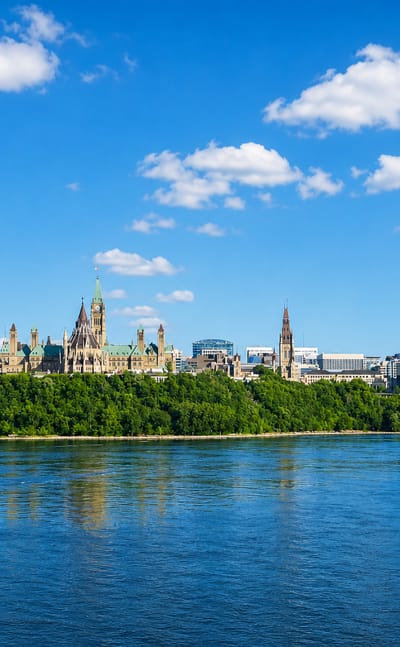
Ottawa is Canada's capital, at the confluence of the Ottawa River and the Rideau River in southeastern Ontario, known for Parliament Hill.Where to stay →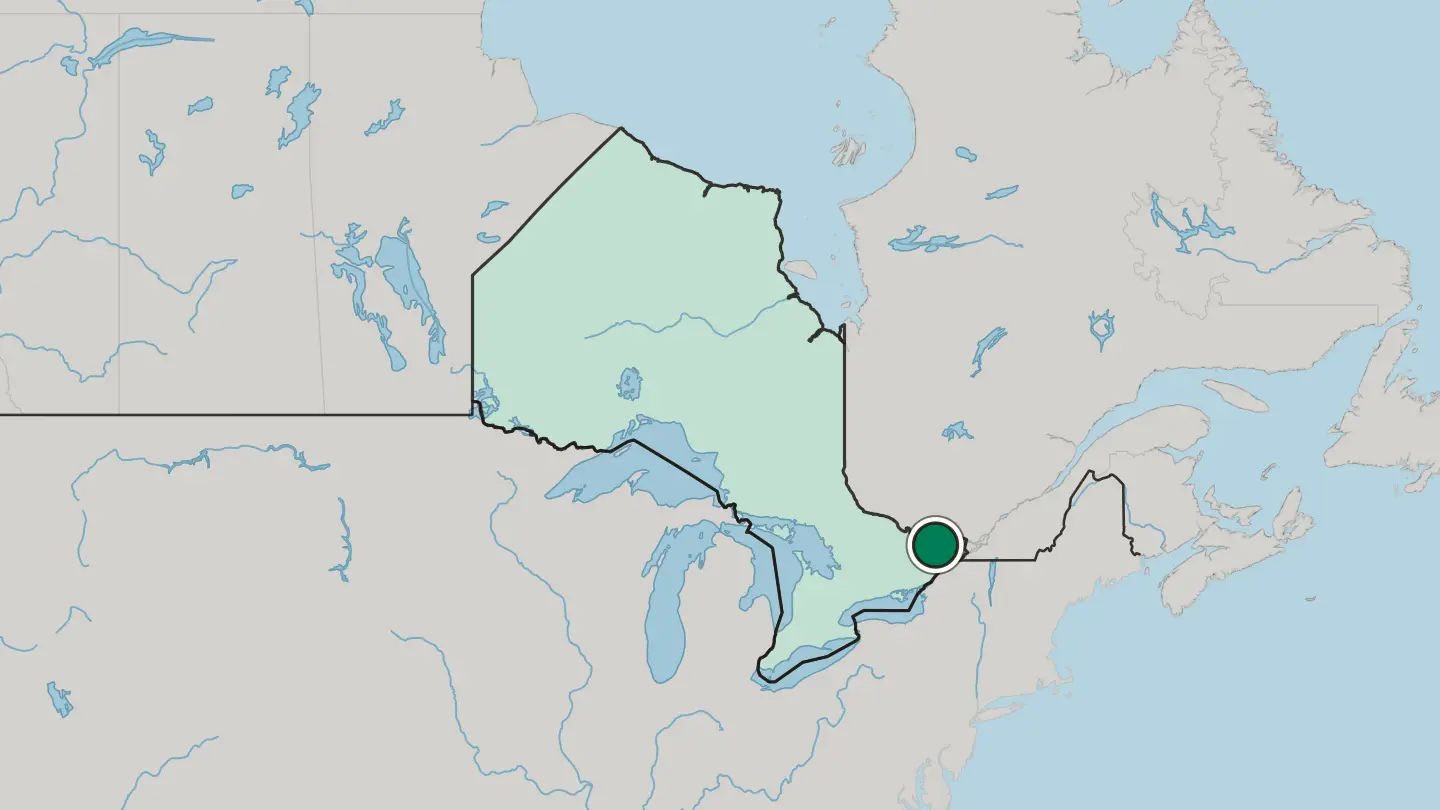
 Canada
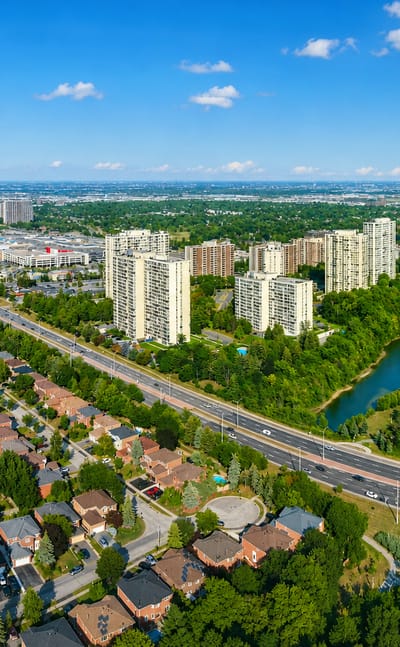
Mississauga
Lake Ontario edges the southern rim of Mississauga, Toronto's largest suburb, in the Regional Municipality of Peel in southwestern Ontario.Where to stay →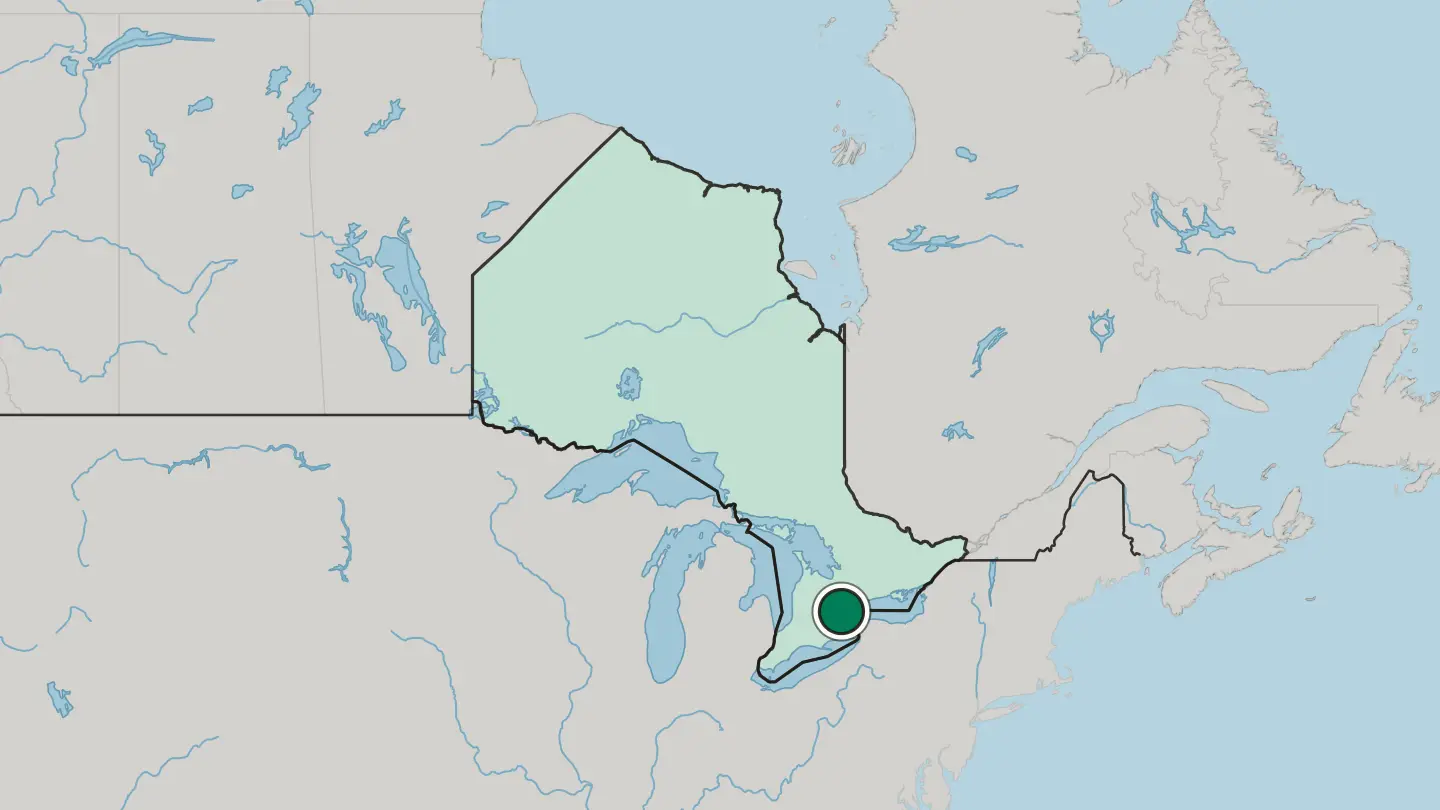
 Canada
Brampton
Brampton spreads across the plain west of Toronto, a city in Ontario's Peel Region, known for Bovaird House and the Peel Art Gallery, Museum and Archives.Where to stay →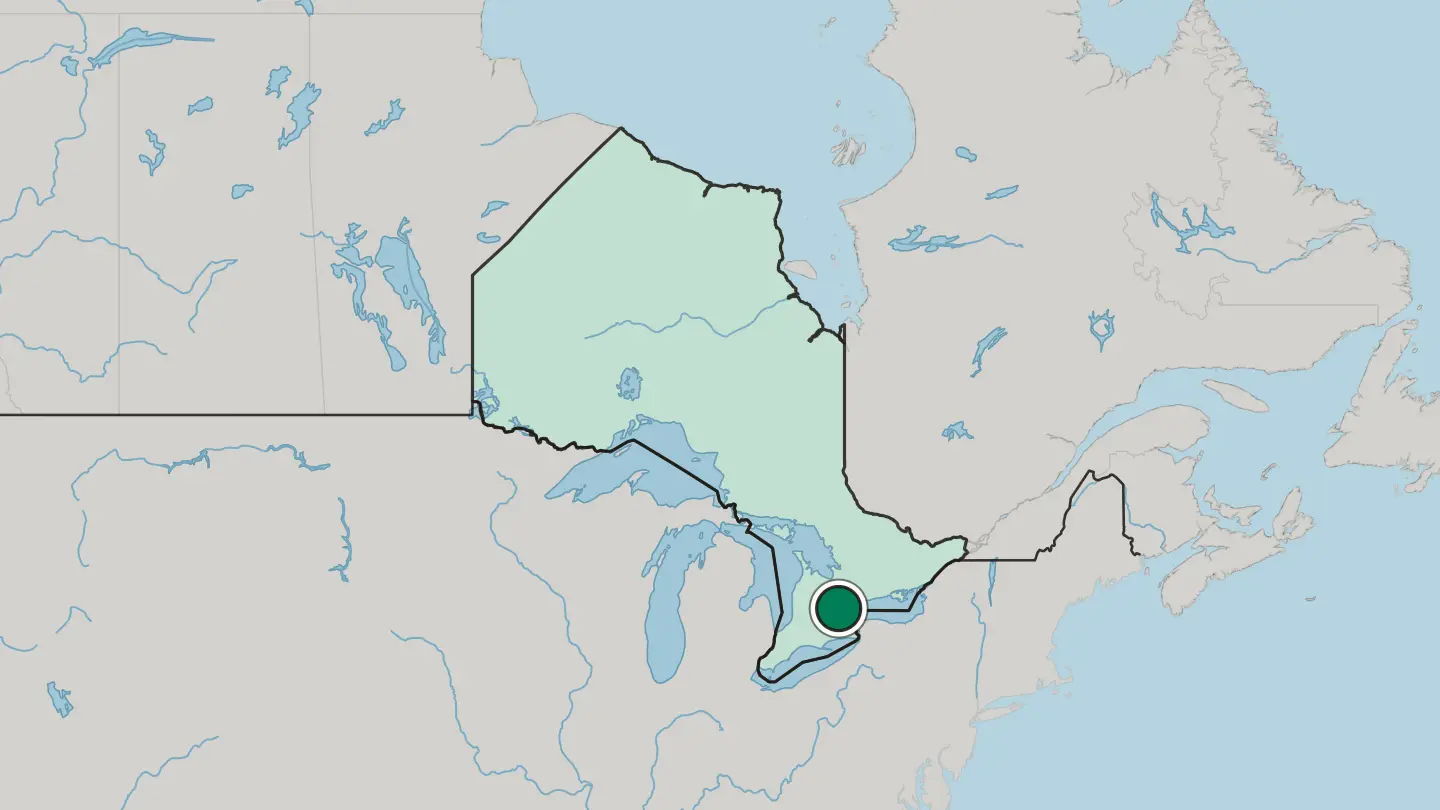
 Canada
Hamilton
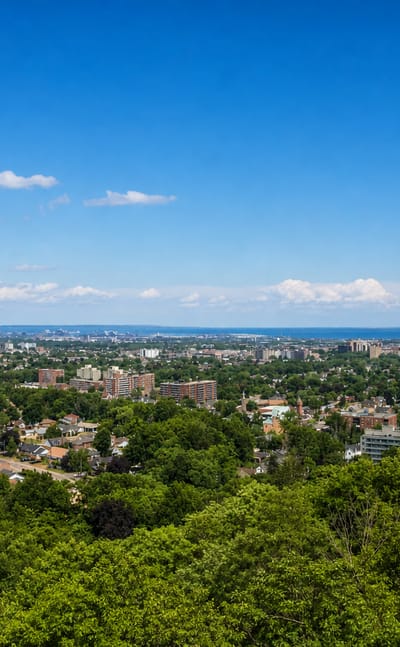
Stone towers rise at Dundurn Castle in Hamilton, a city in Ontario known for its heritage houses, the warship HMCS Haida, and the Art Gallery of Hamilton.Where to stay →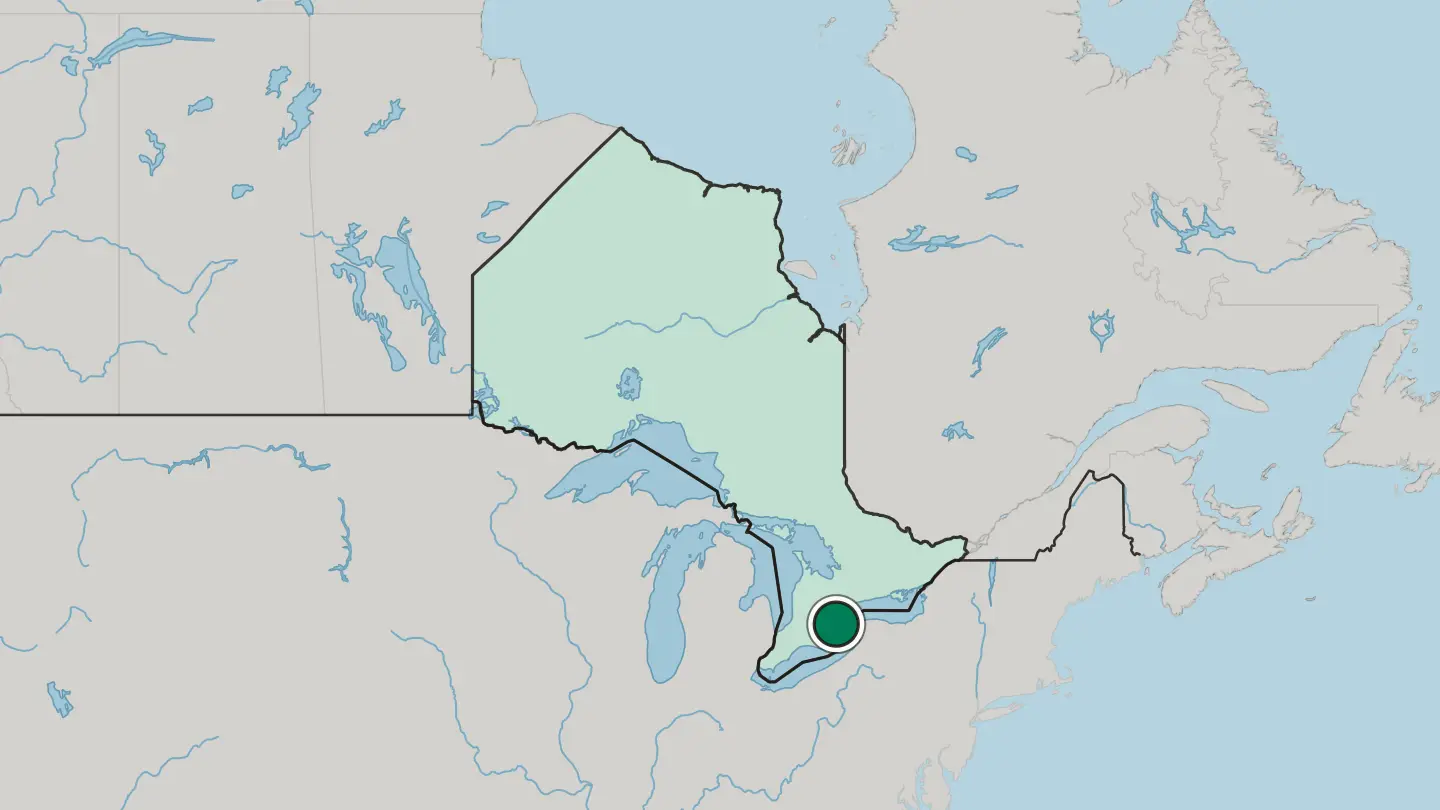
 Canada
London
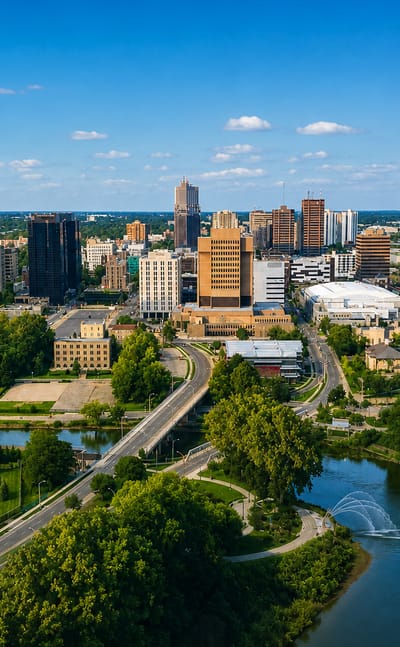
London is a city in Ontario, known for Banting House, Museum London, and the heritage streets of its old core.Where to stay →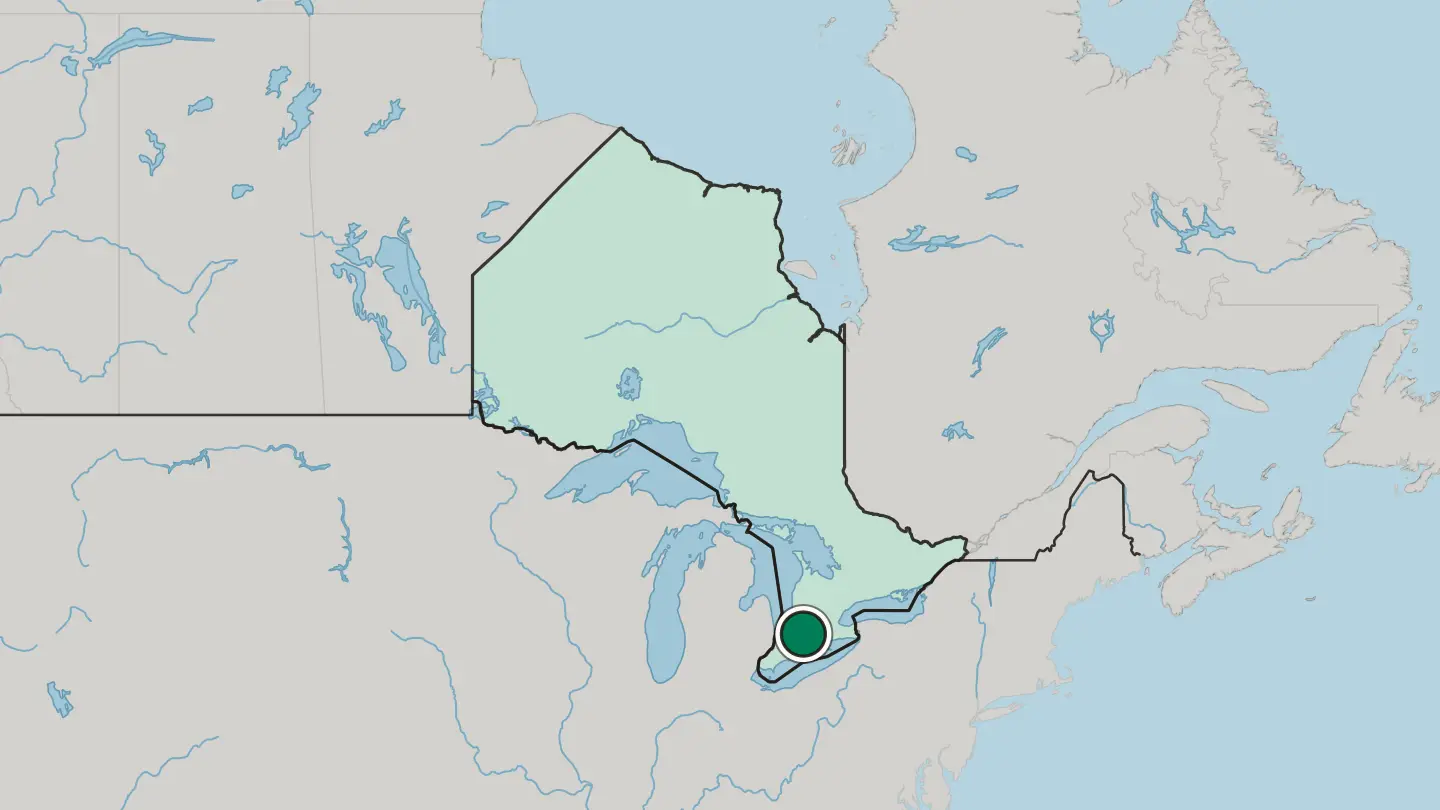
 Canada
Markham
Markham is a York Region city northeast of Downtown Toronto, the largest in that region, and it takes in the heritage village of Unionville.Where to stay →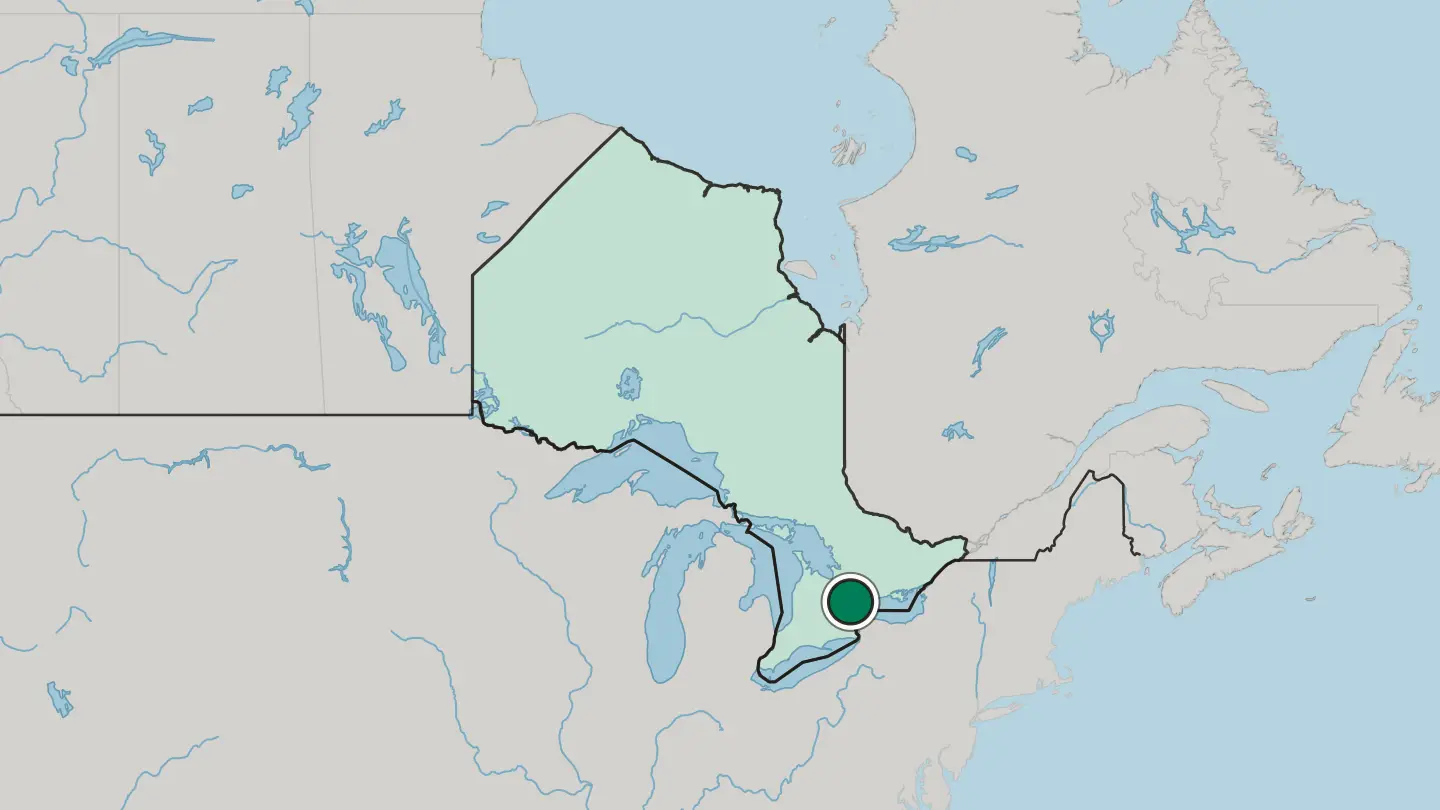
 Canada
Vaughan
Vaughan spreads across York Region north of Toronto, a suburban and rural city known for Canada's Wonderland and the McMichael Canadian Art Collection.Where to stay →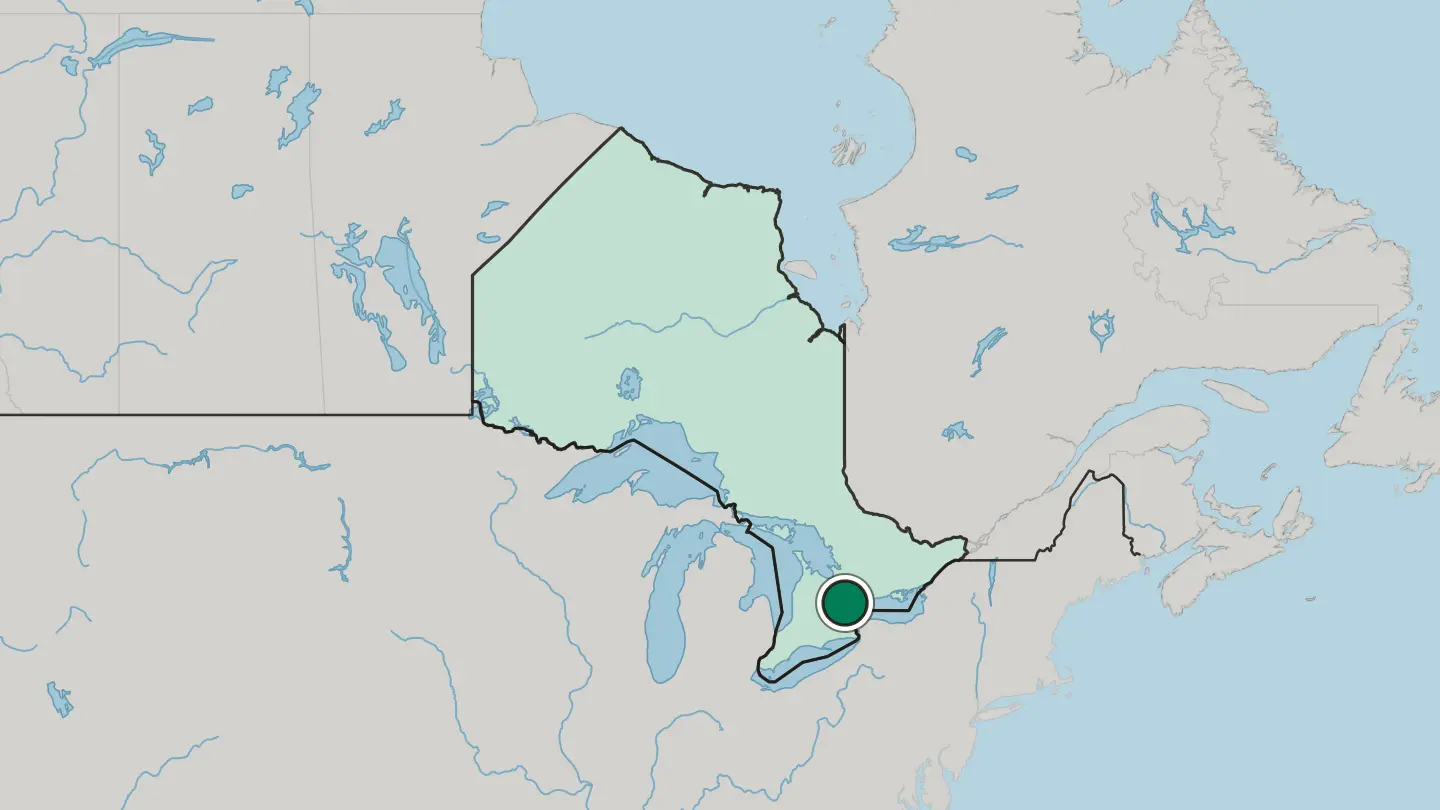
All towns & cities (37)
 Canada
Kitchener
Kitchener is a city of southern Ontario in Canada, an old German settlement once called Berlin, a market and factory town at the heart of a tech region.Where to stay →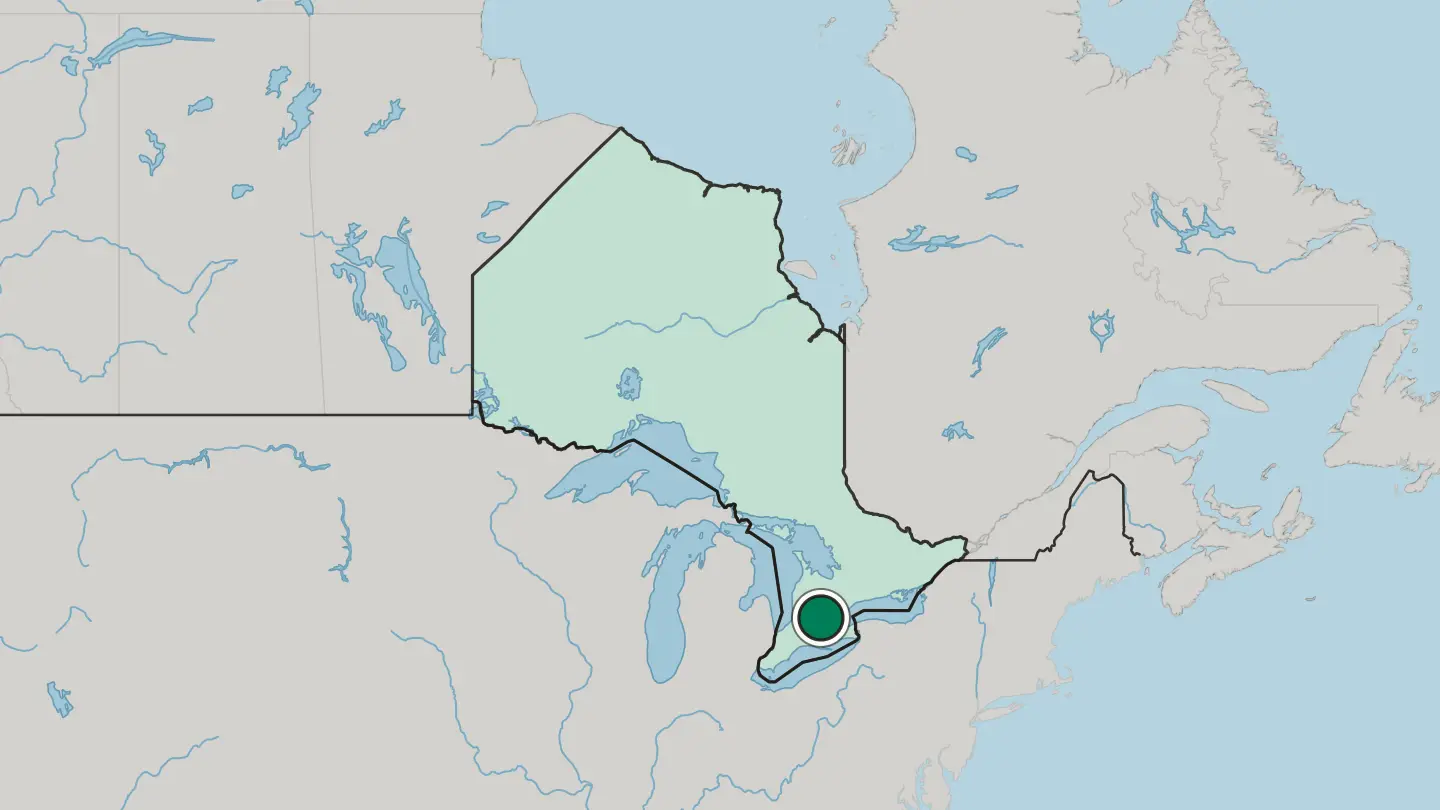
 Canada
Windsor
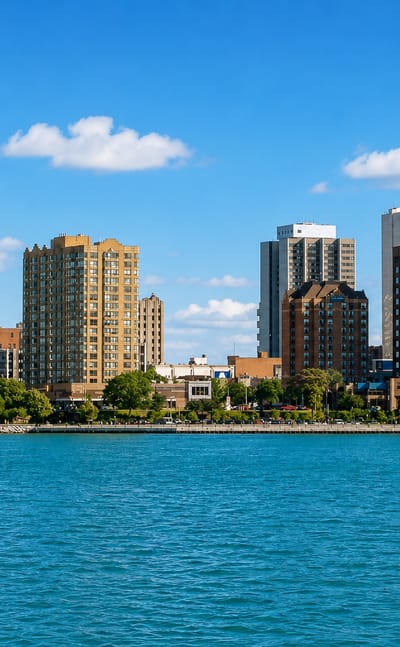
Brick manors and old parish churches mark Windsor, a city in Ontario, Canada, known for Willistead Manor and the Church of Our Lady of the Assumption.Where to stay →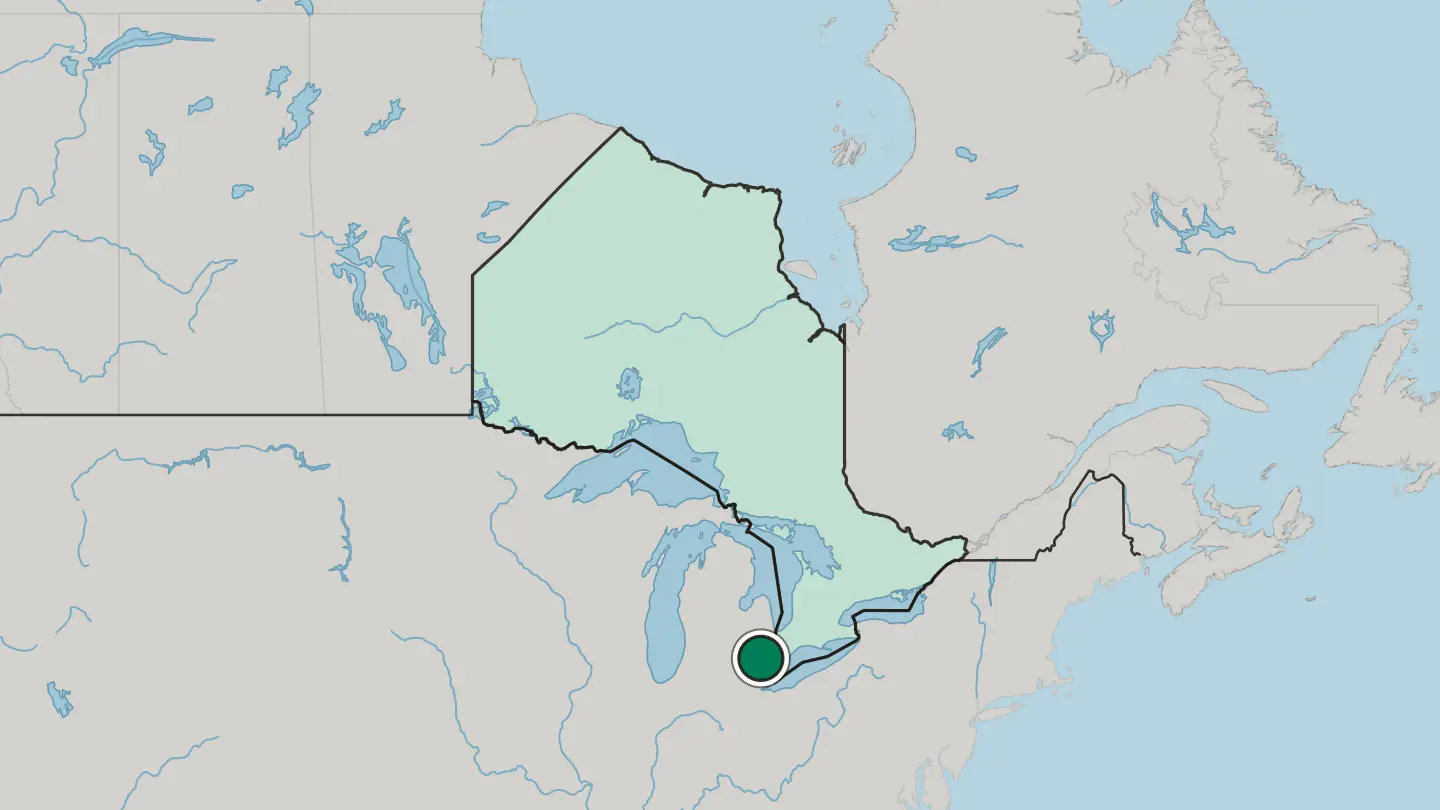
 Canada
Oakville
Oakville sits on the north shore of Lake Ontario west of Toronto, seat of Halton Region and a heritage town of listed streets since 1827.Where to stay →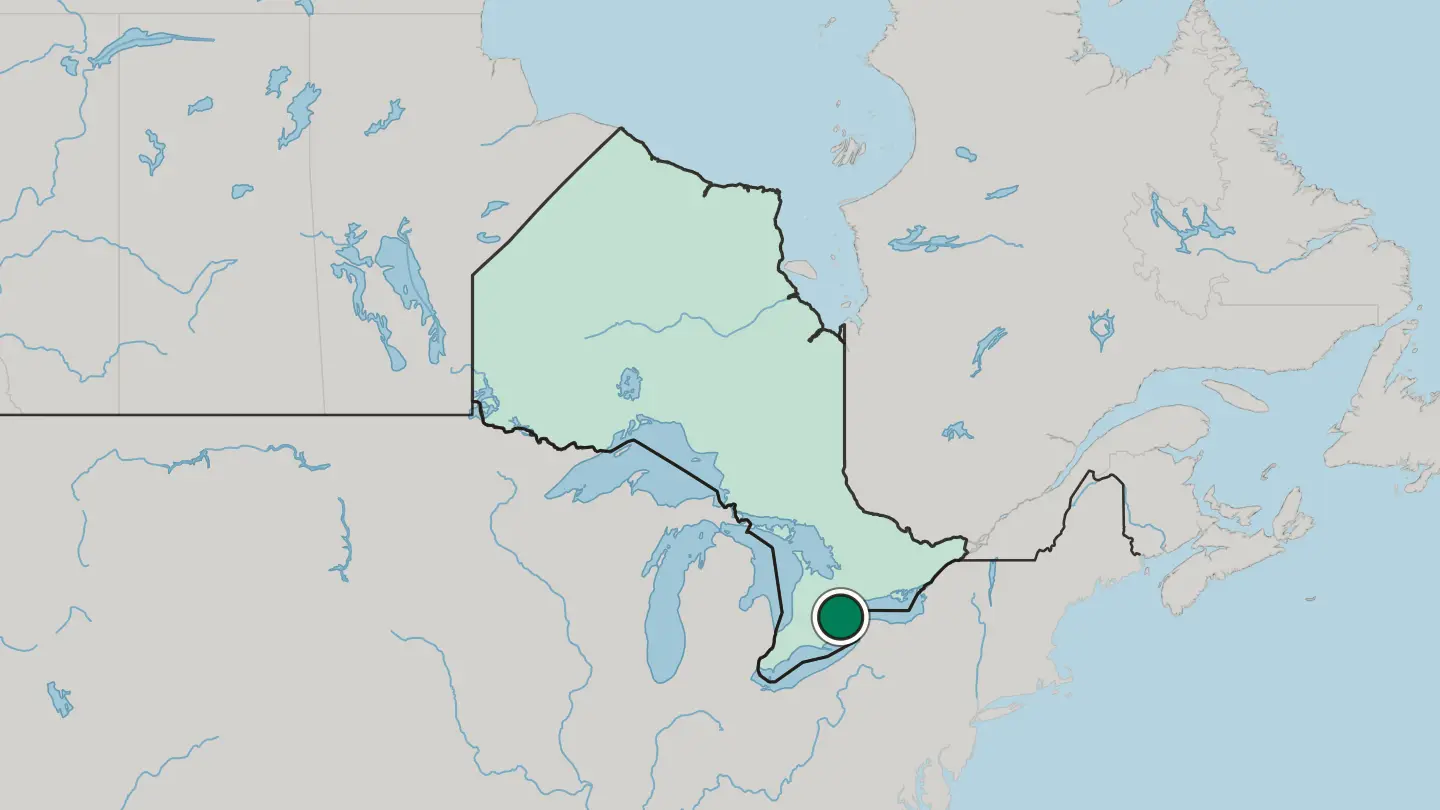
 Canada
Richmond Hill
Richmond Hill is a city between Markham and Vaughan in York Region, north of Toronto, with a long register of kept heritage houses.Where to stay →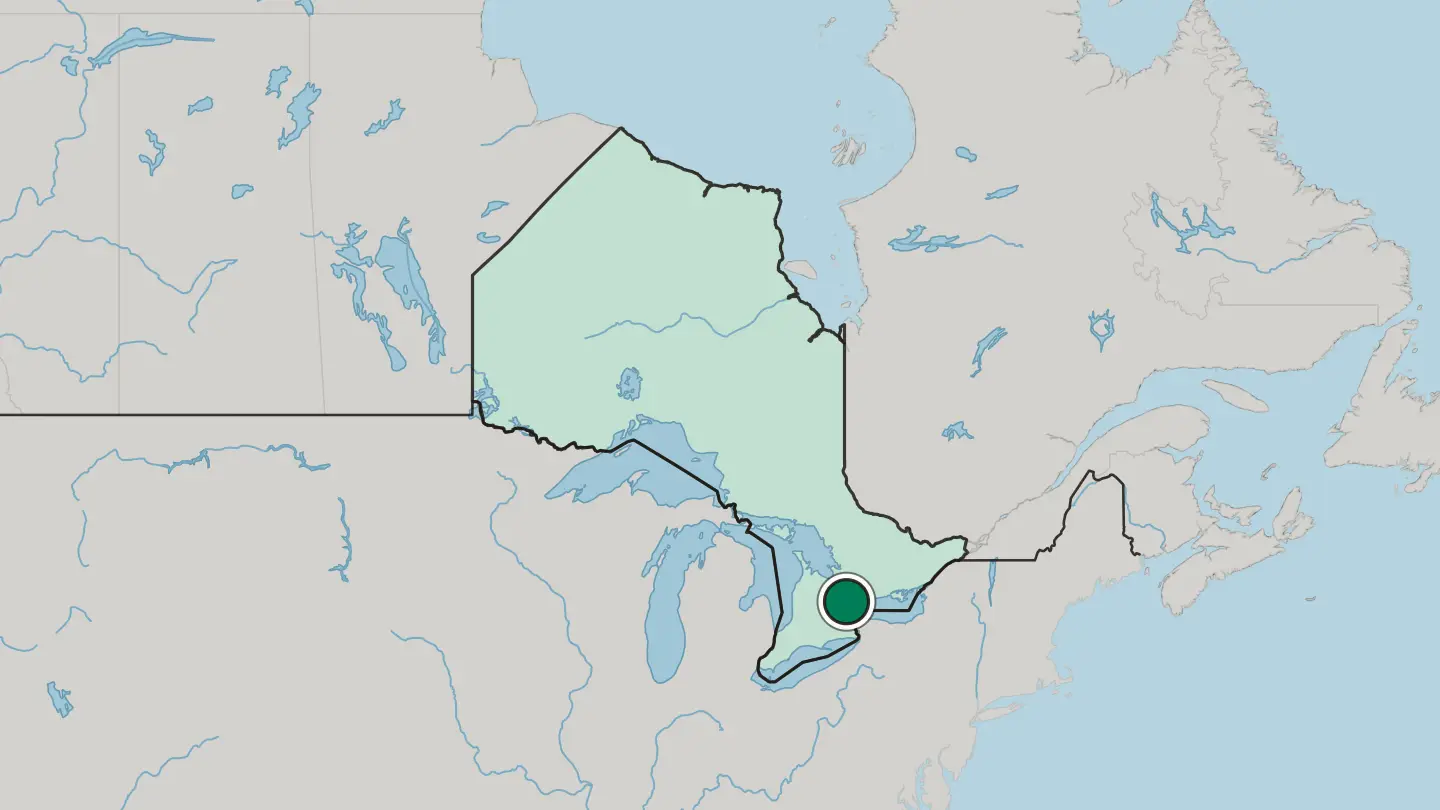
 Canada
Burlington
Burlington lies across Burlington Bay from Hamilton, at the west end of Lake Ontario in Halton Region. Oakville and Milton adjoin it.Where to stay →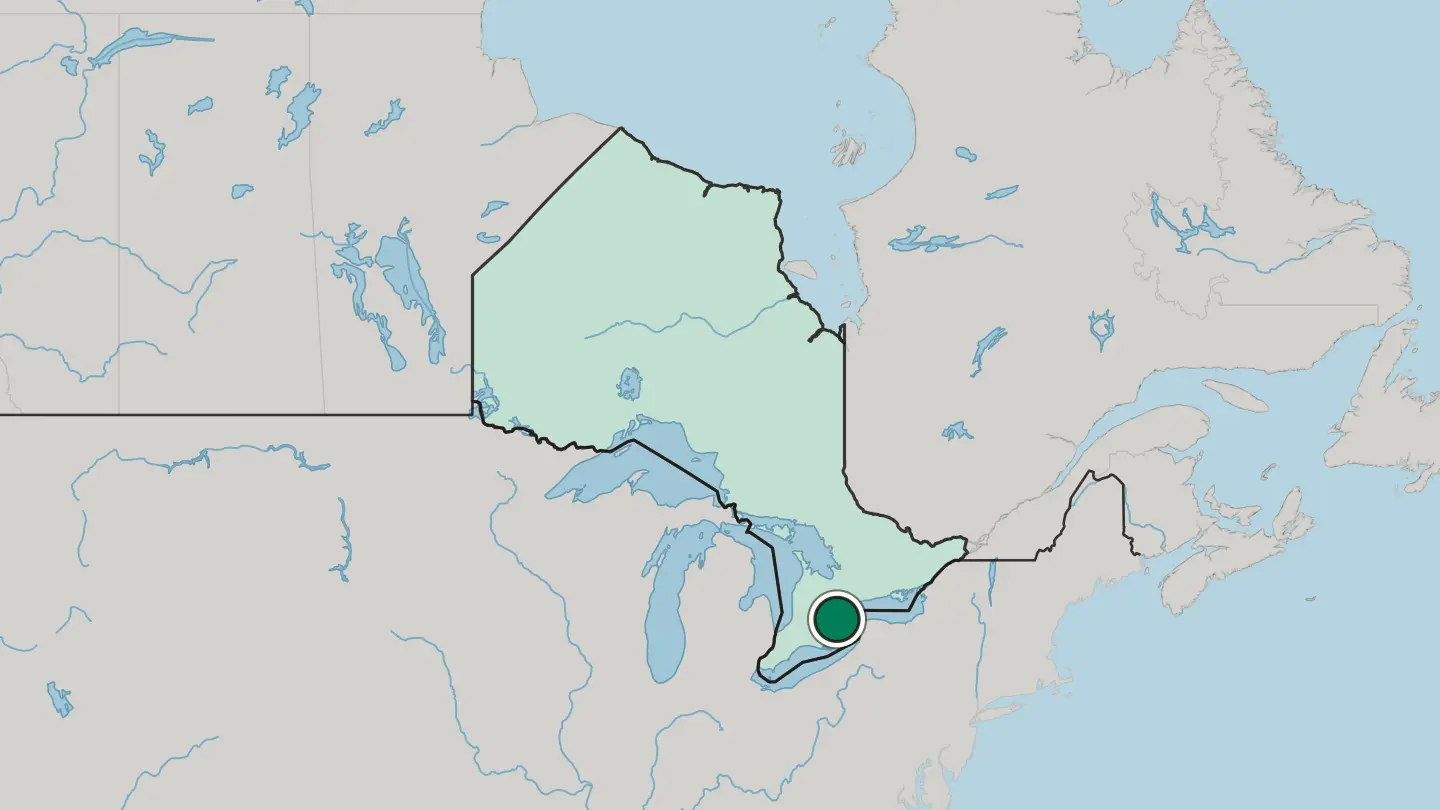
 Canada
Oshawa
Oshawa is an automotive city on the Lake Ontario shoreline east of Toronto, largest municipality of the Regional Municipality of Durham.Where to stay →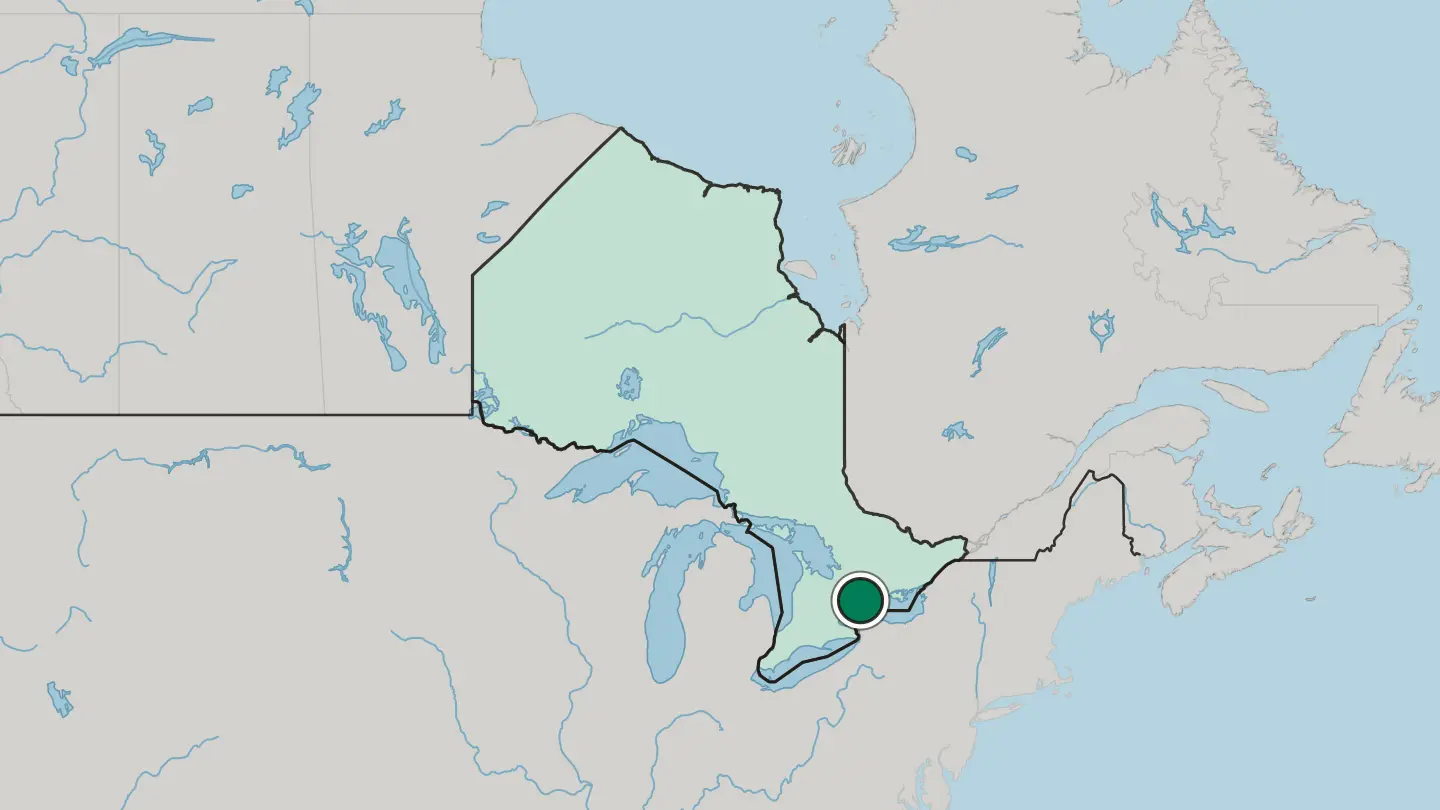
 Canada
Greater Sudbury
Greater Sudbury is Northern Ontario's largest city, a single-tier municipality covering more ground than any other city in Ontario.Where to stay →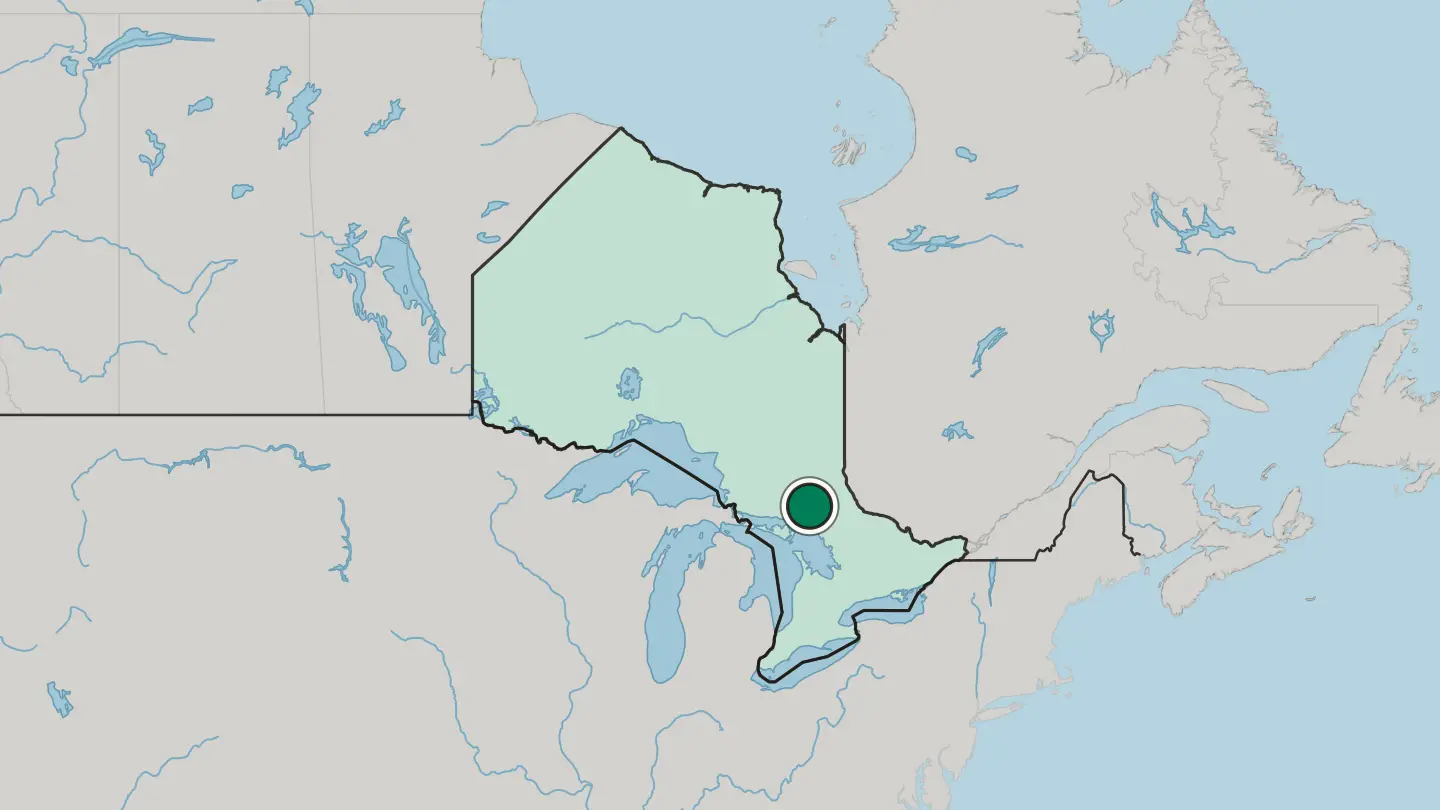
 Canada
Barrie
Barrie stands at the end of Kempenfelt Bay on Lake Simcoe, about 90 kilometres north of Toronto. Simcoe County surrounds it.Where to stay →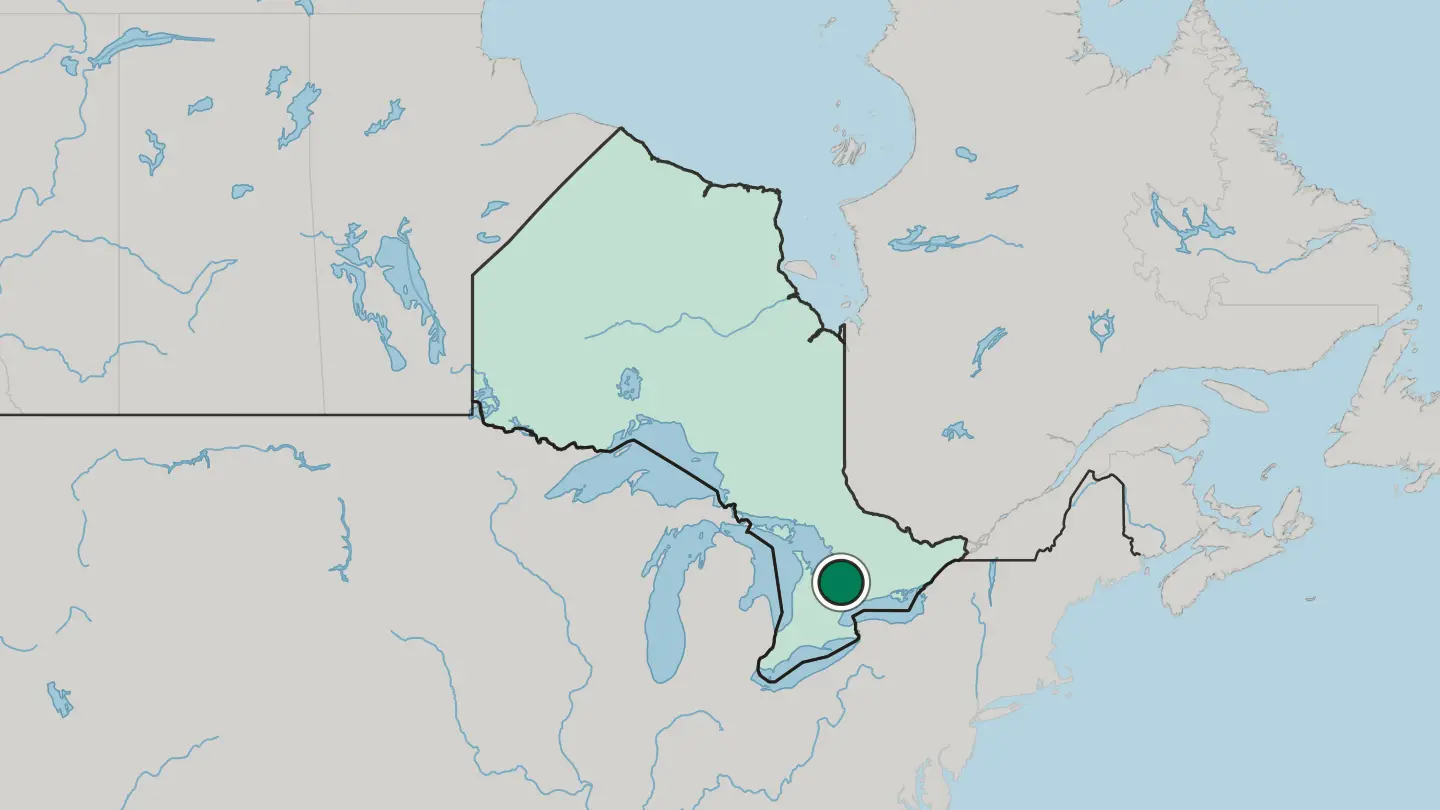
 Canada
Guelph
Guelph is an Ontario city on the Speed River, nicknamed The Royal City, seat of Wellington County and known for its limestone architecture.Where to stay →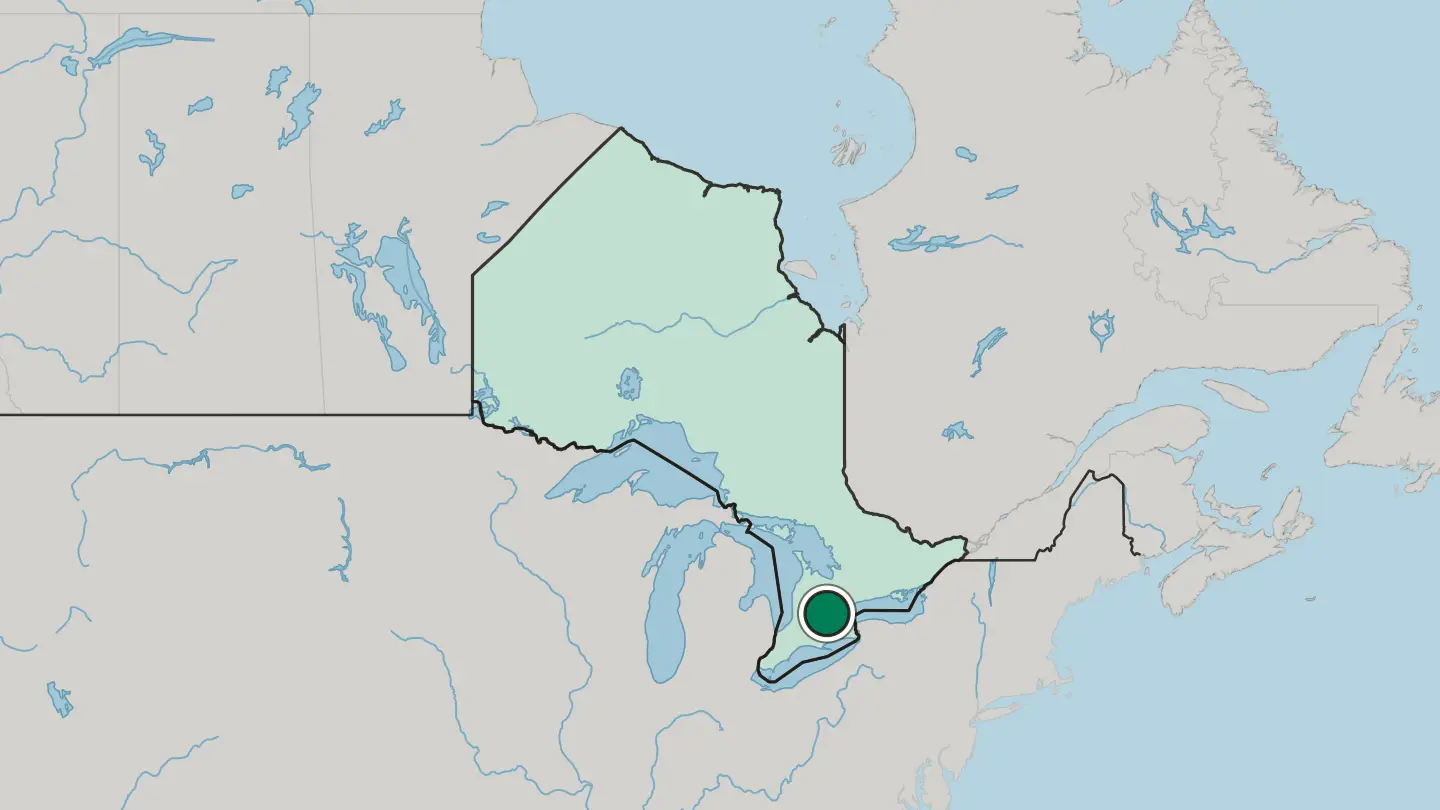
 Canada
Whitby
Whitby is a town in Durham Region, Ontario, on the north shore of Lake Ontario between Ajax and Oshawa, east of Toronto.Where to stay →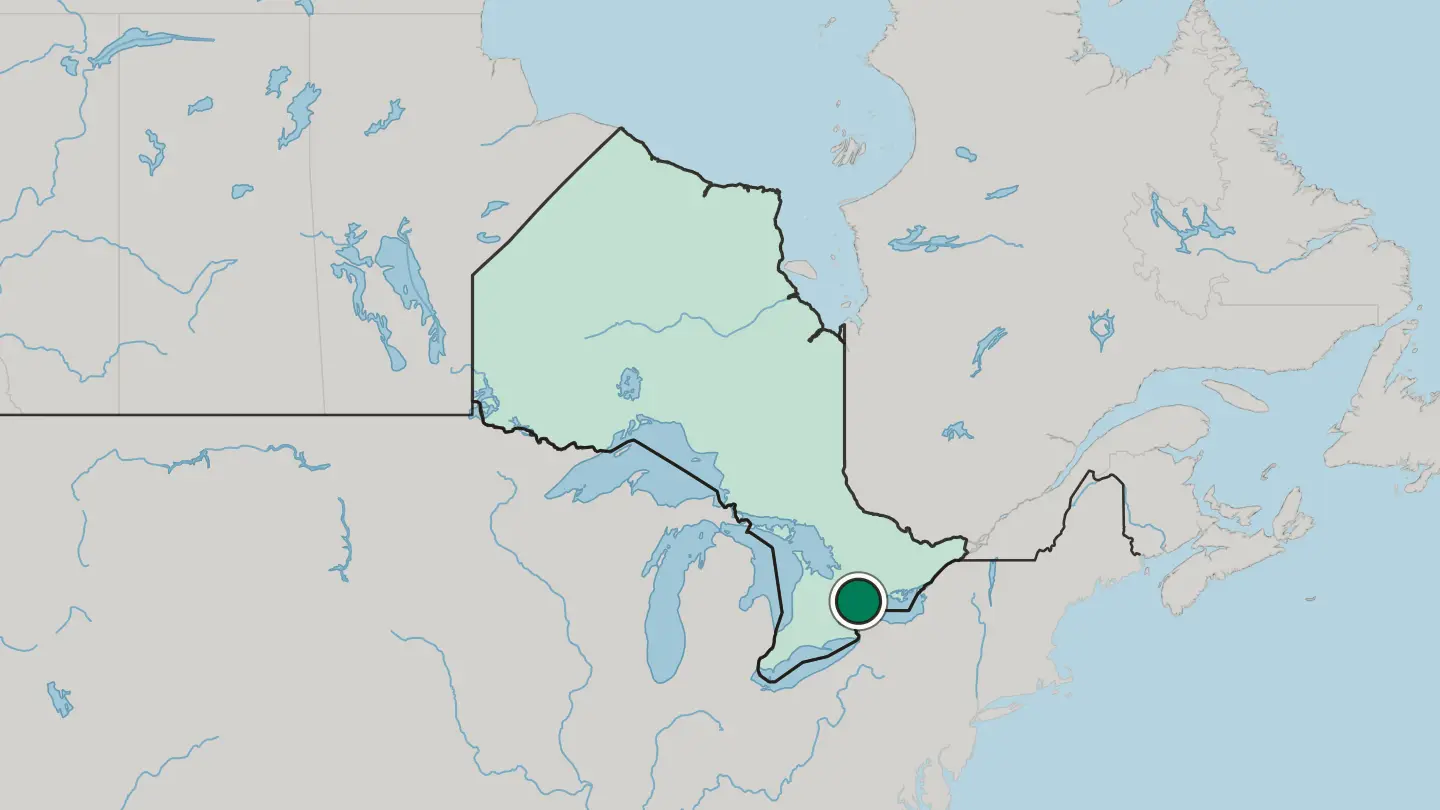
 Canada
St. Catharines
St. Catharines holds the northern entrance of the Welland Canal in the Niagara Peninsula, a park-laced Ontario city that answers to The Garden City.Where to stay →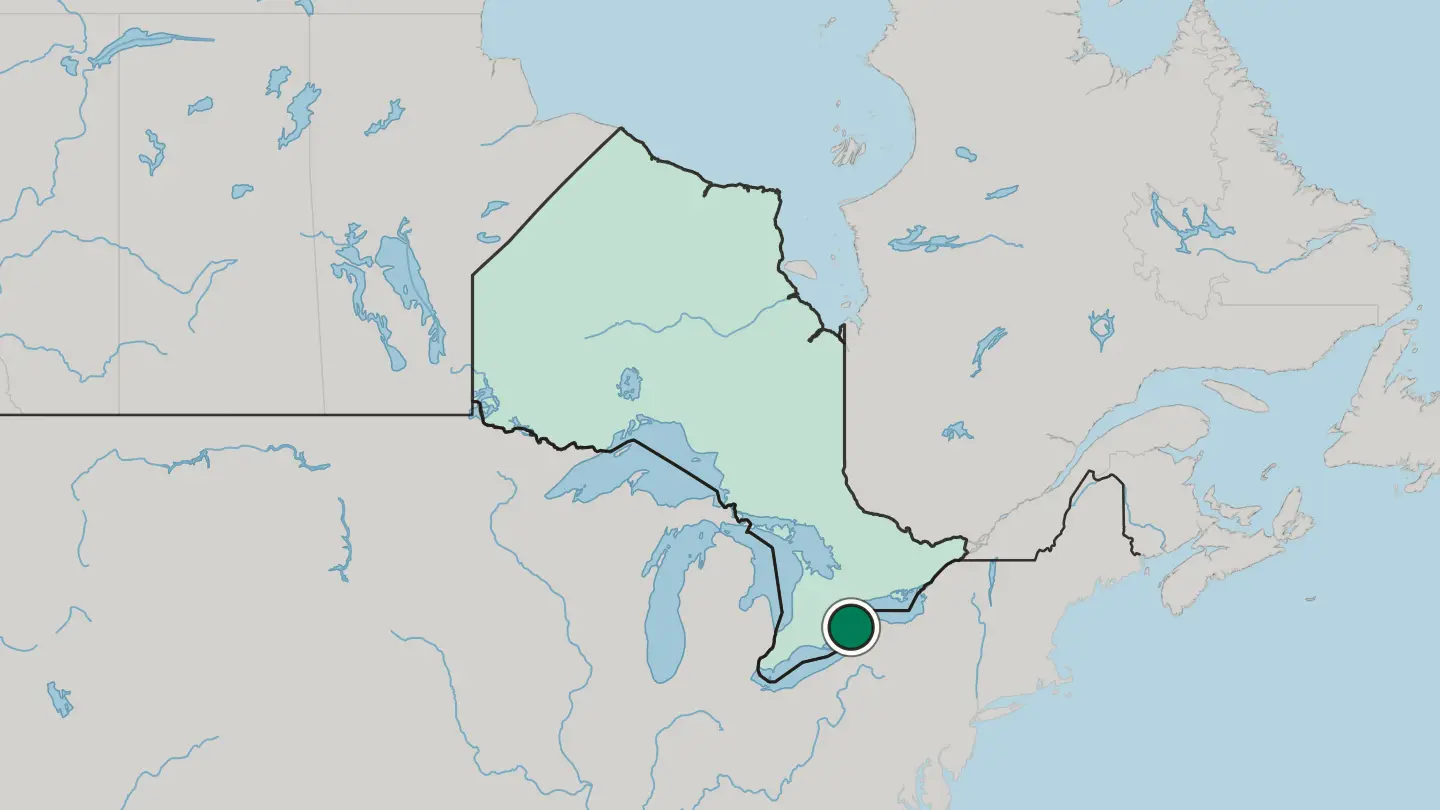
 Canada
Milton
Milton is a town in Halton west of Toronto, a rural centre turned suburban, with a downtown of independent shops and restaurants.Where to stay →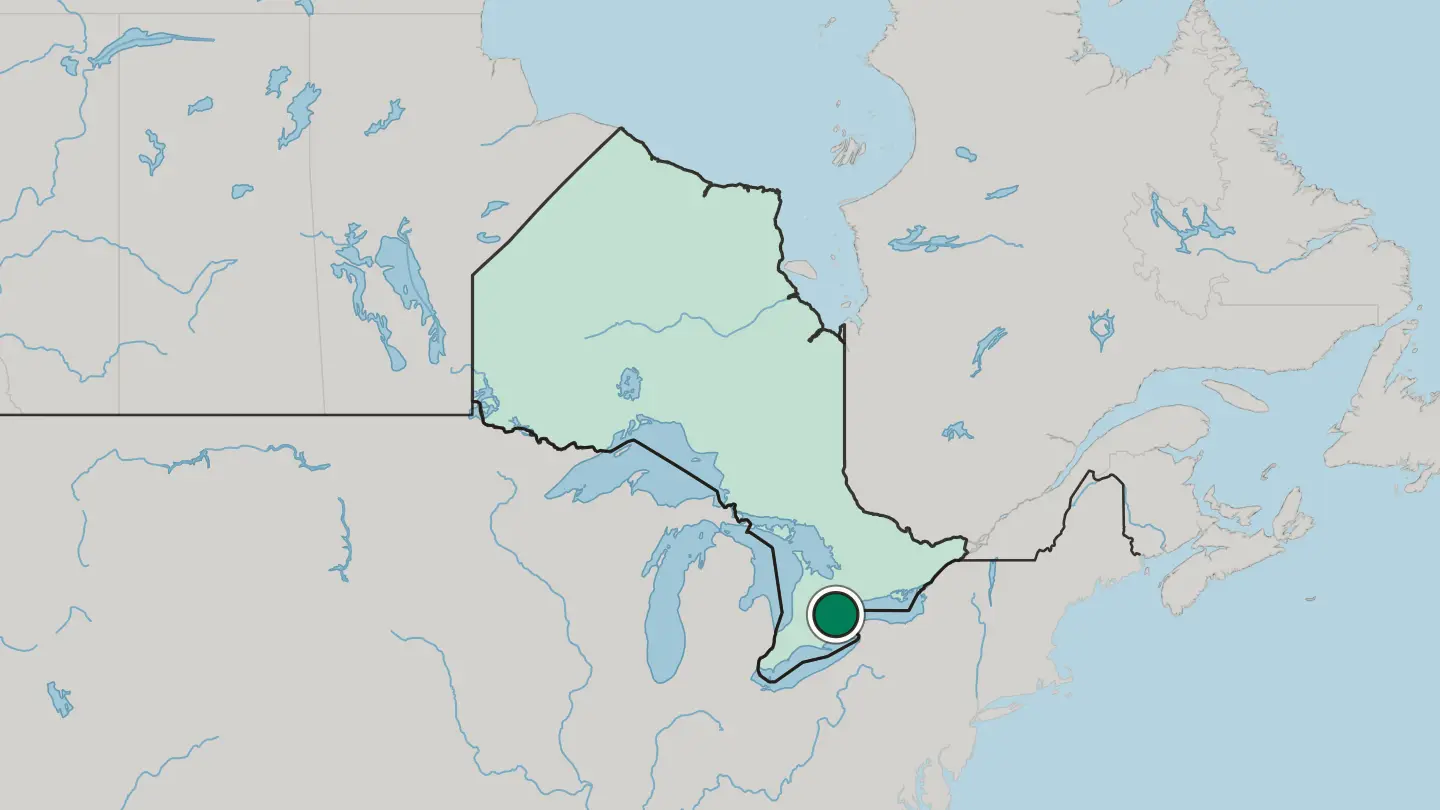
 Canada
Kingston
Kingston is a historic city in eastern Ontario, Canada, built in grey limestone where the Saint Lawrence River flows out of Lake Ontario.Where to stay →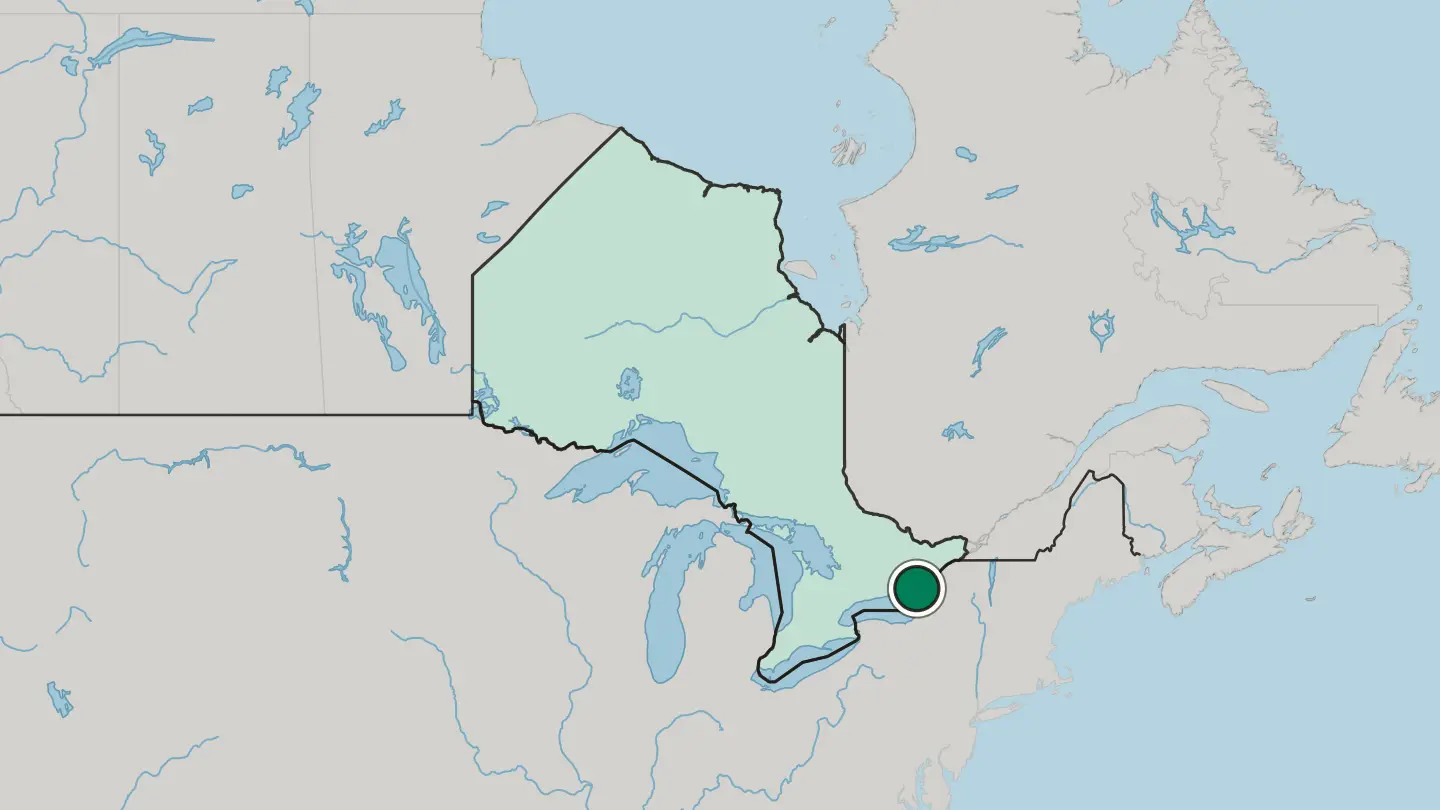
 Canada
Cambridge
Cambridge is an Ontario city at the confluence of the Grand and Speed rivers, one of three core cities of the Region of Waterloo.Where to stay →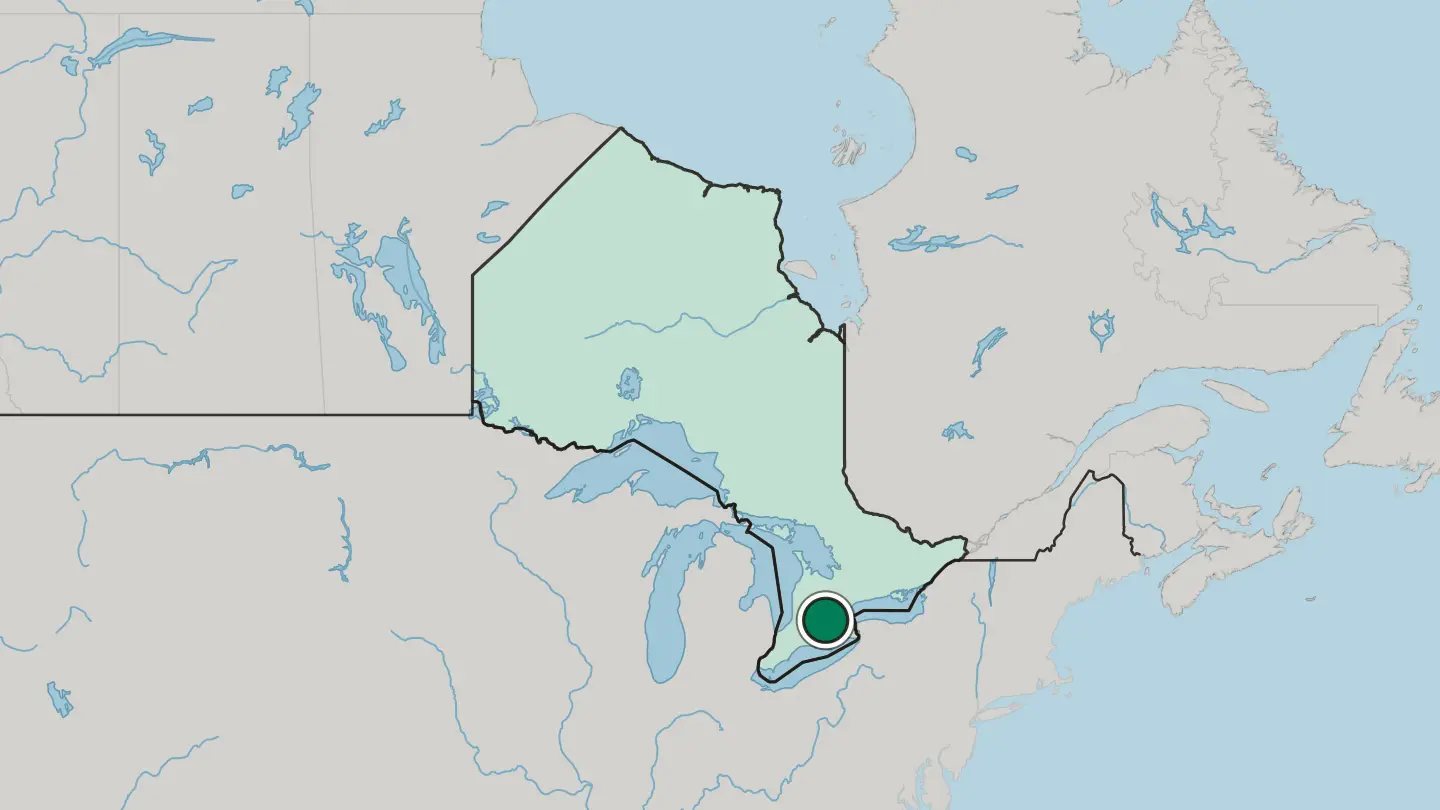
 Canada
Ajax
Ajax is a waterfront town in Durham Region, midway between Toronto and Oshawa in the Greater Toronto Area. Munitions built the place.Where to stay →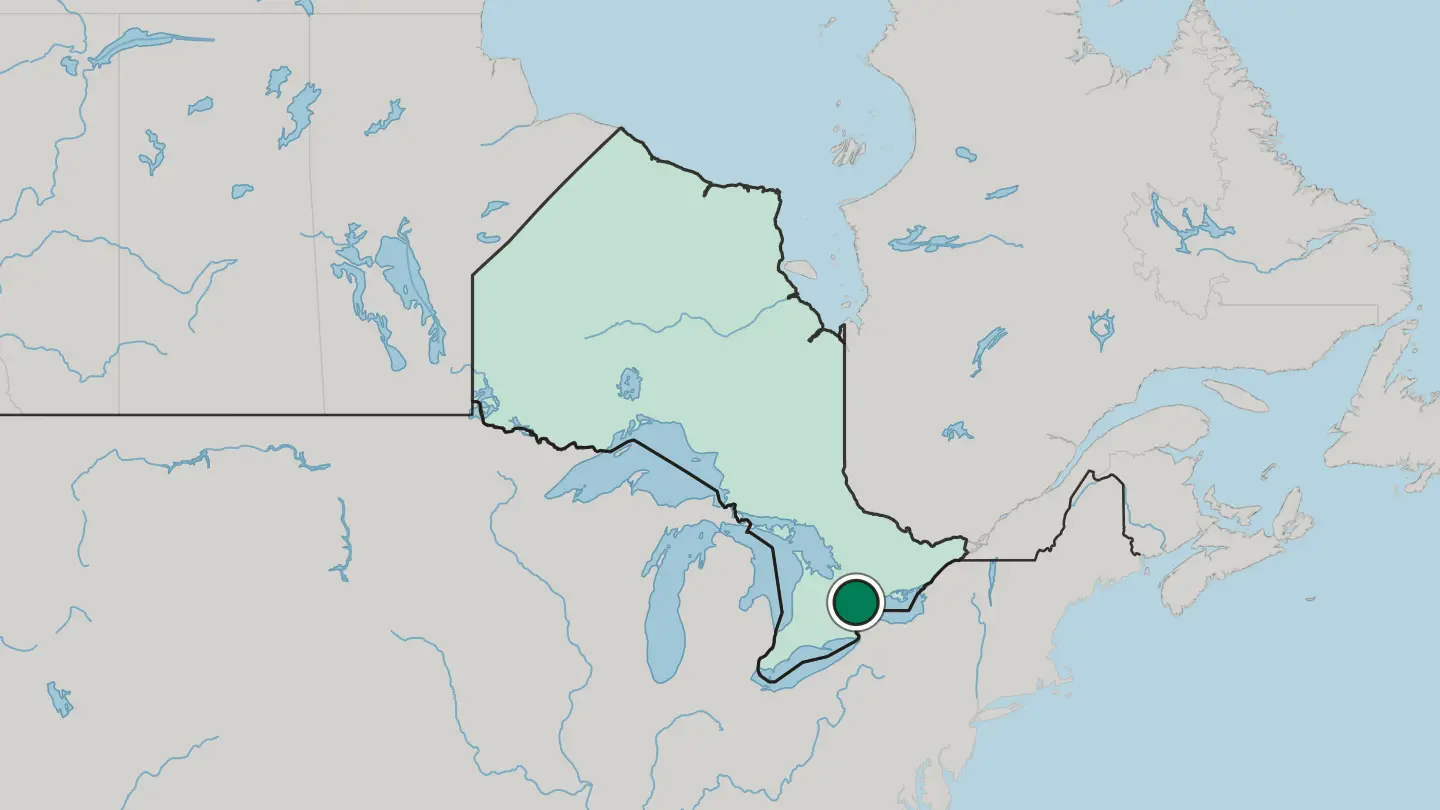
 Canada
Thunder Bay
Thunder Bay holds the far northwestern point of the Great Lakes, seat of Thunder Bay District and the harbour where the Prairies meet deep water.Where to stay →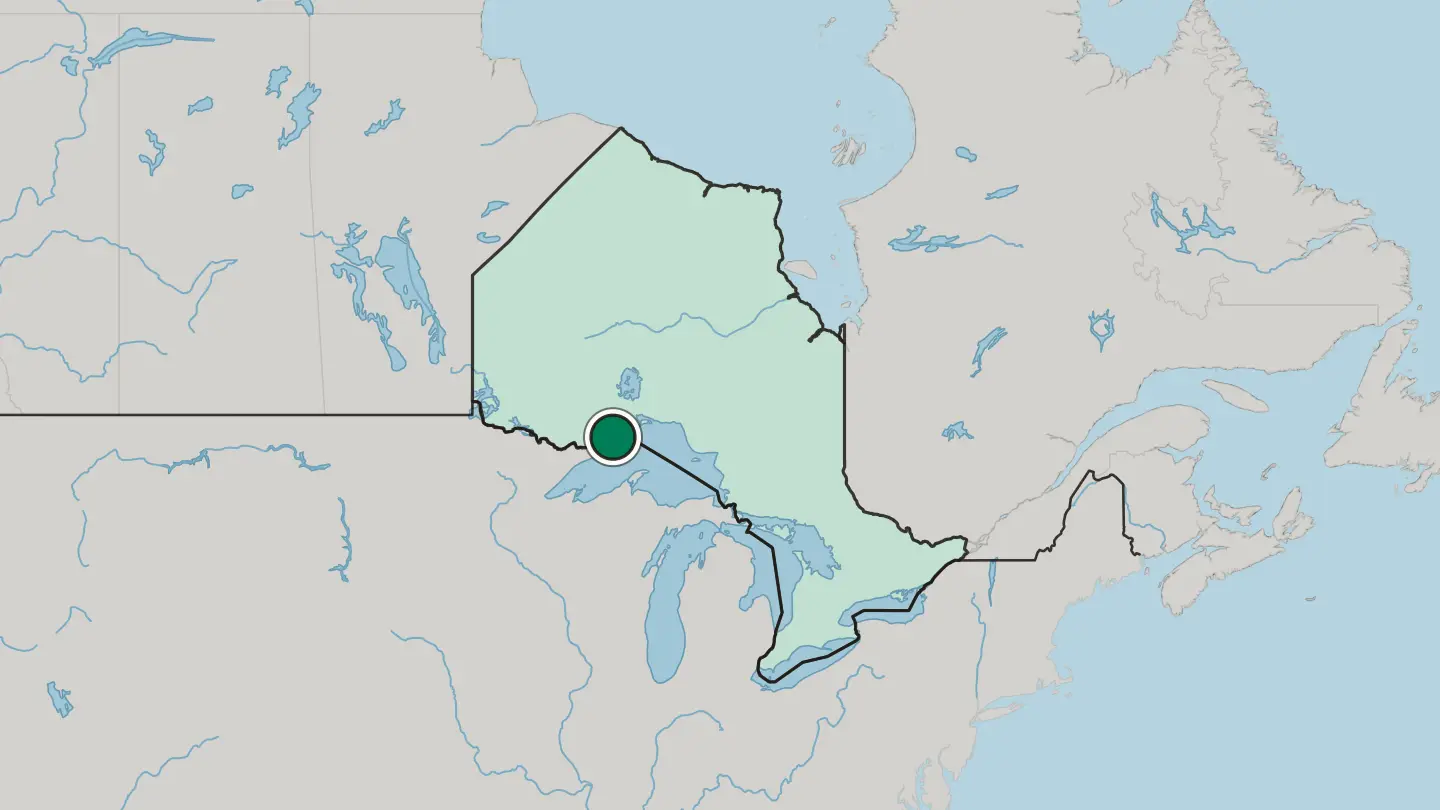
 Canada
Waterloo
Waterloo runs on its two universities, one of the three cities of the Region of Waterloo in Southwestern Ontario alongside Kitchener and Cambridge.Where to stay →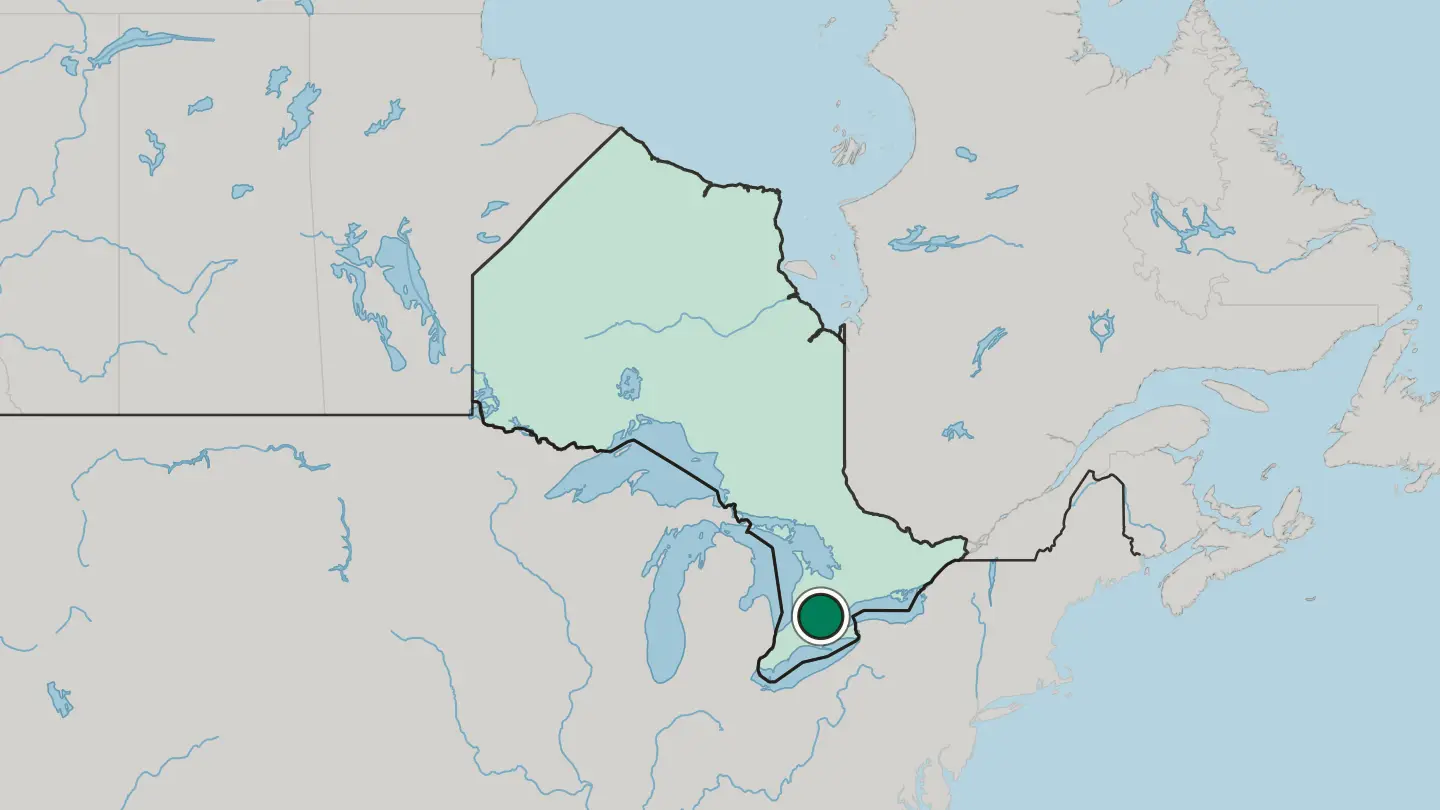 Canada
Brantford
Brantford is a city on the Grand River in south Ontario, Canada, where Alexander Graham Bell dreamed up the telephone, named for the Mohawk Joseph Brant.Where to stay →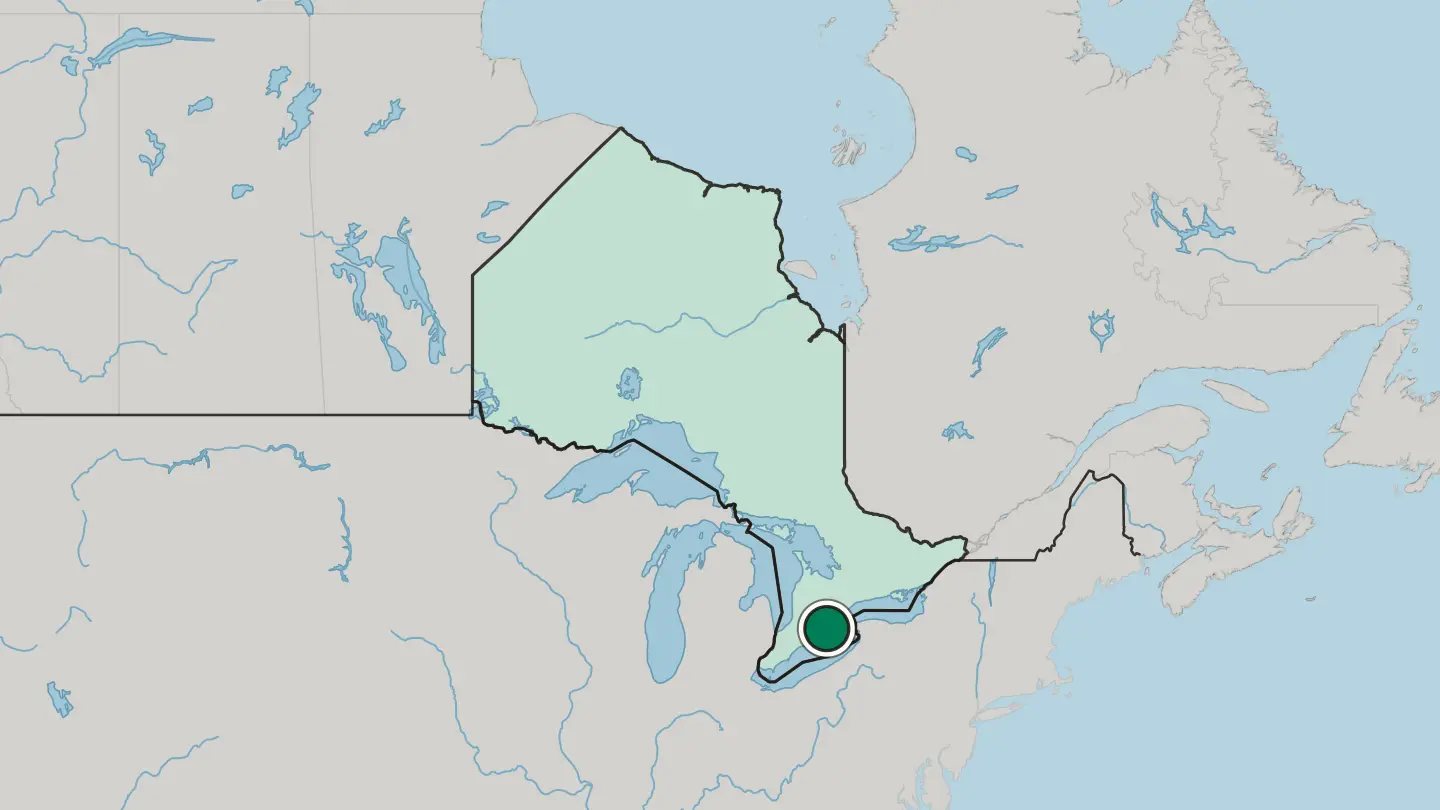
 Canada
Niagara Falls
Niagara Falls is a city in southern Ontario, Canada, beside the great waterfall on the Niagara River between two of the Great Lakes.Where to stay →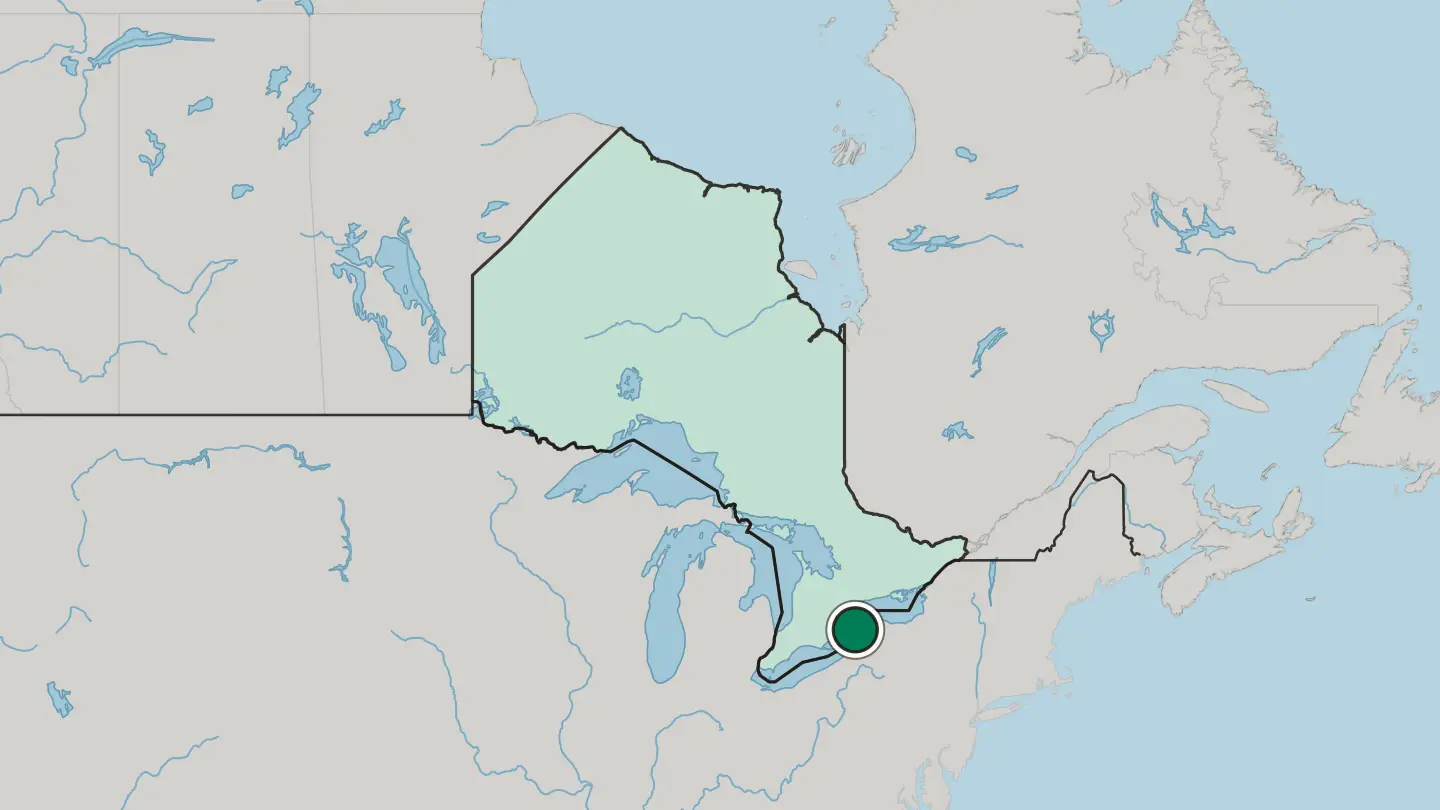
 Canada
Pickering
Pickering is a city immediately east of Toronto in the Regional Municipality of Durham, named for the town of Pickering in North Yorkshire.Where to stay →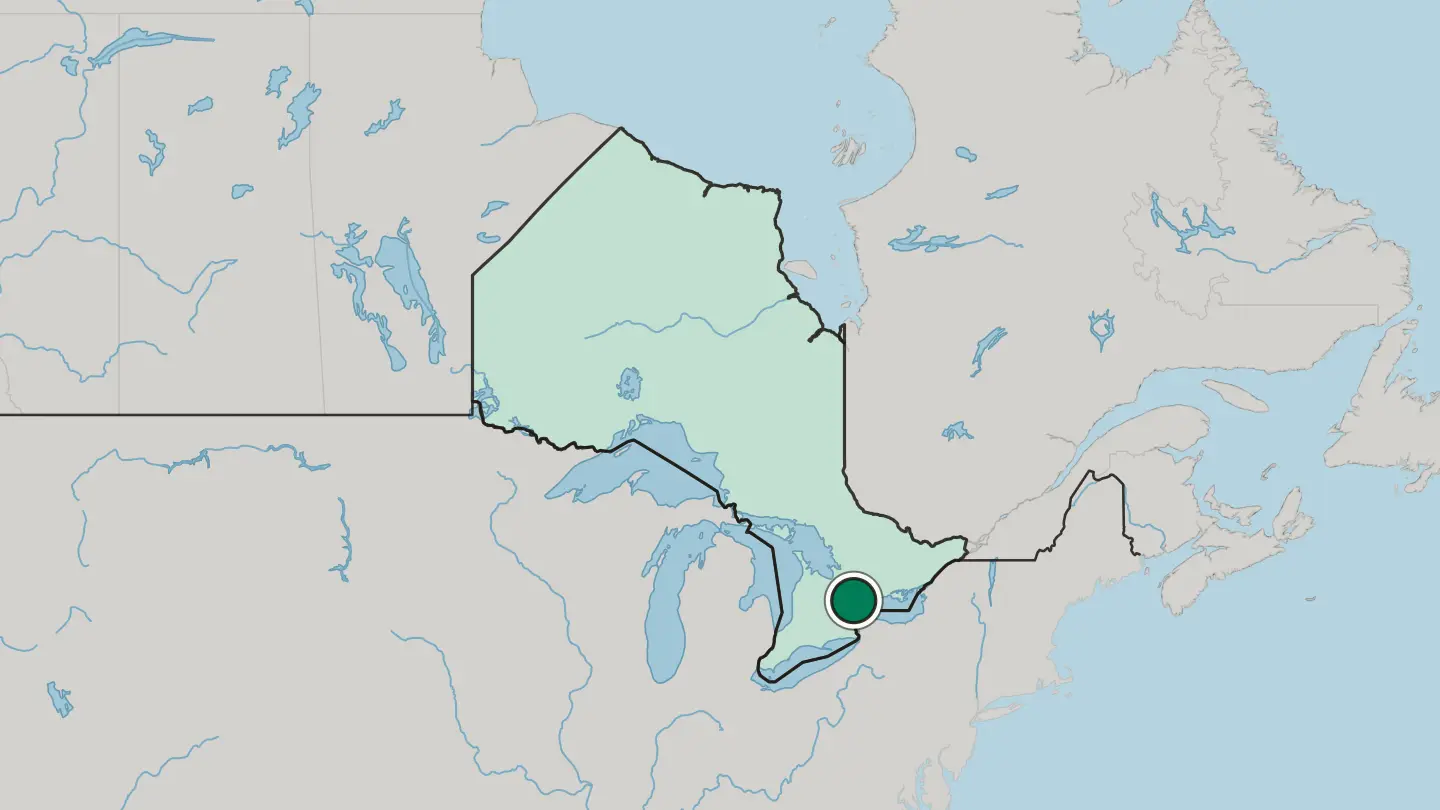
 Canada
Newmarket
Newmarket is the seat of York Region, a town on Yonge Street midway between Toronto and Barrie, named as the new market to York's old one.Where to stay →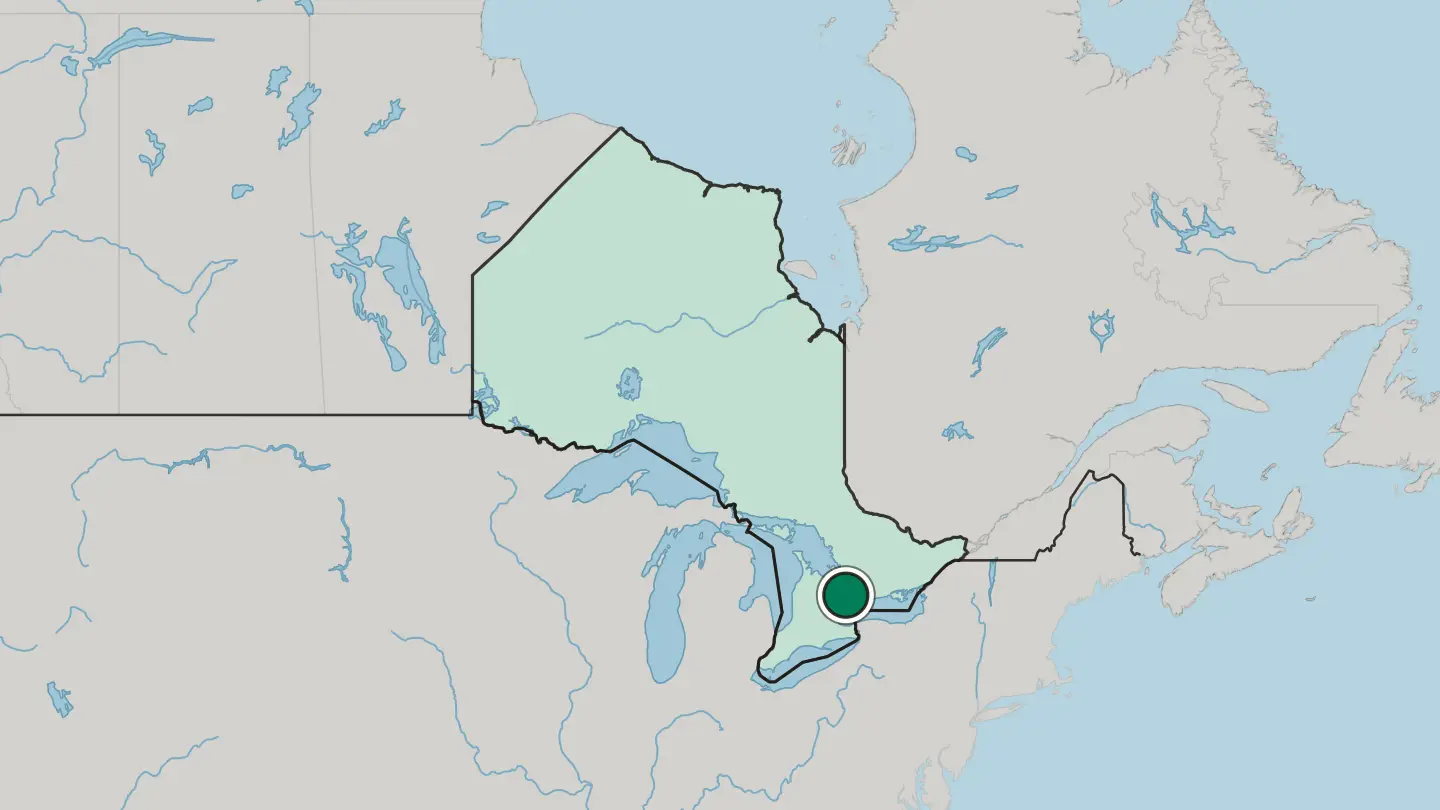
 Canada
Peterborough
Peterborough is a river city of central Ontario in Canada, on the Otonabee at the edge of the Kawartha Lakes, famous for the great hydraulic lift lock.Where to stay →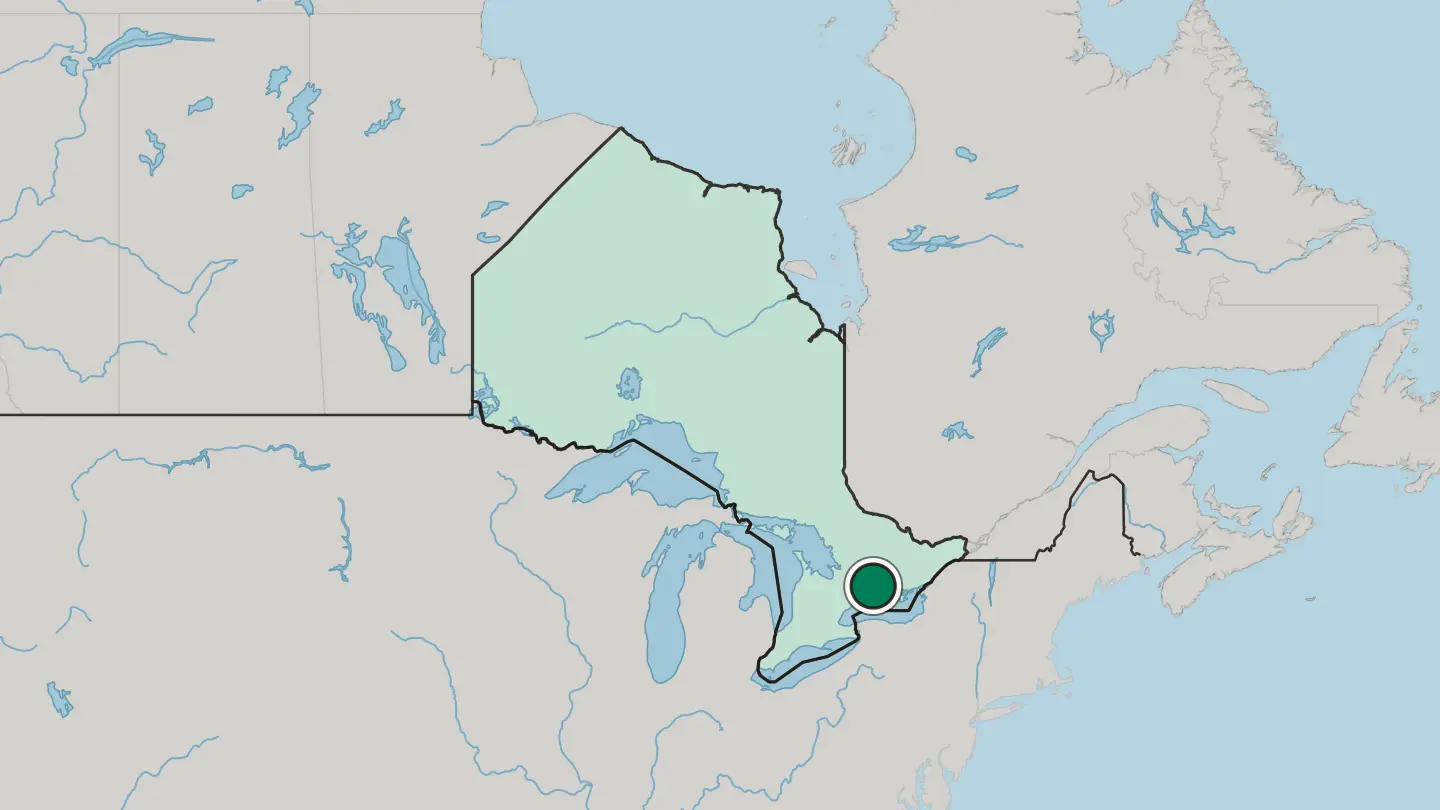
 Canada
Caledon
Caledon spreads across the Niagara Escarpment and the Credit River in the Regional Municipality of Peel. Bolton is its largest community.Where to stay →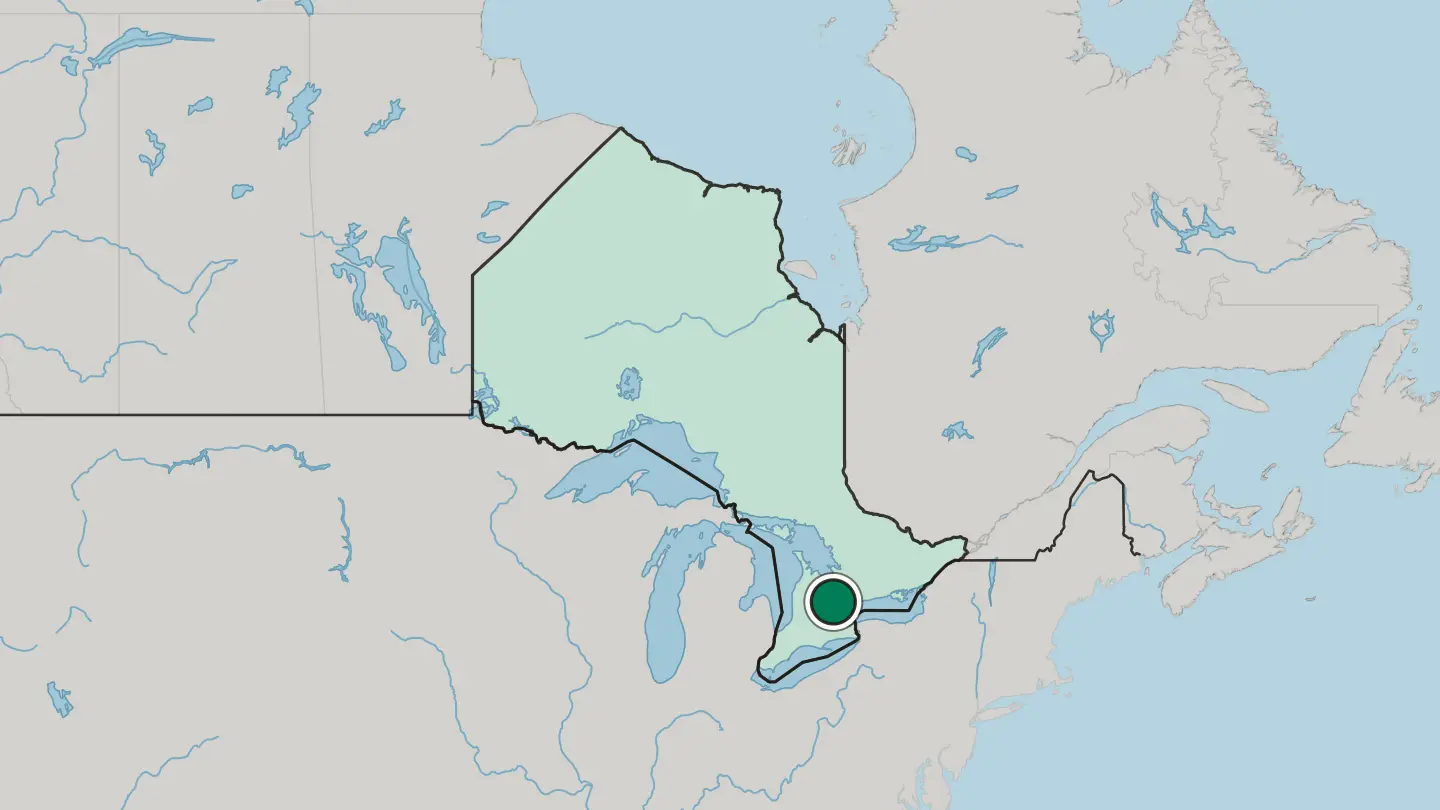
 Canada
Sarnia
Sarnia is the largest city on Lake Huron, holding the Canadian bank at the lake's outflow, opposite Port Huron across the international border.Where to stay →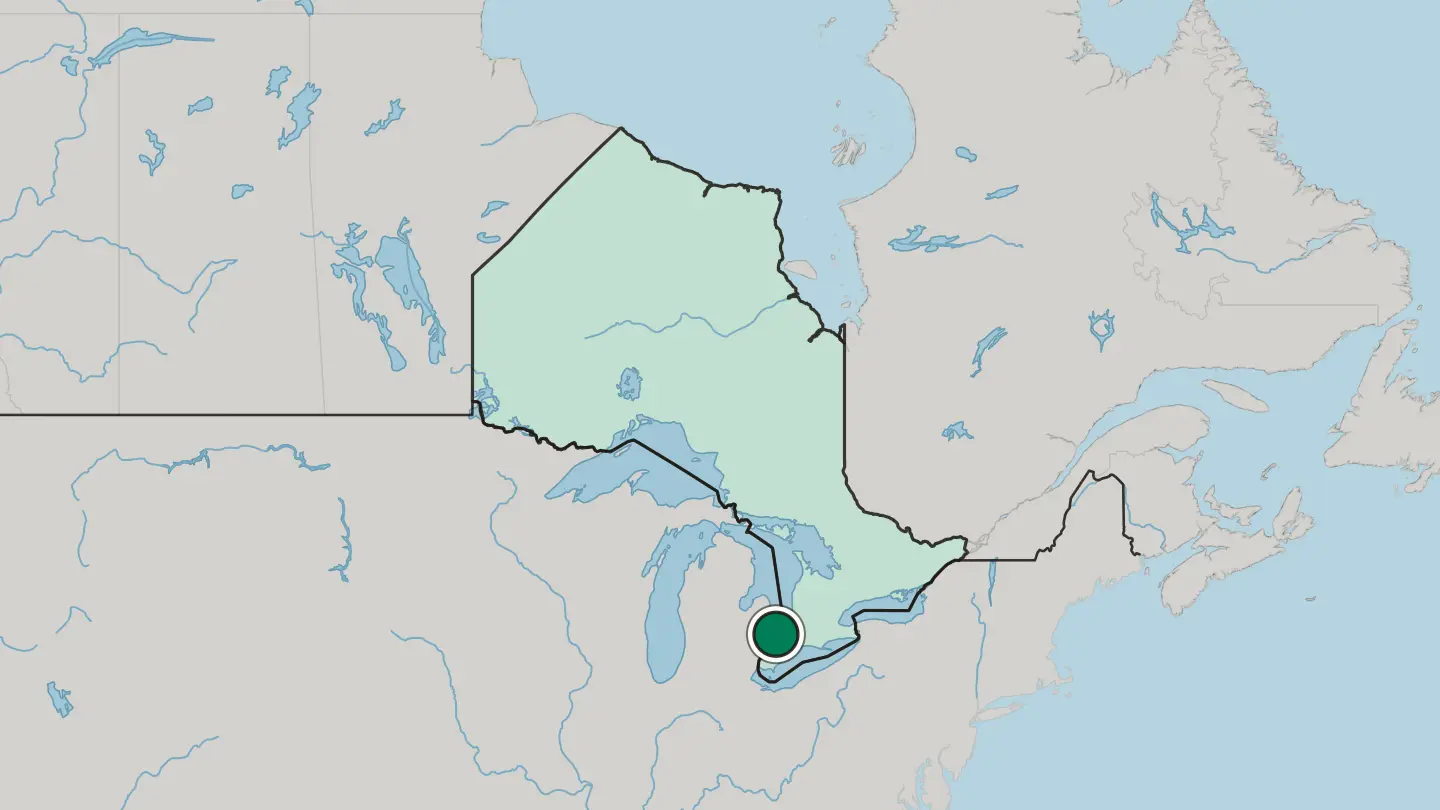
 Canada
Sault Ste. Marie
Sault Ste. Marie sits on the north shore of the St. Mary's River in Northern Ontario, twinned across the border with its namesake in Michigan.Where to stay →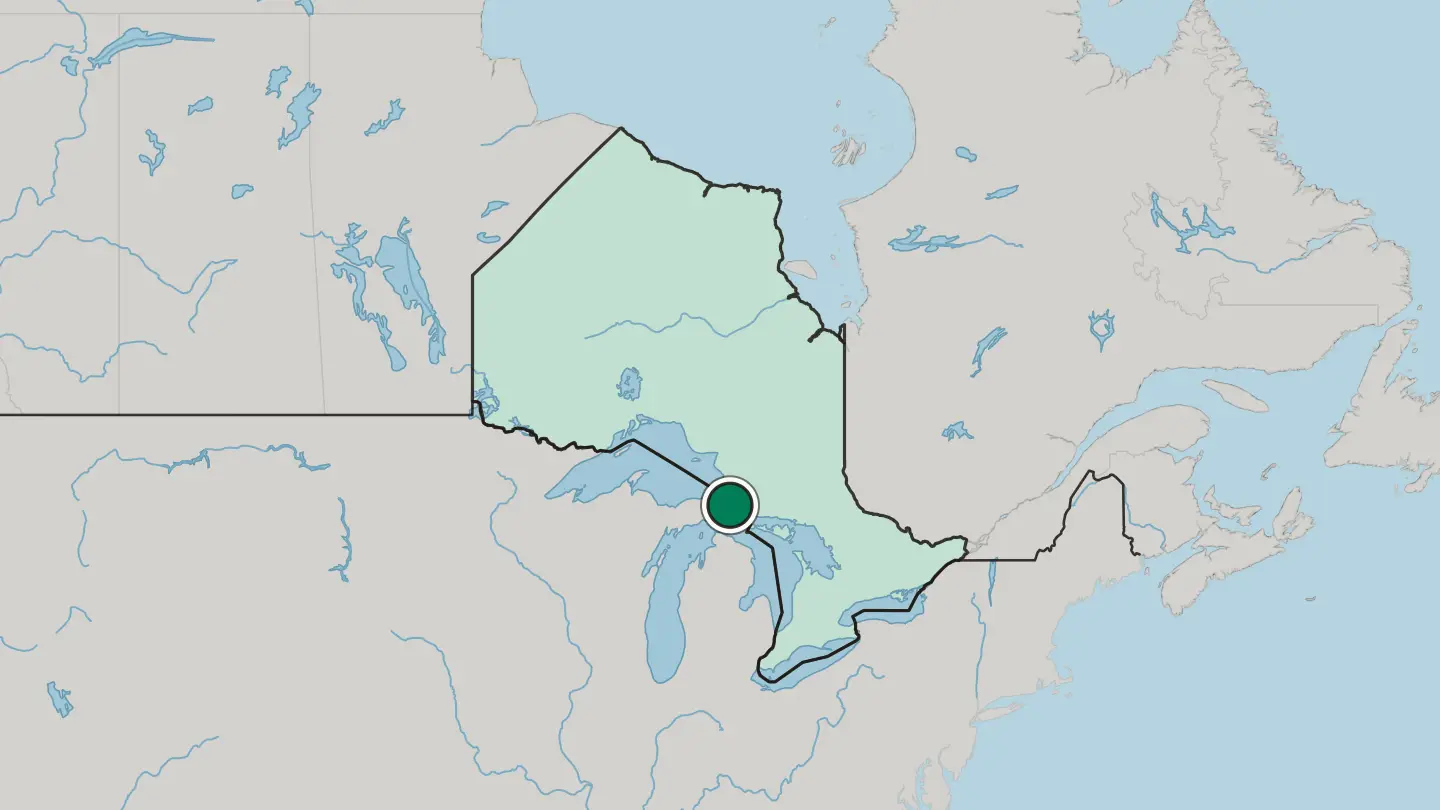
 Canada
Aurora
Aurora sits in central York Region on the Oak Ridges Moraine, 48 km from Downtown Toronto, and its heritage register runs to 25 houses.Where to stay →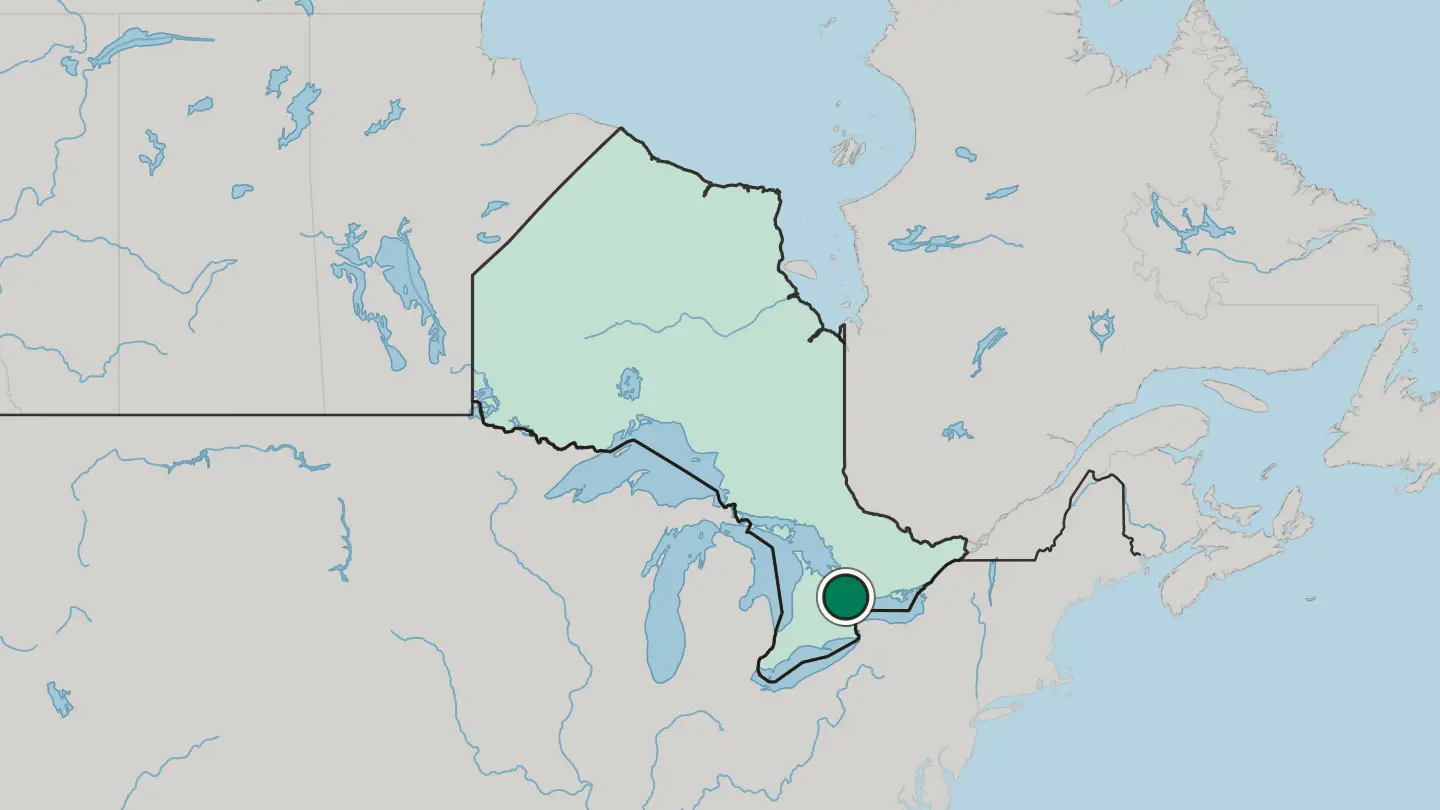 Canada
Welland
Welland is a Southern Ontario city in the Regional Municipality of Niagara, split into two halves by the Old Welland Canal and settled from 1788.Where to stay →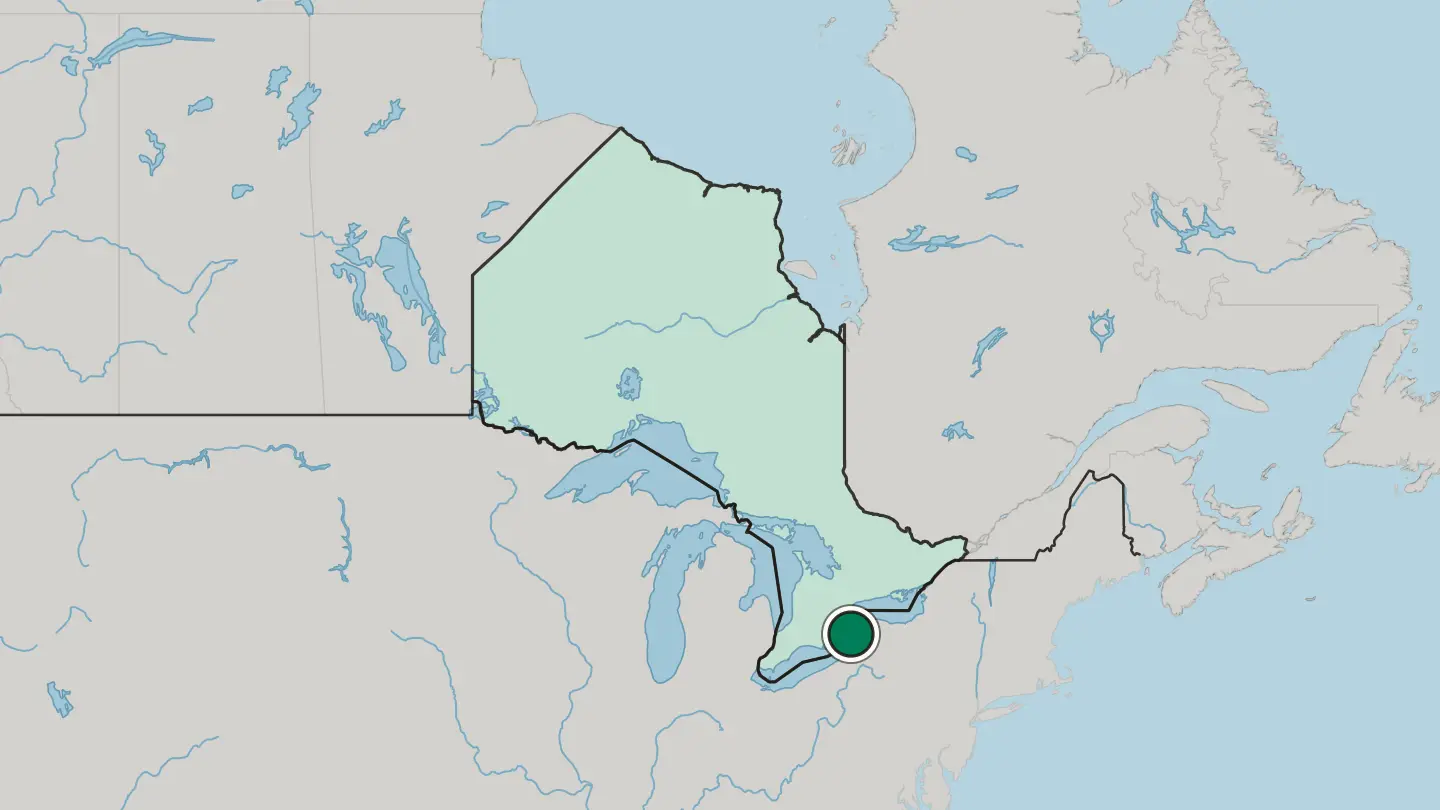
 Canada
Belleville
Belleville stands at the mouth of the Moira River on the Bay of Quinte, at the eastern end of Lake Ontario. Loyalists settled it in 1789.Where to stay →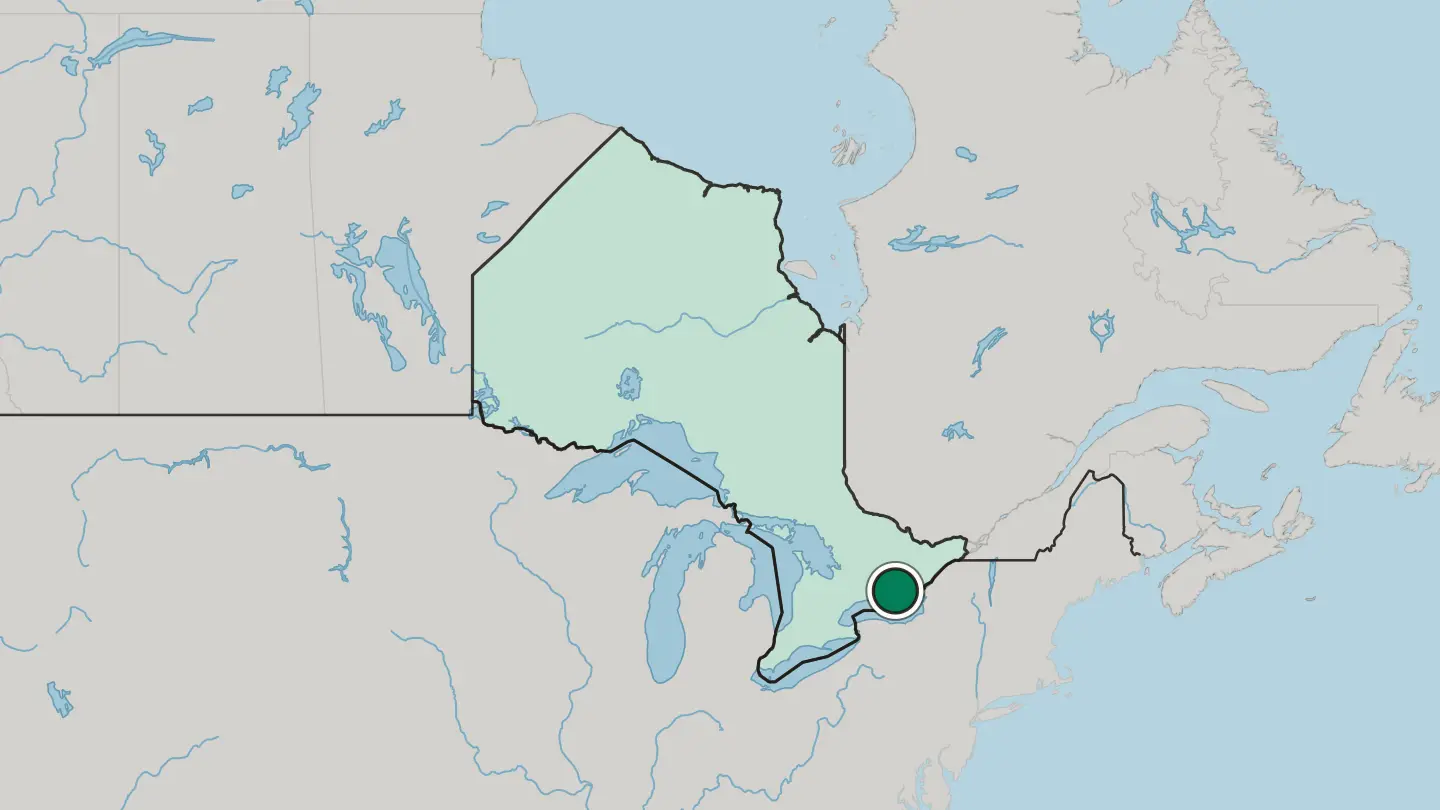 Canada
North Bay
North Bay stands on the shore of Lake Nipissing, seat of Nipissing District and a railway town of Ontario since 1891.Where to stay →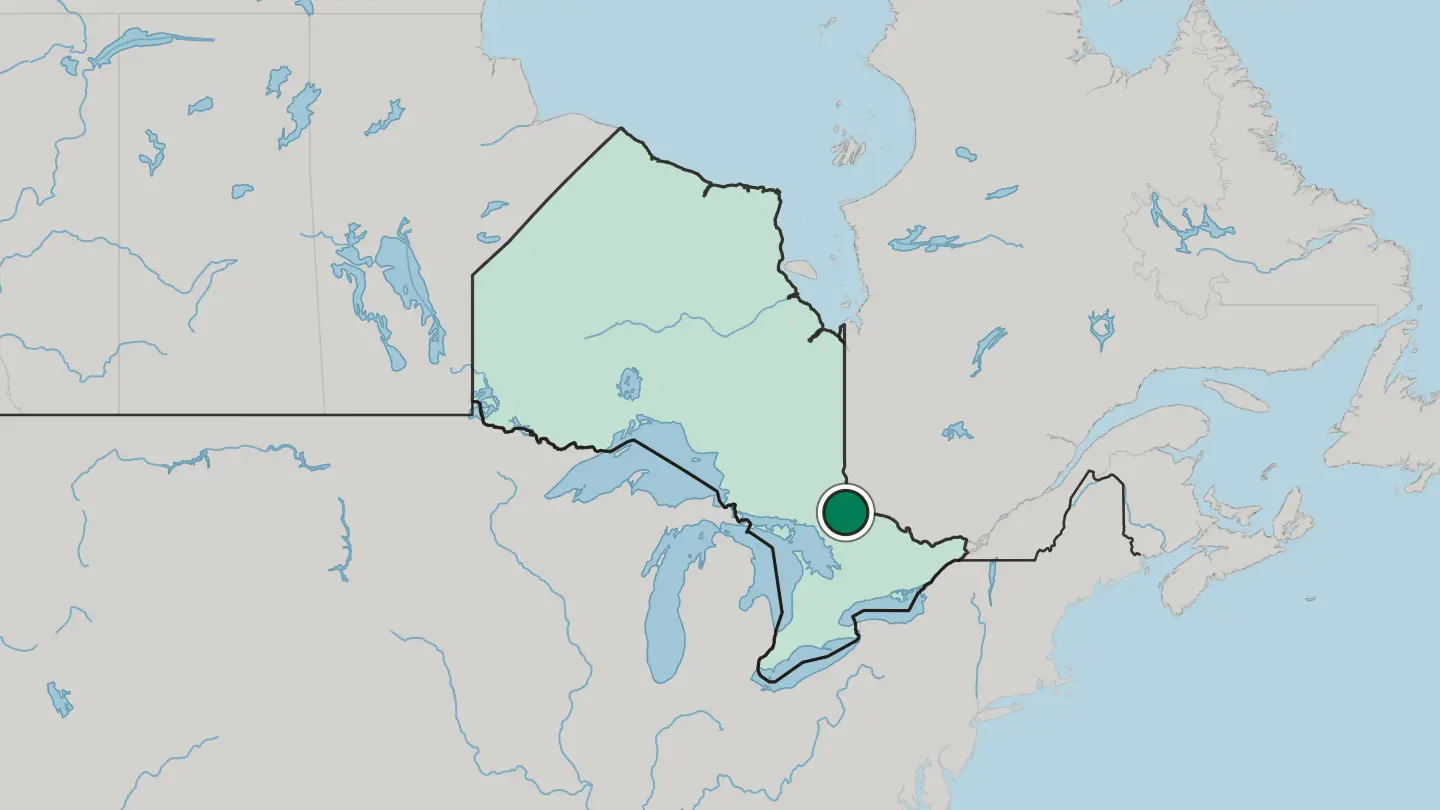
Hotel links are affiliate links: booking through them may earn us a commission, at no extra cost to you. It never affects how places are ranked. How this works
About Ontario
What is Ontario known for?
Ontario's name carries two cities before all else. Ottawa, the national capital of Canada, and Toronto, the country's largest city and the provincial capital, both sit within this one province, an unusual pairing of political and commercial weight in Central Canada. Size adds to the reputation.
It is the second-largest province by area, and one of the founding members of Canada from 1867, a standing that has kept it at the centre of the country's life.
Where is Ontario?
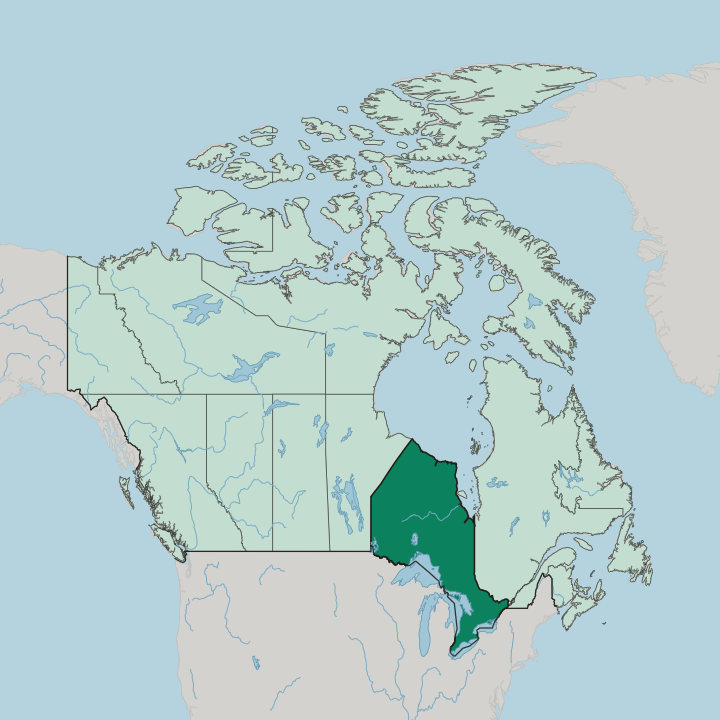
Ontario occupies a vast stretch of Central Canada, the country's second-largest province by area. It is a big land. The province reaches far beyond the belt of cities that most travellers see, running from the settled south, where Toronto and Ottawa lie, into a thinly peopled north that makes up most of its territory.
Distance defines it. Most of Ontario's people gather in the south. Toronto, the provincial capital and Canada's largest city, and Ottawa, the national capital, both sit in this southern band, close by national measure though far apart by the standards of a smaller country.
The rest of the province spreads across its northern reaches, thinly settled and immense, so that the Ontario a traveller experiences is a small, southern fraction of the whole. Two cities, one great hinterland.
What is Ontario like?
Ontario's character is shaped by weight of numbers and the pull of two great cities. It is the most populous province in Canada, and much of the country's public and commercial life is concentrated here. Ottawa gives it the machinery of the nation.
As the national capital, the city holds the federal government and the institutions of the whole country, so that the province carries a political role beyond its own borders. Toronto gives it the other half. The largest city in Canada anchors the province's commercial and cultural life, drawing people from across the country into the settled south of Central Canada.
Between the two lies the province at large. Ontario is where a great share of the country gathers, works and governs, and its identity comes less from a single tradition than from being the crowded, central meeting-ground of Canada. Numbers and cities define it.
What is the history of Ontario?
Ontario was established as a province of Canada in 1867. That date marks its beginning. The name and boundaries of the modern province date from that year, when it took its place among the original provinces of the country, and Toronto was set as its capital.
Ottawa, within Ontario, was chosen as the seat of Canada's national government. The province has stood at the centre of the country's affairs ever since, its history closely tied to that of Canada as a whole.
What is the climate of Ontario?
Ontario has a temperate climate that swings hard between the seasons. Its position inland, deep in Central Canada and far from any softening ocean along its settled south, gives it warm summers and cold, snow-covered winters rather than the even weather of the coasts. The seasons are sharply drawn.
Spring and autumn pass quickly between the two extremes, and the contrast grows stronger the further north the province runs.
How do you get to Ontario?
Most visitors reach Ontario through Toronto, the provincial capital and the largest city in Canada, the main point of arrival by air. Ottawa, the national capital, forms the second gateway. From either city, road and rail run south and connect the settled band of the province where nearly all travel begins, while the far north is reached only by longer routes.
Two cities carry most arrivals.
Common questions
What is the best area to stay in Ontario?
Toronto: a first Ontario visit based in the provincial capital. Ottawa: national museums and the civic centre of the country.
More regions in Canada
Updated September 2026