Canada
New Brunswick/Nouveau-Brunswick, Canada — Towns & Travel Guide
New Brunswick is Canada's only officially bilingual province, a forested Maritime land ringed by the record tides of the Bay of Fundy.
Hotel links are affiliate links: booking through them may earn us a commission, at no extra cost to you. It never affects how places are ranked. How this works


Towns & cities in New Brunswick/Nouveau-Brunswick
Pick a town or city — each links to where to stay.

 Canada
Moncton
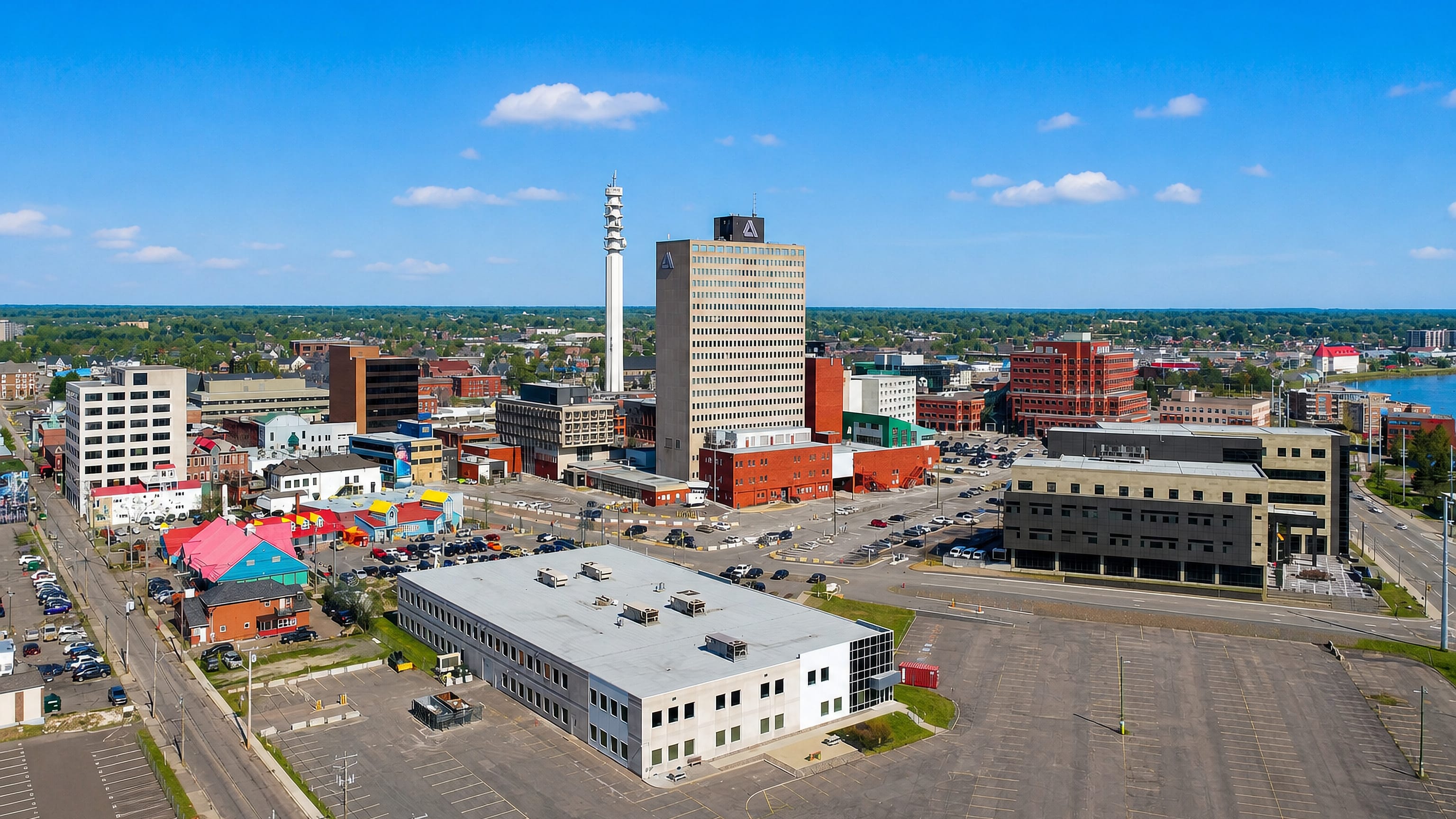
Moncton is a city of New Brunswick in Canada, an Acadian and railway hub on the Petitcodiac River, famous for its tidal bore and Magnetic Hill.Where to stay →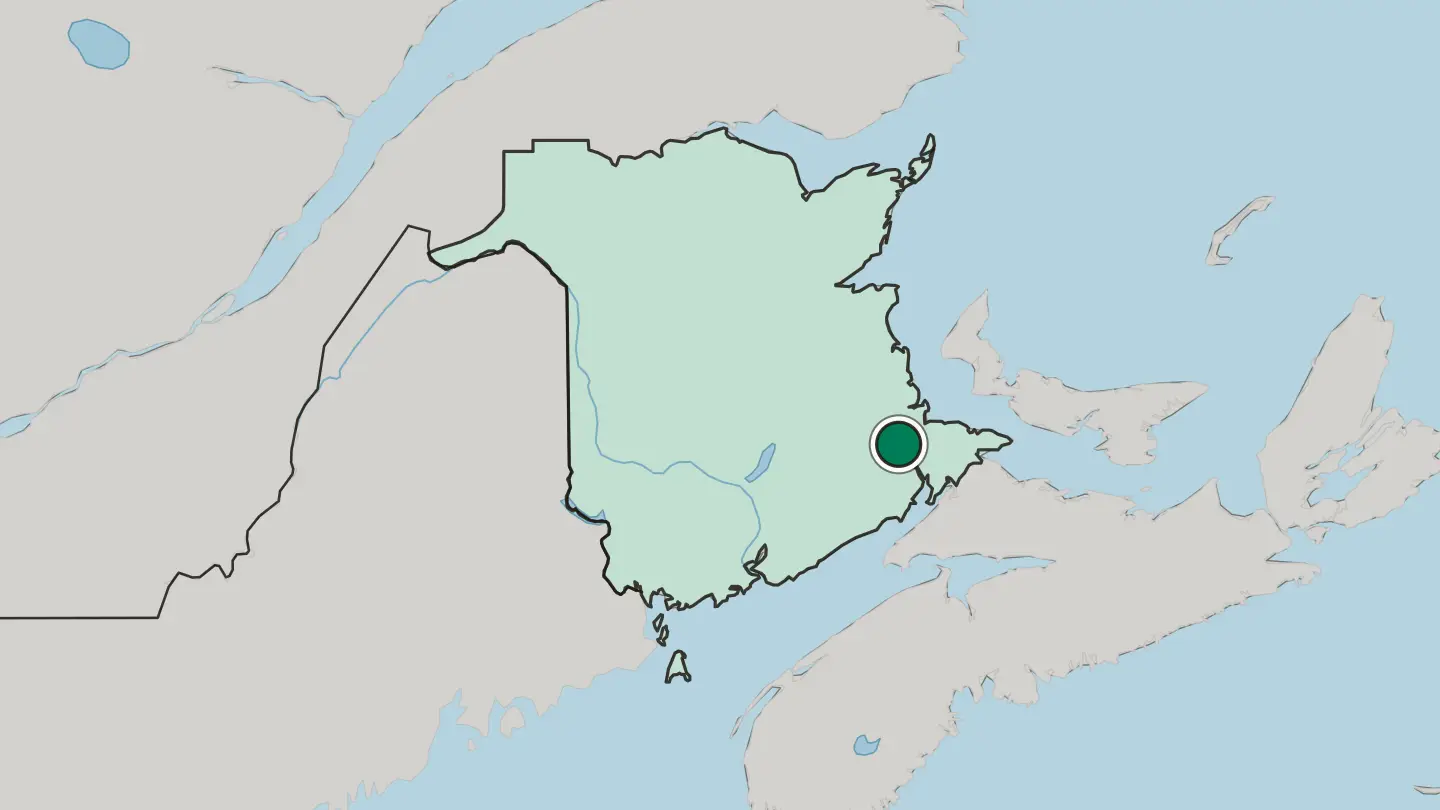
 Canada
Saint John
Saint John is a city of New Brunswick in east Canada, an old Loyalist port on the Bay of Fundy, where the world's highest tides run a river backwards.Where to stay →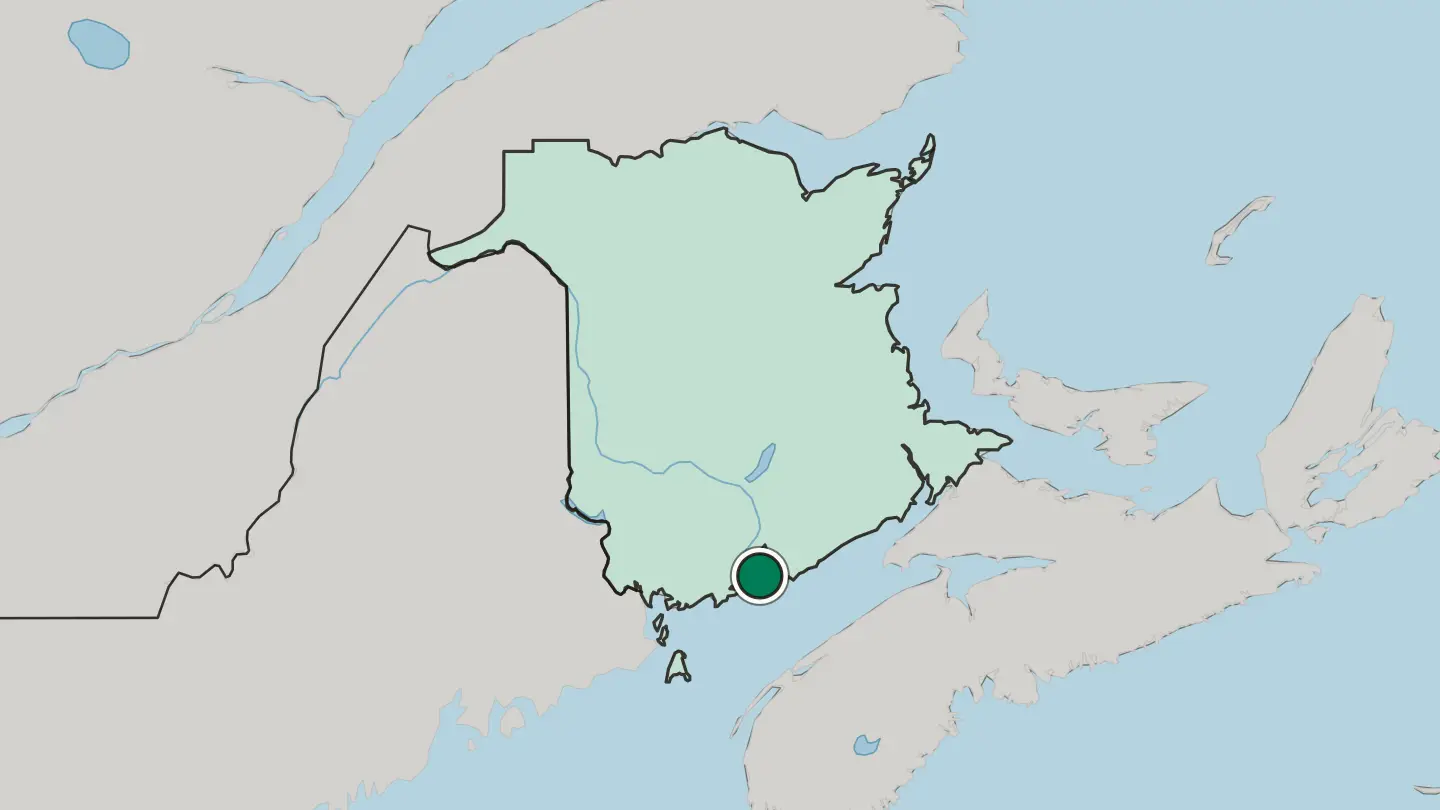
 Canada
Fredericton
Fredericton is the capital of New Brunswick, a riverside city of elms and stately buildings on the Saint John River in eastern Canada.Where to stay →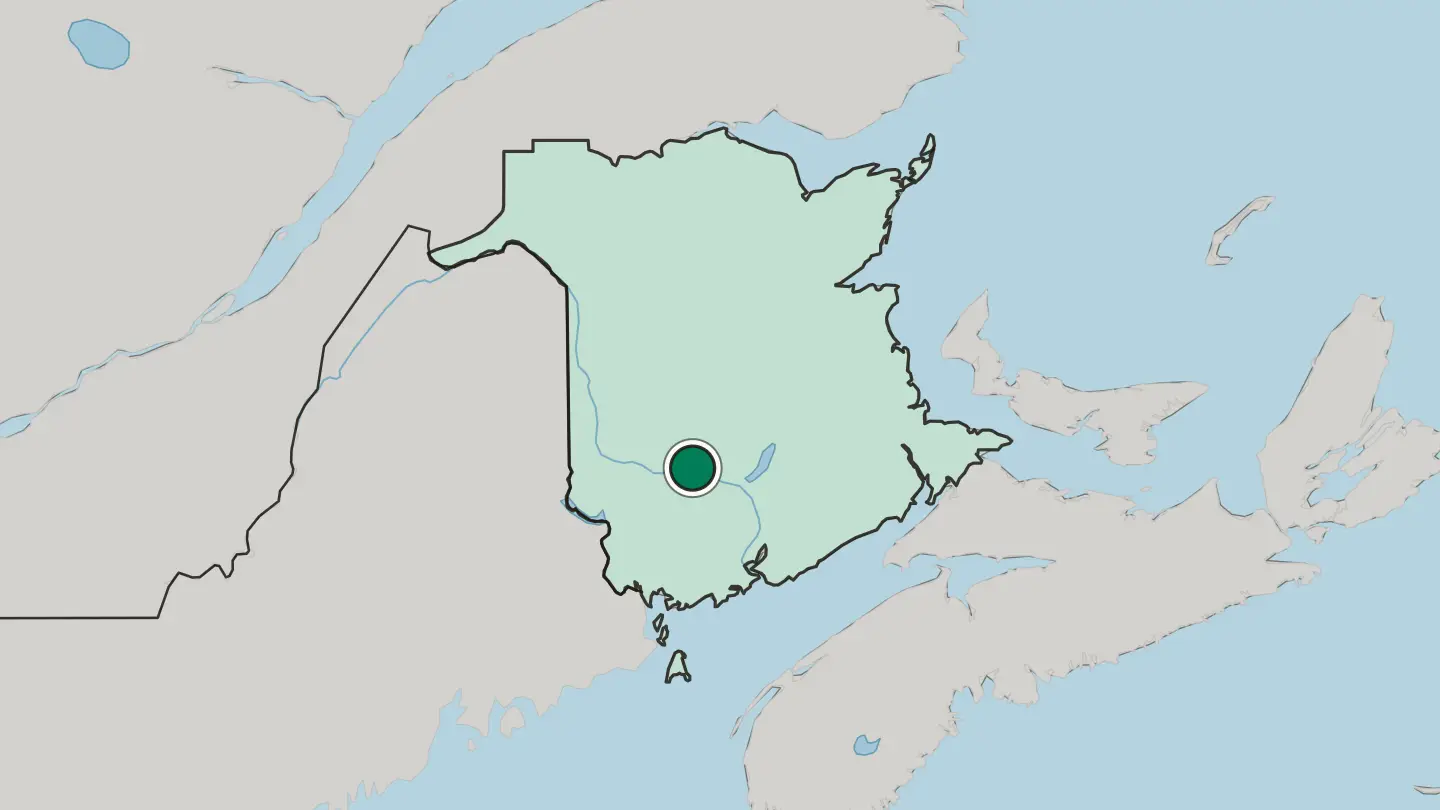
Hotel links are affiliate links: booking through them may earn us a commission, at no extra cost to you. It never affects how places are ranked. How this works
About New Brunswick/Nouveau-Brunswick
What is New Brunswick/Nouveau-Brunswick known for?
New Brunswick is one of Canada's three Maritime provinces, wedged between Quebec, Nova Scotia and the American state of Maine. Two things define it. The Bay of Fundy, on its southern edge, carries the highest tides on Earth, and twice a day the sea climbs some sixteen metres up the cliffs at Hopewell Rocks and forces the Saint John River backwards through a gorge in the city of Saint John.
It is also the country's only officially bilingual province, home to a large Acadian population whose French roots reach back to the early colony of Acadia. Forest covers most of the interior, and travellers cluster along the coasts and the Saint John River valley.
Where is New Brunswick/Nouveau-Brunswick?
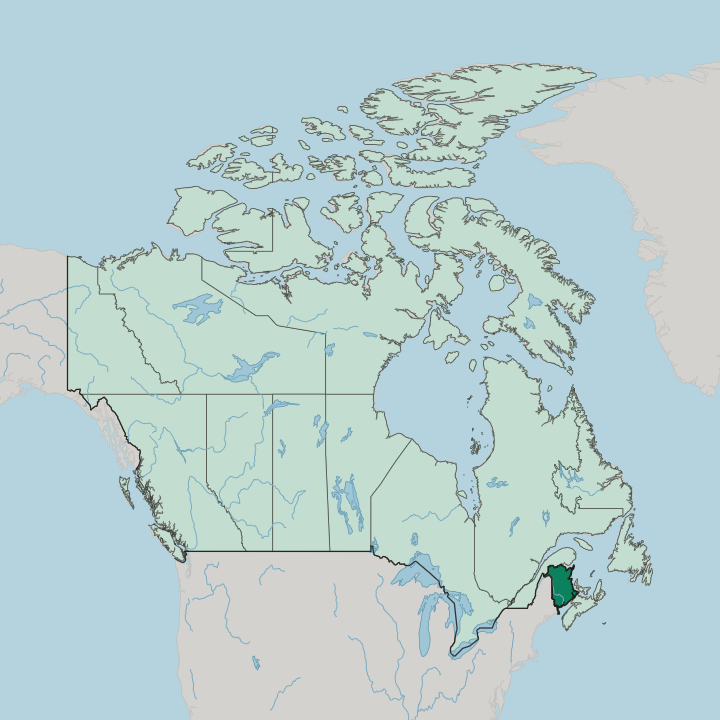
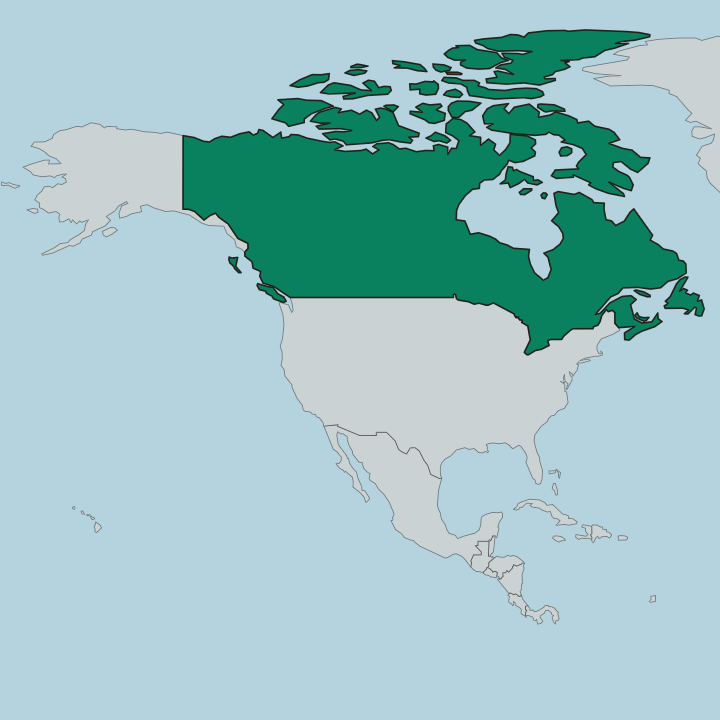
New Brunswick sits in eastern Canada, one of the three Maritime provinces on the country's Atlantic edge. It is almost surrounded. Quebec lies to the northwest, Nova Scotia to the east across a narrow isthmus, and the U.S. state of Maine to the southwest, with only a short land border joining the province to the rest of the continent to the north and west.
The rest is water. The Gulf of Saint Lawrence washes the northeastern shore, and the Bay of Fundy cuts deep into the south, its funnel shape squeezing the incoming Atlantic into the highest tides recorded anywhere on the planet. Inland, the land is overwhelmingly forest, roughly four-fifths of the province under trees.
The Appalachian Mountains fill the northern half and rise to their Maritime summit at Mount Carleton. Down the western side runs the Saint John River, the longest river in eastern Canada, gathering its water from Maine and Quebec before emptying into the Bay of Fundy at the city of Saint John. Most people live along that river valley and around the coasts.
The deep interior stays thinly settled woodland, laced with logging roads and salmon streams, and the whole province is about the size of Ireland.
What is New Brunswick/Nouveau-Brunswick like?
Two peoples give New Brunswick its character, and it is the only province in Canada where both English and French are official. Roughly a third of the population is Acadian, descended from the French who settled Acadia in the early 1600s. Britain deported thousands of them in the expulsion that began in 1755, yet many drifted back, and their communities took root again along the northern and eastern shores.
The Acadian Peninsula is the heart of that French Maritime world, where the tricolour flag with its yellow star flies over fishing harbours and the accent is unmistakably its own. The English side traces mostly to Loyalists. Some fourteen thousand of them fled north after the American Revolution and remade the lower Saint John River valley and the port at Saint John, which became the first incorporated city in Canada.
Older still are the Wolastoqiyik along the Saint John River and the Mi'kmaq of the north and east, whose place names mark the map. Lobster suppers, fiddle tunes and the tidal rhythm of the fisheries run through the culture. It is a rural and coastal place, bilingual to its core.
Two languages share every road sign.
What is the history of New Brunswick/Nouveau-Brunswick?
The land was Mi'kmaq and Wolastoqiyik country long before Europeans came, and the French claimed it as part of Acadia in the 1600s. Everything shifted in 1755. Britain expelled the Acadians, then carved a separate colony out of Nova Scotia in 1784 to settle the Loyalists arriving from the new United States.
New Brunswick became one of the four founding provinces of Canada at Confederation on the first of July, 1867. Formal bilingualism came much later, when the province recognised French and English as equal official languages in 1969, the first in the country to do so.
What is the climate of New Brunswick/Nouveau-Brunswick?
New Brunswick has a humid continental climate, its winters long and snowy and its summers warm and green. Cold air off the continental interior settles the province deep into frost from December through March, and the interior forest can bury two to three metres of snow in a season. Summers on the Gulf of Saint Lawrence coast are the gentlest, warmed enough for swimming off the Acadian Peninsula.
The Bay of Fundy has its own trick: warm spring and early-summer air drifting over its cold tidal water wraps the southern coast in thick sea fog. Autumn ignites the Appalachian forest.
How do you get to New Brunswick/Nouveau-Brunswick?
Flights bring most to New Brunswick. Most visitors fly into Greater Moncton, the busiest airport in the province, though Saint John and the capital at Fredericton also take scheduled flights. Overland, the province joins the rest of Canada through Quebec to the northwest and Nova Scotia across the narrow isthmus to the east, while the border with Maine opens the way south into the United States.
A ferry crosses the Bay of Fundy between Saint John and Nova Scotia. Once here, a car is close to essential; roads follow the Saint John River valley and thread the long coasts, and public transport barely reaches the forested interior.
Common questions
What is the best area to stay in New Brunswick/Nouveau-Brunswick?
Moncton: reaching the Fundy tides. Saint John: the working Fundy port. Fredericton: a riverside capital base. The Acadian Peninsula: the Acadian coast.
More regions in Canada
Updated September 2026