Colombia
Departamento de Tolima, Colombia — Towns & Travel Guide
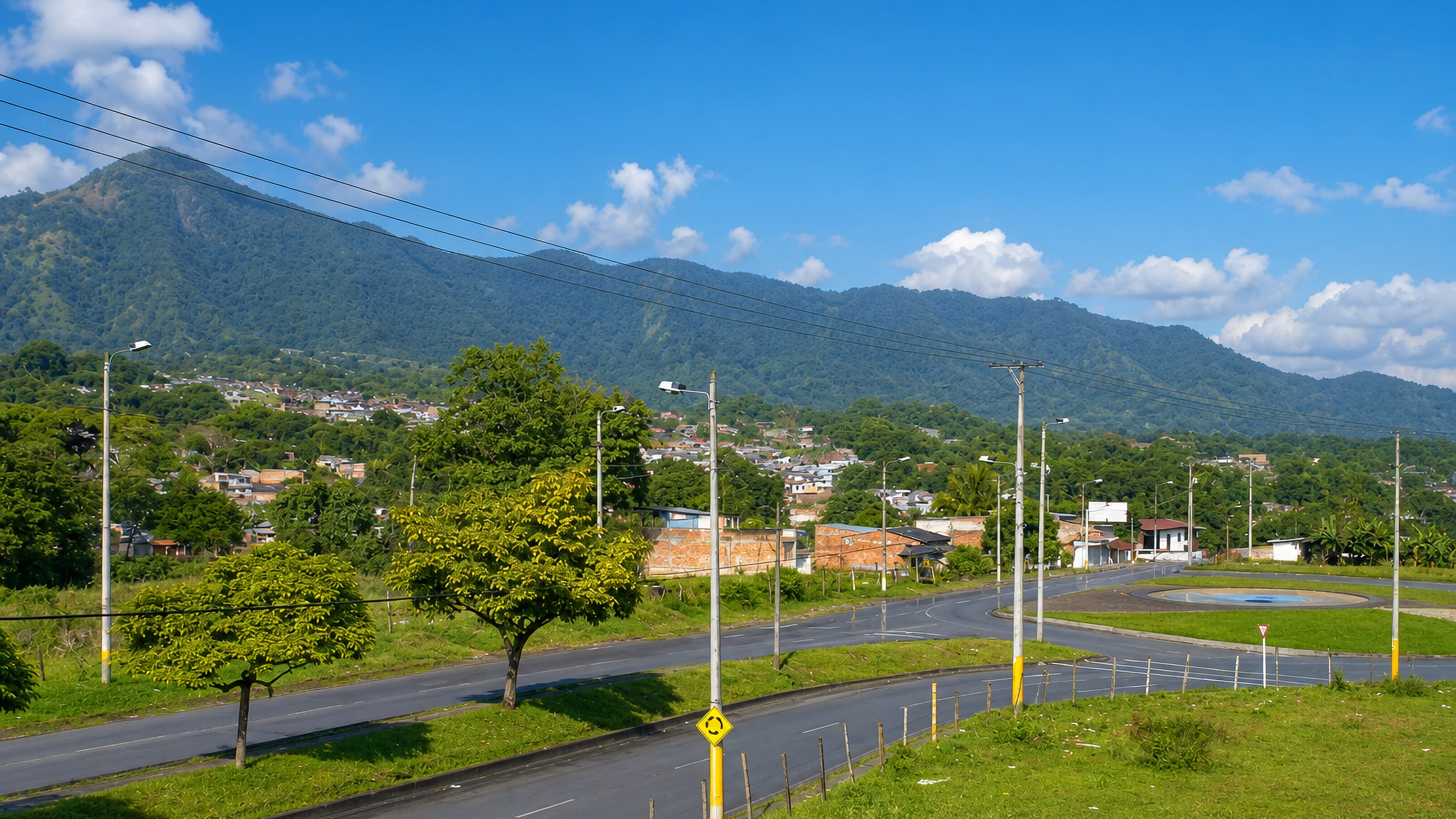
Tolima is an Andean department in central Colombia, split by the Magdalena River between snowbound volcanoes and coffee-draped slopes.
Hotel links are affiliate links: booking through them may earn us a commission, at no extra cost to you. It never affects how places are ranked. How this works


Towns & cities in Departamento de Tolima
One town here has its own guide — it links to where to stay.

 Colombia
Ibagué
Ibagué, capital of Tolima, holds the eastern slopes of the Cordillera Central under Nevado del Tolima, and answers to the name musical city of Colombia.Where to stay →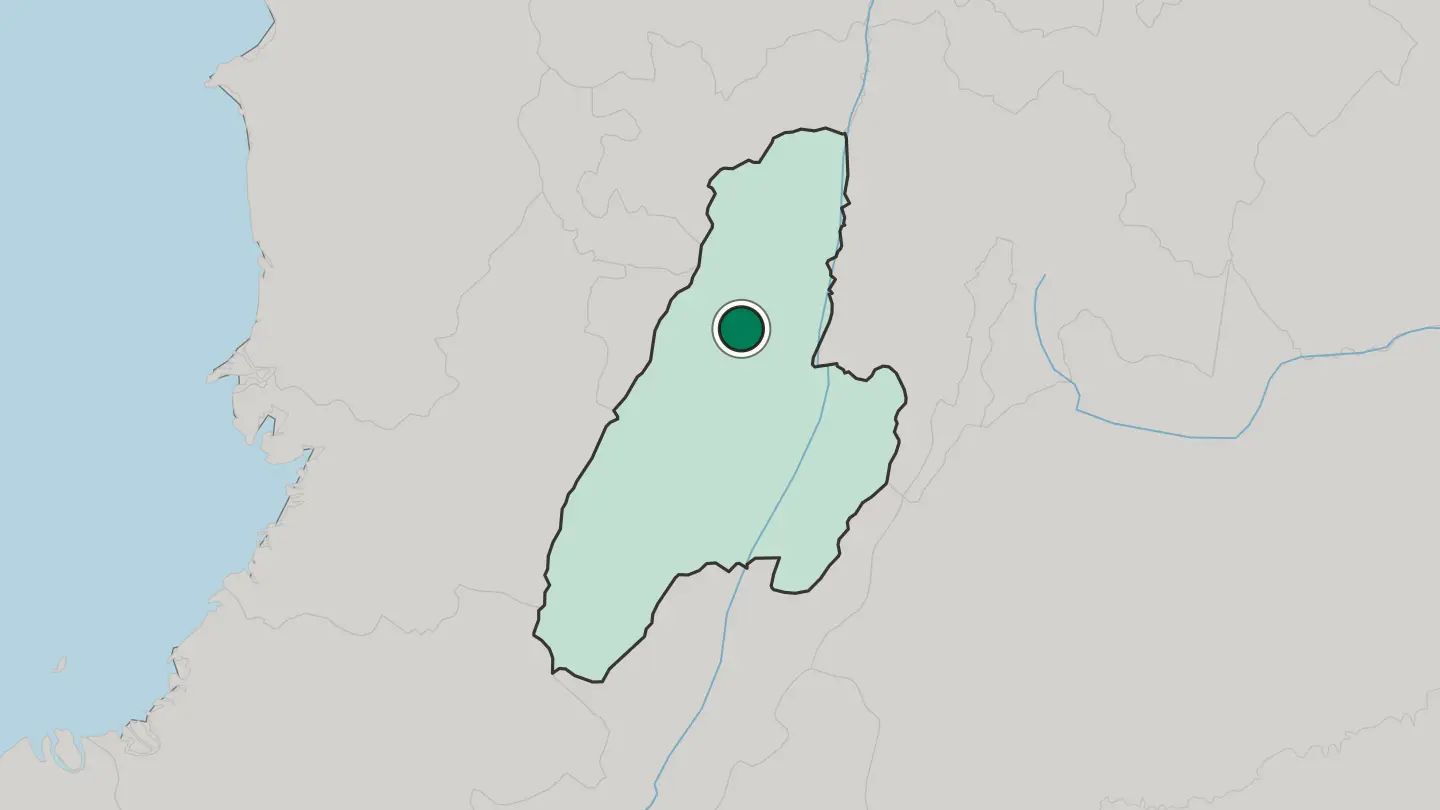
Hotel links are affiliate links: booking through them may earn us a commission, at no extra cost to you. It never affects how places are ranked. How this works
About Departamento de Tolima
Music comes first.
What is Departamento de Tolima known for?
Its capital, Ibagué, has been called the musical capital of Colombia since the nineteenth century, home to a celebrated conservatory and to the folk festival that fills its streets each June. Beyond the city the department climbs from the Magdalena River valley to the glaciated cone of the Nevado del Tolima, and coffee grown on the intervening slopes carries the region's name to buyers abroad. The lechona and the tamal tolimense are eaten far past its borders.
Where is Departamento de Tolima?
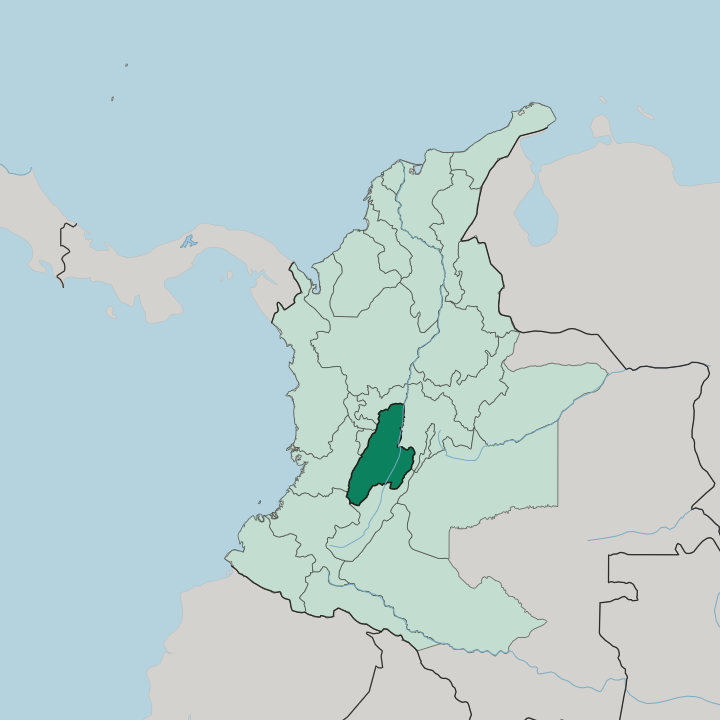
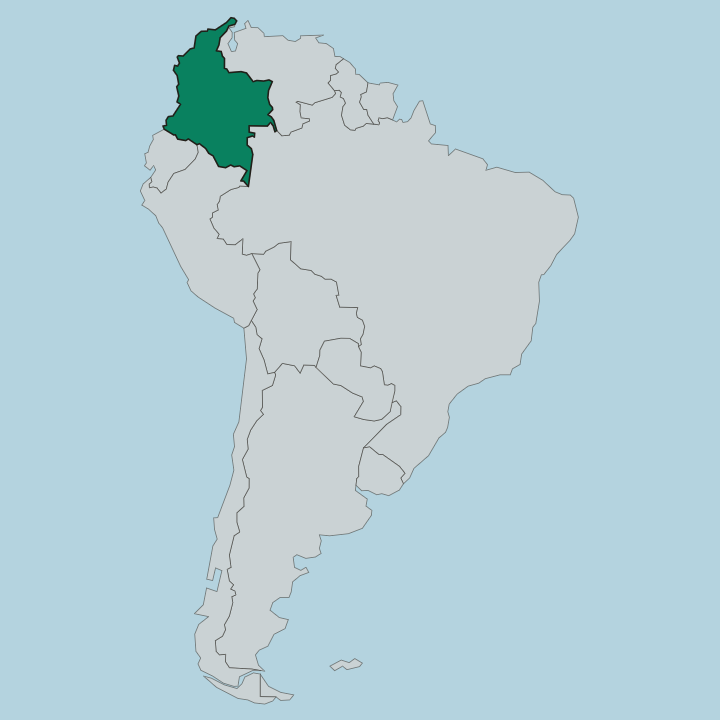
Tolima lies in the middle of Colombia, in the west of the country's Andean interior. The Magdalena River runs the length of it from south to north, and the department is essentially the western half of that great river valley. Two ranges wall it in.
The Cordillera Central rises along the western edge, carrying the snows of the Nevado del Tolima and, at the northern corner, the Nevado del Ruiz. The Cordillera Oriental stands off to the east across the valley floor, marking the border toward Bogotá and the highland interior. Between those two walls the land is anything but uniform.
The valley bottom near the Magdalena River is hot, flat, and given over to rice and cotton, while the slopes above break into the temperate belt where coffee grows and then into cold páramo below the ice. The Combeima river drops out of the Cordillera Central to supply the capital, Ibagué, with its water. Everything here is a matter of altitude.
A traveller can leave the warm river plain in the morning and stand among glaciers by afternoon, all within the same department.
What is Departamento de Tolima like?
Tolima measures itself in music. Ibagué earned the name musical capital of Colombia in the nineteenth century, when a visiting French count remarked on the pianos heard through its windows, and the conservatory founded there has trained players ever since. The department's own rhythms are the bambuco, the bunde tolimense, and the sanjuanero, danced in wide skirts and worked into a folk festival that takes over Ibagué every June.
That festival is the year's hinge. The table is the other half of the identity. The tamal tolimense, wrapped in plantain leaf and steamed, and the lechona, a whole pig stuffed with rice-free spiced pork, are claimed here with real pride and served at every celebration worth the name.
Coffee is a culture as much as a crop, grown by smallholders on the Andean slopes and carried under the Tolima name. The people are called tolimenses. Their calendar turns on the June feasts of San Juan and San Pedro, when the towns of the Magdalena River valley empty into the streets to dance.
What is the history of Departamento de Tolima?
Tolima took its modern shape in 1886, when the constitution of that year turned the old federal states of Colombia into departments and set the boundaries the region still keeps. One date changed it. On a November night in 1985 the Nevado del Ruiz erupted, and meltwater from its glacier tore down as lahars that buried the town of Armero in the Magdalena River valley and killed more than twenty thousand people.
The Armero tragedy remains the deadliest volcanic disaster in the country's history, and the empty ground where the town stood is now a memorial.
What is the climate of Departamento de Tolima?
In Tolima, how high you stand fixes the temperature. The floor of the Magdalena River valley is tropical and hot the year round, and Melgar sits squarely in that warm band. Climb the flank of the Cordillera Central and the air cools into the temperate coffee belt around Ibagué, which enjoys a spring-like mildness, before the páramo and the permanent snow of the Nevado del Tolima take over near the summits.
Snow never melts up there. Rain comes in two wetter spells, roughly around April and again toward October, rather than in one long season.
How do you get to Departamento de Tolima?
Most travellers reach Tolima overland from Bogotá. The road west from the capital drops off the Cordillera Oriental and crosses the Magdalena River to reach Ibagué in roughly four hours by car, or by frequent long-distance bus. Ibagué keeps its own airport as well, with short daily hops from Bogotá for those skipping the drive.
Once inside the department, a single spine of highway threads the Magdalena River valley, linking Honda in the north to Melgar and the capital, so the towns are easily strung together by bus.
Common questions
What is the best area to stay in Departamento de Tolima?
Ibagué: music and the Combeima canyon. Melgar: heat and swimming pools. Honda: colonial river-port streets.
More regions in Colombia
- Distrito Capital de Bogotá
- Departamento de Antioquia
- Departamento del Valle del Cauca
- Departamento de Cundinamarca
- Departamento del Atlántico
- Departamento de Santander
- Departamento de Bolívar
- Departamento de Córdoba
- Departamento de Nariño
- Departamento de Norte de Santander
- Departamento del Cauca
- Departamento del Magdalena
Updated September 2026