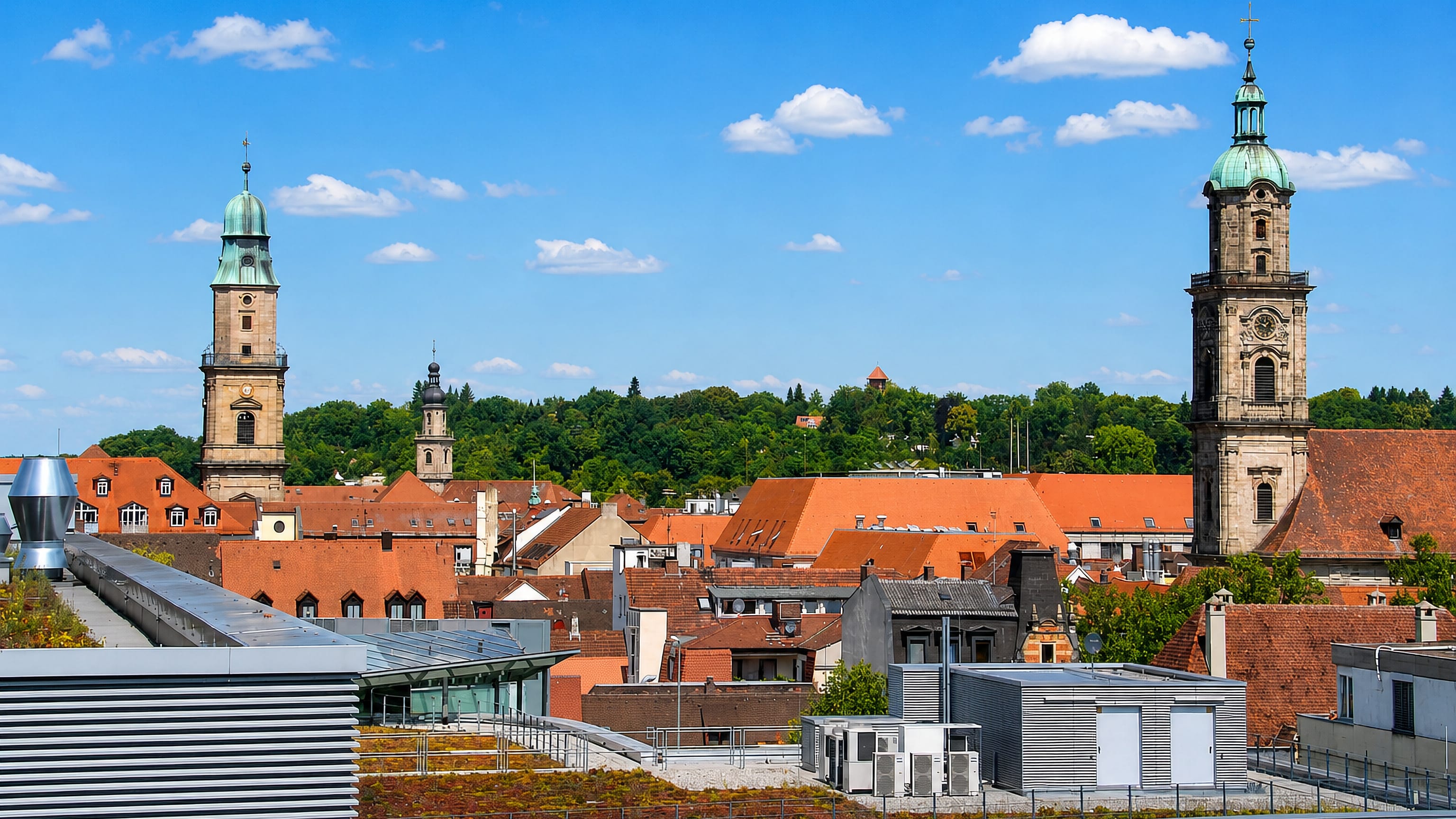
Germany · Bavaria
Where to Stay in Erlangen, Bavaria
Erlangen is a Middle Franconian city in Bavaria, grown from a Huguenot refuge into a town of the Friedrich-Alexander University and Siemens.
Hotel links are affiliate links: booking through them may earn us a commission, at no extra cost to you. It never affects how places are ranked. How this works


Where to stay in Erlangen
Where you base yourself shapes the visit — here's the character of each area.

 ErlangenGermany
Bruck
Bruck is an Erlangen district in Bavaria whose monument list holds the Brucker Mühle, a former brewery and the railway houses at Bahnhof Bruck.Where to stay → ErlangenGermany
Büchenbach
Büchenbach is a district of Erlangen in Bavaria, and its monument list runs to four churches, among them St. Xystus.Where to stay →Hotel links are affiliate links: booking through them may earn us a commission, at no extra cost to you. It never affects how places are ranked. How this works
Find hotels in Erlangen
Direct booking searches for these neighbourhoods.
The Neustädter grid
The Huguenot Church and the Kunstpalais Erlangen inside the planned quarterFind hotels in The Neustädter gridMornings in the Burgberggarten above ErlangenThe Burgberg slope
The Burgbergkapelle and the hill garden replace the shopping streets. Rooms are few around here — worth securing early.Find hotels in The Burgberg slopeDrivers who want parking and a quiet night in termBüchenbach and the outer quarters
Sankt Xystus marks this edge of Erlangen towards Erlangen-HöchstadtFind hotels in Büchenbach and the outer quartersHotel links are affiliate links: booking through them may earn us a commission, at no extra cost to you. It never affects how places are ranked. How this works
Things to do in Erlangen
Ranked by global recognition; descriptions from Wikidata (CC0).
Museums & Galleries
2- Kunstpalais Erlangen
- Kunstmuseum Erlangen
Churches & Religious Sites
8- Huguenot Church (Erlangen) Heritage
- Neustädter Kirche, Erlangen Heritage
- Altstädter Pfarrkirche Heritage
- Herz Jesu Kirche Heritage
- St. Xystus (Büchenbach) Heritage
Show 3 more →
- St. Matthäus (Erlangen) Heritage
- Evangelisch-lutherische St. Peter und Paul Heritage
- St. Sebald Heritage
Castles & Historic Sites
2- Veste Erlangen Heritage
- Jakob-Herz-Stele
Nature & Outdoors
1- Burgberggarten
Landmarks & Notable Places
7- Kollegienhaus Heritage
- Besoldsches Haus Heritage
- Brucker Mühle Heritage
- Leipziger Straße 3 (Erlangen) Heritage
- Westfalenhaus Heritage
Show 2 more →
- Bauernhaus Heritage
- Ehemaliges Judenhaus Heritage
worth knowingacross 5 categories in Erlangen
About Erlangen
What is Erlangen known for?
Most of the Friedrich-Alexander University sits in Erlangen, and the Siemens company is based here as well, which fills the streets with students and engineers rather than tourists. The plan shows through. Huguenot refugees from France settled the newer half, and the Huguenot Church survives from that arrival.
The margraves of Ansbach Bayreuth kept a secondary residence here, and the town grew around that arrangement.
What are the main landmarks in Erlangen?
Church buildings dominate Erlangen's landmark list. The Huguenot Church, the Neustädter Kirche, the Altstädter Pfarrkirche, and Sankt Peter und Paul lead the list, with Heilig Kreuz, Sankt Sebald, and Sankt Markus after them. Art and local history divide between the Kunstpalais Erlangen, the Kunstmuseum Erlangen, and the Erlangen city museum.
University holdings appear as the Antique and Classical Collection of the University of Erlangen-Nuremberg. The Burgbergkapelle and the Burgberggarten share the high ground of the Burgberg, while Veste Erlangen, the Jakob-Herz-Stele, and the Westfalenhaus fill out the rest.
What is the history of Erlangen?
Refugees made the modern city. Huguenots leaving France settled here, and the Huguenot Church is the plainest reminder of an arrival that changed the size and the shape of Erlangen. The town itself is older, with a founding year of 1002 behind it.
Margraves of Ansbach Bayreuth kept their secondary residence here, and that arrangement was the second reason the place grew. The Kollegienhaus, the Besoldsches Haus, and the Westfalenhaus survive from the older city. Veste Erlangen and the Burgbergkapelle belong to an earlier layer again.
The Friedrich-Alexander University supplied the next change, and most of it stands in Erlangen rather than in Nuremberg, which is the other half of its name. Siemens came after it. The company and the university between them turned a margravial town into a working university and industrial city, and the Antique and Classical Collection of the University of Erlangen-Nuremberg is one of the quieter results.
Erlangen counted as a major city from 1974, under the statistical definition officially used in Germany, and it remains the smallest of the eight major cities in Bavaria. The city is the seat of the district of Erlangen-Höchstadt. The Jakob-Herz-Stele and the Erlangen city museum keep the local record, and the Kunstpalais Erlangen and the Kunstmuseum Erlangen keep the art.
Both origins still show.
Where is Erlangen?
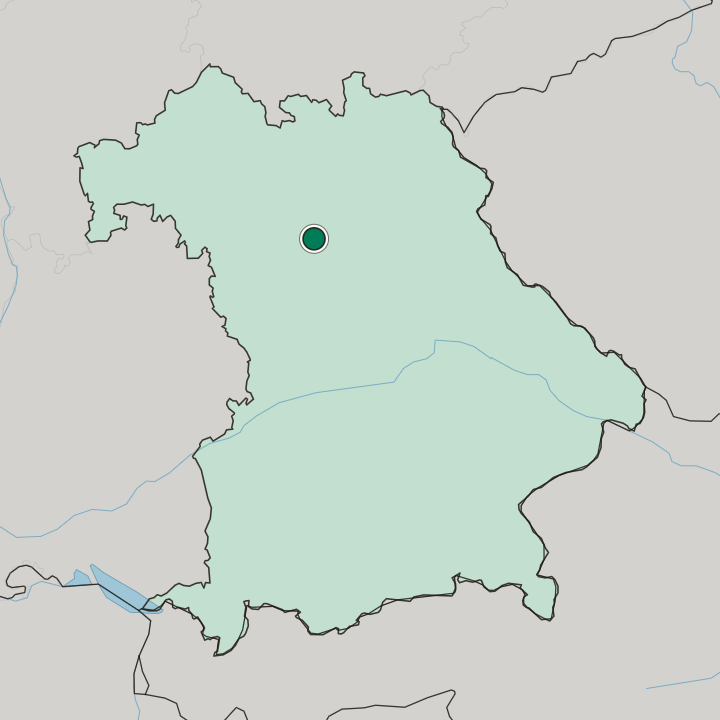
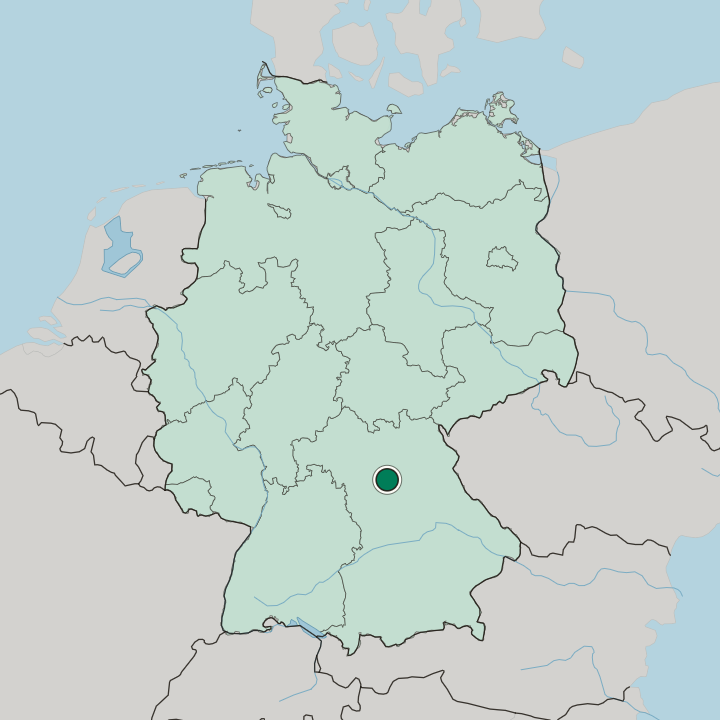
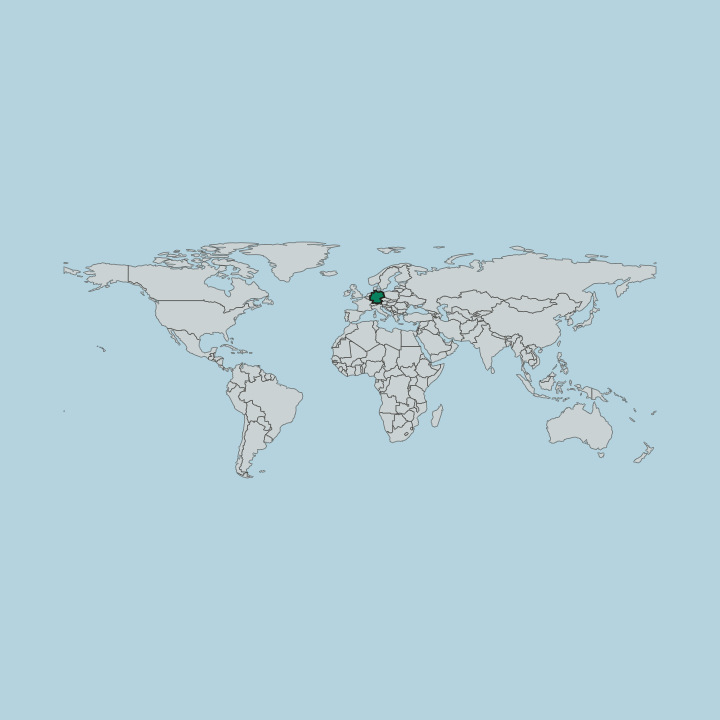
Erlangen sits in Middle Franconia within Bavaria, close enough to Nuremberg that the university carries both names, and the Burgberg gives the built-up ground its one rise. Two halves make the plan. The Altstädter and Neustädter names still divide the city between them.
Büchenbach and the outer quarters reach the edge of Erlangen-Höchstadt, the district whose seat the city provides.
What is the climate of Erlangen?
Weather here is unremarkable. Rain reaches the Burgberggarten in every month of the year, which is what the temperate band over Middle Franconia delivers, and neither the cold nor the heat holds for long. Term time runs through the darker half of that year, which is when the university city is at its fullest.
How do you get to Erlangen?
The centre is small enough to cross on foot, so a car is worth parking once and leaving alone, and drivers coming in from Erlangen-Höchstadt find the outer quarters easier ground for it. Büchenbach is one such edge. The Friedrich-Alexander University addresses lie inside the walkable part, and so do the Kunstpalais Erlangen and the Huguenot Church.
The climb to the Burgberggarten is the only gradient worth the name.
Common questions
What is the best area to stay in Erlangen?
The Neustädter grid: Guests using the Friedrich-Alexander University addresses. The Burgberg slope: Mornings in the Burgberggarten above Erlangen. Büchenbach and the outer quarters: Drivers who want parking and a quiet night in term.
Good for
More cities in Bavaria
Updated October 2026