Germany · Bavaria
Where to Stay in Würzburg, Bavaria
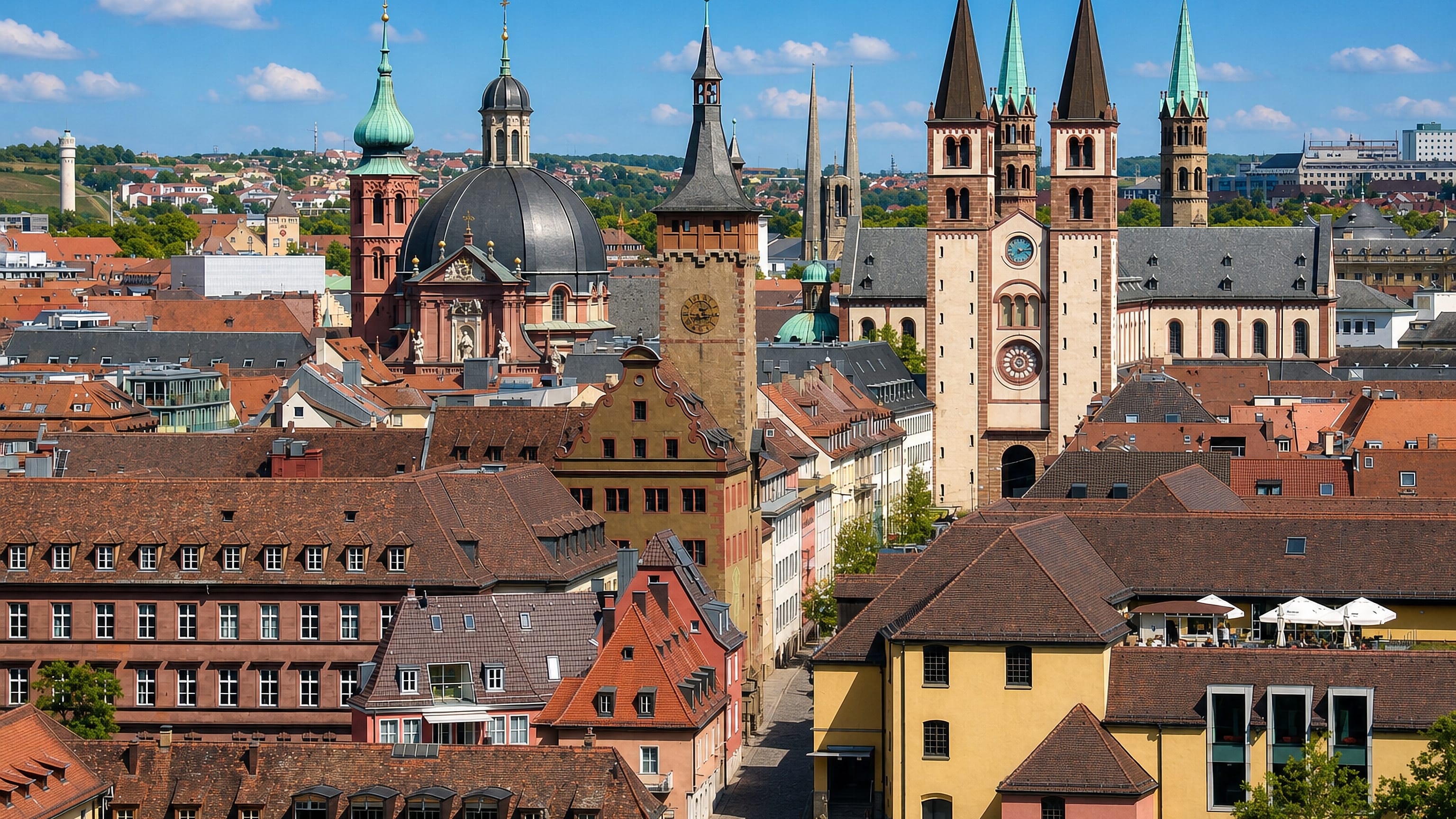
Würzburg is the seat of Lower Franconia on the Main, where the Würzburg Residence and Würzburg Cathedral stand a few streets apart.
Hotel links are affiliate links: booking through them may earn us a commission, at no extra cost to you. It never affects how places are ranked. How this works



Where to stay in Würzburg
One neighbourhood here has its own guide — here's what it is best for.

 WürzburgGermany
Versbach
Versbach is a district of Würzburg in Bavaria, not quite ten square kilometres whose heritage list runs to farmhouses and a memorial stone.Where to stay →Hotel links are affiliate links: booking through them may earn us a commission, at no extra cost to you. It never affects how places are ranked. How this works
Find hotels in Würzburg
Direct booking searches for these neighbourhoods.
Between the Cathedral and the Residence
Würzburg Cathedral, the Kollegiatstift Neumünster, and the Marienkapelle all fall inside the walk between the twoFind hotels in Between the Cathedral and the ResidenceGuests who want the river and the Kulturspeicher at handBy the harbour warehouses
The Museum im Kulturspeicher Würzburg and the water sit on the cathedral's bank, a walk from the old streetsFind hotels in By the harbour warehousesLonger stays near the Universitätsgebäude and the Martin von Wagner MuseumThe university streets by Stift Haug
Stift Haug, Saint Adalbero Church, and the Universitätsgebäude mark the quieter streets behind the Würzburg ResidenceFind hotels in The university streets by Stift HaugHotel links are affiliate links: booking through them may earn us a commission, at no extra cost to you. It never affects how places are ranked. How this works
Things to do in Würzburg
Ranked by global recognition; descriptions from Wikidata (CC0).
Museums & Galleries
3- Würzburg Residence Heritage
- Universitätsgebäude Heritage
- Martin von Wagner Museum
Churches & Religious Sites
8- Wurzburg Cathedral Heritage
- Marienkapelle, Würzburg Heritage
- Kollegiatstift Neumünster, Würzburg Heritage
- Stift Haug, Würzburg Heritage
- Pfarrkirche Heritage
Show 3 more →
- Marienkirche, Würzburg Heritage
- Augustinerkirche Heritage
- St. James's Abbey, Würzburg Heritage
Castles & Historic Sites
1- Gedenkstein Heritage
Landmarks & Notable Places
4- Gefängnis Heritage
- Mietshaus Heritage
- Doppelbauernhaus Heritage
- Wohnhaus Heritage
worth knowingacross 4 categories in Würzburg
About Würzburg
Wine and the Residence carry it.
What is Würzburg known for?
The Würzburg Residence is the building the city is known by, and Franconian wine is the other thing Germany associates with this stretch of the Main. The Romantic Road ends here. Würzburg Cathedral, the Marienkapelle, and Stift Haug fill the streets between, while the Museum im Kulturspeicher Würzburg adds a modern collection to the list.
What are the main landmarks in Würzburg?
One palace outranks everything. The Würzburg Residence is the building visitors come for, and Würzburg Cathedral and the Kollegiatstift Neumünster hold the ground immediately behind it in the old centre. Churches are everywhere here.
The Marienkapelle, Stift Haug, Saint Adalbero Church, the Augustinerkirche, and the Antoniterkirche each stand in the streets around it, and the Franziskanerkirche adds another. Museums close the list: the Museum am Dom, the Lower Franconian Museum, and the Martin von Wagner Museum.
What is the history of Würzburg?
The oldest layer here is ecclesiastical. Würzburg Cathedral and the Kollegiatstift Neumünster stand beside each other in the old centre, and Stift Haug, the Marienkapelle, and the Marienkirche belong to the same long ecclesiastical build-up. Monastic orders followed them.
St. James's Abbey, the Augustinerkirche, the Antoniterkirche, and the Franziskanerkirche mark the religious houses that filled the city, and a surviving Kloster records another. Saint Adalbero Church joins that list. The Residence changed the scale.
Würzburg Residence is the largest single work of building the city owns, and it set the standard that every later address in the old centre was measured against. A university grew here too. The Universitätsgebäude carries that side of the story, and the Martin von Wagner Museum and the Mineralogisches Museum Würzburg both belong to the teaching city rather than to the churches.
Collections took the rest. The Lower Franconian Museum and the Museum am Dom hold the regional and religious material, while the Museum im Kulturspeicher Würzburg keeps the modern art apart from both. A Gefängnis and a protected Mietshaus survive from the plainer end of the same centuries.
Nuremberg is the only Franconian city larger, and Würzburg has held the administrative seat of Lower Franconia through the changes that produced all of it.
Where is Würzburg?
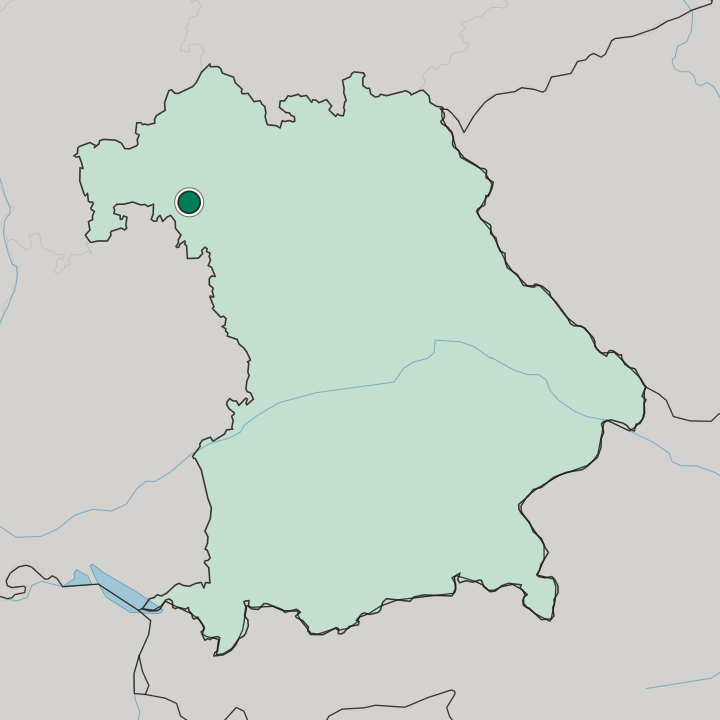
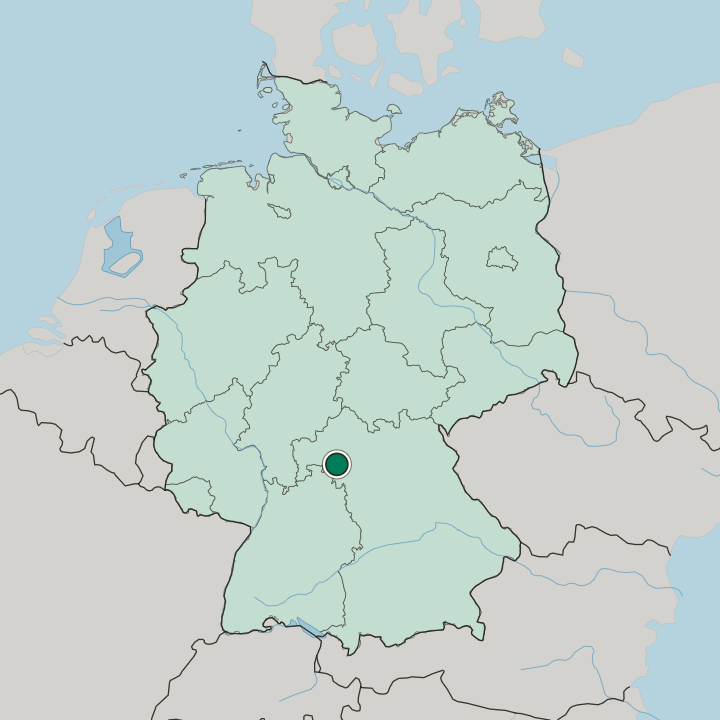
The Main splits the city. Würzburg spans both banks of the river in Franconia, with the wine country of Lower Franconia around it and Bavaria wider still beyond that boundary. The temperate band holds.
Nuremberg is the larger city of Franconia, and Würzburg takes the Lower Franconian half of it, spreading from the water into the streets that carry Stift Haug and Saint Adalbero Church.
What is the climate of Würzburg?
Franconian wine needs the sun. Würzburg sits in the temperate band, and the growing season along the Main runs long enough for the vineyards of Lower Franconia to ripen the fruit the city is known for. Winters are grey rather than severe.
Showers arrive through the year, and the climb away from the river is easier between spring and the end of the harvest than it is in January.
How do you get to Würzburg?
The Romantic Road ends at Würzburg. Drivers arriving along it come into a city that also holds the administrative seat of Lower Franconia, so the through routes of the region converge here rather than skirting it. The Main carries the other axis.
Once inside, the Würzburg Residence, Würzburg Cathedral, and the Marienkapelle are all within a walk of each other, and the Museum im Kulturspeicher Würzburg lies by the river on the same bank. Nuremberg is the other Franconian city of size.
Common questions
What is the best area to stay in Würzburg?
Between the Cathedral and the Residence: First visits built around the Würzburg Residence and the Museum am Dom. By the harbour warehouses: Guests who want the river and the Kulturspeicher at hand. The university streets by Stift Haug: Longer stays near the Universitätsgebäude and the Martin von Wagner Museum.
Good for
More cities in Bavaria
Updated October 2026