Germany · Bavaria
Where to Stay in Augsburg, Bavaria
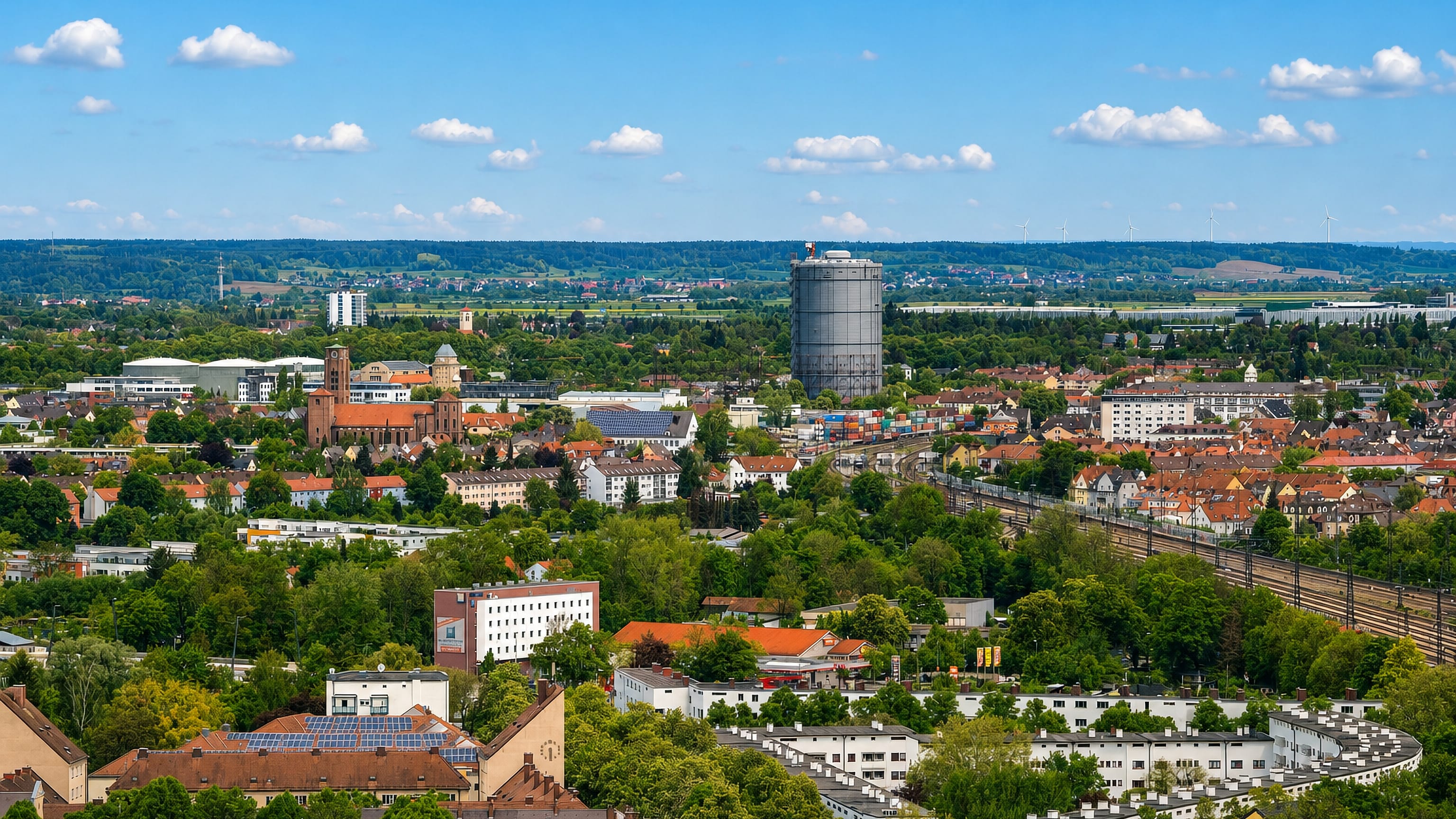
The Perlachturm rises over Augsburg, one of the oldest cities in Bavaria, seat of Swabia, known for its Altstadt and the Fugger und Welser Erlebnismuseum.
Hotel links are affiliate links: booking through them may earn us a commission, at no extra cost to you. It never affects how places are ranked. How this works


Where to stay in Augsburg
Each area has its own feel; here's who each one suits.
 AugsburgGermany
Antonsviertel
Antonsviertel is the Augsburg district carrying Maximilianstraße, the Augsburger Zeughaus, and the abbey of St. Ulrich's and St. Afra's.Antonsviertel →AugsburgGermanyLechhausen
Lechhausen is a Stadtteil of Augsburg across the Lech, holding Lechhausen-Süd, Lechhausen-Ost and Lechhausen-West. Its own town until 1913.Lechhausen → AugsburgGermany
Pfersee
Pfersee is the Augsburg quarter on the western shore of the Wertach, holding the Augsburg Ice Hockey Museum and the Apostelin-Junia-Kirche.Pfersee → AugsburgGermany
Spickel-Herrenbach
Spickel-Herrenbach is the Augsburg district holding the Augsburg Zoo, the Färberturm, and the Kunsthalle Augsburg im Glaspalast.Spickel-Herrenbach →AugsburgGermanyHochfeld
Hochfeld is a district of Augsburg holding the Augsburg Railway Park, the Forstmuseum Waldpavillon, and the parish church of St. Canisius.Hochfeld → AugsburgGermany
Oberhausen
Oberhausen is the Augsburg quarter the Wertach runs through, five wards wide, with the Markgräflich-Burgauisches Amtshaus among its listed buildings.Oberhausen → AugsburgGermany
Kriegshaber
Kriegshaber is the Augsburg quarter whose register runs from the Synagoge Ulmer Straße to the old Zollhaus and the Kulturhaus Abraxas.Kriegshaber →AugsburgGermanyHammerschmiede
Hammerschmiede is a district of Augsburg in Bavaria, and the church of Christkönig is its one named landmark.Hammerschmiede → AugsburgGermany
Hochzoll
Hochzoll is one of seventeen Planungsräume of Augsburg, a Bavarian city quarter carried east of the Lech.Hochzoll →AugsburgGermanyFirnhaberau
Firnhaberau is the 28th Stadtbezirk of Augsburg, a Bavarian district whose ground takes in the Wolfzahnau and its hydroelectric station.Firnhaberau →AugsburgGermanyBärenkeller
Bärenkeller is one of Augsburg's seventeen Planungsräume, a single-ward quarter in Bavaria whose listed church is the Bruder-Konrad-Kirche.Bärenkeller → AugsburgGermany
Inningen
Inningen is a former Bavarian municipality annexed by Augsburg in 1972, and it still fills the 41st Stadtbezirk on its own.Inningen →Hotel links are affiliate links: booking through them may earn us a commission, at no extra cost to you. It never affects how places are ranked. How this works
Things to do in Augsburg
Ranked by global recognition; descriptions from Wikidata (CC0).
Museums & Galleries
3- Synagoge Halderstraße Heritage
- Synagoge Ulmer Straße Heritage
- Augsburg textile and industry museum
Churches & Religious Sites
8- St. Anne's Church, Augsburg Heritage
- St. Peter am Perlach Heritage
- St. Moritz Heritage
- St. Ulrich's and St. Afra's Abbey, Augsburg Heritage
- Evangelische Ulrichskirche Heritage
Show 3 more →
- Catholic Holy Cross Church, Augsburg Heritage
- St. Stephen's Abbey Heritage
- Don-Bosco-Kirche Heritage
Castles & Historic Sites
5- Archduke Charles Memorial (Augsburg) Heritage
- Markgräflich-Burgauisches Amtshaus Heritage
- Zollhaus Augsburg-Kriegshaber Heritage
- Cultural heritage D-7-7631-0620 in Augsburg Heritage
- Denkmal Professor-Steinbacher-Straße 10 a in Augsburg Heritage
Stadiums & Sports
3- Kanustrecke Am Eiskanal 30 in Augsburg Heritage
- Kanustrecke Nähe Lech in Augsburg Heritage
- Kanustrecke Spickelstraße 41 a in Augsburg Heritage
Landmarks & Notable Places
8- Perlachturm Heritage
- Augsburger Zeughaus Heritage
- Brechthaus Heritage
- Vogeltor Heritage
- Färberturm Heritage
Show 3 more →
- Mädchenschule Heritage
- Kapellen-Volksschule Augsburg-Oberhausen Heritage
- Ehemaliges Kontorhaus der Firma F. B. Silbermann Heritage
worth knowingacross 5 categories in Augsburg
About Augsburg
What is Augsburg known for?
Augsburg is known as one of the oldest cities in Germany and the regional seat of Swabia within Bavaria, its old wealth built on merchant banking and later on textiles. The banking story lives on. The Fugger und Welser Erlebnismuseum tells how the great houses ran their fortunes from here, and the well-preserved Altstadt keeps the towers and churches of that age around the Perlachturm.
Culture runs deep here too. The Maximilianmuseum holds the city's civic collections, while the Brechthaus marks the birthplace of the playwright Bertolt Brecht.
What are the main landmarks in Augsburg?
Augsburg concentrates its landmarks in the well-preserved Altstadt, where the Perlachturm rises over the central squares and the old merchant streets that run out from them toward the city gates. The tower stands beside St. Peter am Perlach. Faith is written into the stone of the old town, and the great abbey of St. Ulrich's and St. Afra's Abbey anchors its southern end near the church of St. Moritz, both survivors of the age when Augsburg built as much for worship as for trade.
Old walls ring it still. Beyond the churches the Augsburger Zeughaus and the medieval Vogeltor recall the fortified city, while the Maximilianmuseum, the Fugger und Welser Erlebnismuseum, and the Brechthaus gather its art and its memory of Bertolt Brecht.
What is the history of Augsburg?
Augsburg counts among the oldest cities in Germany, and its history is written into the Altstadt. The old walls left gates like the Vogeltor and the arsenal of the Augsburger Zeughaus, marks of a city that had to defend its trade. Its wealth came from money itself.
In the age of the merchant banks the Fugger and Welser houses ran their fortunes from here, a story now kept in the Fugger und Welser Erlebnismuseum, and their patronage raised much of the church and civic building that still stands. The Reformation reached the city early. St. Anne's Church became a centre of the new teaching, and Augsburg gave its name to a confession of faith drawn up within its walls, so the old town holds Catholic and Protestant churches side by side, among them St. Ulrich's and St. Afra's Abbey and St. Moritz.
Its industry came later, with textiles. The mills along the water made Augsburg a manufacturing city, a past gathered now in the Augsburg textile and industry museum. The playwright Bertolt Brecht was born here, in the house kept as the Brechthaus.
Augsburg remains the regional seat of Swabia within Bavaria, its Altstadt one of the best-kept old cores in the country.
Where is Augsburg?
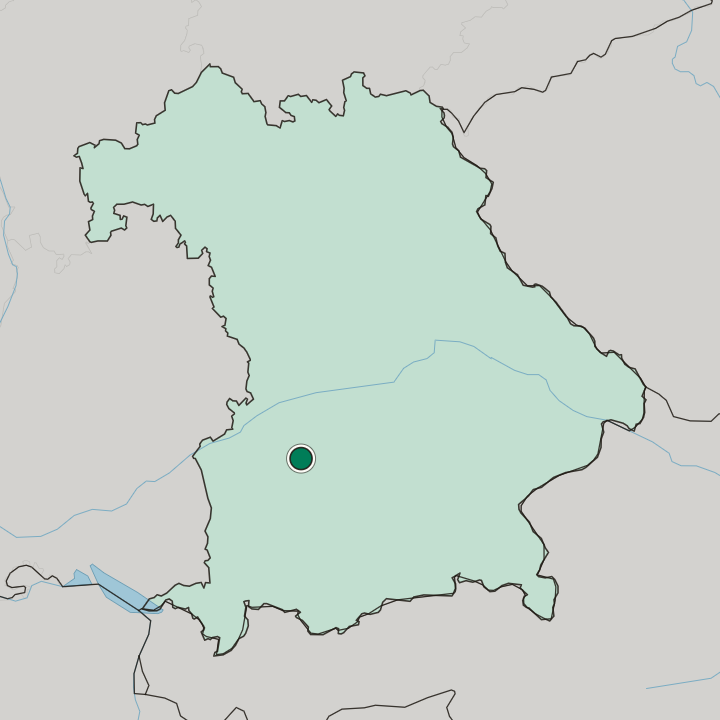
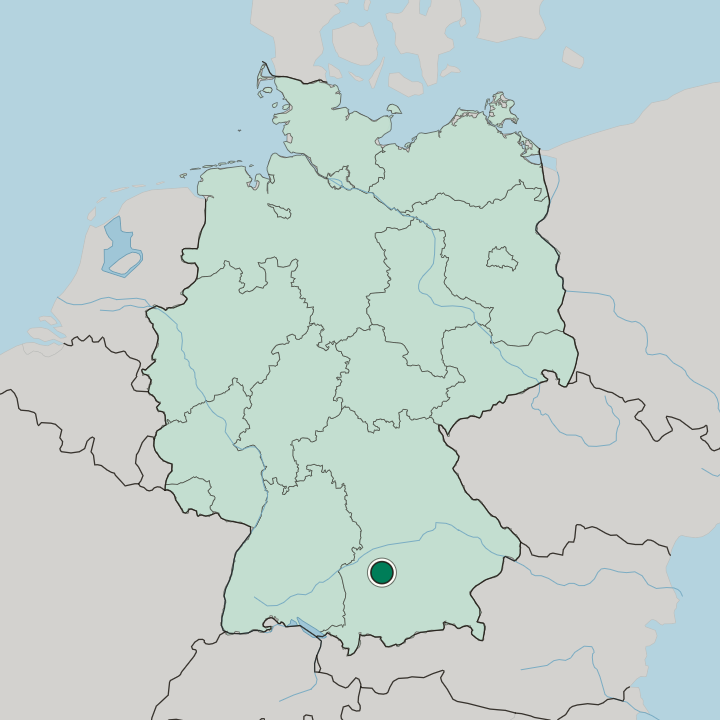
Augsburg lies in the Bavarian part of Swabia, on the plain west of Munich in the state of Bavaria. The old core sits on rising ground above the surrounding lowland, and the Altstadt spreads across it in a compact ring of towers and squares. Water shaped the city early.
Streams and canals thread the old town, once powering the mills that gave Augsburg its trade, and the flat farmland of Swabia opens out beyond the built-up edge. From here the ground falls away gently toward the wider Bavarian plain.
What is the climate of Augsburg?
Augsburg has a temperate climate marked by its inland position on the Swabian plain within Bavaria. Winters run cold and often grey, with frost and snow settling over the surrounding lowland for weeks at a time. Summers turn humid.
Thunderstorms build on hot afternoons and break over the plain in sudden rain, while spring and autumn stay changeable, cool and bright by turns between the harder seasons. Rain falls through the year, feeding the streams and canals that thread the old town.
How do you get to Augsburg?
Augsburg sits on the main rail and motorway line between Munich and Stuttgart, an easy reach from either. Munich lies close by. Fast trains stop at its central station, west of the Altstadt, on the busy route across southern Bavaria, with the nearest large airport reached by an onward ride from Munich.
Regional lines fan out across Swabia from the city. The motorway passes close to the north, so Augsburg is quick to reach by car from the Bavarian capital and the wider south, and trams carry arrivals the last stretch into the old town.
Good for
More cities in Bavaria
Updated October 2026