Germany · Bavaria
Where to Stay in Landshut, Bavaria
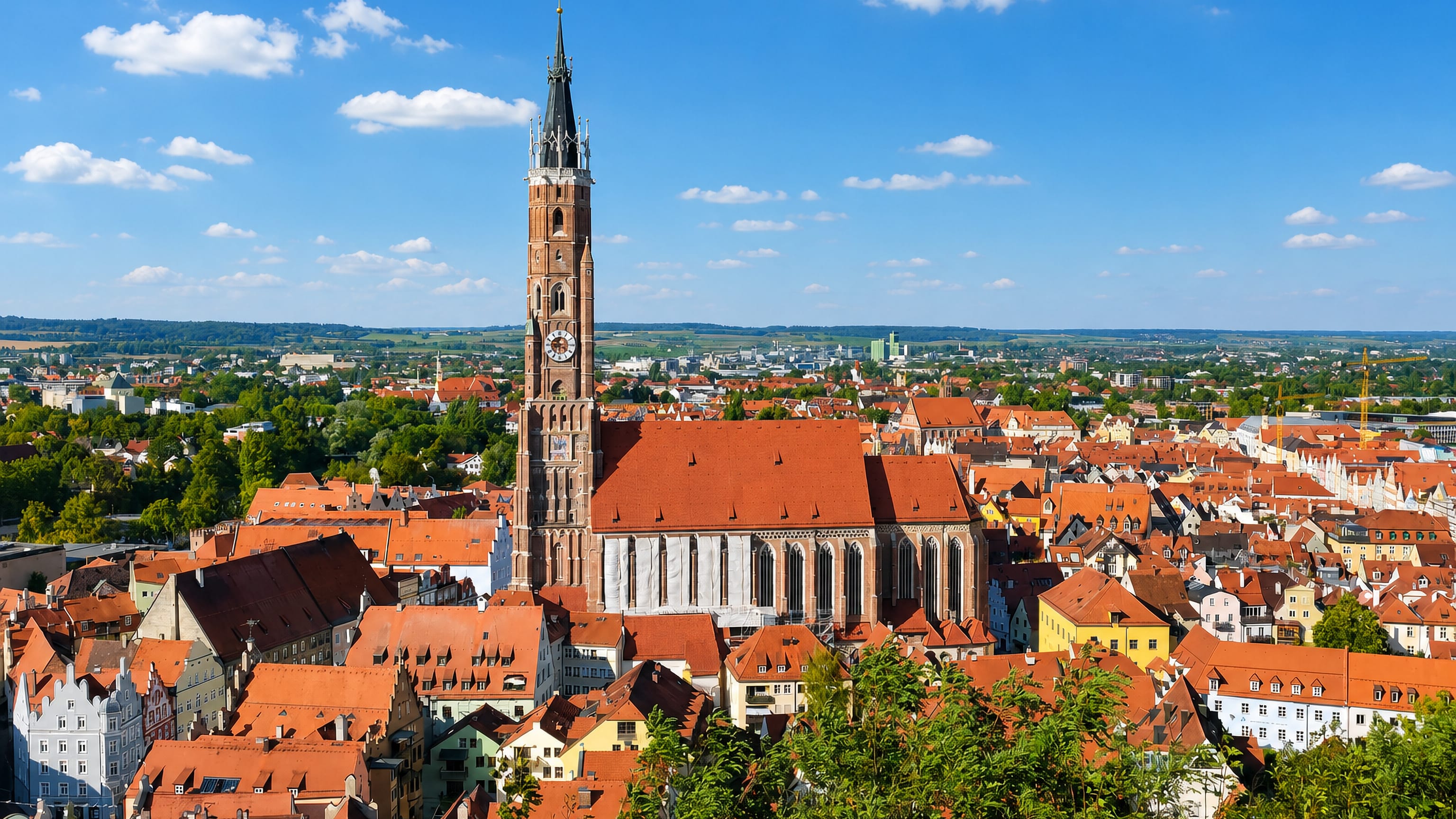
Landshut is a ducal Bavarian town founded in 1204, its old core packed with church towers, chapels and the walls of Trausnitz Castle.
Hotel links are affiliate links: booking through them may earn us a commission, at no extra cost to you. It never affects how places are ranked. How this works


Where to stay in Landshut
Where the beds are, and what that means for the visit.
The old core is the short answer, and the reasons are all within a few streets of St. Martin's Church. The Landschaftshaus, the Jesuitenkirche and the Dominikanerkirche are close enough that a room among them removes any question of transport, and Freyung 630 is the sort of address that shows what the fabric looks like at ground level. Walking is the point.
Beds in that pocket are few and go early in the season. Under Trausnitz Castle the ground changes. Beds there sit apart from the church-tower core and suit anyone whose morning starts with the castle rather than the market, and the climb is short enough to do twice in a day.
Berg Heilig Blut names the rising ground on the other flank. Quiet comes easily on that side. Ergolding is the third option, a neighbouring place whose parish church of St. Peter und Paul turns up on the same monument list as Landshut's own, and a room out there trades the medieval street plan for parking and an easy road.
None of it lies far apart. The Kapuzinerkloster Landshut and the Nordfriedhof St. Michael sit between the two, which is a reminder that the built-up area runs on past the point where the old town stops.
Find hotels in Landshut
Direct booking searches for these neighbourhoods.
The old core
St. Martin's Church, the Dominikanerkirche and addresses like Freyung 630 stand in the same set of streets. Beds are limited here, so book early.Find hotels in The old coreMornings that begin with the climb to Trausnitz CastleUnder Trausnitz Castle
Ground apart from the church-tower core, with Berg Heilig Blut named on the far flankFind hotels in Under Trausnitz CastleArrivals by car who would rather not enter the medieval street planErgolding
A neighbouring place whose parish of St. Peter und Paul is listed with Landshut's own monumentsFind hotels in ErgoldingHotel links are affiliate links: booking through them may earn us a commission, at no extra cost to you. It never affects how places are ranked. How this works
Things to do in Landshut
Ranked by global recognition; descriptions from Wikidata (CC0).
Churches & Religious Sites
8- St. Martin's Church Heritage
- Heilig-Geist-Kirche (Landshut) Heritage
- Dominikanerkirche Heritage
- Jesuitenkirche Heritage
- Landshut Berg Heilig Blut Heritage
Show 3 more →
- St. Nikola (Landshut) Heritage
- Alt St. Margareta Heritage
- Christuskirche (Landshut) Heritage
Castles & Historic Sites
2- Trausnitz Castle Heritage
- Denkmal für Herzog Ludwig den Reichen Heritage
Landmarks & Notable Places
1- Landschaftshaus Heritage
worth knowingacross 3 categories in Landshut
About Landshut
Churches, and then more churches.
What is Landshut known for?
Landshut carries St. Martin's Church, the Jesuitenkirche, the Dominikanerkirche and the Heilig-Geist-Kirche within a few streets of each other, along with chapels as small as the Sebastiankapelle, the Theklakapelle and the Kapelle Maria Bründl. Trausnitz Castle holds the other half. Ducal Bavaria left its mark in stone as much as in worship, and the Denkmal für Herzog Ludwig den Reichen carries a duke's name into the street plan of a town chartered in 1204.
What are the main landmarks in Landshut?
St. Martin's Church and Trausnitz Castle are the two that carry the skyline. Below them the count runs high: the Jesuitenkirche, the Dominikanerkirche, the Heilig-Geist-Kirche, the Erlöserkirche, the Christuskirche, Mariä Heimsuchung and Alt St. Margareta all hold their own quarters, and the Franziskanerkloster and the Kapuzinerkloster Landshut record the orders that once ran houses here. Chapels fill the gaps.
The Theklakapelle, the Sebastiankapelle and the Kapelle Maria Bründl are the small end of the same tradition, and the Landschaftshaus stands for the secular side of it.
What is the history of Landshut?
Landshut was chartered in 1204. Ducal Bavaria built the town and its castle together, and Trausnitz Castle remains the clearest statement of that arrangement, standing above a core whose street lines were fixed while dukes still governed from here. The Denkmal für Herzog Ludwig den Reichen keeps one of their names in public view.
Stone outlasted the dynasty. Religious houses shaped the rest. The Dominikanerkirche and the Jesuitenkirche belong to orders that took ground inside the walls, the Franziskanerkloster and the Kapuzinerkloster Landshut to others that did the same, and the Heilig-Geist-Kirche marks the kind of hospital foundation that most Bavarian towns of this age carried.
St. Nikola and Alt St. Margareta stand from parishes that predate the modern boundary. Small chapels came with them. The Theklakapelle, the Sebastiankapelle, the Kapelle Maria Bründl and St. Ottilia each hold a corner of the same devotional map, and Landshut Berg Heilig Blut names a pilgrimage site on rising ground.
Later building filled in. The Christuskirche, the Erlöserkirche, Mariä Heimsuchung and St. Joseph belong to generations that came after the ducal one, and the Nordfriedhof St. Michael closes the sequence at the edge of the built-up area. Ergolding grew up against it.
Its parish of St. Peter und Paul is counted among the monuments of the same district, which is what happens when a small town and its neighbour stop having open ground between them.
Where is Landshut?
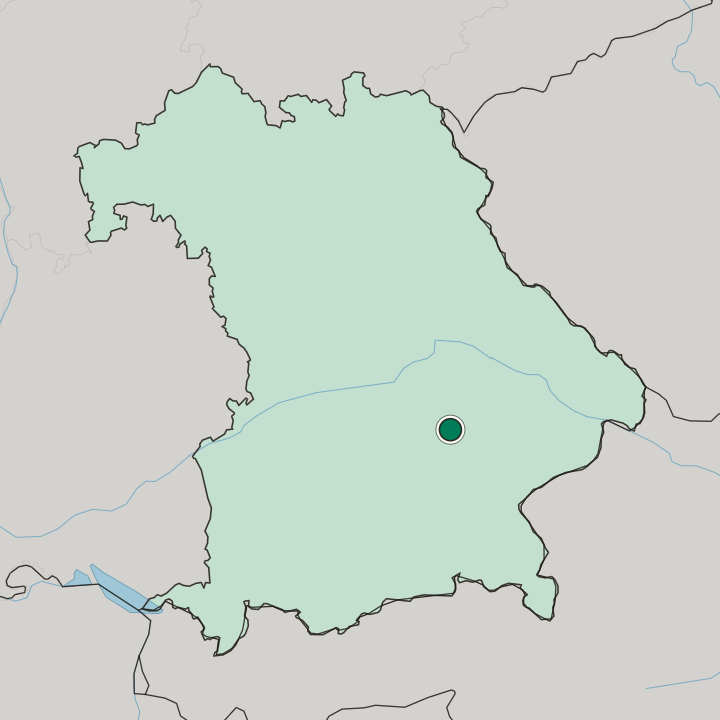
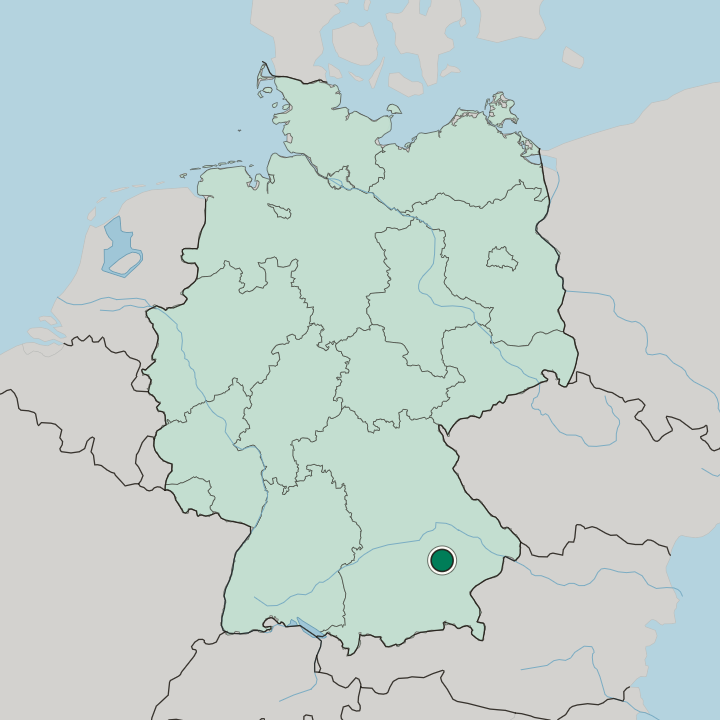
Landshut belongs to Bavaria and sits well inland. No coast is anywhere near, so the town's setting is a matter of low ground, rising ground and the built-up area that has spread across both, with Trausnitz Castle on one side and the slope named in Landshut Berg Heilig Blut on another. Ergolding presses against the edge.
Its church of St. Peter und Paul is listed alongside Landshut's own monuments.
What is the climate of Landshut?
Bavaria's interior sets the year here, with no coast in reach to interfere. Landshut lies in the temperate band, which delivers four distinct seasons rather than a wet half and a dry one, and nothing maritime is close enough to blunt the difference between them. Winter and summer both arrive properly.
How do you get to Landshut?
Roads bring most arrivals in. Ergolding stands so close that the two places run together along the approach, and a car is more use left at the edge than taken into a core whose streets were laid out long before them. The old town crosses on foot in minutes.
St. Martin's Church is the fixed point once inside.
Common questions
What is the best area to stay in Landshut?
The old core: Guests taking the Landschaftshaus and the Jesuitenkirche on one walk. Under Trausnitz Castle: Mornings that begin with the climb to Trausnitz Castle. Ergolding: Arrivals by car who would rather not enter the medieval street plan.
Good for
More cities in Bavaria
Updated October 2026