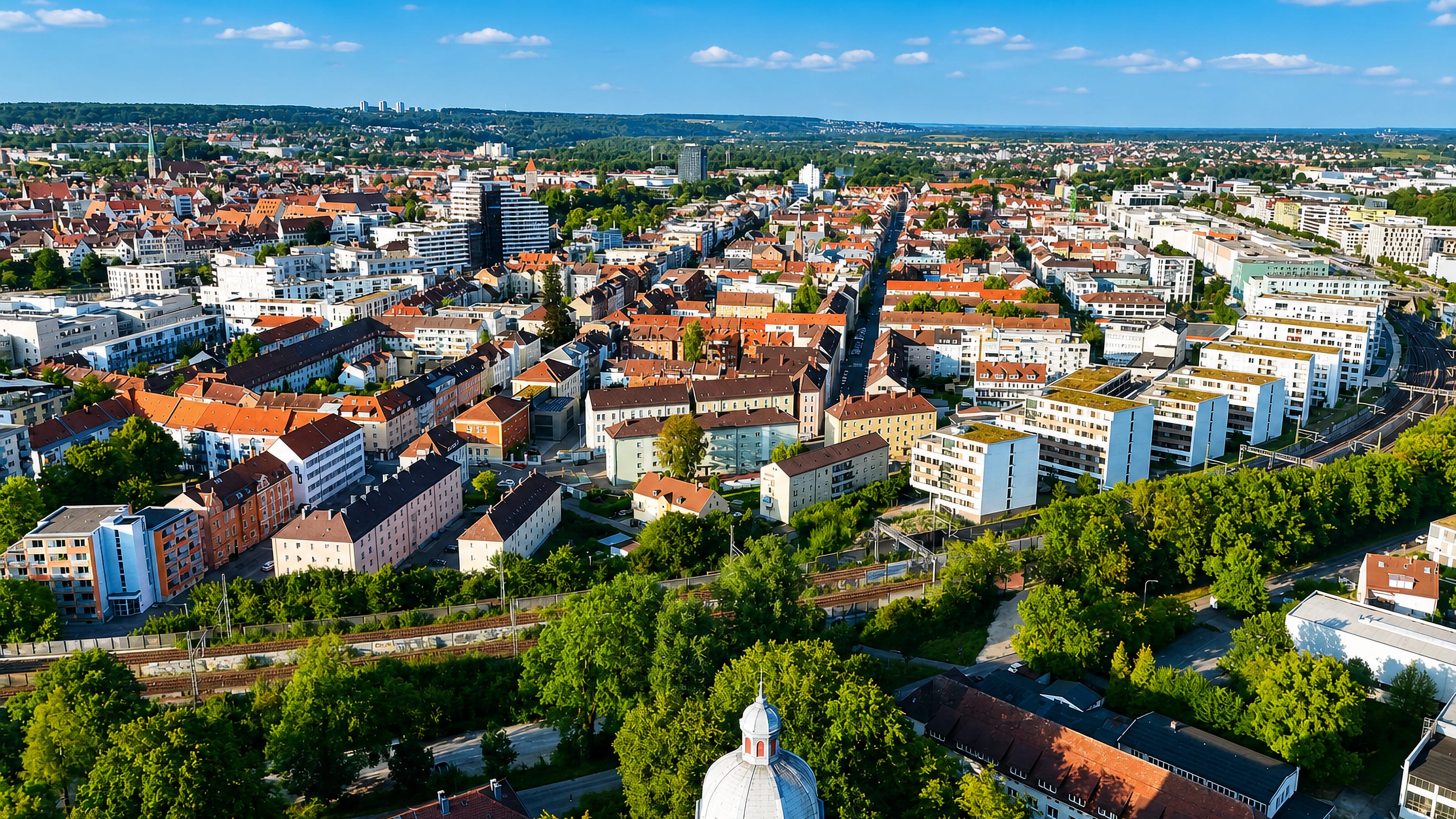
Germany · Bavaria
Where to Stay in Neu-Ulm, Bavaria
Neu-Ulm is a town of 1869 in Bavarian Swabia, facing Ulm across the Danube and running its own district from the newer bank.
Hotel links are affiliate links: booking through them may earn us a commission, at no extra cost to you. It never affects how places are ranked. How this works


Where to stay in Neu-Ulm
How the choice of base plays out on the ground.
The bridges decide more than the addresses do. A bed on the Neu-Ulm bank puts the Danube between the room and the crowds that Ulm Minster pulls, while leaving the Metzgerturm, the Stadthaus Ulm and Museum Ulm inside a short walk across the water. Prices behave differently on each side.
That single crossing is what most guests are buying. Away from the river the town keeps its own streets. The Petruskirche, the Martin-Luther-Kirche and the Pionierdenkmal give the newer bank a centre of its own, and a room among them trades sightseeing minutes for quiet evenings and a shorter queue at breakfast.
Neu-Ulm is a district seat before it is a destination. That shows in the kind of hotel it keeps. Further out, the district takes over.
Senden, Nersingen, Elchingen, Holzheim and Pfaffenhofen an der Roth all lie within the same administrative reach, and staying in that ring suits anyone driving, since the road network is built for the Landkreis rather than for the twin-town core. The trade is obvious. Everything worth seeing is back on the water, and the Wiblingen Abbey and Söflingen Abbey side of the story needs a car or a long morning either way.
Find hotels in Neu-Ulm
Direct booking searches for these neighbourhoods.
The Neu-Ulm bank
One bridge separates the room from the Metzgerturm, the Stadthaus Ulm and Museum UlmFind hotels in The Neu-Ulm bankQuiet evenings on the newer side of the riverAround the Petruskirche
The Martin-Luther-Kirche and the Pionierdenkmal anchor streets that belong to Neu-Ulm aloneFind hotels in Around the PetruskircheDrivers working the district rather than the twin townsThe Landkreis ring
Senden, Nersingen and Elchingen sit on roads built for the Landkreis, not the riverfront. Rooms are few around here — worth securing early.Find hotels in The Landkreis ringHotel links are affiliate links: booking through them may earn us a commission, at no extra cost to you. It never affects how places are ranked. How this works
About Neu-Ulm
One river, two towns.
What is Neu-Ulm known for?
Neu-Ulm stands on the Bavarian bank of the Danube opposite Ulm, near enough that Ulm Minster and the Metzgerturm belong to the same skyline, yet separate enough to run the Neu-Ulm district from its own side of the water. The date on the town is 1869. What draws visitors is shared property, from the Museum der Brotkultur and the Kunsthalle Weishaupt to the Donauschwäbisches Zentralmuseum, and reaching any of it means crossing the river at least once.
What are the main landmarks in Neu-Ulm?
The landmark list here reaches across the river. Ulm Minster, the Metzgerturm, the Stadthaus Ulm, Museum Ulm and the Kunsthalle Weishaupt all carry Ulm's name, and the Museum der Brotkultur and the Donauschwäbisches Zentralmuseum are counted in the same set. Then come the parish churches.
The Petruskirche, the Pauluskirche, the Martin-Luther-Kirche, the Dreifaltigkeitskirche and the Wengenkirche stand within the built-up area the two towns share, and the Seelturm, the Nikolauskapelle and the Valentinskapelle are the smaller survivals among them.
What is the history of Neu-Ulm?
Neu-Ulm was made, not grown. The town dates from 1869, which is why the name reads as an addendum to an older place across the Danube, and the street plan on this bank has none of the accidental geometry that the far bank kept. A new town needs a reason.
This one became the seat of the Neu-Ulm district, and Senden, Nersingen, Elchingen, Holzheim and Pfaffenhofen an der Roth have looked to it since. The older layer belongs to the neighbourhood rather than to the town. Wiblingen Abbey and Söflingen Abbey, the Franziskanerkloster Ulm and the Wengenkirche all predate anything here by centuries, and St. Johann Baptist, the Nikolauskapelle and the Valentinskapelle carry the same kind of age.
Ulm Minster towers over all of it. Neu-Ulm inherited that view without having built any of it. Military engineering wrote the next chapter.
The King-William-Tower and the Pionierdenkmal keep the names of a garrison era in the townscape, and the Seelturm and the Metzgerturm show what an earlier age of towers looked like on the opposite shore. Memory has its own monuments. The Donauschwäbisches Zentralmuseum and the Donauschwabendenkmal both name the Danube Swabians, and the Memorial for Rafael Blumenstock stands for a much narrower and more personal act of remembrance.
Where is Neu-Ulm?
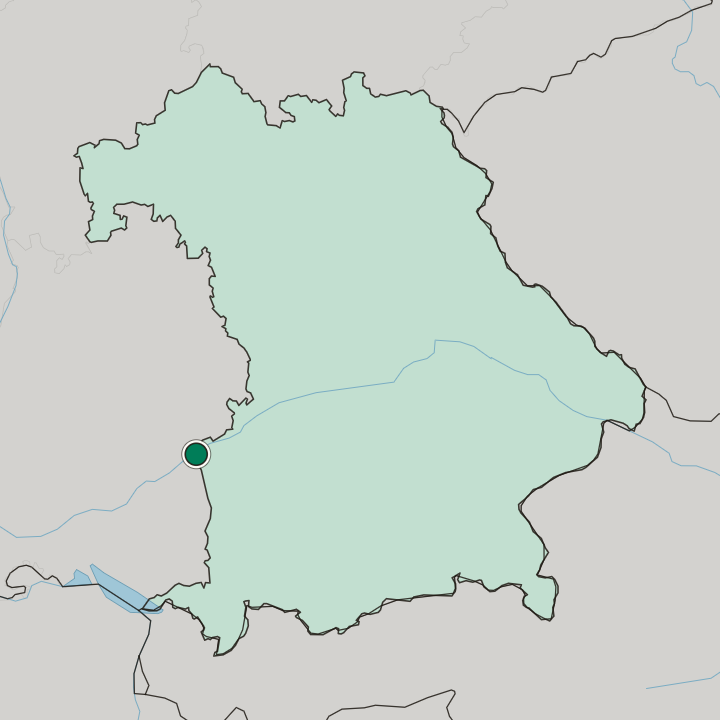
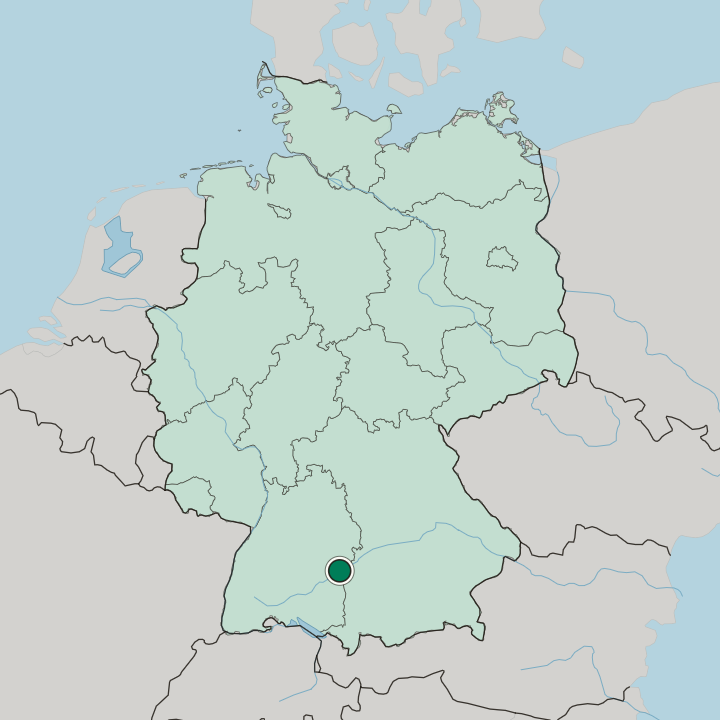
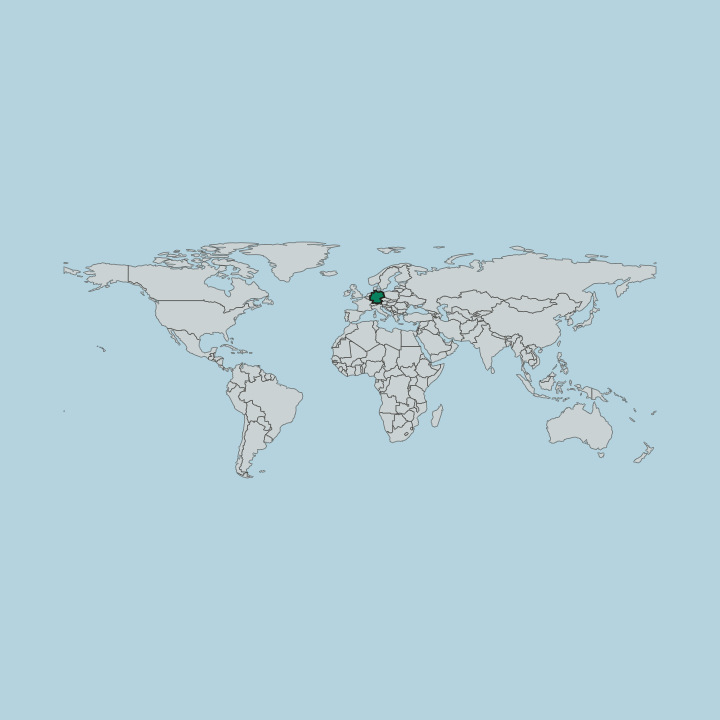
The Danube does the dividing. Neu-Ulm holds the Bavarian side of the river in Swabia, with Ulm directly opposite and no distance at all between the two built-up areas. Bridges close the gap.
Senden, Pfaffenhofen an der Roth, Holzheim, Nersingen and Elchingen ring the town on the landward side, and the whole arrangement sits far inland, with no coast in any direction.
What is the climate of Neu-Ulm?
Both banks share the same weather. The Danube is no barrier to it, and the temperate year that crosses Bavarian Swabia reaches Neu-Ulm and Ulm on the same day, delivering four separate seasons rather than a wet half and a dry one. Swabia gets no help from the sea, which lies a long way from either bank.
How do you get to Neu-Ulm?
Most journeys route through Ulm. The two towns face each other across the Danube, so the last stage of an approach is a bridge rather than a road out of town, and the district beyond, Senden, Nersingen, Elchingen, Holzheim, Pfaffenhofen an der Roth, feeds into Neu-Ulm rather than the reverse. The crossing takes minutes.
Common questions
What is the best area to stay in Neu-Ulm?
The Neu-Ulm bank: Guests wanting Ulm Minster in reach and the crowds on the far shore. Around the Petruskirche: Quiet evenings on the newer side of the river. The Landkreis ring: Drivers working the district rather than the twin towns.
Good for
More cities in Bavaria
Updated October 2026