Germany · Lower Saxony
Where to Stay in Delmenhorst, Lower Saxony
Delmenhorst is an industrial city in Lower Saxony on Bremen's urban edge, first named in a document of 1247 and built up around the Nordwolle factory.
Hotel links are affiliate links: booking through them may earn us a commission, at no extra cost to you. It never affects how places are ranked. How this works


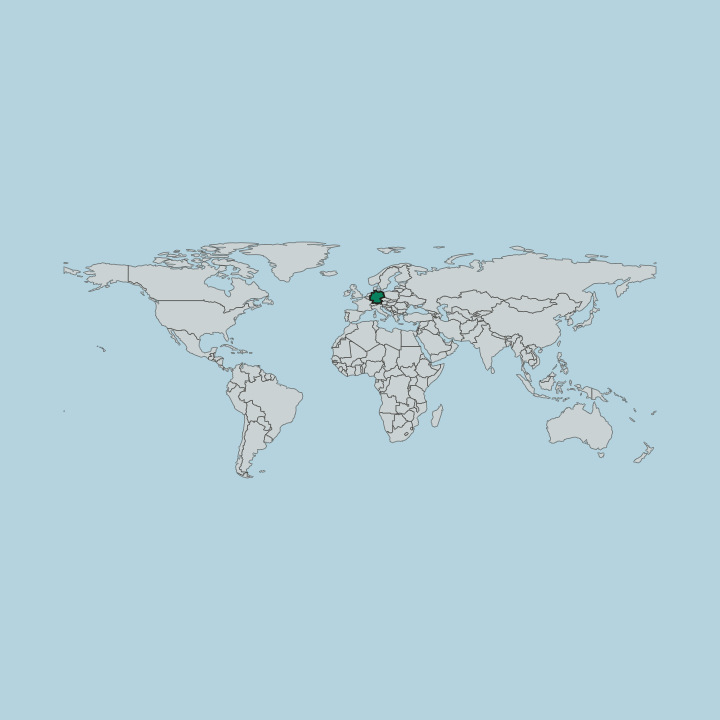
Where to stay in Delmenhorst
One neighbourhood here has its own guide — here's what it is best for.

 DelmenhorstGermany
Annenriede
Annenriede is a district of Delmenhorst in Lower Saxony, sharing its name with the watercourse that flows into the Delme.Where to stay →Hotel links are affiliate links: booking through them may earn us a commission, at no extra cost to you. It never affects how places are ranked. How this works
Find hotels in Delmenhorst
Direct booking searches for these neighbourhoods.
The centre by Burg Delmenhorst
The oldest ground in the city, where the castle site and the market streets sit togetherFind hotels in The centre by Burg DelmenhorstAnyone coming for the Nordwestdeutsches Museum für IndustriekulturThe Nordwolle quarter
The old works district, where the factory buildings and the Städtische Galerie Delmenhorst standFind hotels in The Nordwolle quarterDrivers who want parking and the road toward OldenburgHasbergen and the outer quarters
Outer streets near the Museumsmühle Hasbergen, quieter than the ground around the castleFind hotels in Hasbergen and the outer quartersHotel links are affiliate links: booking through them may earn us a commission, at no extra cost to you. It never affects how places are ranked. How this works
Things to do in Delmenhorst
Ranked by global recognition; descriptions from Wikidata (CC0).
Museums & Galleries
3- Museumsmühle Hasbergen Heritage
- Städtische Galerie Delmenhorst
- Nordwestdeutsches Museum für Industriekultur
Churches & Religious Sites
4- St. Marien Heritage
- Stadtkirche Heritage
- Zu den zwölf Aposteln Heritage
- St. Christophorus Heritage
Castles & Historic Sites
3- Nikolaus Friedrich Peter memorial Heritage
- Burg Delmenhorst
- Jan Tut
worth knowingacross 3 categories in Delmenhorst
About Delmenhorst
What is Delmenhorst known for?
Nordwolle was the biggest factory of them all, and the wool works pulled Delmenhorst from a small town into an industrial city in the late nineteenth century. The record sits in museums. Nordwestdeutsches Museum für Industriekultur takes the factory story, while the Stadtmuseum Delmenhorst and the Städtische Galerie Delmenhorst hold the town's own history and its art.
Bremen begins a short way off.
What are the main landmarks in Delmenhorst?
Burg Delmenhorst is the oldest thing in the city, a castle site that predates the factories by centuries. Nordwolle left the other landmark. The Nordwestdeutsches Museum für Industriekultur, the Stadtmuseum Delmenhorst, and the Städtische Galerie Delmenhorst carry most of what there is to see indoors, and the Museumsmühle Hasbergen adds a mill to the list.
The Stadtkirche, Zu den zwölf Aposteln, the Nikolaus Friedrich Peter memorial, and Jan Tut fill in the rest.
What is the history of Delmenhorst?
A document of 1247 carries the first mention of Delmenhorst, and Burg Delmenhorst held the ground through the centuries that followed. Delmenhorst appears in the written record from that point on. The town stayed small for a long time.
Churches mark that stretch, the Stadtkirche and the parish of Zu den zwölf Aposteln among the buildings that carry the town's church life. Then the factories arrived. Delmenhorst turned industrial in the late nineteenth century, and Nordwolle, the largest of its factories, drew workers and housing into a town that had been modest until then.
Other works followed. The Nordwestdeutsches Museum für Industriekultur keeps that period, and the Stadtmuseum Delmenhorst sets it inside the longer record of the place. The Städtische Galerie Delmenhorst carries the art, while the Museumsmühle Hasbergen preserves an older kind of work in the quarter of Hasbergen.
Memorials mark the streets as well, among them the Nikolaus Friedrich Peter memorial and Jan Tut. Bremen reaches out toward it, and the two urban areas run together without a gap of open land between them. Two names run through it all.
Castle and factory sit in the same record, and the museums between them tell one city twice, once as an old seat in Lower Saxony and once as a works town on Bremen's edge.
Where is Delmenhorst?
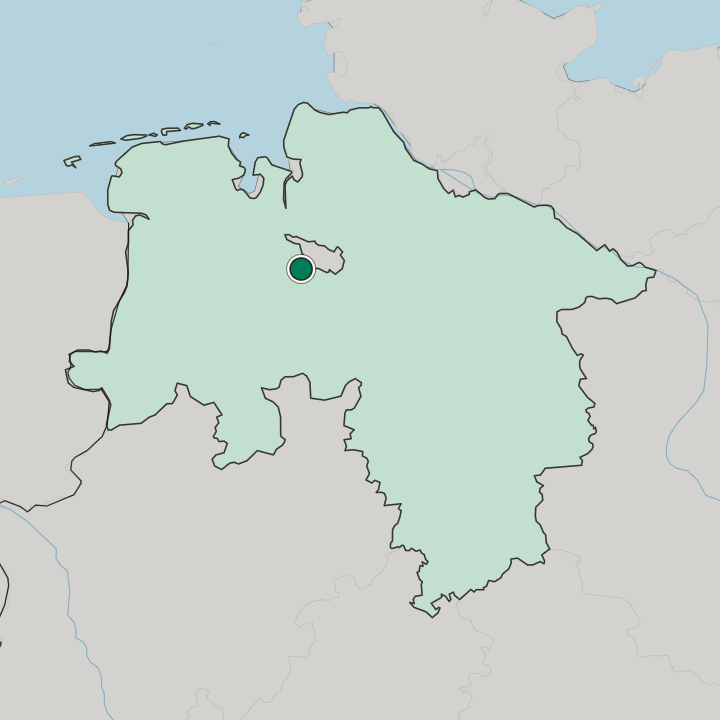
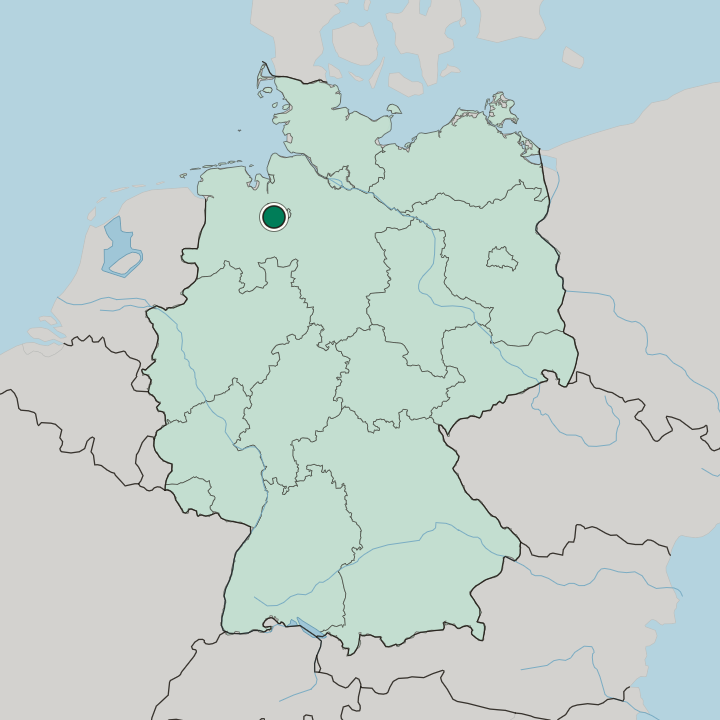
Delmenhorst lies about 10 kilometres west of downtown Bremen and runs into it, the two forming one continuous built-up area in Lower Saxony. Oldenburg stands 25 kilometres to the northwest, which leaves the city set between two larger neighbours rather than out on its own in the countryside. Not much open ground is left.
Hasbergen and the other quarters fill much of that ground, and the Museumsmühle Hasbergen marks one of them.
What is the climate of Delmenhorst?
Delmenhorst shares its weather with Bremen. The two sit in the same temperate band and the same run of open country, so the winters stay damp rather than hard and the summers rarely climb far. Grey months outnumber bright ones, and rain arrives in every season rather than in a wet half of the year.
How do you get to Delmenhorst?
Bremen is 10 kilometres away and the two run together, so the roads and rail lines that serve the larger city carry most of what reaches Delmenhorst as well. Arrival is usually via Bremen. Oldenburg lies 25 kilometres to the northwest, which gives the city a second larger neighbour within a short drive of its own streets.
Hasbergen and the outer quarters sit within the same short span.
Common questions
What is the best area to stay in Delmenhorst?
The centre by Burg Delmenhorst: Short stays with the Stadtkirche and the Stadtmuseum Delmenhorst on the doorstep. The Nordwolle quarter: Anyone coming for the Nordwestdeutsches Museum für Industriekultur. Hasbergen and the outer quarters: Drivers who want parking and the road toward Oldenburg.
Good for
More cities in Lower Saxony
Updated October 2026