
Algeria
El Oued, Algeria — Towns & Travel Guide
El Oued is a Saharan province of eastern Algeria, its domed capital rising from the date palms and dunes of the Grand Erg Oriental.
Hotel links are affiliate links: booking through them may earn us a commission, at no extra cost to you. It never affects how places are ranked. How this works


Towns & cities in El Oued
One town here has its own guide — it links to where to stay.

 Algeria
El Oued
El Oued is the capital of El Oued Province in Algeria, an oasis town of domed brick roofs known as the City of a Thousand Domes.Where to stay →
Hotel links are affiliate links: booking through them may earn us a commission, at no extra cost to you. It never affects how places are ranked. How this works
About El Oued
El Oued goes by another name: the City of a Thousand Domes.
What is El Oued known for?
Its capital wears cupolas instead of flat roofs, curved brick vaults that throw off the Saharan sun and keep rooms cool below. The province is equally known for the ghout, a form of date-palm farming found almost nowhere else, in which growers sink funnel-shaped pits deep into the dunes so the palm roots drink straight from the water table. Beyond the palm groves rolls the open sand of the Grand Erg Oriental.
Domes, dates, and dunes define the place.
Where is El Oued?
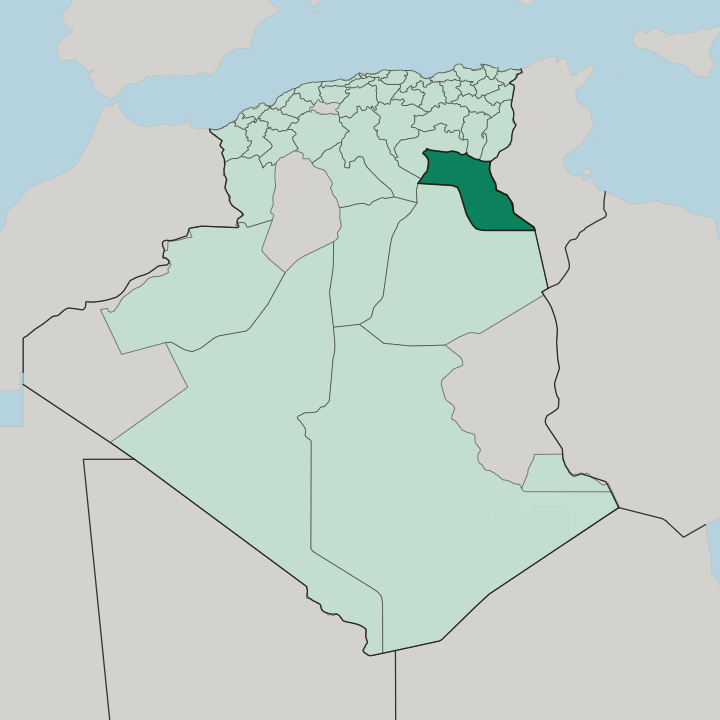
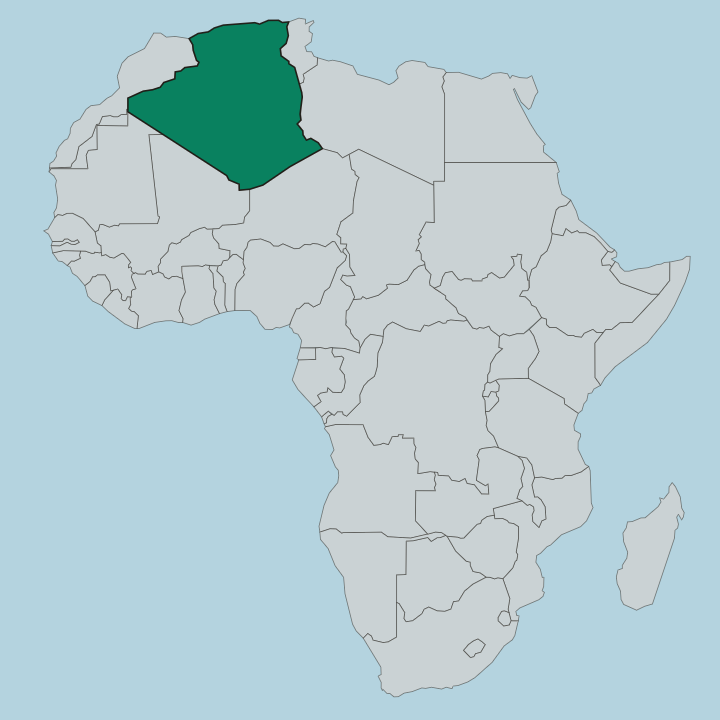
El Oued lies in eastern Algeria, hard against the Tunisian border, where the country runs out into the Sahara. It is desert almost everywhere. The southern half of the province disappears under the Grand Erg Oriental, one of the great sand seas in the Sahara, a slow tide of dunes shared with Tunisia across the frontier.
Northward the sand thins into scattered oases, low salt flats, and patches of bare, stony ground. Towns cluster where there is water. Past the last oases, paved roads give out into tracks that only local drivers can follow.
The province takes its name from the Oued Souf, and the name is a small riddle: the river it points to has no water on the surface. It runs underground, a shallow aquifer beneath the dunes. Everything green here depends on that buried water, which makes the ghout possible and feeds the date palms of the Souf.
El Oued town stands in the north of the province, roughly halfway between the salt lowlands and the open erg. Guemar and the other oasis towns ring it. Beyond the last palms, the sand simply takes over.
What is El Oued like?
Life in El Oued is shaped by heat and sand. The domed houses answer both: brick vaults, whitewashed and curved, that shed the sun and hold cool air where a flat roof would bake. Streets in the old quarters run narrow and shaded between them.
The people of the region are the Souafa, long settled around these oases, and Arabic is the everyday language of the markets and the mosques. Dates are the other constant. They are food, cash crop, and the reason the palm groves exist, and the harvest sets the rhythm of the year.
Ghout is more than farming here; it is heritage. The pits sunk into the dunes, tended for centuries and passed down through families, have been named by the UN's Food and Agriculture Organization as a globally important agricultural heritage system. That palm landscape of the Oued Souf also stands on Algeria's tentative list for UNESCO World Heritage.
Away from the groves, the culture is a desert one. Sweet mint tea, date markets, and the long silence of the Grand Erg Oriental all belong to it. The sand is never far from the table.
What is the history of El Oued?
People have lived around these oases since Neolithic times, Berber long before Arab. The Arab conquest reached the Souf in the seventh century, and Islam and the Arabic language have held the region ever since, binding it to the wider Maghreb. The domed towns and the ghout palm groves grew up slowly over the centuries that followed, one crater at a time.
French troops occupied the Souf in 1854 and ruled it as a desert outpost. El Oued became a province in its own right only in 1984, carved out of neighbouring Biskra. The desert set the pace.
What is the climate of El Oued?
El Oued has a hot desert climate, and it is one of the driest, hottest corners of Algeria. Rain almost never falls. Summers are punishing, with the sun beating down on the dunes from cloudless skies and the heat pushing well past what most visitors expect of a European summer.
Winters are short and mild, the days warm and the desert nights sharply colder. Spring can bring the sirocco, a dry wind that lifts sand off the erg and hazes the sky. Come between autumn and spring.
How do you get to El Oued?
Flying in is how most people get to El Oued. Guemar airport sits just north of the city, near the town of Guemar, and carries domestic flights up to Algiers and the northern cities. The alternative is the road, and it is a long one: El Oued lies far out in the Sahara, hundreds of kilometres southeast of Algiers across open desert by way of Biskra and Touggourt.
The Tunisian border is close, with a desert crossing east of the city into Tunisia. On arrival, the oasis towns sit near enough to reach by local road. Flying saves a hard drive.
Common questions
What is the best area to stay in El Oued?
El Oued: a first base in the Souf oases. Guemar: arriving by air at Guemar. The Grand Erg Oriental dunes: a night out on the dunes. The Kouinine palm groves: the ghout date-palm groves.
Good for
More regions in Algeria
Updated September 2026