Algeria
Wilaya de Ghardaïa, Algeria — Towns & Travel Guide
Wilaya de Ghardaïa is a Saharan province of Algeria built around the M'zab valley and its five walled ksour, a UNESCO World Heritage site.
Hotel links are affiliate links: booking through them may earn us a commission, at no extra cost to you. It never affects how places are ranked. How this works


Towns & cities in Wilaya de Ghardaïa
One town here has its own guide — it links to where to stay.

 Algeria
Ghardaïa
Ghardaïa is a desert town of the M'zab valley in central Algeria, chief of five old Mozabite towns whose tiered houses climb the hills above the palms.Where to stay →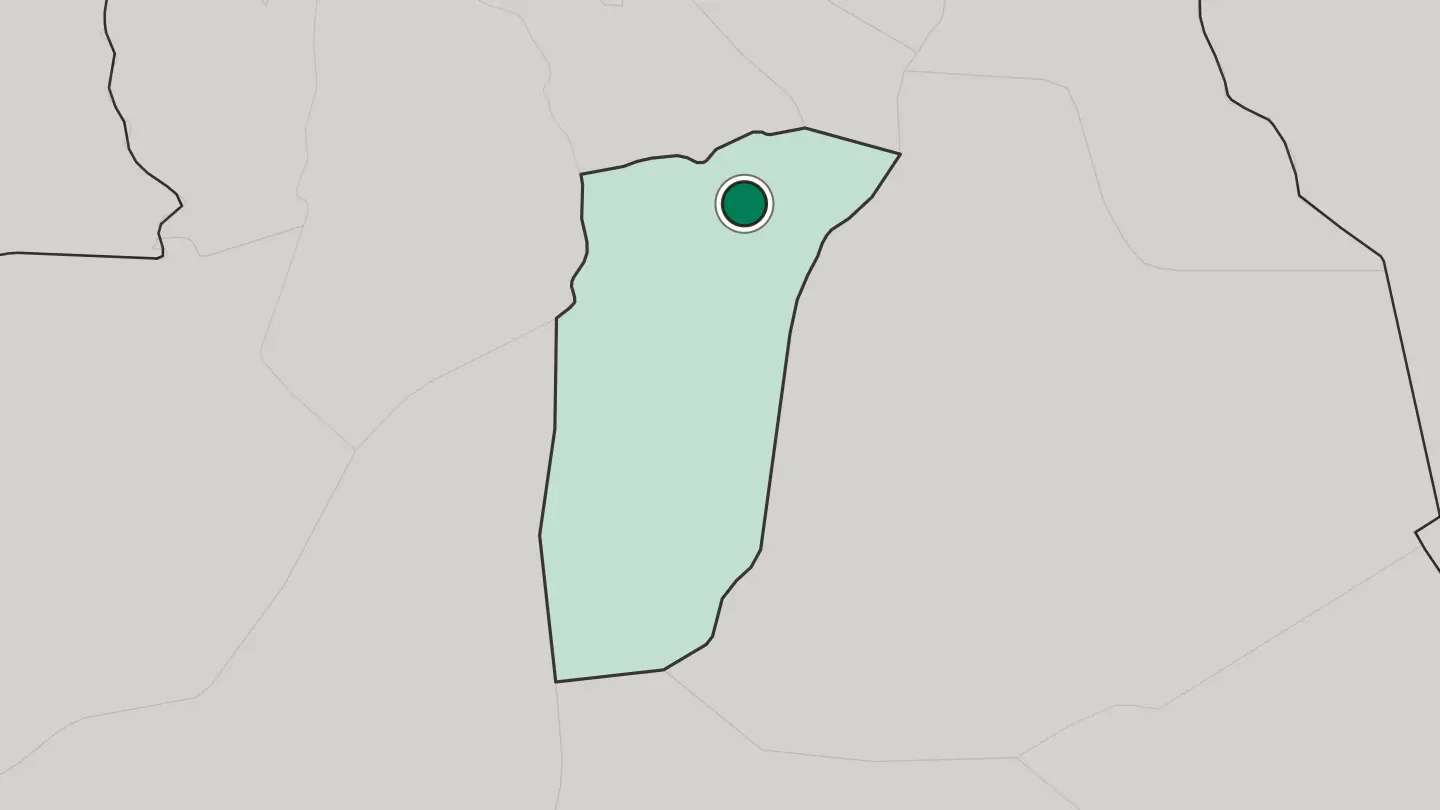
Hotel links are affiliate links: booking through them may earn us a commission, at no extra cost to you. It never affects how places are ranked. How this works
About Wilaya de Ghardaïa
What is Wilaya de Ghardaïa known for?
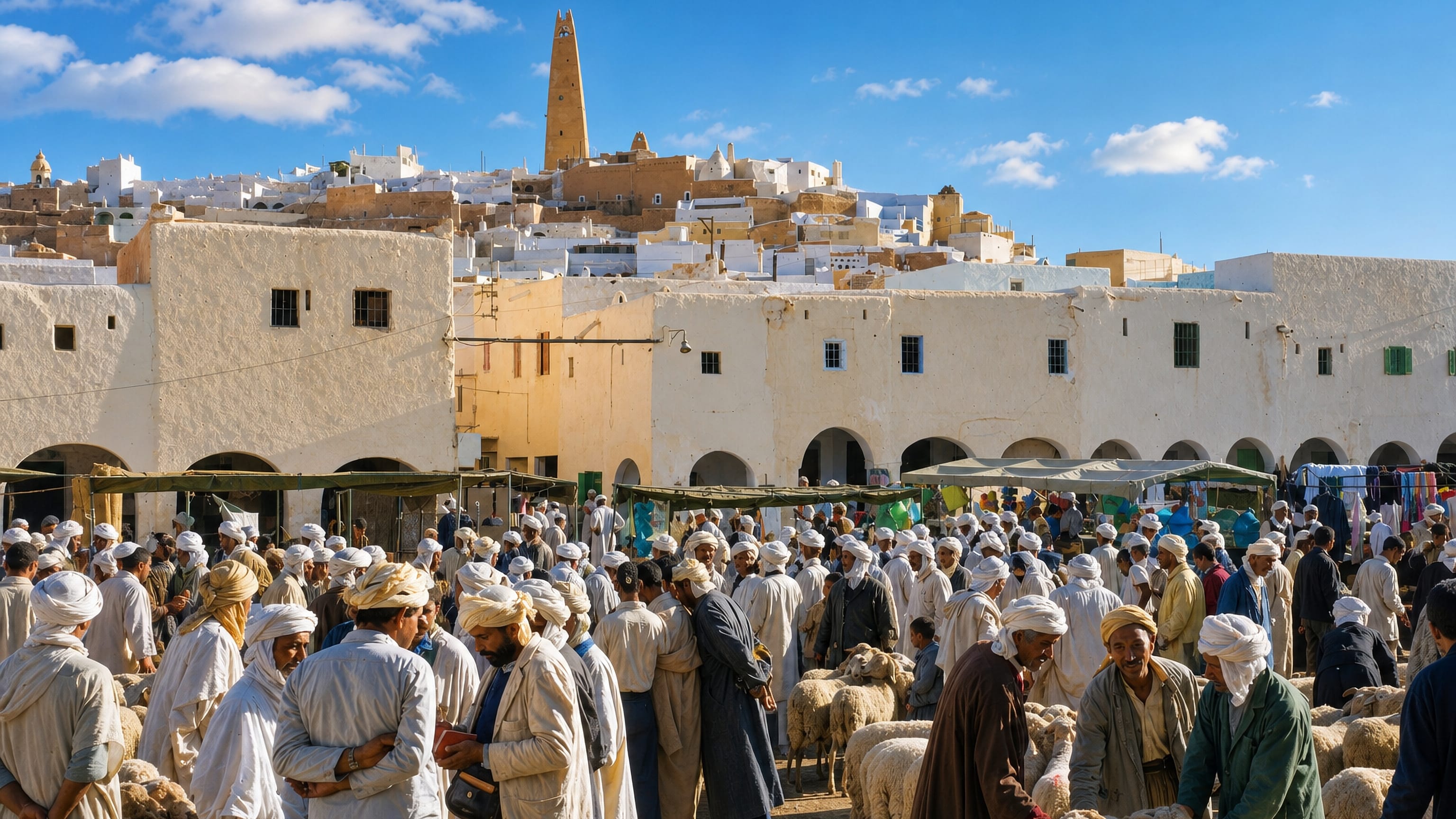
Ghardaïa is the capital of the province and the heart of the M'zab. Its old town climbs a rocky spur in tiers to a single minaret, ringed at the base by an arcaded market square where Mozabite traders have sold carpets and dates for centuries. Four sister ksour share the valley: Beni Isguen, Melika, El Atteuf and Bounoura.
Together the five form a Pentapolis inscribed by UNESCO. The Ibadi faith shaped every wall.
Where is Wilaya de Ghardaïa?
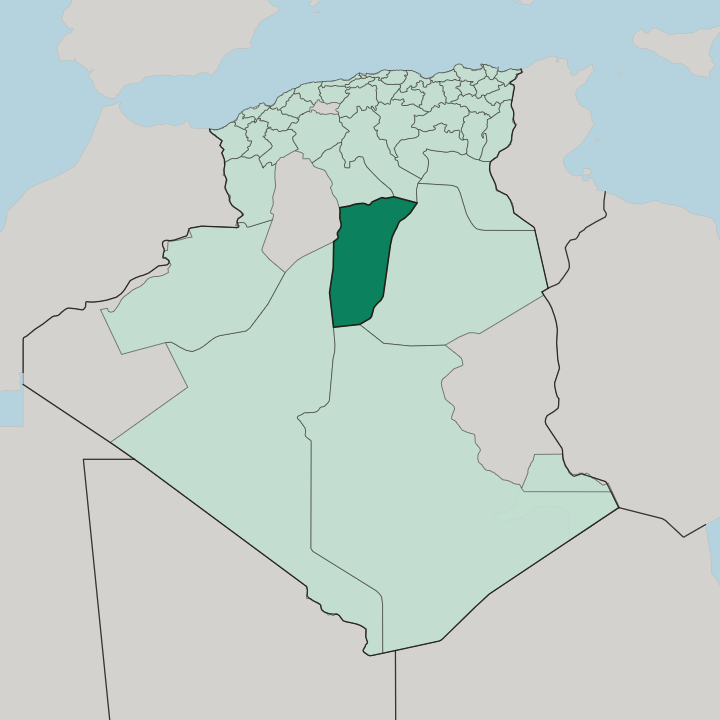
The province lies deep in the northern Sahara, roughly 600 km south of Algiers. Its ground is the chebka, a limestone plateau whose name means the net, cut into a tangle of dry ravines that drain toward one shallow valley. That valley is the M'zab.
Down its floor runs the Oued M'zab, a wadi that stays a bed of pale gravel for most of the year and fills only when a rare storm breaks over the plateau. Along the outcrops above the flood line stand the five ksour. Ghardaïa holds the largest of them, with Beni Isguen, Melika, Bounoura and El Atteuf strung within a few kilometres up and down the wadi.
Water is everything here. Below the towns, the Mozabites dug channels and dams that share every flood between the date-palm gardens, so the palmeraies stay green while the surrounding hamada bakes bare. The province reaches north toward the high plateaus that fringe the Saharan Atlas and opens south into open desert.
Nothing about the setting is gentle. The whole civilisation of the M'zab is an answer to that hard ground.
What is Wilaya de Ghardaïa like?
The M'zab belongs to the Mozabites, a Berber people who hold to Ibadi Islam, a strict early branch of the faith distinct from both Sunni and Shia. They speak their own tongue, Mozabite, called Tumẓabt, alongside Arabic. Their creed shaped the towns.
Each ksar was laid out as an egalitarian community around a fortress mosque whose minaret doubled as a watchtower, with houses sized so that no family overlooked another. The rules still bind daily life. Beni Isguen bars outsiders after dark, marriage stays within the community, and the elective councils of elders settle local affairs much as they did when the ksour were young.
Craft carries the culture too. Mozabite weavers are known across Algeria for their carpets, and the traders of Ghardaïa built a merchant network that reached every Algerian town. The plain geometry of these desert houses left a mark far beyond the Sahara: architects of the last century, Le Corbusier and Fernand Pouillon among them, studied the M'zab and carried its lessons into modern building.
Function drives every line. What looks austere is a whole way of living, worked out over centuries against the desert.
What is the history of Wilaya de Ghardaïa?
The ksour of the M'zab were founded by Ibadi refugees who fled south after the fall of their kingdom of Tahert to the north. El Atteuf came first, around 1012, and the others followed along the valley over the next three centuries. Ghardaïa itself was laid out in 1053.
By 1350 the five towns stood complete, a Pentapolis of the desert. France annexed the M'zab in the nineteenth century, and it later passed to independent Algeria. The community endured.
What is the climate of Wilaya de Ghardaïa?
Ghardaïa has a hot desert climate, one of the harshest inhabited corners of the Sahara. Summer days climb well past forty degrees, and the sun beats on bare rock from a near-cloudless sky. Rain is rare and violent.
Whole seasons pass dry, then a single storm can send a flood down the Oued M'zab and soak the palm gardens in an afternoon. Winter nights swing the other way, dropping toward freezing under the clear desert air. Shade and thick walls are survival here, not decoration.
How do you get to Wilaya de Ghardaïa?
Most travellers reach the M'zab by air. The Noumérat airport lies just southeast of Ghardaïa, a short flight from Algiers across open desert. Coming overland means a long haul: a full day at the wheel south from the capital, over the high plateaus and down into the Sahara before the palmeraies appear.
Within the valley the five ksour sit close together, joined by short roads. A guide is expected inside Beni Isguen.
Common questions
What is the best area to stay in Wilaya de Ghardaïa?
Ghardaïa: a first base in the M'zab valley. Beni Isguen: the strict walled ksar and its dusk auction. El Atteuf: the oldest ksar and its landmark mosque. The M'zab palm groves: shaded garden retreats by the wadi.
Good for
More regions in Algeria
Updated September 2026