Algeria
Wilaya de Ouargla, Algeria — Towns & Travel Guide
Wilaya de Ouargla is a Saharan province of eastern Algeria, a great date-palm oasis and the oil hub around the Hassi Messaoud field.
Hotel links are affiliate links: booking through them may earn us a commission, at no extra cost to you. It never affects how places are ranked. How this works


Towns & cities in Wilaya de Ouargla
One town here has its own guide — it links to where to stay.

 Algeria
Ouargla
Ouargla is the Saharan capital of Ouargla Province in Algeria, an oil town with a university and a museum of the desert.Where to stay →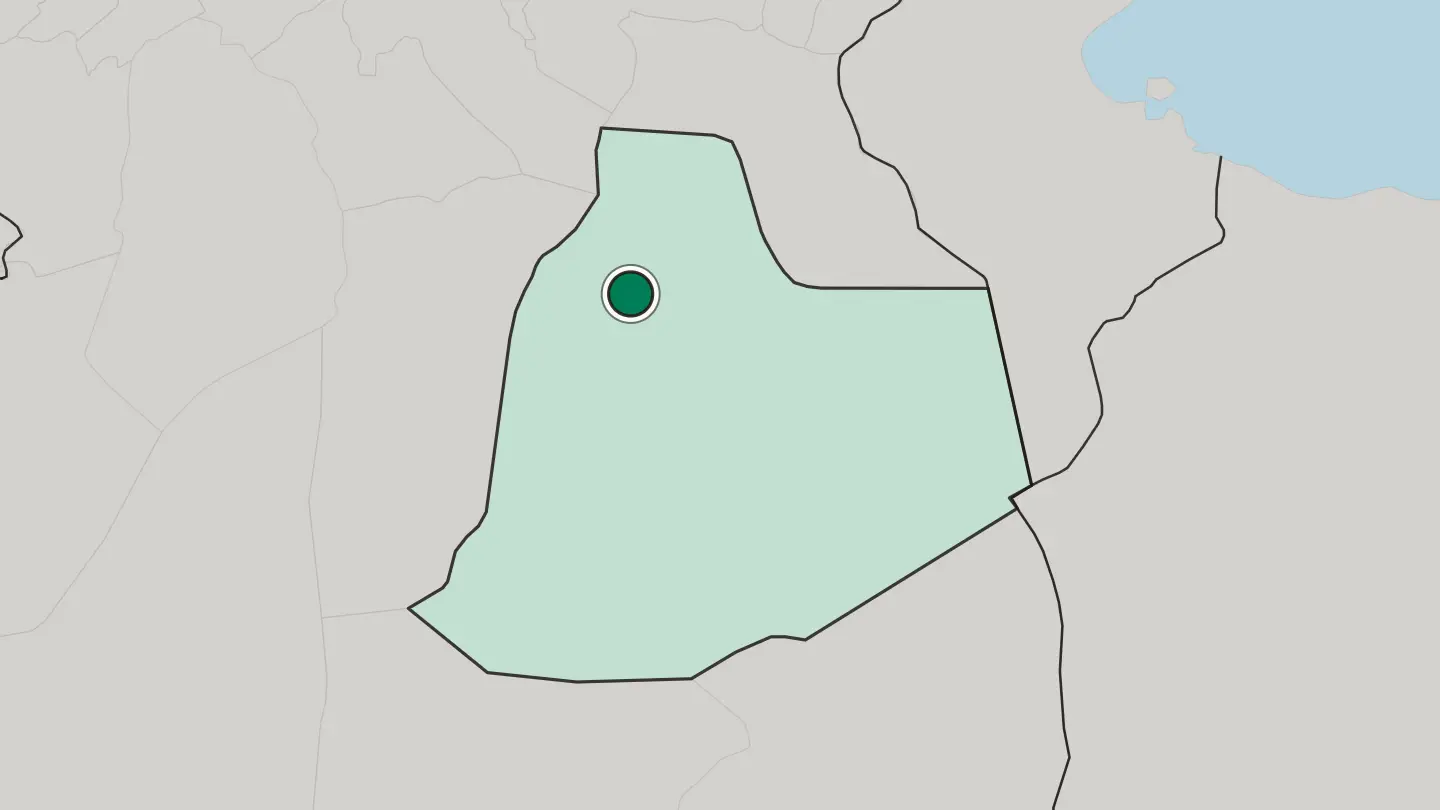
Hotel links are affiliate links: booking through them may earn us a commission, at no extra cost to you. It never affects how places are ranked. How this works
About Wilaya de Ouargla
Oil made Wilaya de Ouargla famous.
What is Wilaya de Ouargla known for?
The Hassi Messaoud field, Algeria's biggest, sits inside the province and pumps a large share of the nation's crude from beneath the sand. Yet the wilaya is older than any derrick: Ouargla grew as a caravan oasis, and its palm grove still runs to hundreds of thousands of date palms fed from wells. The Sahara surrounds all of it.
The University of Ouargla anchors the provincial capital, drawing students across the deep south.
Where is Wilaya de Ouargla?
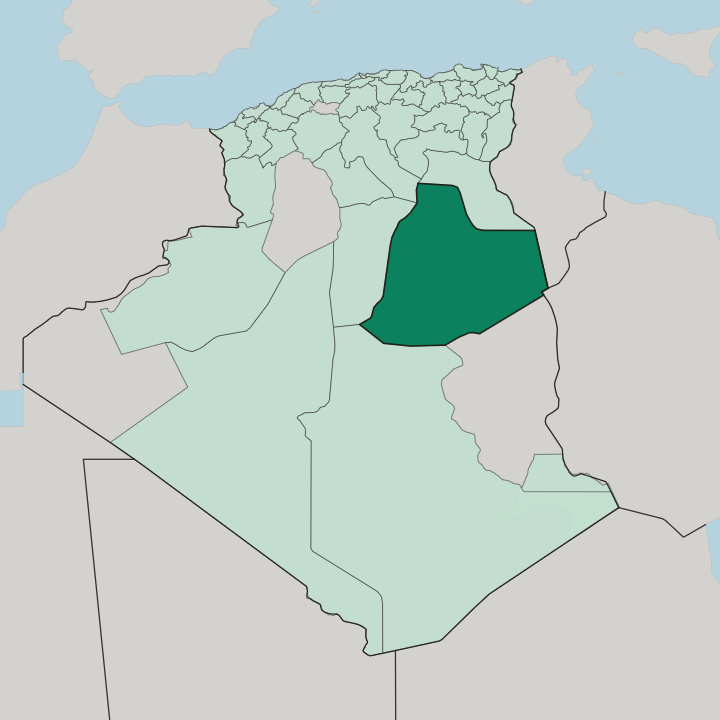
Wilaya de Ouargla lies in eastern Algeria, deep in the Sahara. The province spreads across a low, flat basin of sand and gravel, far from any coast, with Tunisia along its eastern edge. It ranks among Algeria's larger provinces by area, and among its emptiest.
At its heart is a shallow depression, and it is here that the Oued Mya, a wadi that flows only after rare rain, once drained toward the oasis. The town of Ouargla grew in that hollow. North of it the ground sinks again to Sebkhet Safioune, a salt flat that glazes white when its shallow water dries.
East of the capital the ground rises to the stony flats where Hassi Messaoud stands, and beyond them the dunes of the Grand Erg Oriental begin, a sand sea that rolls east across the border into Tunisia. Beneath all of it lies water. The North-Western Sahara Aquifer, a vast store of fossil groundwater trapped under the desert, feeds every well and palm grove in the province.
Without it the oasis would be bare sand. That buried water, not any river, is what keeps Ouargla alive.
What is Wilaya de Ouargla like?
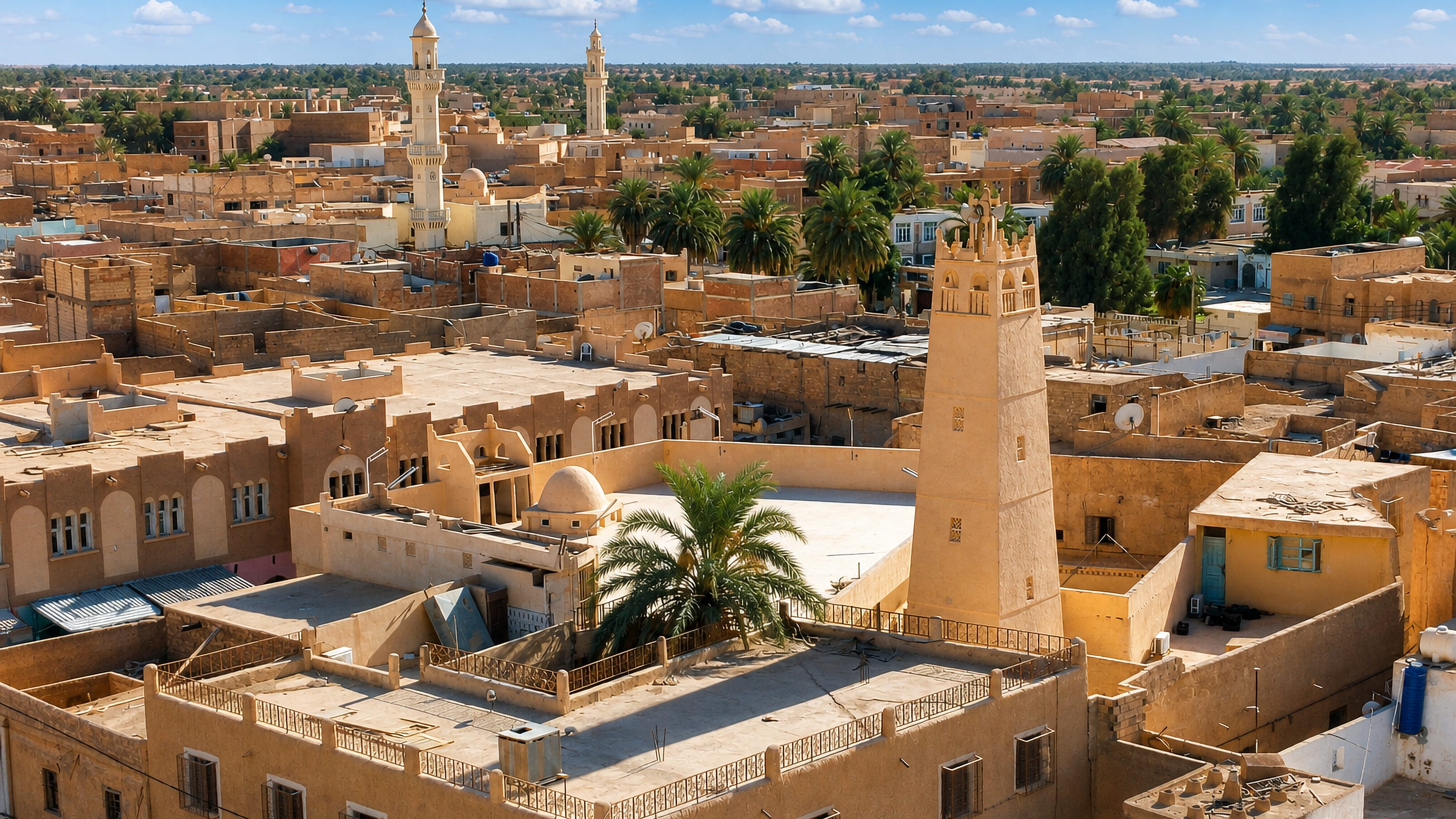
Life in Wilaya de Ouargla is oasis life. For a thousand years the date palm has ruled the calendar here, and the autumn harvest of Deglet Nour dates still sets the rhythm of the gardens around Ouargla. The old town keeps its shape as a ksar, a dense knot of earthen houses and shaded lanes built to hold off the sun.
Two tongues are spoken. Most people use Arabic, but the older Berber speech of the oasis, Teggargrent, survives among Ouargla's families. Craft follows the palm too, and weavers turn its fibre into the baskets and matting sold in the souks of the old town.
Faith runs deep through the region's past: the Ibadi refugees who founded nearby Sedrata gave the desert one of its earliest centres of learning. Their stucco work still marks the ruins in the dunes. Markets remain the social heart.
Traders gather at the Souk El Hedjar, and the University of Ouargla draws a younger crowd from across the Sahara. Beyond the walls, the dunes of the Grand Erg Oriental pull desert travellers out to camp on the sand under clear skies. Music, dates, and prayer hold it together.
What is the history of Wilaya de Ouargla?
Ouargla began as a Berber ksar. Its fortunes turned in the year 909, when Ibadi refugees fleeing the fall of Tahert settled the oasis and raised nearby Sedrata into a capital of stucco palaces, later half-swallowed by the dunes. Caravans did the rest, for the town sat on the trans-Saharan gold road between the Niger and the Mediterranean.
Ottoman authority reached it in 1555, and French troops took Ouargla in 1855. Then came oil: the strike at Hassi Messaoud in 1956 remade the whole province.
What is the climate of Wilaya de Ouargla?
The climate is pure Sahara: hot, dry, and merciless in summer. Ouargla ranks among the hottest inhabited places on earth, and in July 2018 the oasis logged one of the highest temperatures ever reliably measured in Africa. Rain barely falls.
A whole year may pass with only a few storms, and when they come the wadis run for hours before the sand drinks them dry. Winters turn mild by day and cold after dark, and dust lifts off the Grand Erg Oriental whenever the wind gets up.
How do you get to Wilaya de Ouargla?
Two airports open the province to the outside. Ain Beida Airport sits on the edge of Ouargla, while the busier Oued Irara-Krim Belkacem Airport at Hassi Messaoud is kept turning by the oilfields. Both link mainly to Algiers in the north, the usual way in from abroad.
Overland, the desert highways drop south from Ghardaia and the M'Zab through hundreds of miles of open Sahara. It is a long haul by road. The nearest railhead lies far to the north.
Common questions
What is the best area to stay in Wilaya de Ouargla?
Ouargla: the oasis capital and its old ksar. Hassi Messaoud: work trips to the oilfields. N'Goussa: a palm oasis north of the capital. Rouissat: the palm gardens on the oasis fringe.
Good for
More regions in Algeria
Updated September 2026