Egypt
Ismailia Governorate, Egypt — Towns & Travel Guide
Ismailia Governorate holds the middle of the Suez Canal, its garden capital set on the shore of Lake Timsah in north-eastern Egypt.
Hotel links are affiliate links: booking through them may earn us a commission, at no extra cost to you. It never affects how places are ranked. How this works


Towns & cities in Ismailia Governorate
One town here has its own guide — it links to where to stay.

 Egypt
Egypt
Ismailia
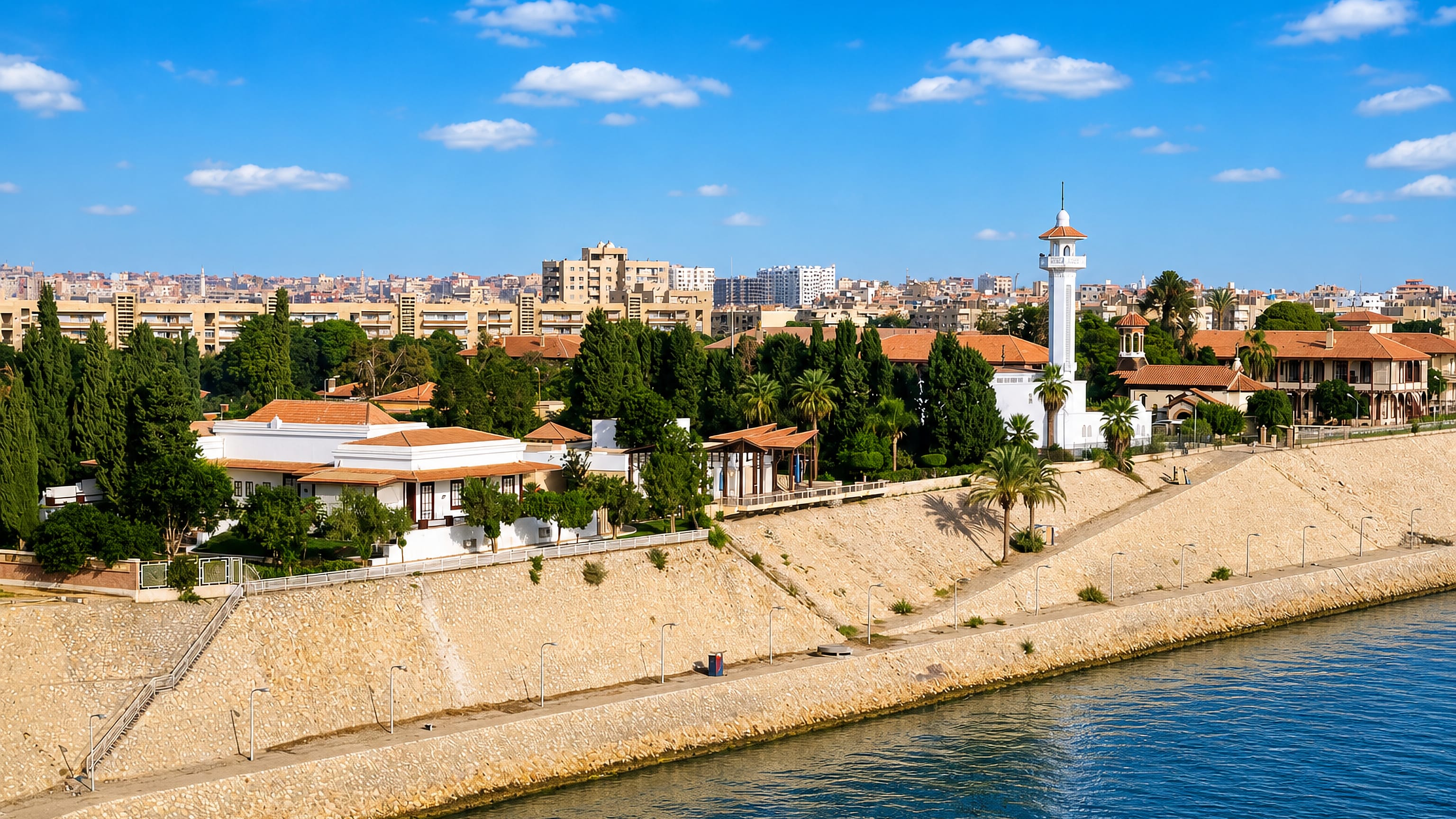
Ismailia is a garden city of Egypt on the Suez Canal, a tree-lined town on the shore of Lake Timsah, built for the men who dug the great waterway.Where to stay →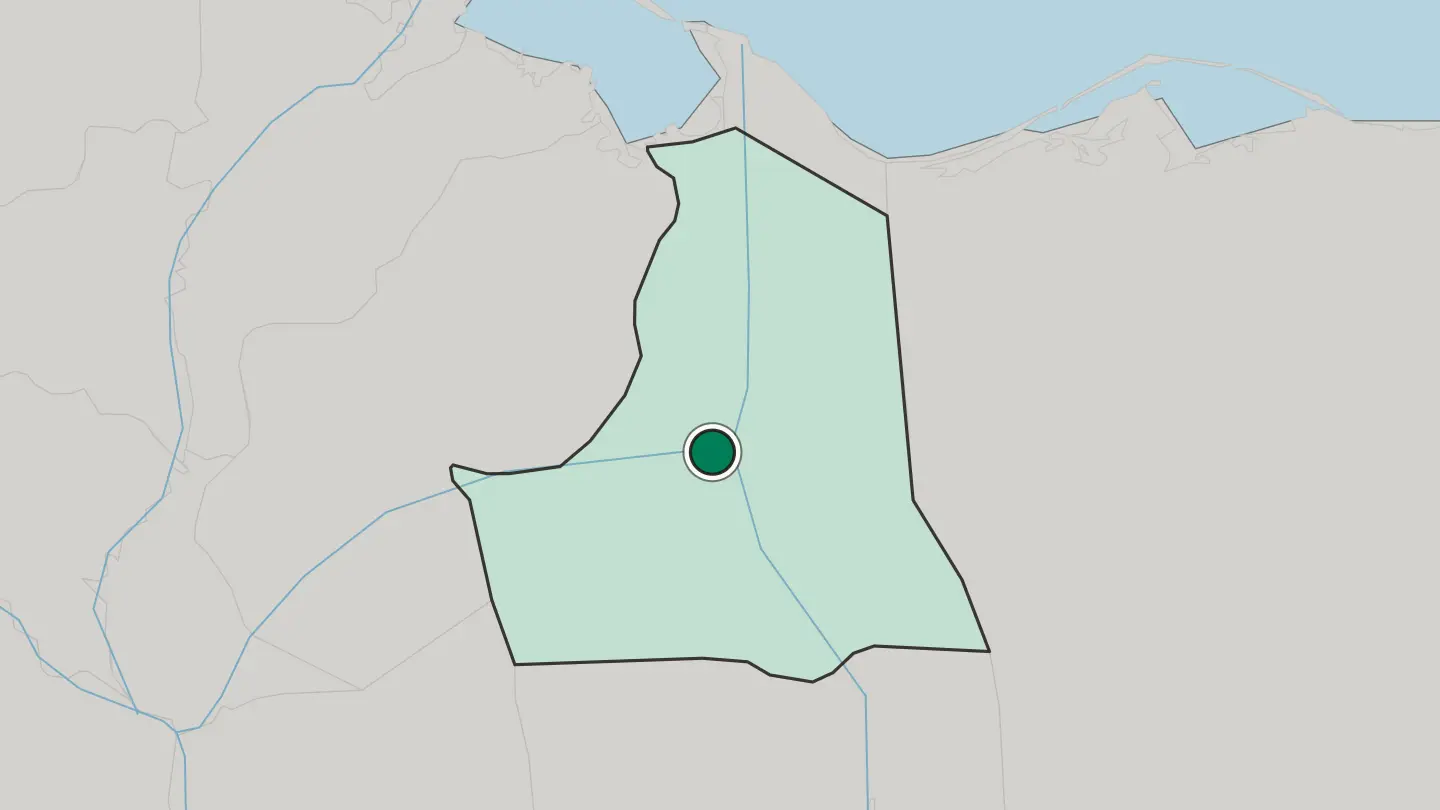
Hotel links are affiliate links: booking through them may earn us a commission, at no extra cost to you. It never affects how places are ranked. How this works
About Ismailia Governorate
This is Canal country.
What is Ismailia Governorate known for?
The governorate straddles the middle stretch of the Suez Canal, and its capital, Ismailia, was laid out in 1863 as the engineers' base camp while that waterway was being dug. Lake Timsah widens the Canal right at the city, and the Great Bitter Lake broadens it again to the south. The capital is known across Egypt for tree-lined avenues, colonial villas and public gardens fed by fresh water piped in from the Nile.
Where is Ismailia Governorate?
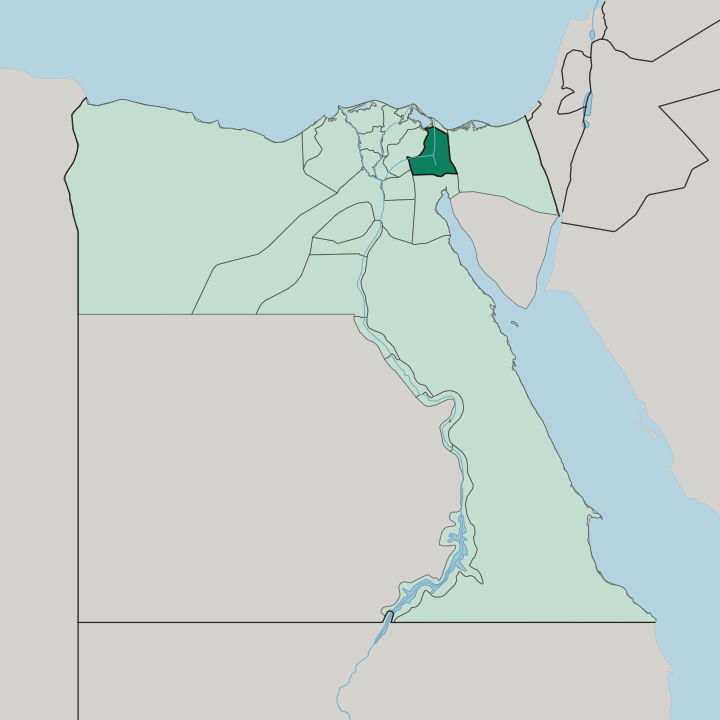
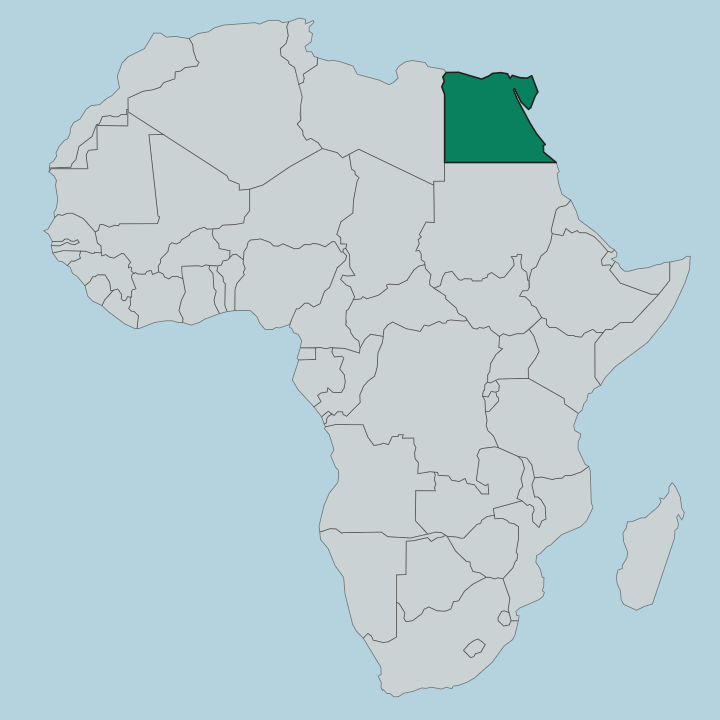
Ismailia Governorate sits in north-eastern Egypt, on the western side of the Suez Canal about halfway down its length. The Canal is the spine of the place. It threads north to south through the governorate, widening into Lake Timsah at the capital and again into the Great Bitter Lake to the south.
Four other governorates ring it: Port Said to the north, Suez to the south, Sharqia across the farmland to the west, and North Sinai over the Canal to the east. Away from the water the land is desert, flat and dry, and settlement clings to the Canal and to the strip that irrigation reaches. That irrigation comes from the Ismailia Canal, the fresh-water channel dug from the Nile near Cairo to slake the thirst of the crews building the Suez Canal, and it still keeps the northern farmland green.
The Canal cities line up along the waterway rather than spreading into the sand. Ismailia stands at the centre, Port Said's border lies to the north and Suez's to the south, so the governorate reads as a ribbon of towns following the water through otherwise empty country. Everything of consequence here faces the Canal.
What is Ismailia Governorate like?
The capital was built to a plan, and it shows. When the Suez Canal company raised Ismailia in the 1860s it borrowed the look of a French Riviera town, a gridiron of broad avenues, shaded squares and gardens, and locals still call it Little Paris. That planning split the young city into quarters: a European district for the French engineers and elites, a central zone for Greek and Italian technicians, and an Arab quarter for the Egyptian labourers who dug the Canal.
The mix has softened, but the layout survives. Arabic is the everyday language, as it is across Egypt. The Ismailia Museum, opened in 1932, holds pharaonic and Graeco-Roman pieces, among them a Roman mosaic floor, while the Suez Canal University brings students into the capital.
Green is the governorate's signature. Parks and tree-lined boulevards, kept alive by Nile water carried in along the Ismailia Canal, make the capital one of the leafiest in Egypt, and the Corniche along Lake Timsah is where the city gathers in the evening. Beyond the towns the character turns rural, farms and fishing villages set against the desert edge.
What is the history of Ismailia Governorate?
The place exists because of the Canal. Khedive Ismail gave the capital his name in 1863, when it rose as a base camp for the crews cutting the Suez Canal, which opened in 1869. A century later the Canal made the governorate a front line.
From 1967 to 1970 the towns took heavy damage in the fighting with Israel, and normal life only returned after the 1973 ceasefire. What the waterway created, the wars around it nearly unmade.
What is the climate of Ismailia Governorate?
The governorate has a hot desert climate. Summers run long and dry, with June to August often climbing toward 40 degrees, while winters stay mild and pleasant. The Suez Canal and Lake Timsah temper the worst of the heat, so the capital feels a shade softer than the open desert inland to the west.
Rain is scarce in any season. Winter is the easy time to visit.
How do you get to Ismailia Governorate?
Most travellers reach the governorate overland from Cairo, roughly two hours west by road or rail across the desert to the capital. Ismailia sits on the main line and highway that link the Egyptian capital with the Canal cities, so buses and trains run through to Port Said in the north and Suez in the south. The Suez Canal itself passes the door, carrying shipping rather than passengers.
Inside the governorate, road ties the Canal-bank towns together.
Common questions
What is the best area to stay in Ismailia Governorate?
Ismailia: Lake Timsah and the Canal's midpoint city. Fayed: Great Bitter Lake beaches away from the city. The Canal-bank towns: farmland and the Sweet Water Canal.
Good for
More regions in Egypt
Updated September 2026