Spain · Andalusia
Where to Stay in Almería, Andalusia
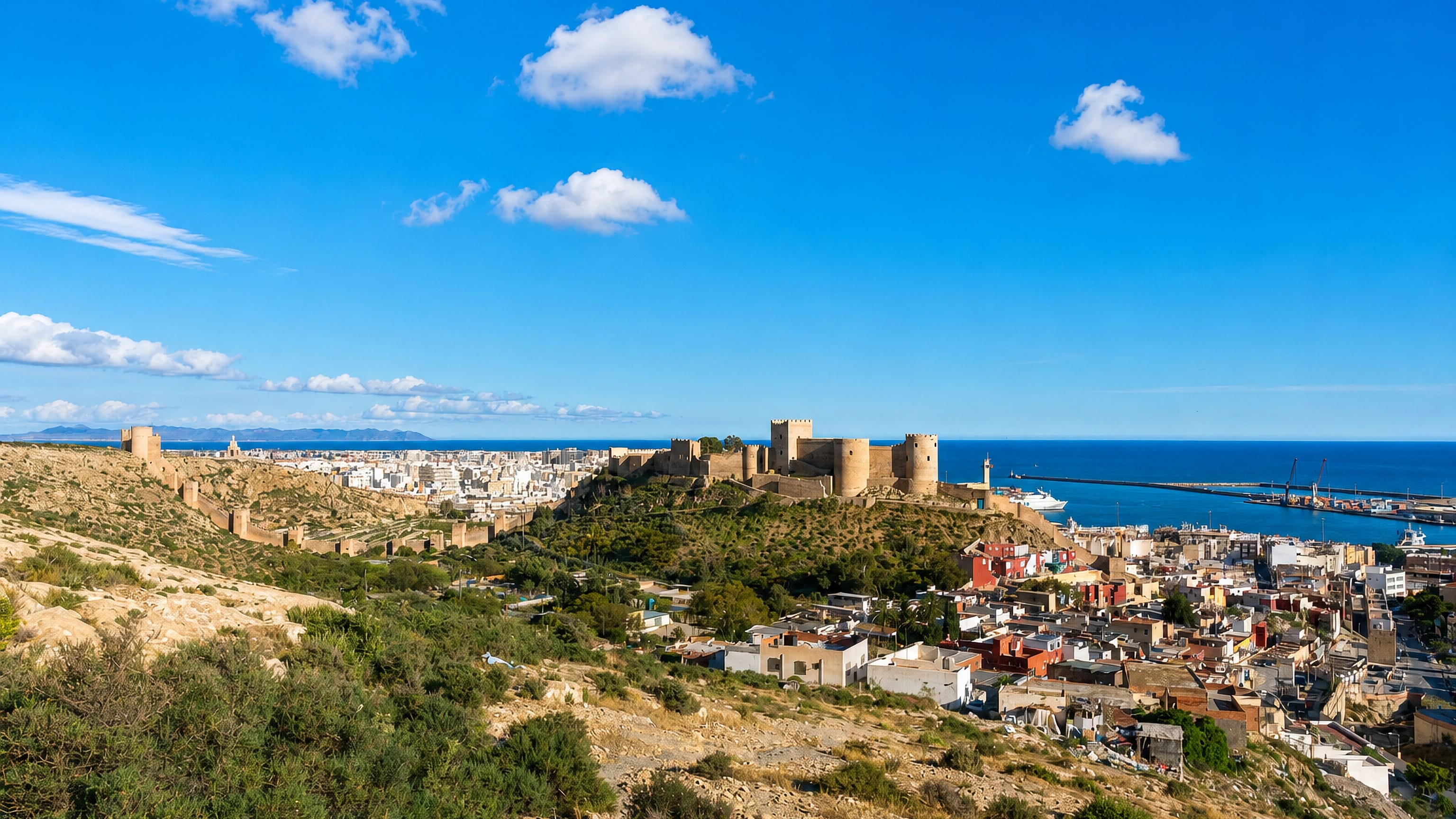
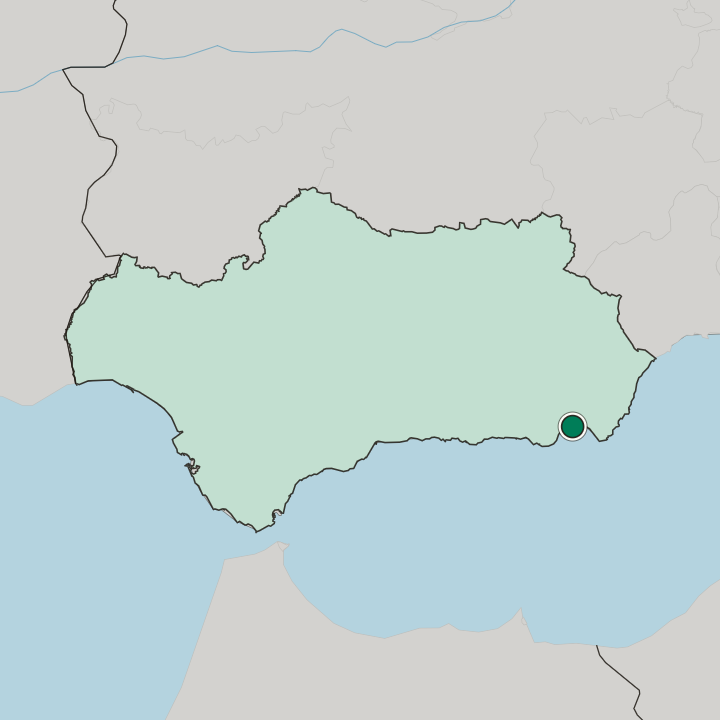
Almería, capital of its Andalusian province, spreads under the Alcazaba between the Sierra de Gádor and the Gulf of Almería.
Hotel links are affiliate links: booking through them may earn us a commission, at no extra cost to you. It never affects how places are ranked. How this works


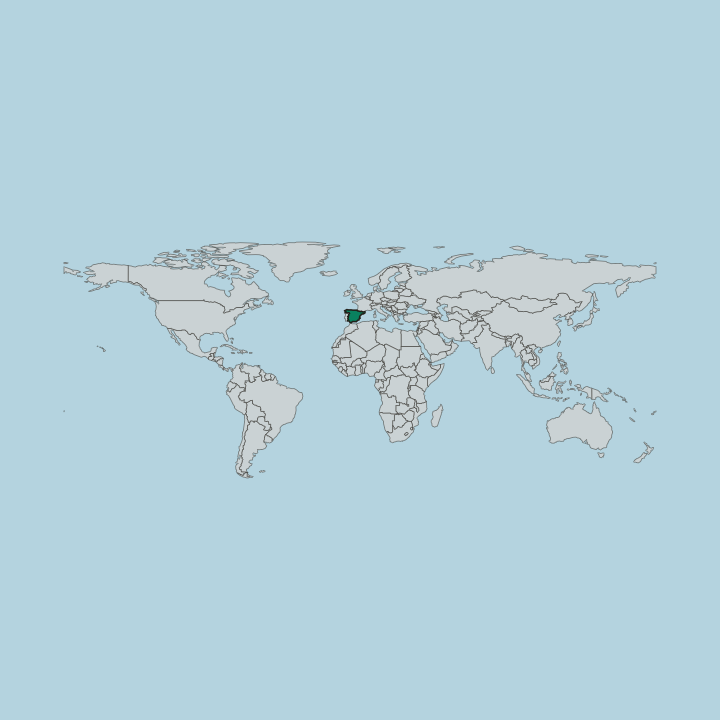
Where to stay in Almería
How the choice of base plays out on the ground.
The hill sorts the choice. Beds in the lanes under the Alcazaba y Murallas del Cerro de San Cristóbal put the climb to the walls at the start of a morning rather than the end of one, and the Museo de Almería and the Centro Andaluz de la Fotografía fall inside the same short circuit. Steps are part of the deal.
Anyone unwilling to walk uphill twice a day should look lower down instead. The flat streets around Iglesia Catedral de Nuestra Señora de la Encarnación give the lower town its centre of gravity, and Teatro Cervantes, the Antonio de Torres Spanish Guitar Museum and the Doña Pakyta Art Museum sit in the same walking radius, which makes this the practical base for a stay of several days. Water changes the calculation again.
Rooms facing the Gulf of Almería trade the old fabric for the shoreline that runs out past Castillo de San Telmo, and the ground east of the Andarax, where the Palacio de los Juegos Mediterráneos and Pabellón Moisés Ruiz stand, holds the beds that suit arrivals by car. The Sierra de Gádor closes the view inland from all of them.
Find hotels in Almería
Direct booking searches for these neighbourhoods.
Under the Alcazaba
The lanes below the fortress hill reach the Museo de Almería and the Centro Andaluz de la Fotografía without a bus.Find hotels in Under the AlcazabaSeveral days spent between Teatro Cervantes and the Doña Pakyta Art MuseumThe cathedral quarter
Flat streets around Iglesia Catedral de Nuestra Señora de la Encarnación hold the densest run of beds and museums.Find hotels in The cathedral quarterEvenings facing the Gulf of Almería instead of the old lanesThe shore past Castillo de San Telmo
The seafront strip swaps the fortress hill for open water and the road out along the coastline.Find hotels in The shore past Castillo de San TelmoHotel links are affiliate links: booking through them may earn us a commission, at no extra cost to you. It never affects how places are ranked. How this works
Things to do in Almería
Ranked by global recognition; descriptions from Wikidata (CC0).
Museums & Galleries
3- Alcazaba y Murallas del Cerro de San Cristóbal Heritage
- Museo de Almería Heritage
- Antonio de Torres Spanish Guitar Museum
Churches & Religious Sites
6- Iglesia Catedral de Nuestra Señora de la Encarnación Heritage
- Basílica de la Virgen del Mar Heritage
- Iglesia de San Juan Evangelista Heritage
- Iglesia de Santiago Apóstol Heritage
- Iglesia del convento de Santa Clara Heritage
Show 1 more →
- Convento de la Purísima Concepción Heritage
Castles & Historic Sites
6- Escuela de Arte y Superior de Diseño Carlos Pérez Siquier Heritage
- Monumento a las víctimas de Mauthausen Heritage
- Edificio del Círculo Mercantil e Industrial y Teatro Cervantes Heritage
- Castillo de San Telmo Heritage
- Murallas del Cerro de San Cristóbal Heritage
Show 1 more →
- Castle of Diezmo Heritage
Stadiums & Sports
2- Palacio de los Juegos Mediterráneos
- Pabellón Moisés Ruiz, Almería
worth knowingacross 4 categories in Almería
About Almería
Cinema gave the city a second name.
What is Almería known for?
Almería answers to the Hollywood of Spain for the film work done in the country around the Gulf of Almería, and Casa del Cine keeps that record, while the Alcazaba y Murallas del Cerro de San Cristóbal hold the hill over the old lanes. The cathedral stands below. Iglesia Catedral de Nuestra Señora de la Encarnación and Museo de Almería carry most of what a first day here amounts to.
What are the main landmarks in Almería?
Alcazaba y Murallas del Cerro de San Cristóbal take the high ground. Below them stand Iglesia Catedral de Nuestra Señora de la Encarnación, Iglesia de Santiago Apóstol and the Convento de la Purísima Concepción, while Museo de Almería, the Centro Andaluz de la Fotografía and Casa del Cine divide the collections between archaeology, photography and film. Guitars have a museum too.
Antonio de Torres Spanish Guitar Museum, Doña Pakyta Art Museum and Museo del Realismo Español Contemporáneo share the lower town with Edificio del Círculo Mercantil e Industrial y Teatro Cervantes.
What is the history of Almería?
Fortification came first on the Cerro de San Cristóbal. The Alcazaba and the Murallas del Cerro de San Cristóbal still hold the ridge that overlooks the Andarax and the water, and the Puerta de Almería archaeological site keeps the buried layer that the streets were laid across. Churches followed the walls down the slope.
Iglesia de Santiago Apóstol, Iglesia de San Juan Evangelista, the Iglesia del convento de Santa Clara and the Basílica de la Virgen del Mar mark a town that filled the ground between the fortress and the Gulf of Almería, with Iglesia Catedral de Nuestra Señora de la Encarnación at the centre of it and the Castle of Diezmo further out. Later centuries wrote in other materials. Edificio del Círculo Mercantil e Industrial y Teatro Cervantes belongs to a confident commercial period, El Mesón Gitano to the ground under the fortress, and the Escuela de Arte y Superior de Diseño Carlos Pérez Siquier to the photographic tradition that the Centro Andaluz de la Fotografía also serves.
Film work gave Almería its nickname. Casa del Cine keeps that chapter, the Palacio de los Juegos Mediterráneos carries the name of the games it was built for, and the Monumento a las víctimas de Mauthausen holds a harder memory than any of them. Museo de Almería and the Heritage Interpretation Center assemble the record that all of this leaves behind.
Where is Almería?
The city occupies the strip between the eastern fringes of the Sierra de Gádor and the Andarax riverbed, along the coastline of the Gulf of Almería. That gulf is a wide inlet of the Mediterranean Sea, and the built ground has to work with what the range and the river leave it, running lengthways rather than spreading inland. Room is short.
The Cerro de San Cristóbal rises inside the plan itself, which is why the walls on it are visible from so much of the city.
What is the climate of Almería?
The Sierra de Gádor takes the weather first. Air arriving off the interior crosses that range before it reaches the Andarax and the coastal strip, and the Mediterranean Sea beyond the Gulf of Almería keeps the temperate band the city lies in from swinging as hard as the ground inland does. Cloud thins on the way down.
Sea air reaches the lanes under the Alcazaba on most days of the year.
How do you get to Almería?
The coast does the routing. Approaches run along the Gulf of Almería, pressed between the water and the eastern fringes of the Sierra de Gádor, and the Andarax riverbed opens the corridor that leads inland from the city toward the rest of Andalusia. Everything else has to climb.
Arrivals see the Alcazaba y Murallas del Cerro de San Cristóbal before they see much of the town, since the hill carries the walls above every road into the centre.
Common questions
What is the best area to stay in Almería?
Under the Alcazaba: Mornings that open with the climb to the Cerro de San Cristóbal walls. The cathedral quarter: Several days spent between Teatro Cervantes and the Doña Pakyta Art Museum. The shore past Castillo de San Telmo: Evenings facing the Gulf of Almería instead of the old lanes.
Good for
More cities in Andalusia
Updated October 2026