Spain · Andalusia
Where to Stay in Jerez de la Frontera, Andalusia
Jerez de la Frontera stands on the Campiña de Jerez, an inland plain crossed by the Guadalete, among the major cities of Andalusia.
Hotel links are affiliate links: booking through them may earn us a commission, at no extra cost to you. It never affects how places are ranked. How this works


Where to stay in Jerez de la Frontera
Where visitors usually base themselves, and why.
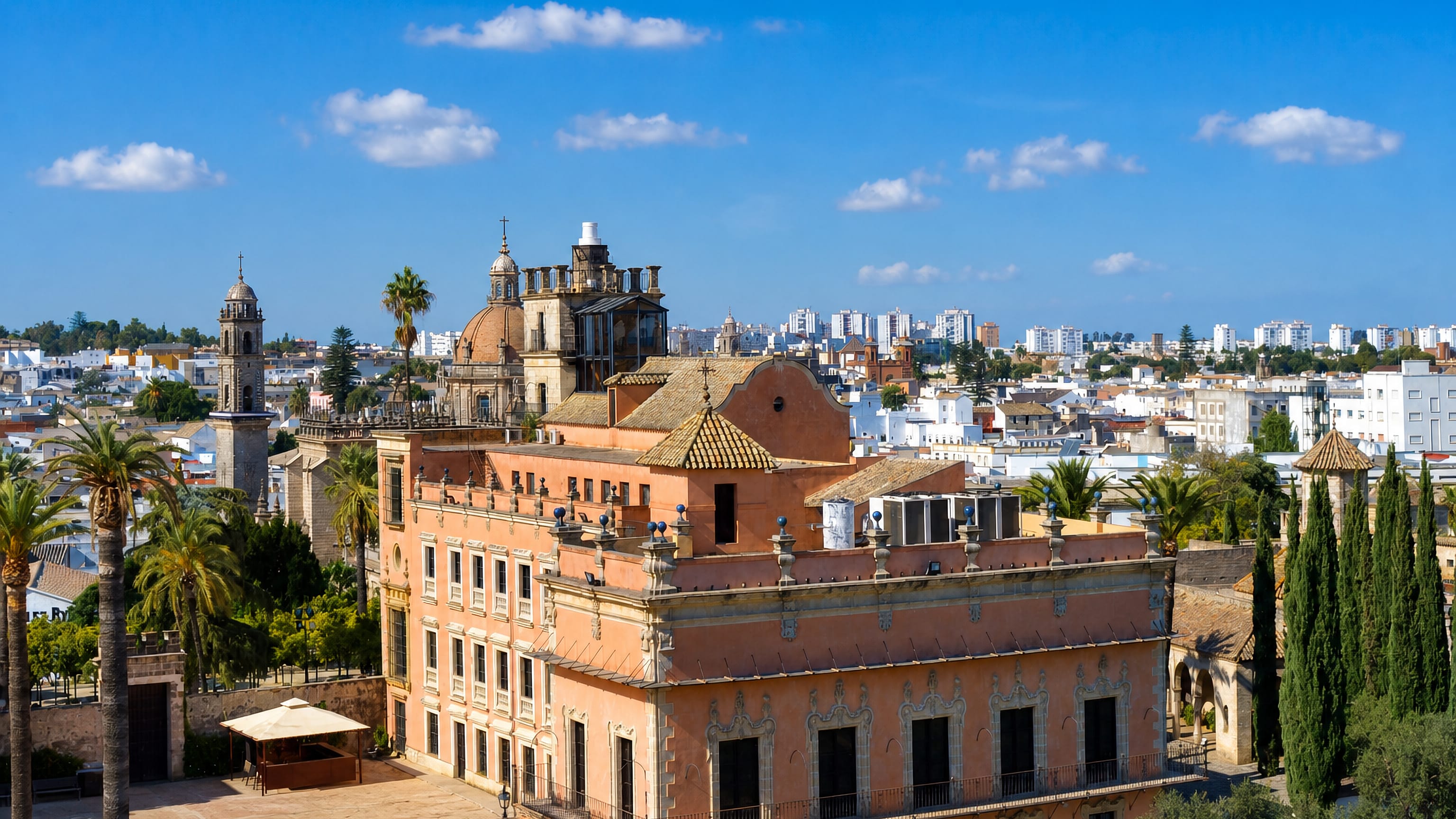
The cathedral end comes first. Jerez de la Frontera Cathedral, the Iglesia de San Dionisio and its Tower of San Dionisio, and the Palacio de los Marqueses de Bertemati fall inside the old city, and a bed among them puts the churches, the palaces and the Pescadería Vieja within one walk. Convents hold the other side.
The Convento de Santo Domingo and the Cloisters of the Church of Santo Domingo sit together, with the Iglesia-convento de la Merced and the Iglesia de San Miguel among the other church names on the same register. Museums scatter more widely. The Museo Arqueológico Municipal de Jerez, the Museo del Belén, the Pinacoteca Rivero and the Museos de la Atalaya give a stay several fixed points that are not churches, and the Museo del Enganche adds another.
Zoobotánico Jerez suits a family week. Beds out that way trade the old city's density for room to move, while the Rotonda del Minotauro en Jerez and the Torre del Agua are two more names on the municipal list. The Campiña de Jerez runs out beyond all of it, and the province of Cádiz supplies the rest of the choice.
Find hotels in Jerez de la Frontera
Direct booking searches for these neighbourhoods.
The cathedral and San Dionisio quarter
Jerez de la Frontera Cathedral, the Iglesia de San Dionisio and the Palacio de los Marqueses de Bertemati stand in the same old-city streets, with the Pescadería Vieja a few corners away.Find hotels in The cathedral and San Dionisio quarterThe convent side, by the Cloisters of the Church of Santo DomingoAround the Convento de Santo Domingo
The Convento de Santo Domingo and its cloisters give this part of Jerez its character, and the Iglesia-convento de la Merced belongs to the same religious register.Find hotels in Around the Convento de Santo DomingoFamily days at Zoobotánico Jerez with room to parkOut towards Zoobotánico Jerez
Rooms away from the church quarter swap dense old streets for space, with Zoobotánico Jerez the fixed point on that side of the city. Rooms are few around here — worth securing early.Find hotels in Out towards Zoobotánico JerezHotel links are affiliate links: booking through them may earn us a commission, at no extra cost to you. It never affects how places are ranked. How this works
Things to do in Jerez de la Frontera
Ranked by global recognition; descriptions from Wikidata (CC0).
Museums & Galleries
3- Museo Arqueológico Municipal de Jerez Heritage
- Pinacoteca Rivero
- Museos de la Atalaya (Jerez de la Frontera)
Churches & Religious Sites
8- Jerez de la Frontera Cathedral Heritage
- Iglesia de San Miguel Heritage
- Iglesia de San Dionisio Heritage
- Iglesia de Santiago El Real Heritage
- Iglesia-convento de la Merced Heritage
Show 3 more →
- Convento de Santo Domingo Heritage
- Iglesia de San Marcos Heritage
- Cloisters of the Church of Santo Domingo, Jerez de la Frontera Heritage
Castles & Historic Sites
3- Palacio de Camporreal Heritage
- Palacio Domecq Heritage
- Palacio de los Marqueses de Bertemati Heritage
Parks & Gardens
1- Zoobotánico Jerez
Landmarks & Notable Places
2- Tower of San Dionisio Heritage
- Torre del Agua, Jerez
worth knowingacross 5 categories in Jerez de la Frontera
About Jerez de la Frontera
What is Jerez de la Frontera known for?
Count the register's entries and the churches take the largest share. Jerez de la Frontera Cathedral heads a list that runs on through the Iglesia de San Dionisio, the Iglesia de San Marcos, the Iglesia de Santiago El Real and the Iglesia de San Mateo, four parish names for one city. Palaces answer them.
Palacio Domecq, the Palacio de Camporreal and the Palacio de los Marqueses de Bertemati give the city three grand private addresses on the same register. Zoobotánico Jerez pulls a different crowd, and the Museos de la Atalaya and the Museo del Enganche take the specialist end.
What are the main landmarks in Jerez de la Frontera?
Five parish churches, one cathedral. Iglesia de San Dionisio, Iglesia de San Marcos, Iglesia de Santiago El Real, Iglesia de San Miguel and Iglesia de San Mateo stand alongside Jerez de la Frontera Cathedral, and the Tower of San Dionisio belongs to the first of them. Palacio Domecq heads the civil names.
Puerta del arroyo, the Torre del Agua and the Misterio de Jerez fill in the gaps between them.
What is the history of Jerez de la Frontera?
For all its churches, Jerez records no year of foundation. The city's name carries its own history: Jerez de la Frontera is also written simply as Jerez, and Xeres is a third form recorded for the same place. A person's name appears on the register too: Álvar Núñez Cabeza de Vaca.
The Museo Arqueológico Municipal de Jerez holds the excavated material, which is where a city without a recorded founding date keeps its earliest evidence. Names, not dates, carry it. Religious building runs through it.
Jerez de la Frontera Cathedral, the Convento de Santo Domingo with its cloisters, the Iglesia-convento de la Merced and five parish churches account for much of what the register protects. Then come the palaces. Palacio Domecq, the Palacio de Camporreal and the Palacio de los Marqueses de Bertemati record the families who built on that scale, and the Pescadería Vieja records the trade that went on at street level.
Museums close the sequence. Museo del Belén, the Pinacoteca Rivero, the Museos de la Atalaya and the Museo del Enganche keep collections that the older register never had a place for. The Misterio de Jerez and the Rotonda del Minotauro en Jerez sit at the other end of the same municipal list.
Where is Jerez de la Frontera?
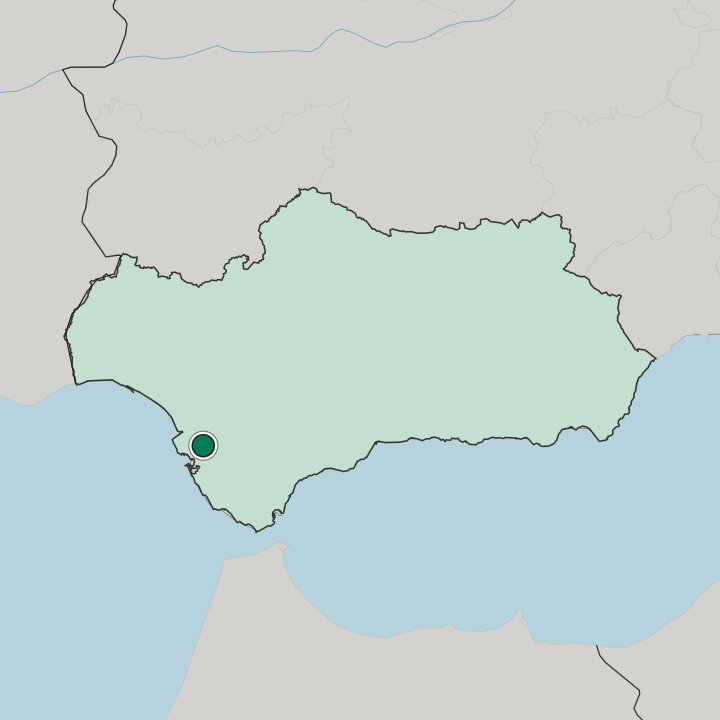
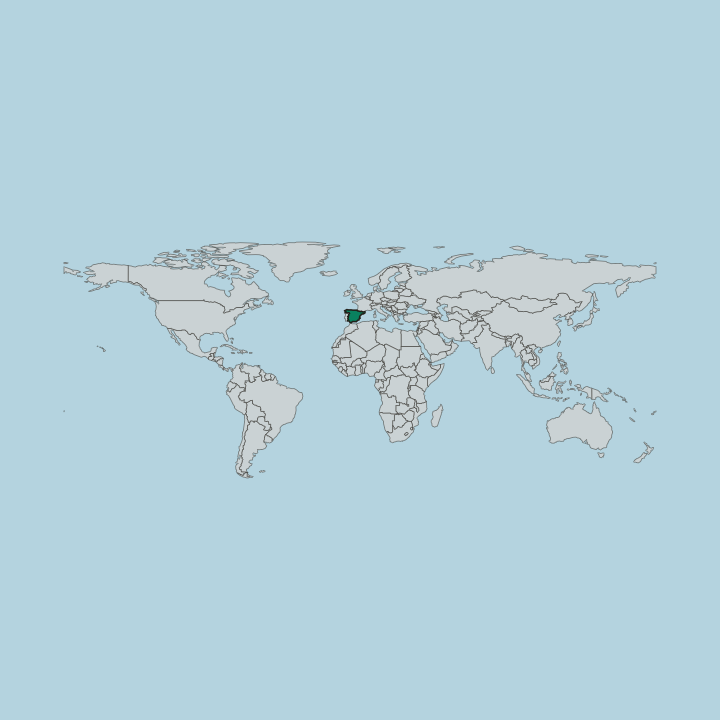
The Campiña de Jerez is the setting. Jerez de la Frontera lies on that inland lowland plain, crossed by the Guadalete River, midway between the Atlantic Ocean, the Guadalquivir and the western reaches of the Subbaetic System. The Costa de la Luz is the coast it answers to.
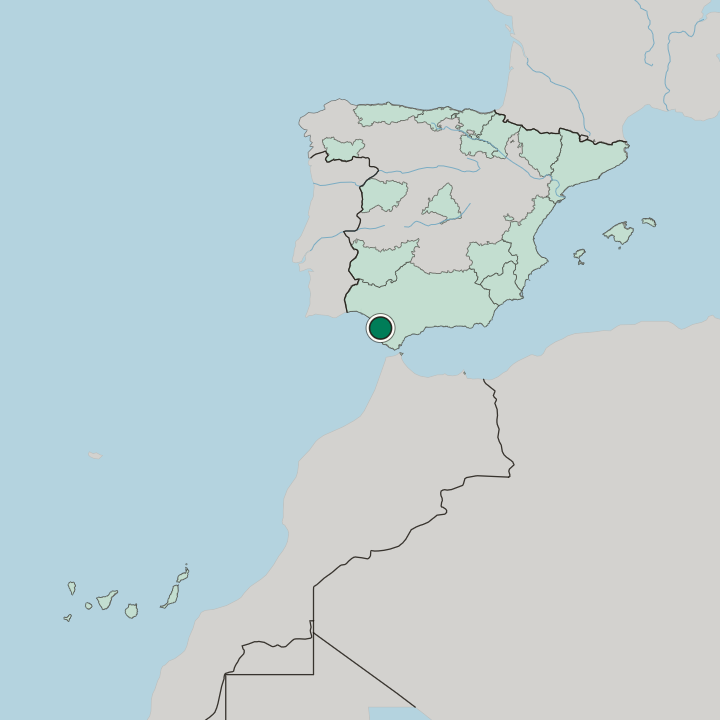
Cádiz province holds the municipality, and Andalusia frames the whole.
What is the climate of Jerez de la Frontera?
The Atlantic reaches inland here. Jerez de la Frontera sits on an open plain midway between the ocean and the Subbaetic System, so maritime air off the Atlantic crosses the Campiña de Jerez without a range in the way, and the temperate band recorded here holds. The Guadalete cuts through it.
A day spent between Jerez de la Frontera Cathedral and the Convento de Santo Domingo works in most months of the year.
How do you get to Jerez de la Frontera?
Jerez is a transport hub. The city works as the main economic engine of the province of Cádiz, and its position on the Campiña de Jerez, midway between the Atlantic Ocean and the Guadalquivir, puts it on the routes rather than off them. The Guadalete River crosses the plain.
Arrivals reach an old city where Jerez de la Frontera Cathedral, the Iglesia de San Miguel and Puerta del arroyo mark the oldest part of it.
Common questions
What is the best area to stay in Jerez de la Frontera?
The cathedral and San Dionisio quarter: Walking from Jerez de la Frontera Cathedral to the Tower of San Dionisio. Around the Convento de Santo Domingo: The convent side, by the Cloisters of the Church of Santo Domingo. Out towards Zoobotánico Jerez: Family days at Zoobotánico Jerez with room to park.
Good for
More cities in Andalusia
Updated October 2026