Ethiopia
Harari Region, Ethiopia — Towns & Travel Guide
Harari Region is Ethiopia's smallest state, wrapped around the walled Muslim city of Harar in the eastern highlands.
Hotel links are affiliate links: booking through them may earn us a commission, at no extra cost to you. It never affects how places are ranked. How this works


Towns & cities in Harari Region
One town here has its own guide — it links to where to stay.

 Ethiopia
Harar
Harar is an ancient walled city in eastern Ethiopia, a holy city of Islam packed with mosques and shrines.Where to stay →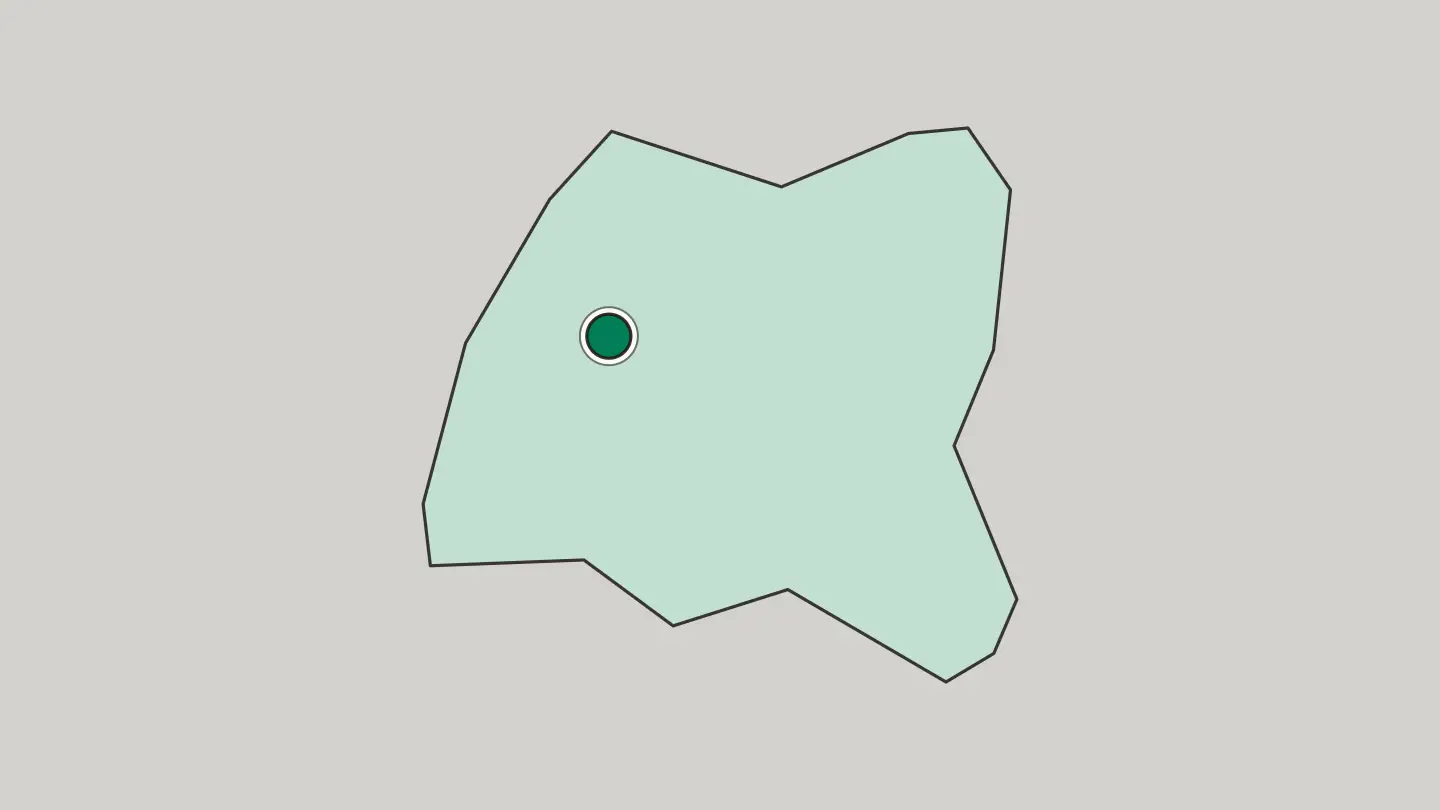
Hotel links are affiliate links: booking through them may earn us a commission, at no extra cost to you. It never affects how places are ranked. How this works
About Harari Region
The region exists for one city.
What is Harari Region known for?
Harar is the reason travellers come. Its old core, Harar Jugol, is a walled town of some 110 mosques and scores of shrines that many Muslims count as the fourth holiest city of Islam, and it carries a UNESCO World Heritage listing for that dense religious fabric. The stone ramparts, the winding alleys, and the nightly feeding of wild hyenas outside the gates are what fix Harar in most itineraries across eastern Ethiopia.
Where is Harari Region?
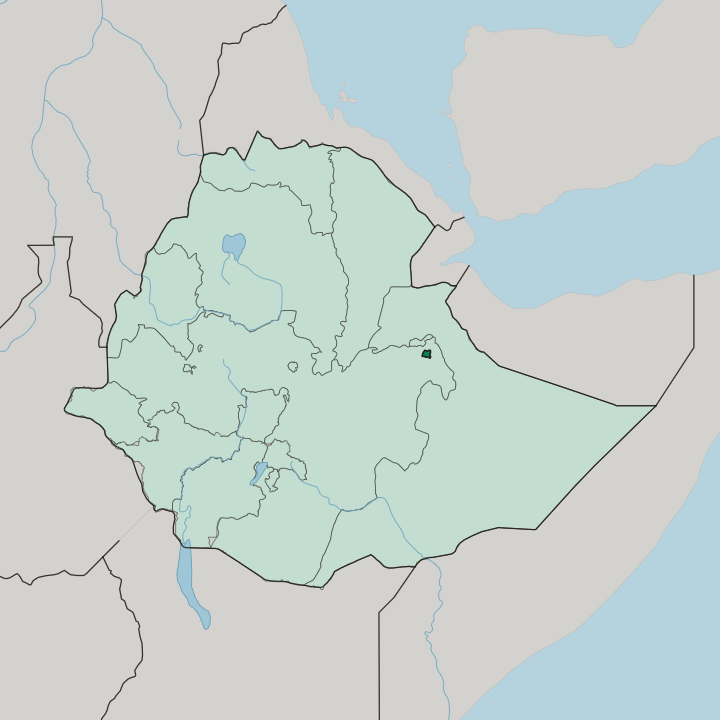
Harari Region sits in the eastern highlands of Ethiopia, a small enclave surrounded on every side by the far larger Oromia Region. It has no outer border of its own. Oromia rings it completely, and the whole state covers only about 334 square kilometres, the least of any region in the country.
That makes it the smallest of Ethiopia's regional states in both land and people. The land itself is a plateau. Harar stands on a hilltop near 1,885 metres, high enough for cool air, with deep gorges cut into the tableland and dry savannah and semi-desert falling away toward the lowlands beyond.
To the north the ground drops toward Dire Dawa and the hot plains that run out to the Somali country and the Gulf of Aden. Coffee and the stimulant leaf chat grow on the surrounding slopes, and Harar's name has long been tied to the coffee trade that once moved out through its gates toward the coast. Nearly all of the population lives in the city itself.
The rural kebeles beyond hold only a thin scatter of farms across the remaining hills, which is unusual for Ethiopia.
What is Harari Region like?
Harar is a Muslim city, and its culture is Harari before it is anything else. That identity runs through the whole region. The Harari people, a Semitic-speaking group with their own language, built the walled town over centuries and still keep its handicrafts alive, from weaving and basketry to the bookbinding tied to the town's many mosques and shrines.
Islam is the faith of most of the population, and Harar's standing as a holy town shapes daily life inside the ramparts. The old town is famous for two things a visitor cannot miss. One is the maze of narrow lanes and colour-washed courtyard houses, whose interiors follow a layout found nowhere else, part African and part Arab, later touched by Indian traders.
The other happens after dark, when the hyena men call spotted hyenas up to the gates and feed them by hand, a practice that grew into an evening ritual watched by outsiders. The French poet Arthur Rimbaud lived here as a coffee and arms trader in the 1880s, and the house linked to his name is now a museum. Layered on the Harari core are Oromo and Amhara communities, so Harari, Oromo, and Amharic are all heard in the streets.
It is a small place with an outsized cultural weight.
What is the history of Harari Region?
Harar's story is the region's story. Its emir Nur ibn Mujahid raised the great stone wall around the town in the 16th century, and Harar served as a seat of the Adal Sultanate before becoming the independent Emirate of Harar founded in 1647. Egypt held the city from 1875 onward, and Ethiopian rule then began in 1887 after the Battle of Chelenqo brought Harar under the emperor Menelik.
The modern Harari state was later drawn tight around the old town to give the Harari people their own regional home.
What is the climate of Harari Region?
Harar's height tempers the heat. Sitting near 1,885 metres on its plateau, the city keeps a mild semi-arid climate while the lowlands toward Dire Dawa bake below. Days run warm rather than hot, nights cool into the mid-teens, and the heaviest rain arrives in April and May before a drier stretch settles over the hills.
The gorges and savannah around the walls green up briefly with those spring showers.
How do you get to Harari Region?
Harar has no airport of its own. The usual way in is through Dire Dawa, whose airport sits down on the plains to the north and takes flights from Addis Ababa. From Dire Dawa a road climbs the escarpment to Harar in an hour or so.
The Addis Ababa to Djibouti railway also runs through Dire Dawa, so rail travellers pick up the same mountain road for the final leg up to the walled city.
Good for
More regions in Ethiopia
Updated September 2026