
Ethiopia: Regions, Cities & Travel Guide
Ethiopia is a landlocked country in the Horn of Africa, its land split by the East African Rift, with Addis Ababa as its capital city.
Hotel links are affiliate links: booking through them may earn us a commission, at no extra cost to you. It never affects how places are ranked. How this works


Top destinations in Ethiopia
Cities to start from, then drill into areas and hotels.
 Ethiopia
Addis Ababa
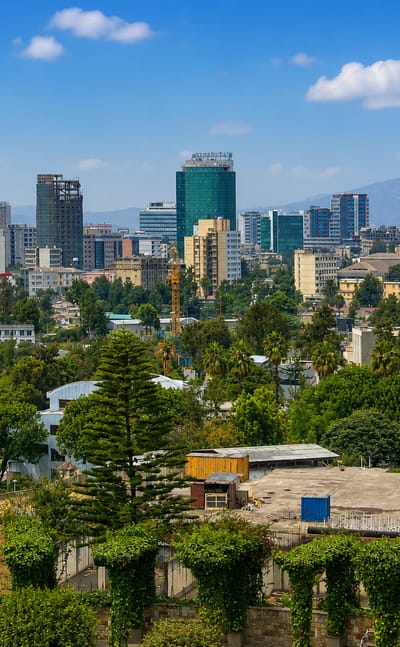
Addis Ababa is the capital of Ethiopia and the highest capital in Africa, with the National Museum of Ethiopia and St. George's Cathedral.Where to stay →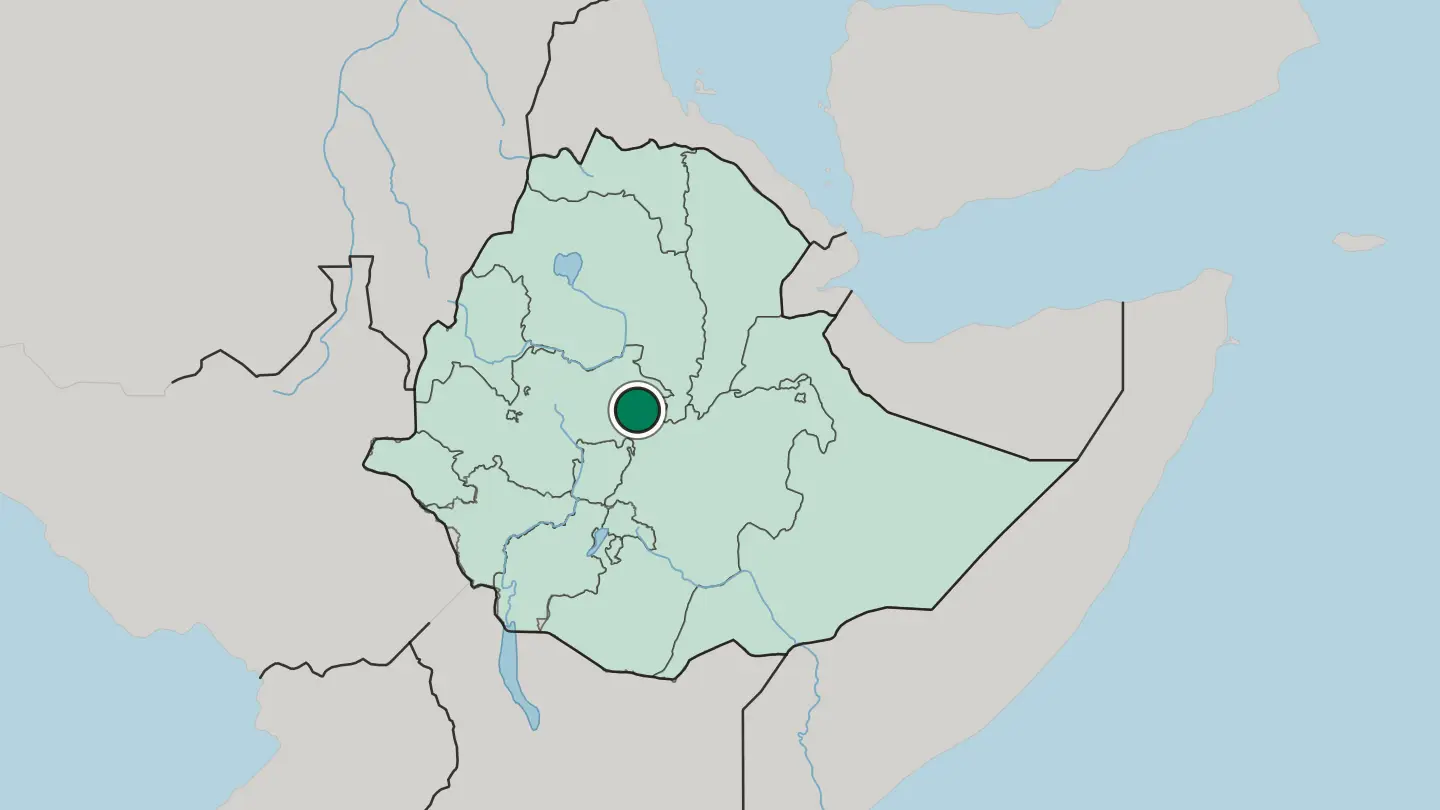
 Ethiopia
Aksum
Aksum is an ancient city of the Tigray highlands in northern Ethiopia, the capital of a great early empire, famed for its towering carved stone obelisks.Where to stay →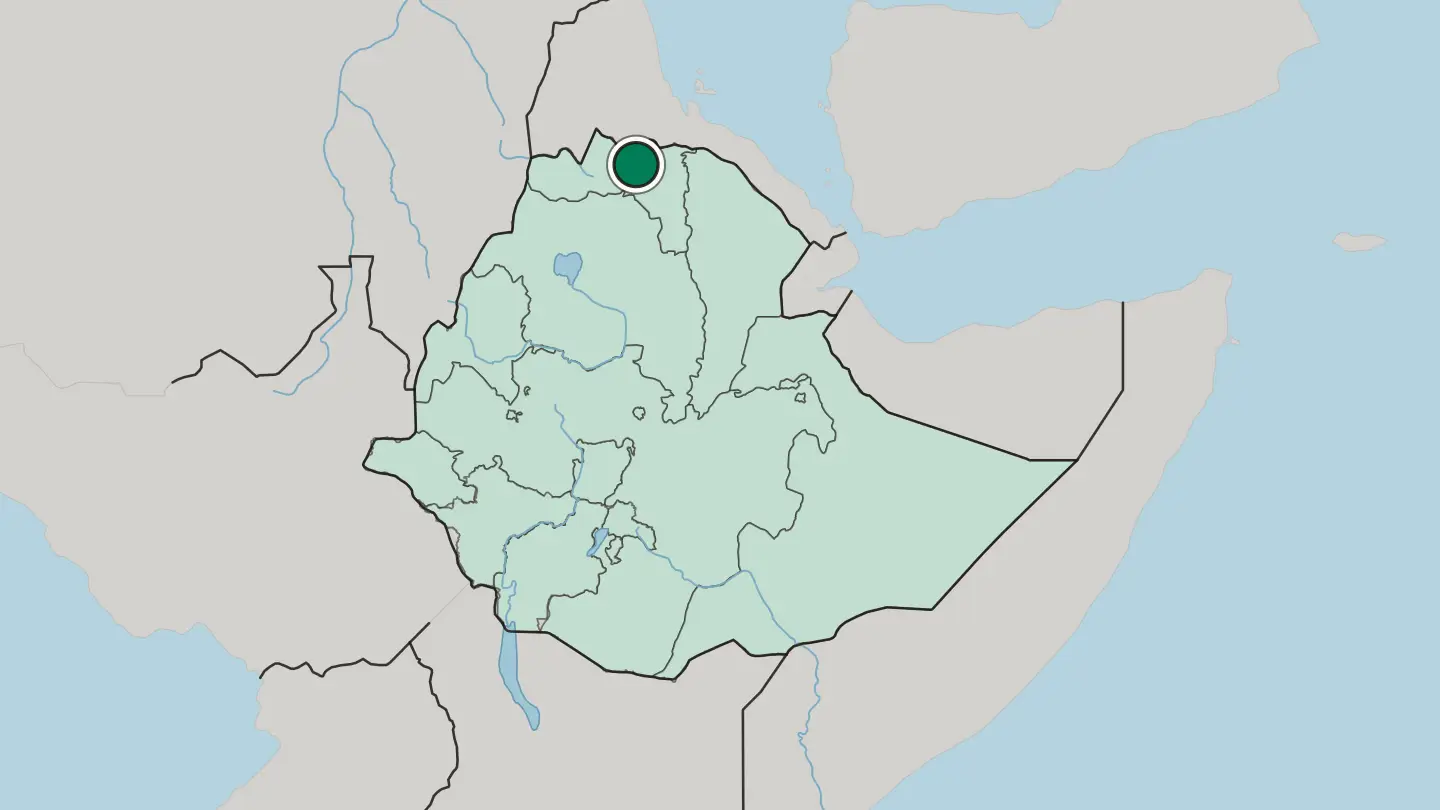
 Ethiopia
Harar
Harar is an ancient walled city in eastern Ethiopia, a holy city of Islam packed with mosques and shrines.Where to stay →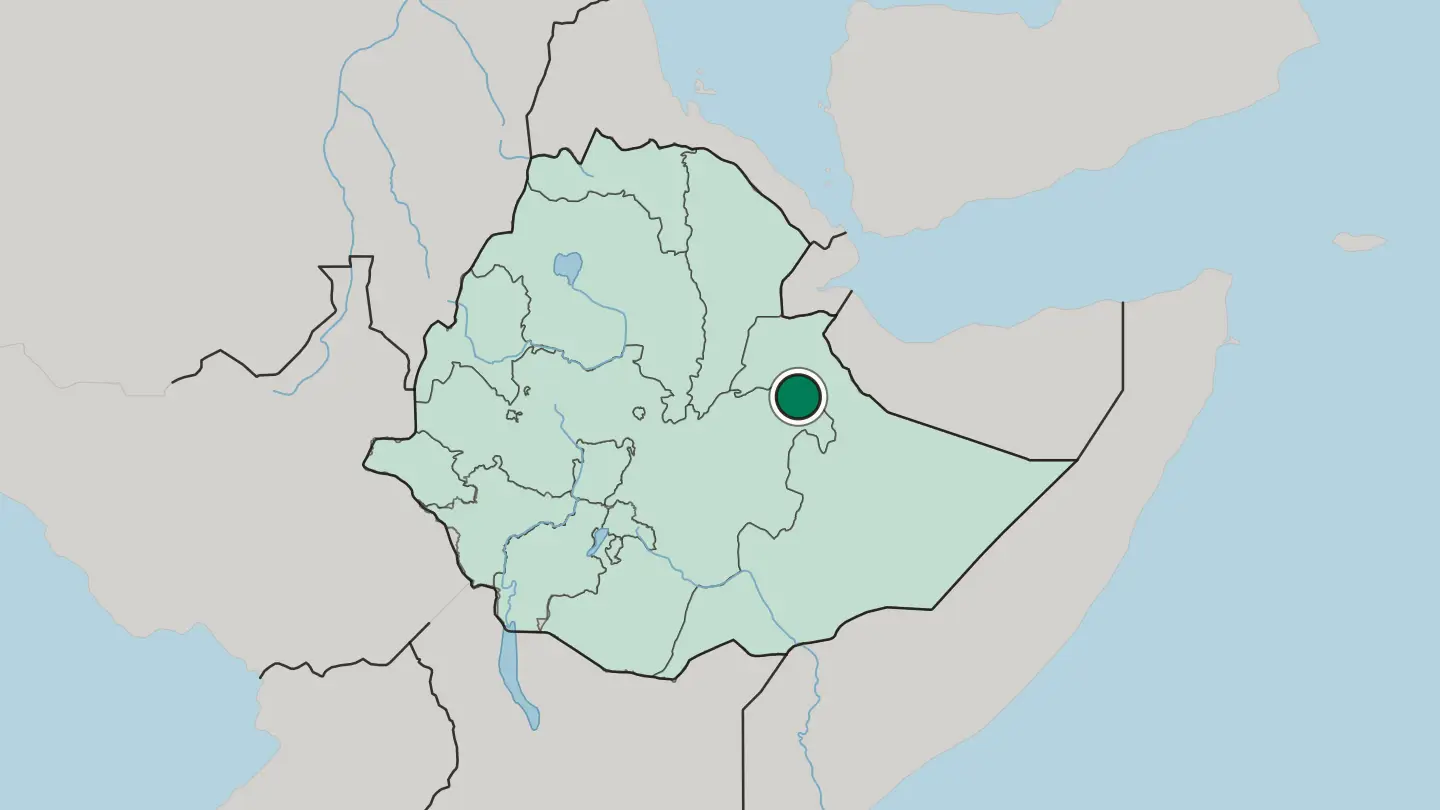
 Ethiopia
Gonder
Gondar is a highland city of northern Ethiopia, the old imperial capital whose stone castles have earned it the name of the Camelot of Africa.Where to stay →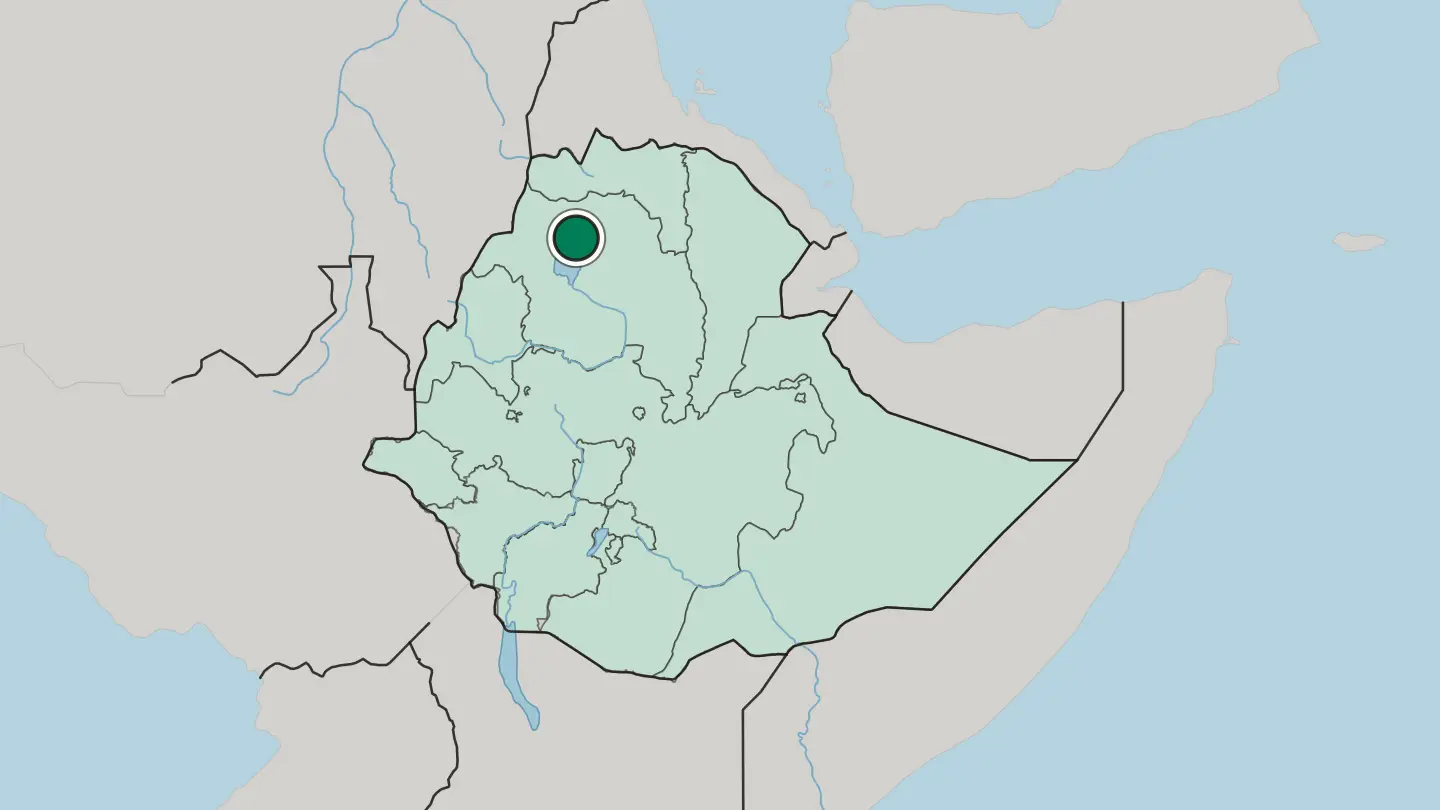
 Ethiopia
Dire Dawa
Dire Dawa is one of two chartered cities of Ethiopia, founded in 1902 and administered apart from the Oromia Region beside it.Where to stay →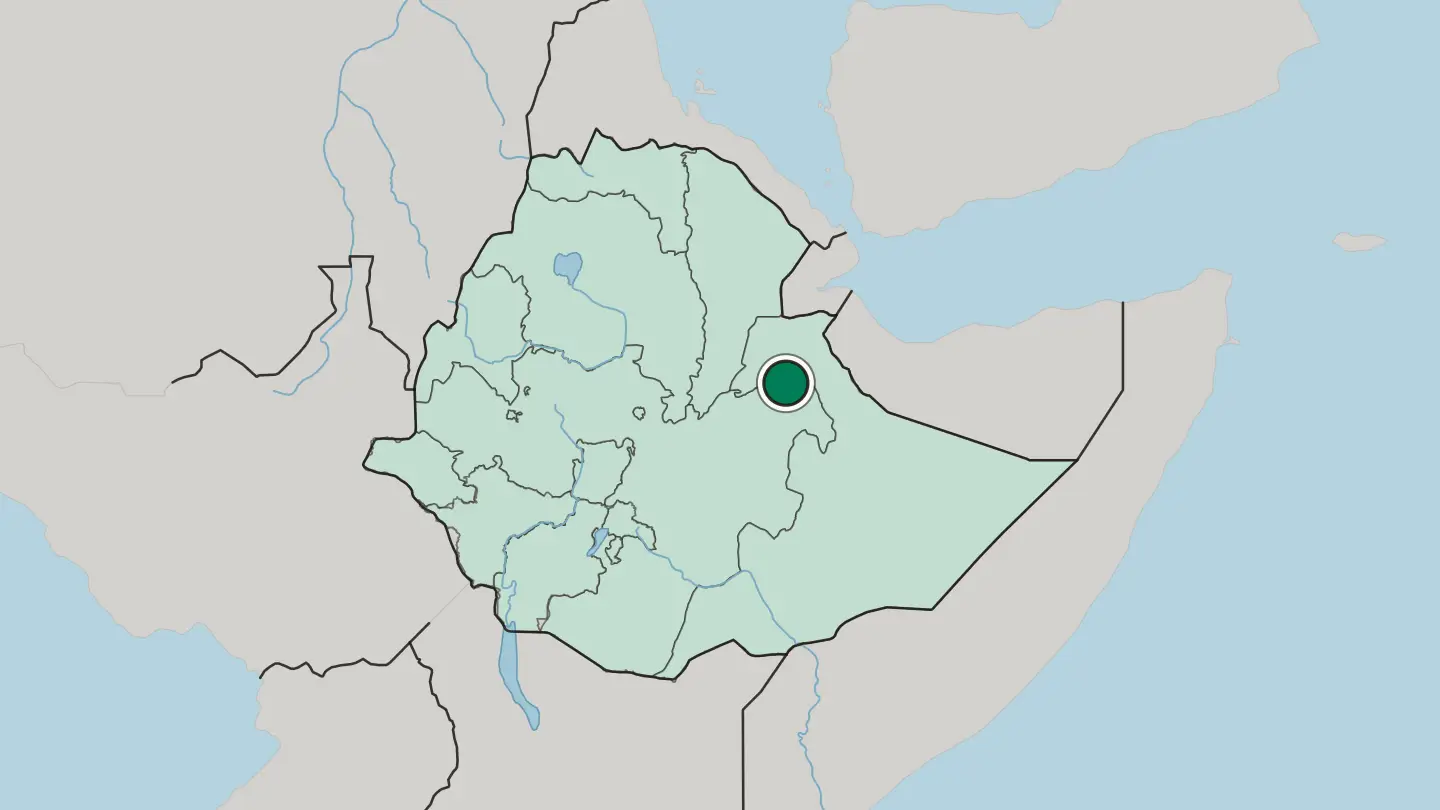 Ethiopia
Mek'ele
Mek'ele, capital of Ethiopia's Tigray Region, stands high on the Tigrayan Highlands, a Special Zone of seven sub-cities north of Addis Ababa.Where to stay →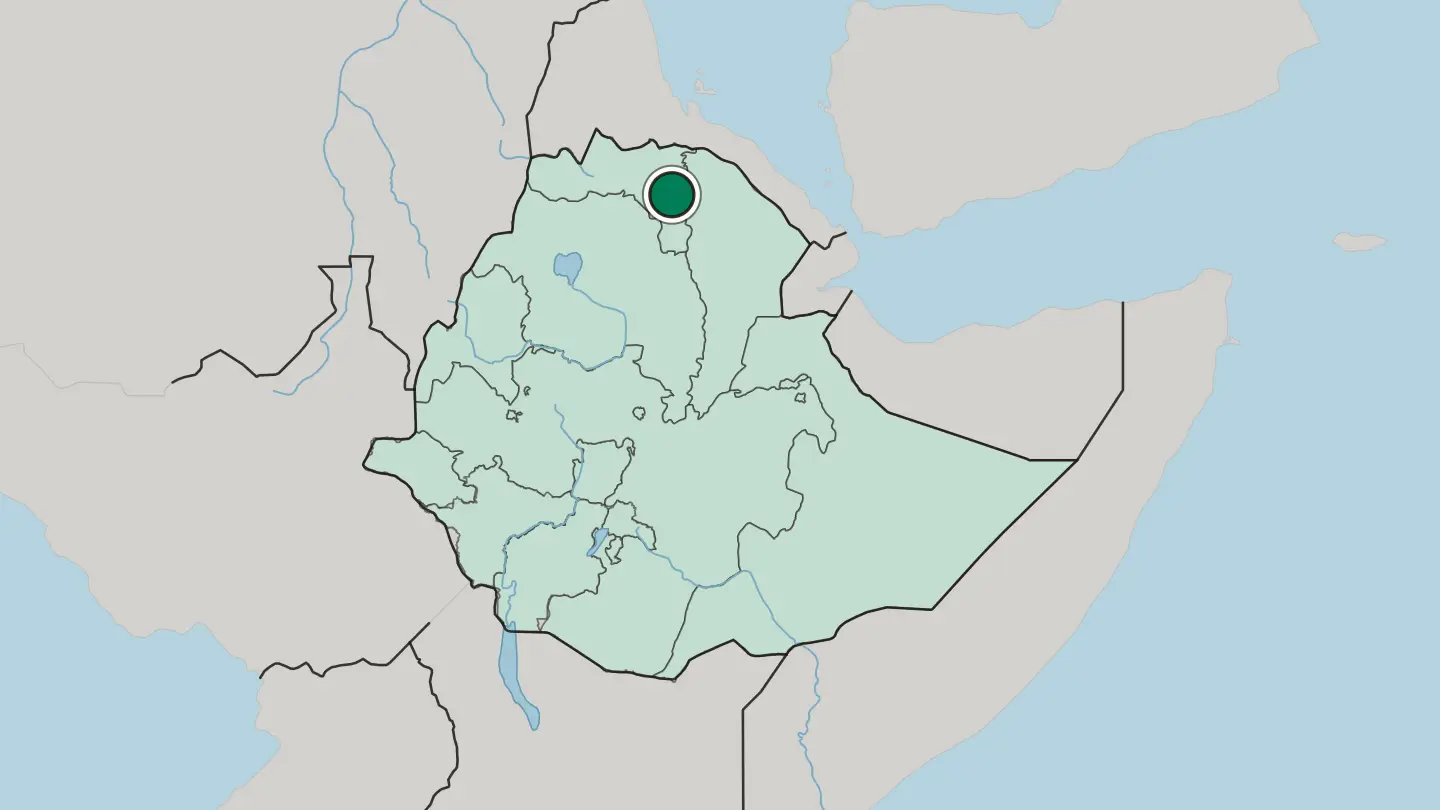
 Ethiopia
Bahir Dar
Bahir Dar is a lakeside city of northwestern Ethiopia, a palm-lined town on the shore of Lake Tana where the Blue Nile begins its journey.Where to stay →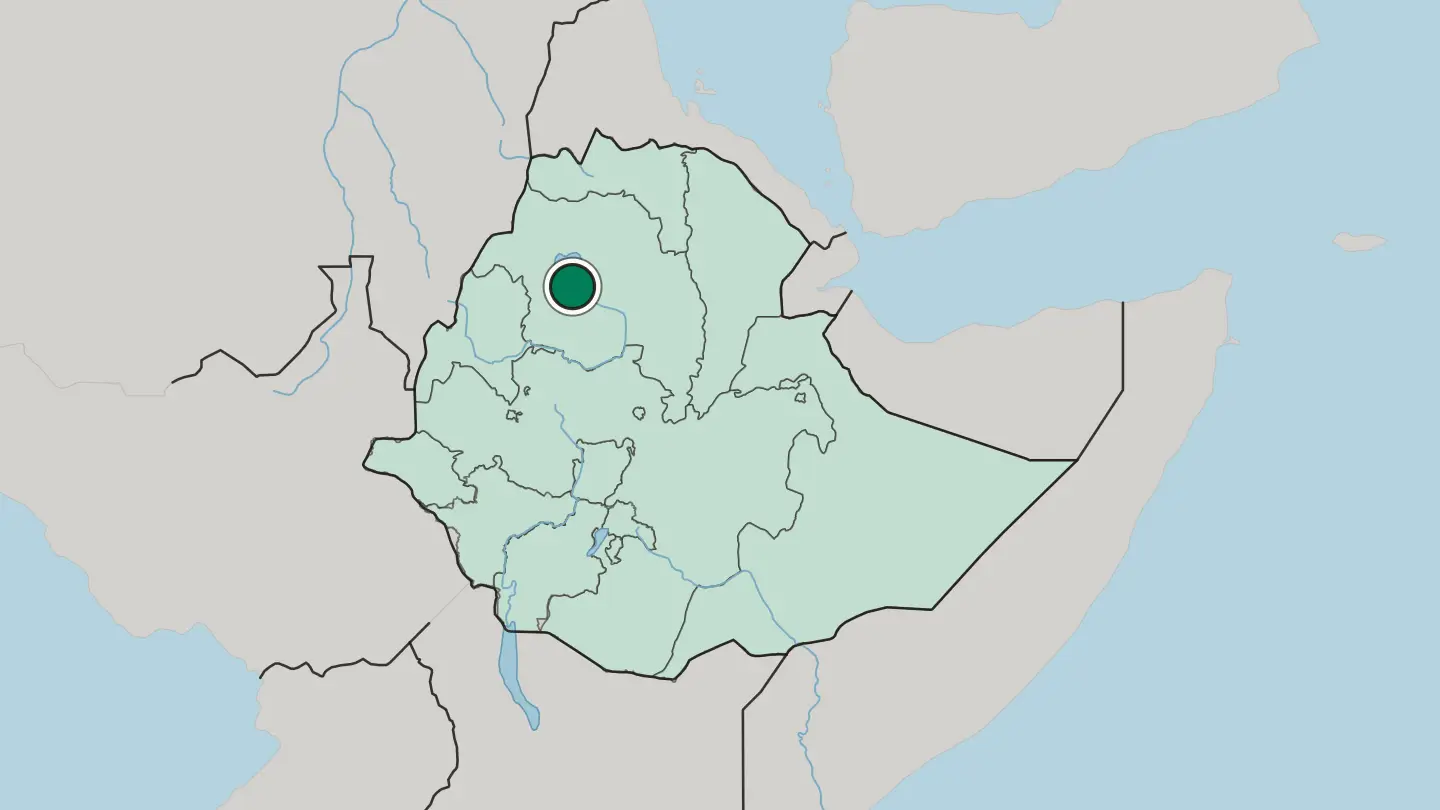
 Ethiopia
Nazrēt
Nazrēt, now more often called Adama, is a city of the Oromia Region between an escarpment and the Great Rift Valley in Ethiopia.Where to stay →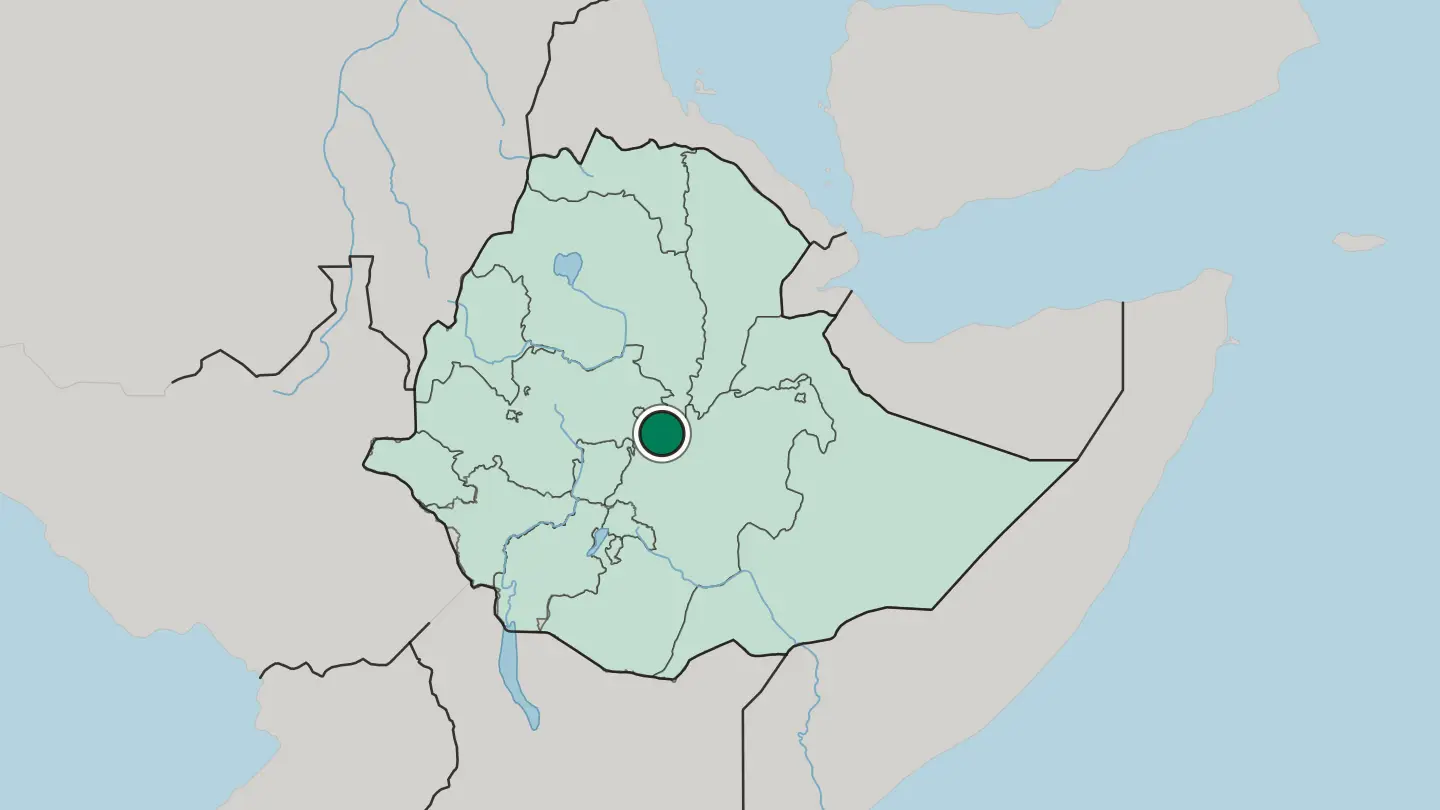 Ethiopia
Jijiga
Jijiga, also written Jigjiga, is the capital of Ethiopia's Somali Region, an upland city of the Fafan Zone near the Somaliland frontier.Where to stay →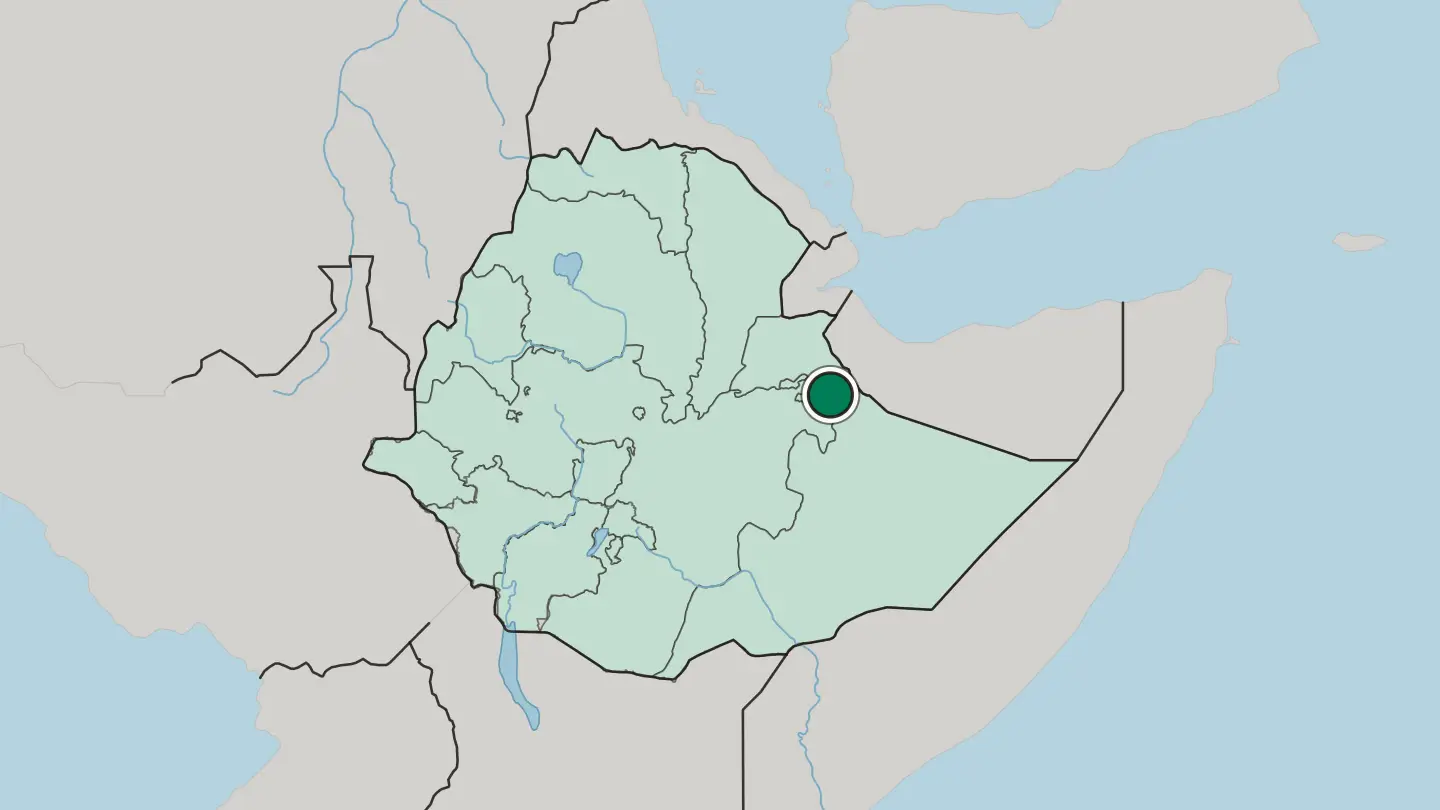
Hotel links are affiliate links: booking through them may earn us a commission, at no extra cost to you. It never affects how places are ranked. How this works
Regions of Ethiopia
Ethiopia
Addis Ababa
Addis Ababa is the capital region of Ethiopia, the seat of national government and, raised on high ground, the highest capital in Africa.Towns & cities →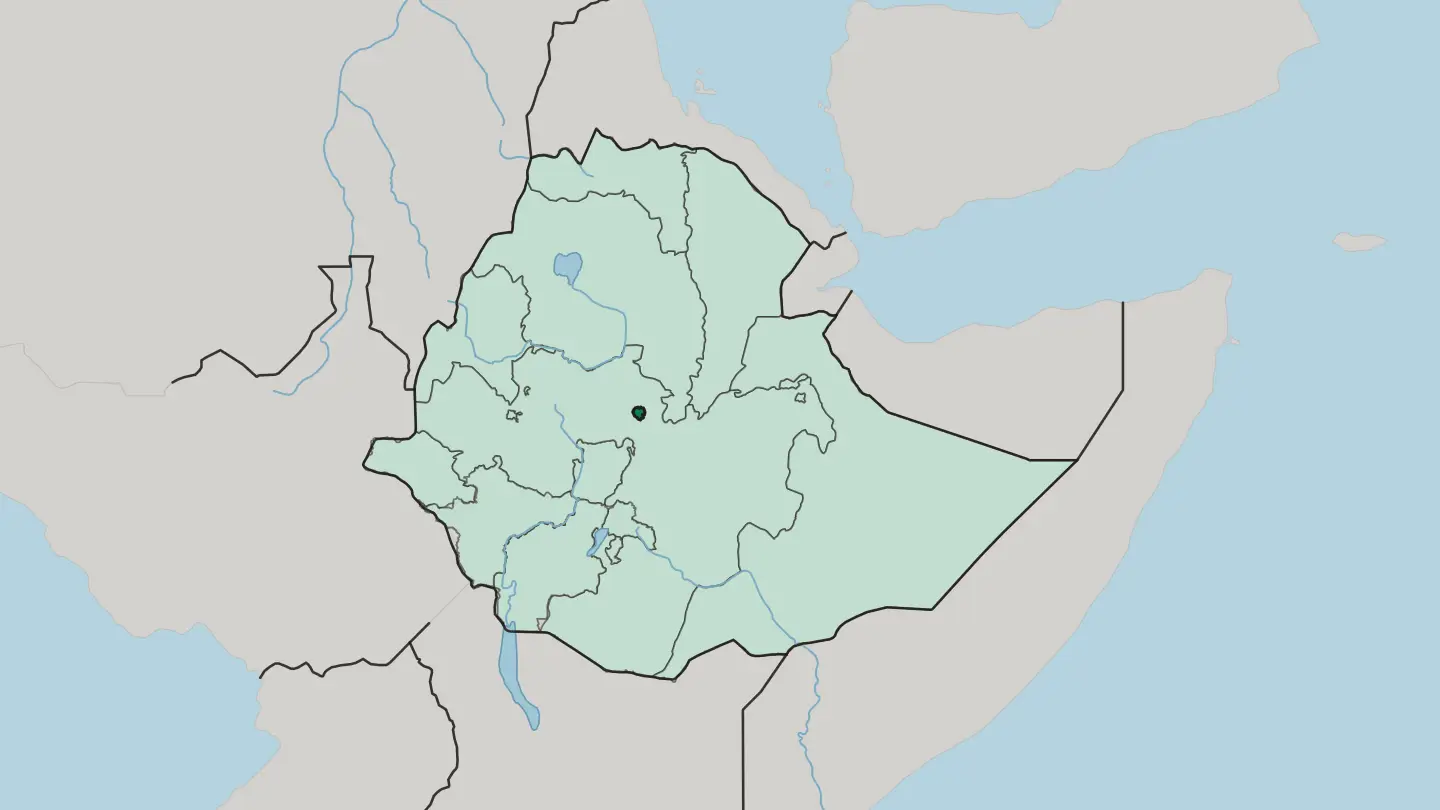 Ethiopia
Afar Region
Afar is Ethiopia's northeastern desert region, holding the Danakil Depression, the Erta Ale lava lake, and salt caravans crossing the flats.Towns & cities →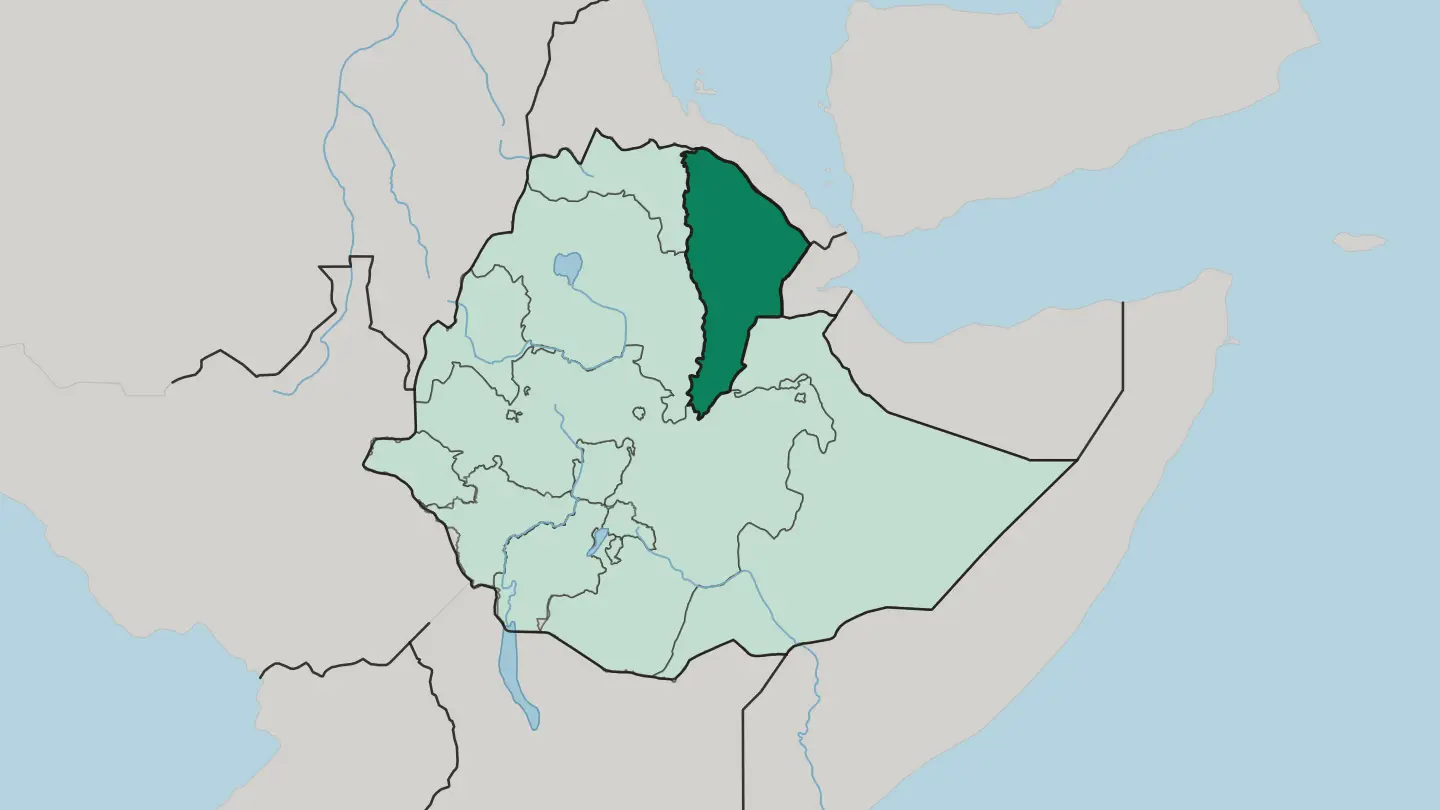 Ethiopia
Amhara Region
Amhara is the highland heart of northern Ethiopia, home to Lake Tana, the castles of Gondar, and the rock churches of Lalibela.Towns & cities →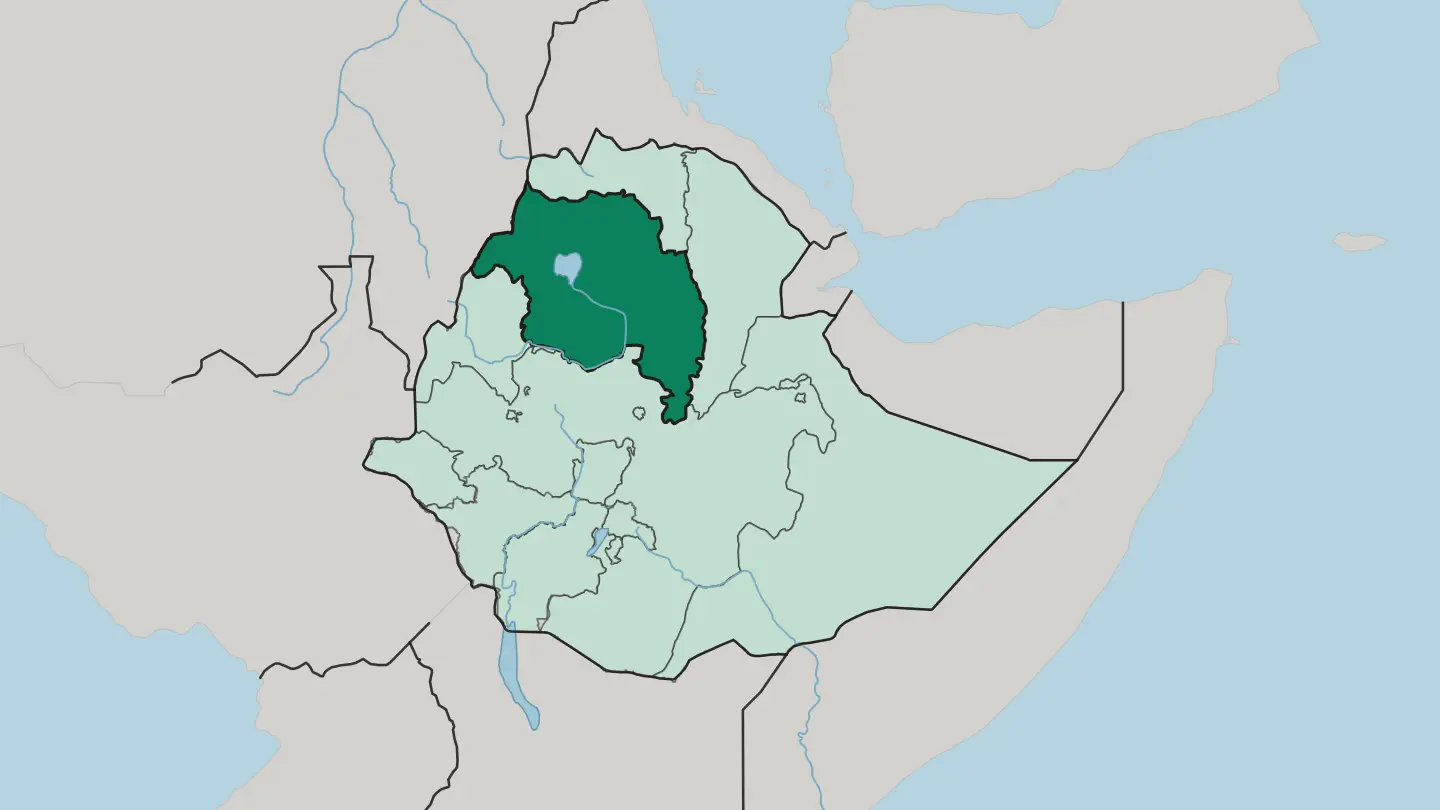 Ethiopia
Benishangul-Gumuz Region
Benishangul-Gumuz is Ethiopia's western frontier region, where the Abay carves the plateau on its way to Sudan.Towns & cities →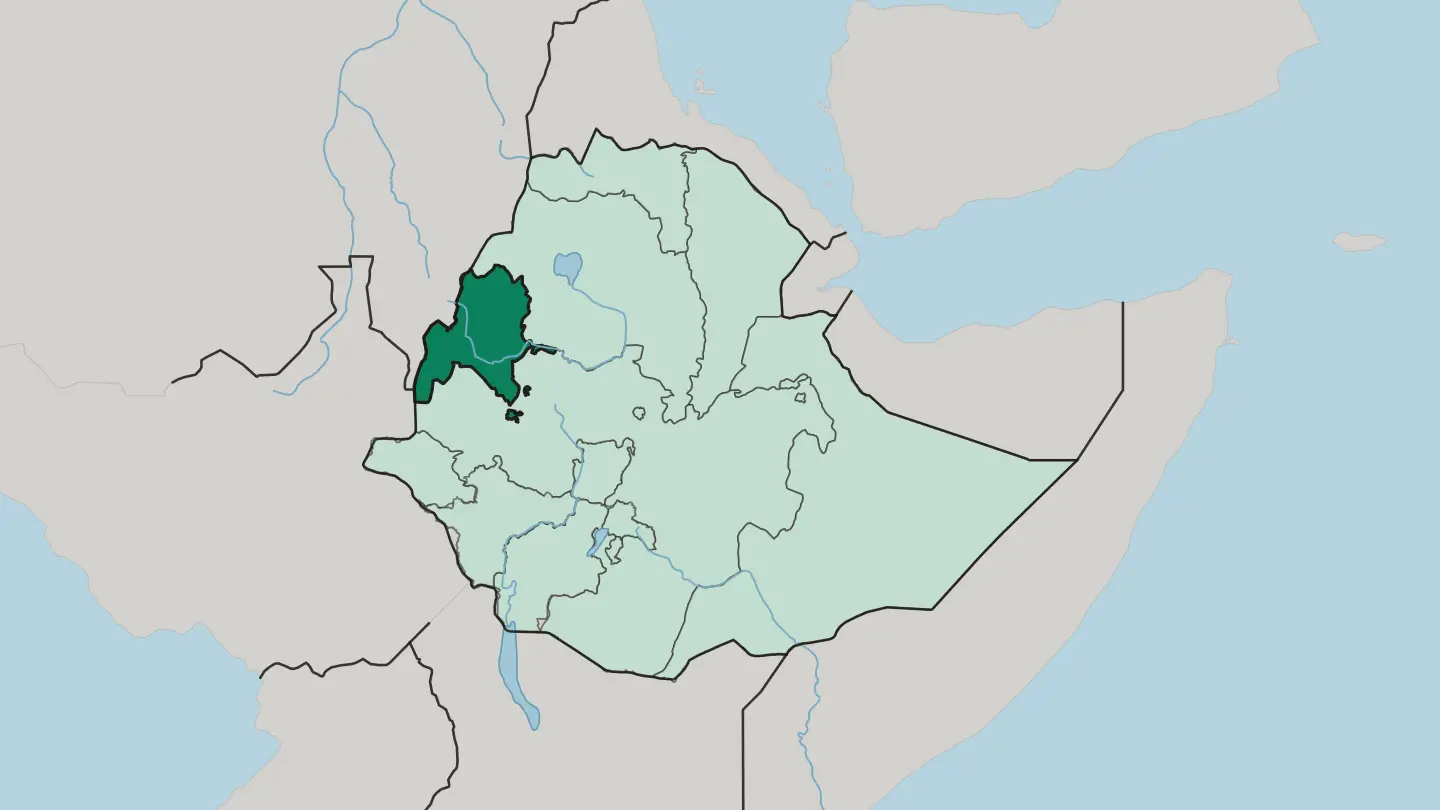 Ethiopia
Central Ethiopia Regional State
Central Ethiopia Regional State is a highland region southwest of Addis Ababa, home to the Gurage and Hadiya peoples.Towns & cities →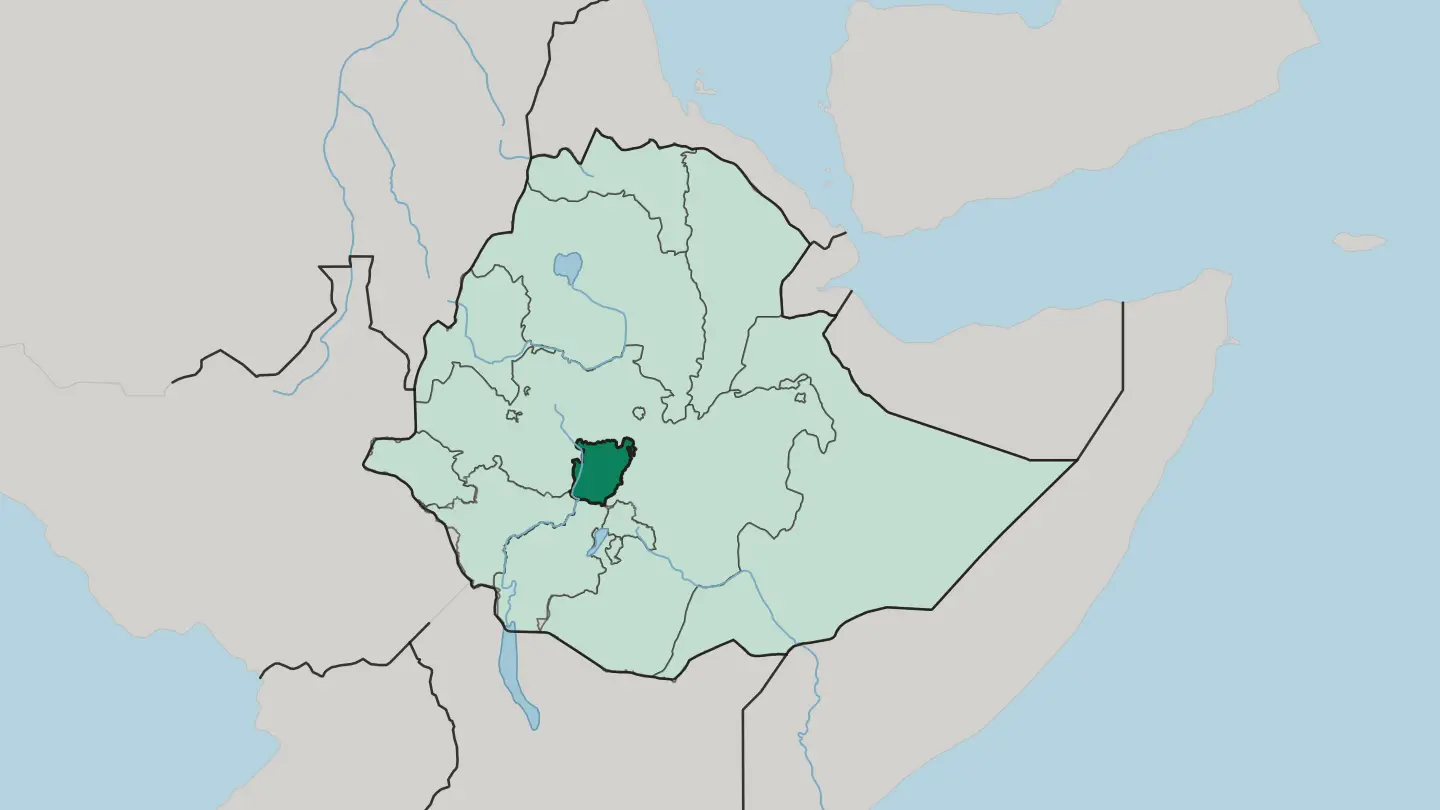 Ethiopia
Dire Dawa Region
Dire Dawa is a railway-born chartered region of eastern Ethiopia, set on the Dechatu River at the foot of encircling cliffs.Towns & cities →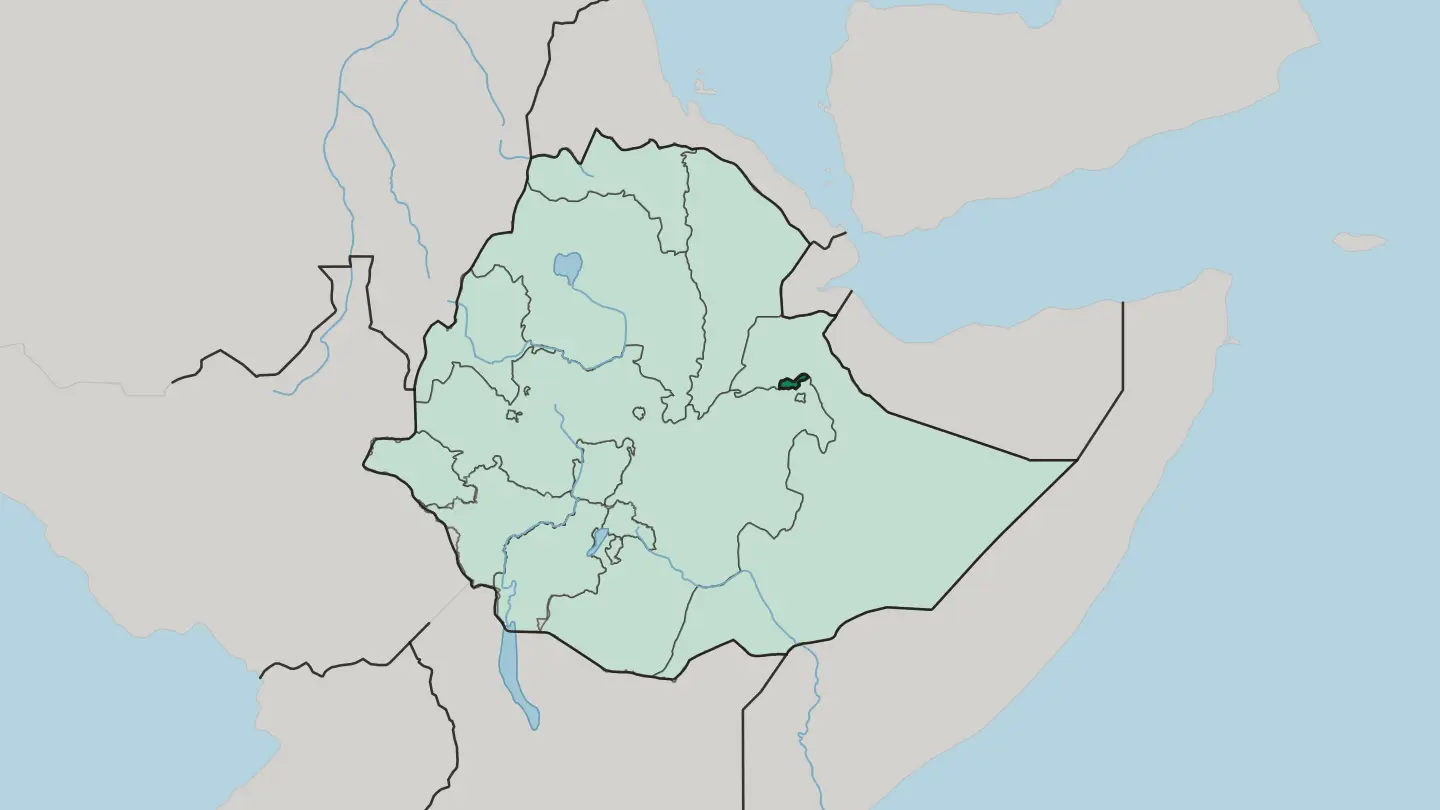 Ethiopia
Gambela Region
Gambela is Ethiopia's western lowland, a hot floodplain of Nilotic villages and open savanna where the Baro River runs toward South Sudan.Towns & cities →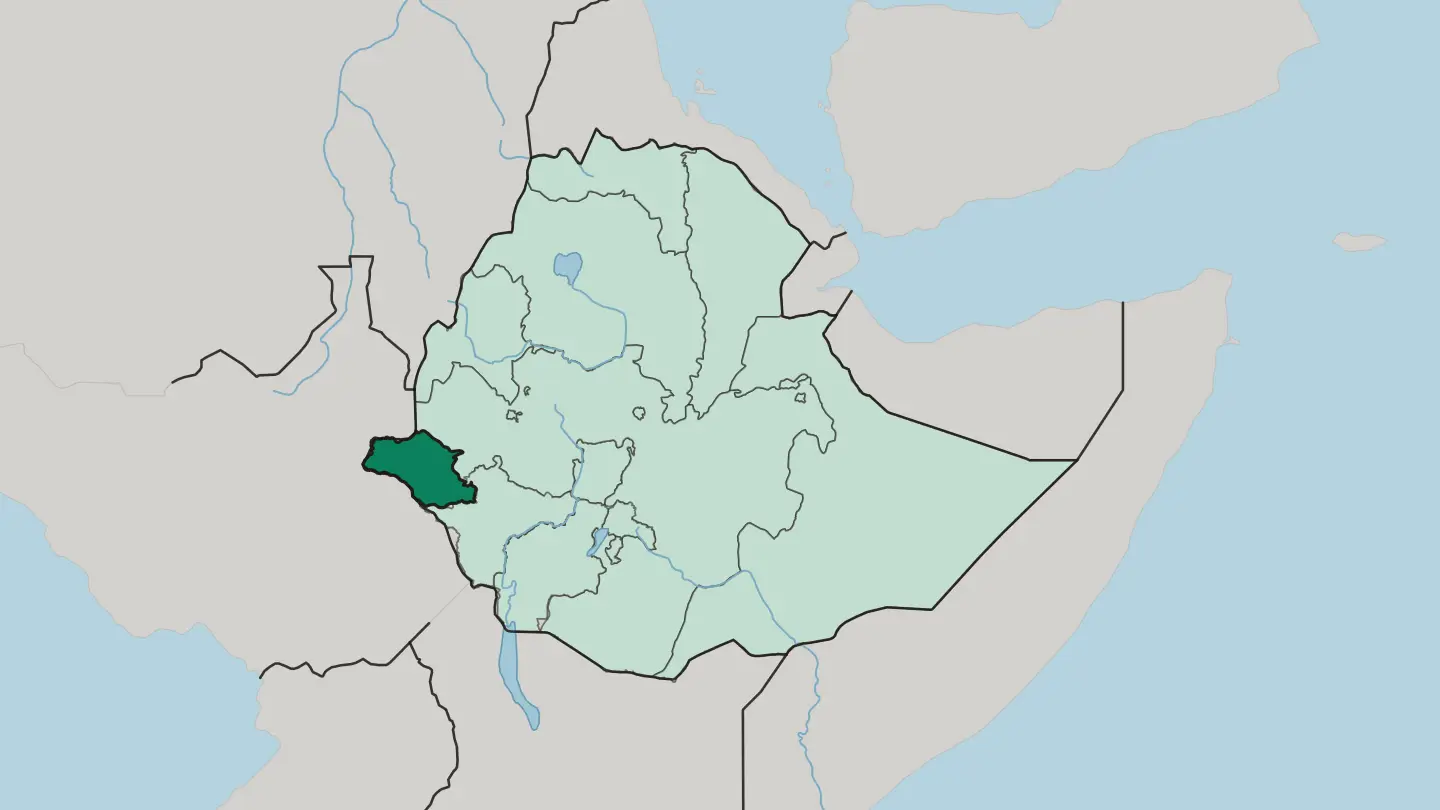 Ethiopia
Harari Region
Harari Region is Ethiopia's smallest state, wrapped around the walled Muslim city of Harar in the eastern highlands.Towns & cities →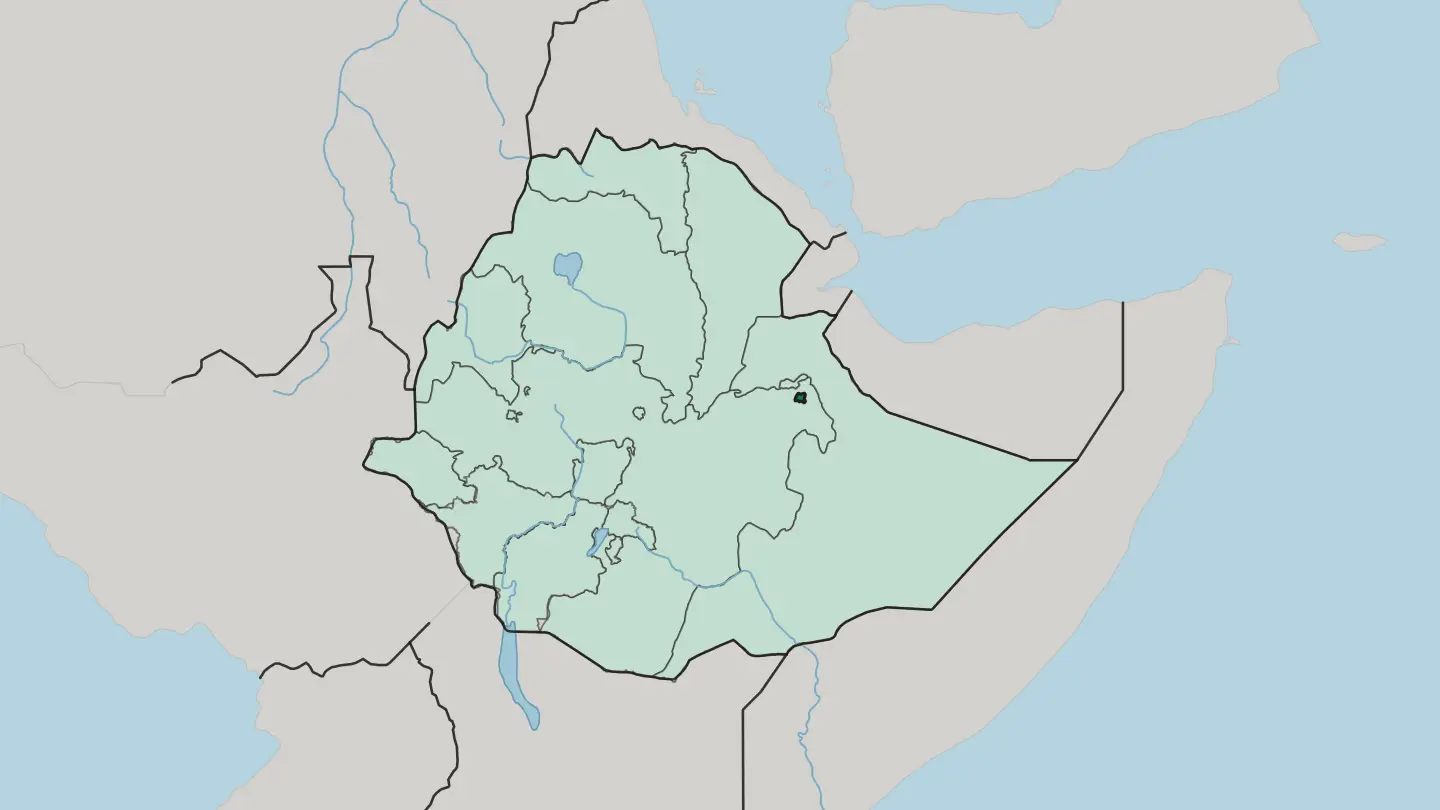 Ethiopia
Oromiya Region
Oromiya is Ethiopia's largest region, wrapping around Addis Ababa and stretching from Bale's high peaks to the Rift Valley lakes.Towns & cities →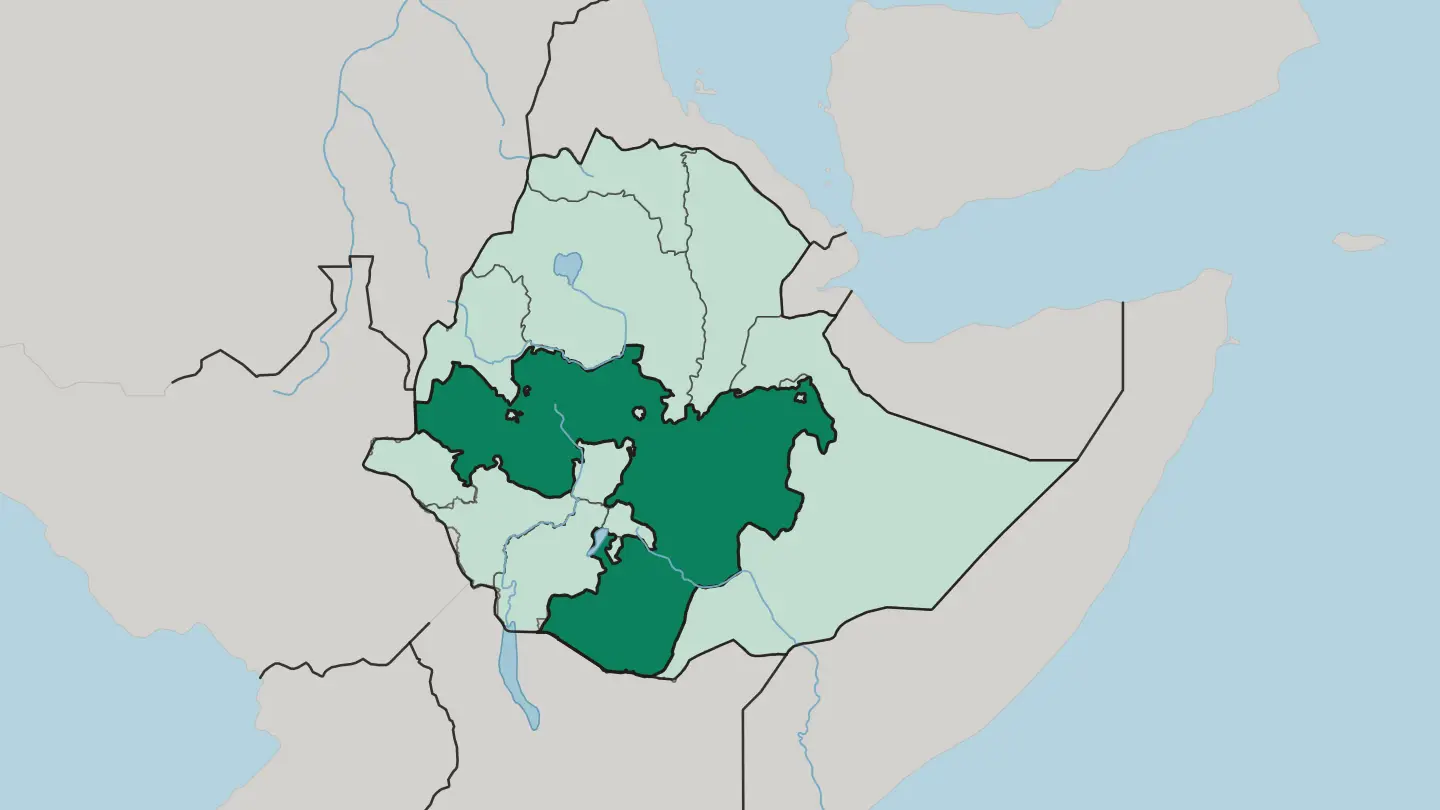
 Ethiopia
Sidama Region
Sidama is Ethiopia's youngest region, coffee country on the shores of Lake Awasa in the Great Rift Valley.Towns & cities →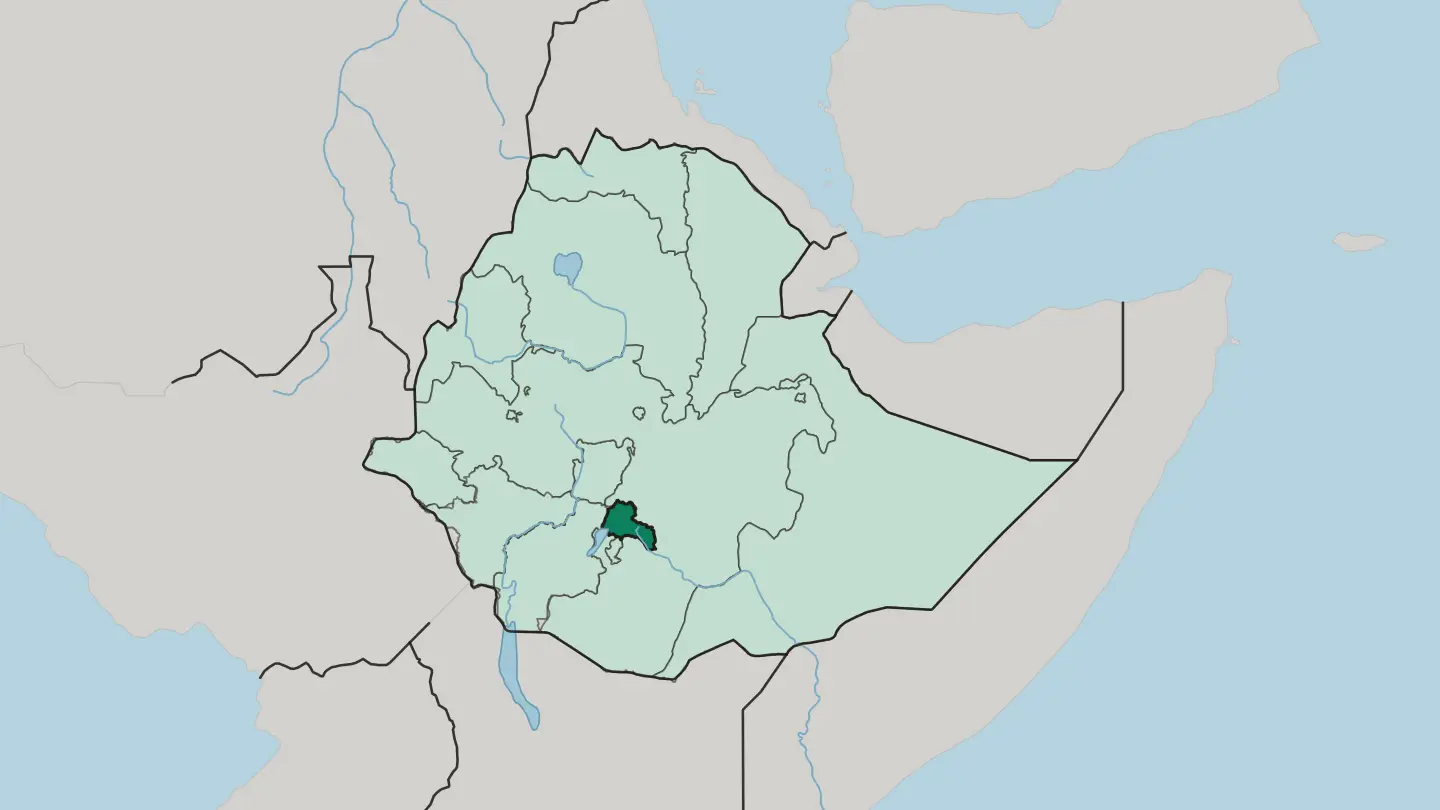 Ethiopia
Somali Region
The Somali Region is the arid eastern edge of Ethiopia, a land of camel-herding pastoralists spread across the vast Ogaden plateau.Towns & cities →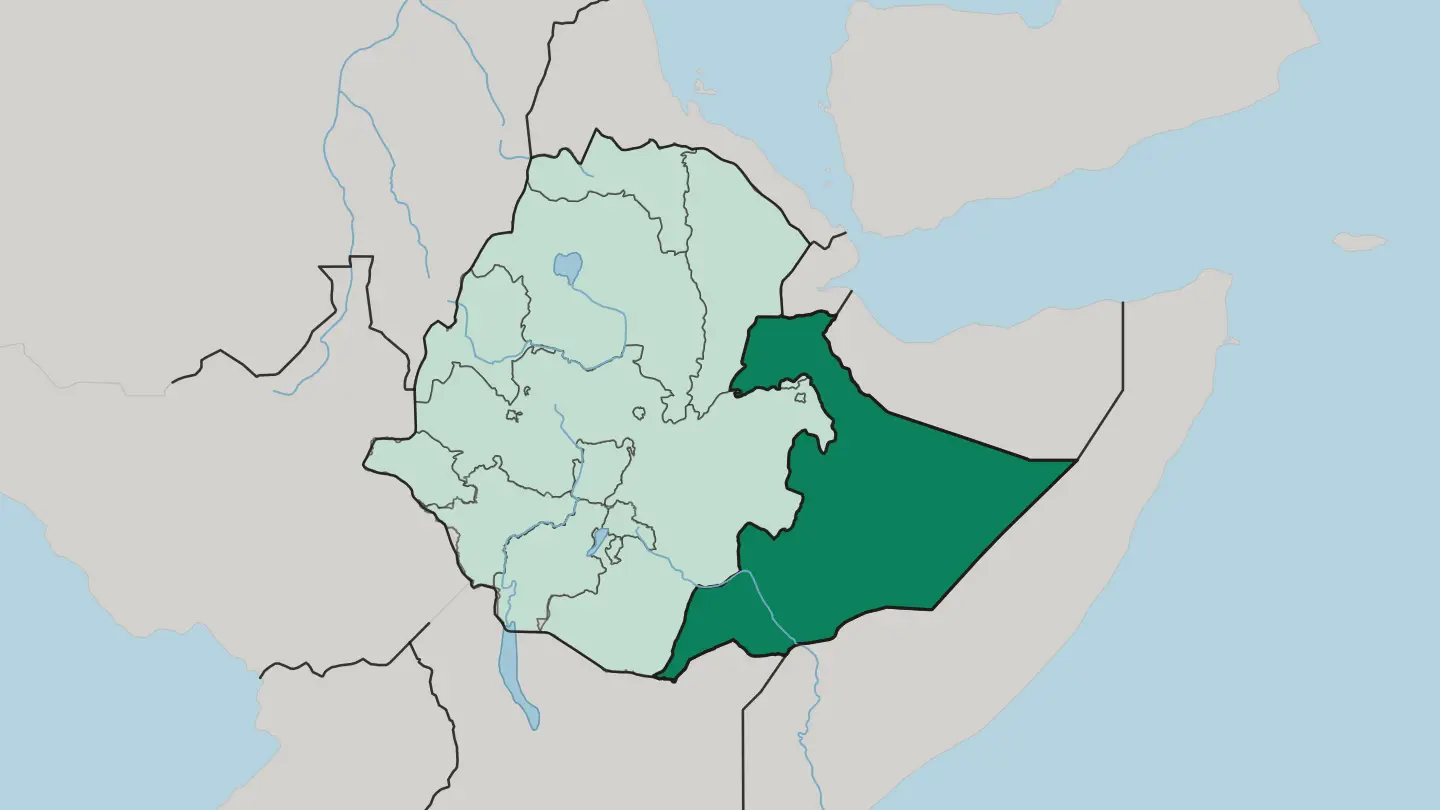 Ethiopia
South Ethiopia Regional State
South Ethiopia Regional State is Ethiopia's newest region, carved from the old south in 2023, Rift Valley lakes, the Omo Valley and Konso terraces.Towns & cities →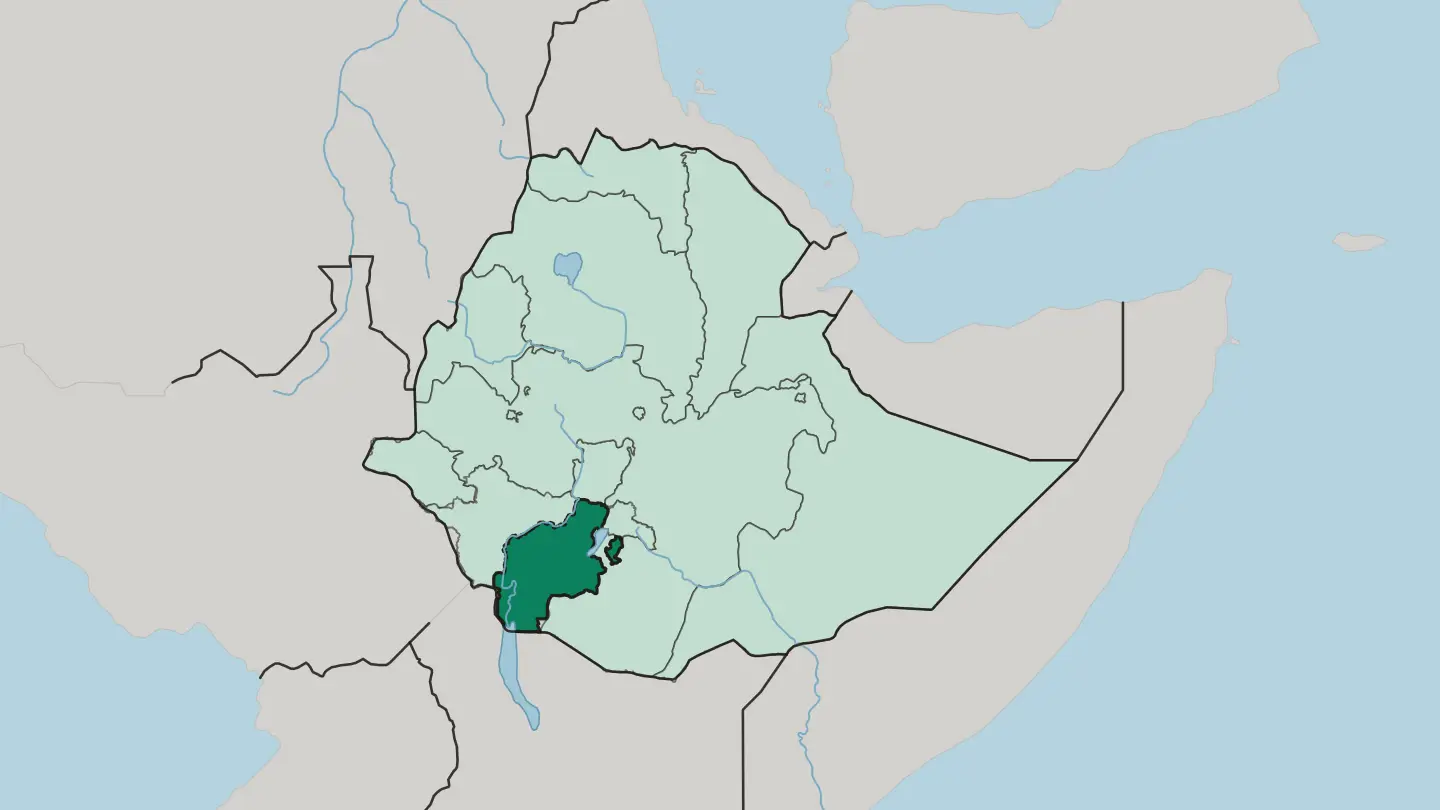 Ethiopia
South West Ethiopia Peoples' Region
The forested southwest corner of Ethiopia, cradle of wild Arabica coffee, split from the old south in 2021.Towns & cities →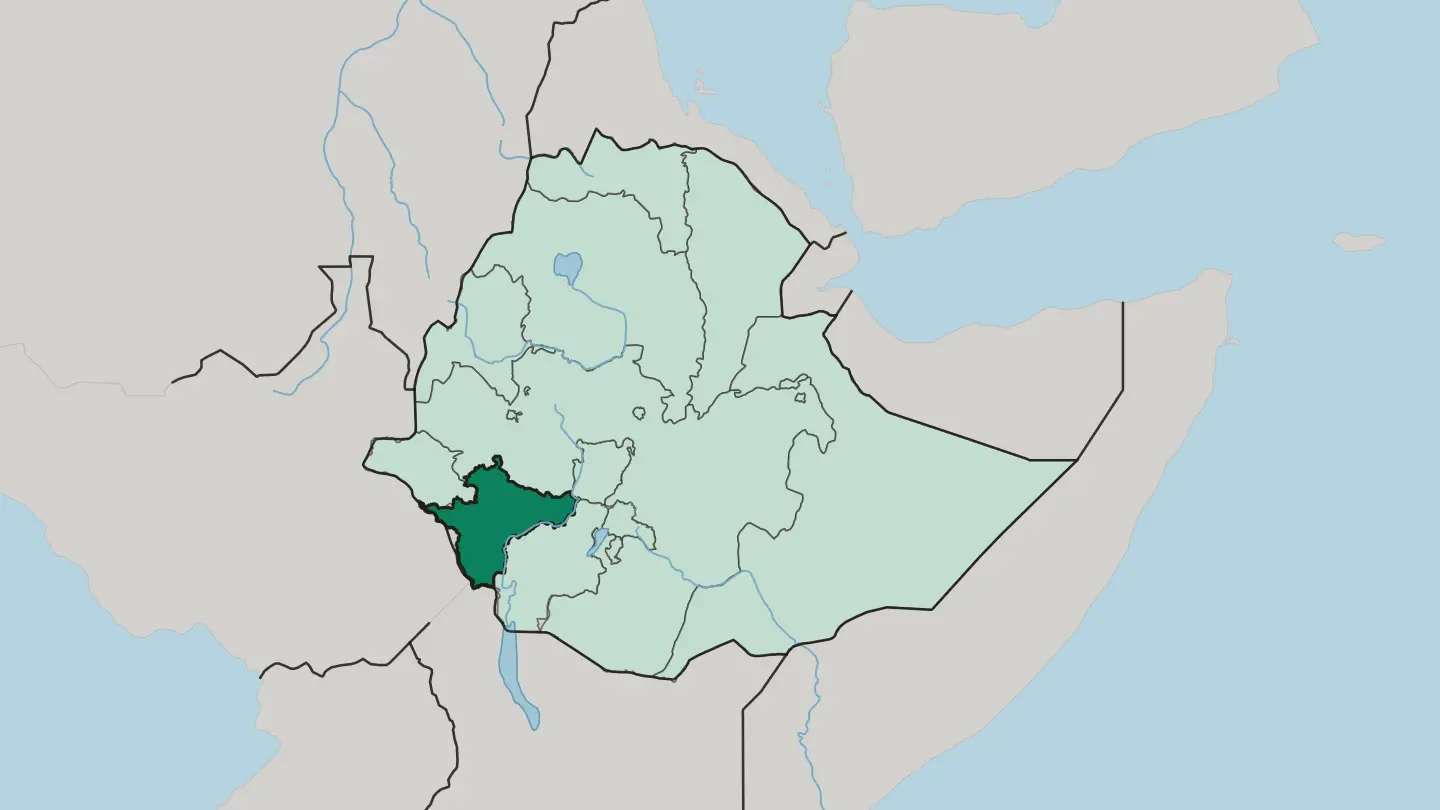 Ethiopia
Tigray Region
Tigray is Ethiopia's northernmost region, an ancient highland of rock-hewn churches, Aksumite obelisks, and the deep Tekezé gorge.Towns & cities →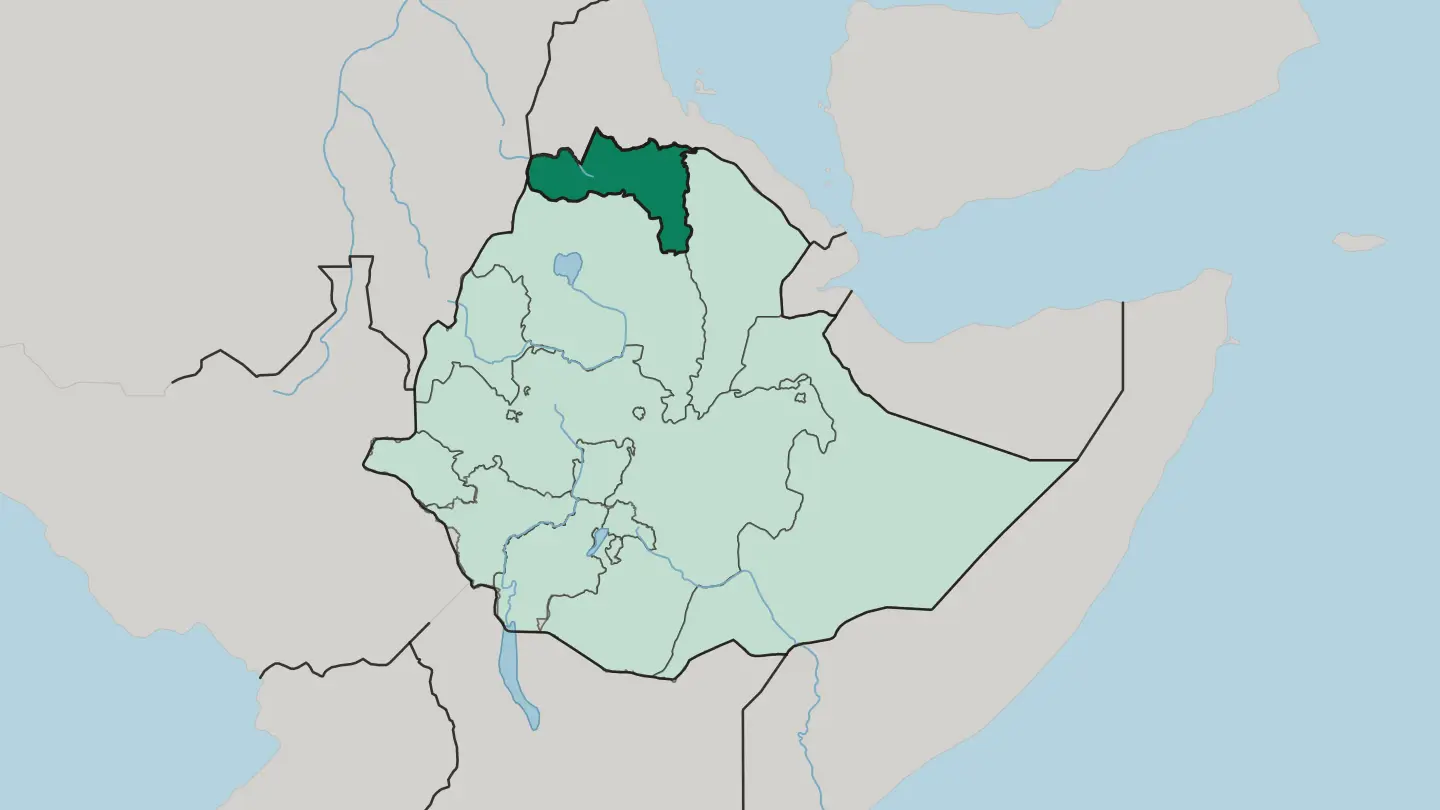
Explore by experience
Not sure which place? Start from how you want to travel.
About Ethiopia
What is Ethiopia known for?
Ethiopia is known as a landlocked nation of the Horn of Africa, set across the ground that the East African Rift cuts through the region. Its south holds national parks and Rift Valley lakes. The north and east are marked instead by long-standing cultural heritage, and several indigenous peoples live along the Rift within East Africa.
Where is Ethiopia?
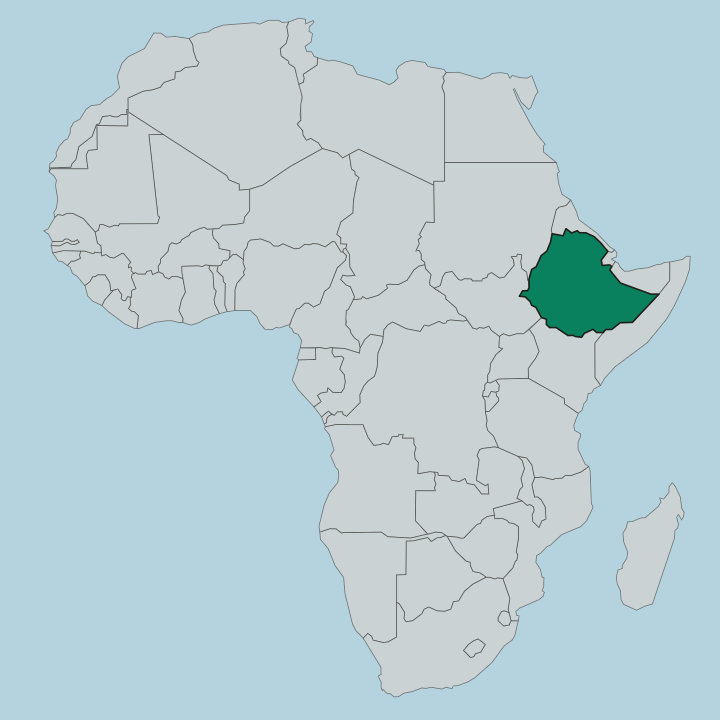
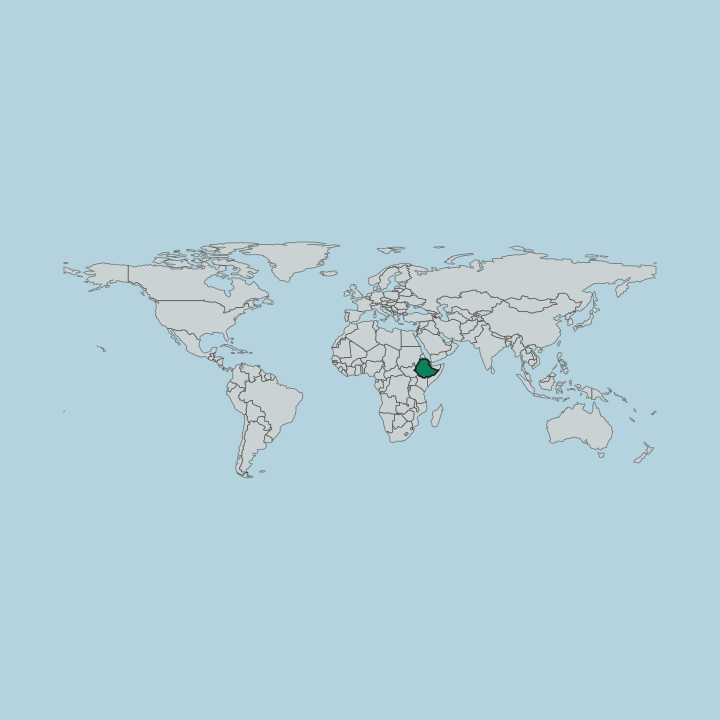
Ethiopia is a landlocked country in the Horn of Africa, within the wider region of East Africa. It shares long land borders with six neighbours. Eritrea lies to the north and Djibouti to the northeast, Somalia sits to the east, Kenya to the south, and South Sudan and Sudan close off the west and northwest.
No coastline reaches it. These frontiers ring a broad interior of open plains and river valleys that rise and fall across the African interior. The defining feature of that interior is the East African Rift, which runs through the country and splits it into the African and Somali tectonic plates.
Addis Ababa, the national capital, lies several kilometres west of the Rift. To the south, the land of the Rift opens into a run of lakes and national parks. The north and east carry the older cultural landscape, while the southern valleys shelter national parks and several indigenous peoples across East Africa.
What is the history of Ethiopia?
Ethiopia's modern state took its present shape in the late twentieth century. The Federal Democratic Republic of Ethiopia was established in 1995, the constitutional form under which this country of the Horn of Africa is now governed from Addis Ababa. That framework is recent.
It set the federal structure that binds the interior of East Africa into a single republic, drawing the country's many regions together under one national government. The older story runs far deeper than that founding date. Across the north and east, Ethiopia's cultural heritage has gathered over long centuries, while the southern valleys that follow the East African Rift hold the lands of several indigenous peoples.
Addis Ababa, set near the Rift's western side, grew into the seat from which the republic is run and the point where its regions meet. Its position shaped the nation. The Federal Democratic Republic of Ethiopia carries this inheritance under its present name, a state of the Horn of Africa whose territory the Rift still divides.
What is Ethiopia like?
Ethiopia carries two faces that meet across the Horn of Africa. In the north and east, the country's cultural heritage runs deepest, built up over centuries of settled life on the land between the valleys. Amharic is widely spoken.
The southern reaches turn instead toward the natural world, where the national parks and lakes of the East African Rift shelter distinctive flora and fauna along the valley floor. Those southern lands also hold several indigenous peoples, whose ways of life have long belonged to the Rift and its lakes within East Africa. The division is not sharp.
Heritage and landscape run together across Ethiopia, from the cultural centres of the north to the parks and waters of the south. Addis Ababa gathers these threads. As the capital it draws the regions of the Horn of Africa into a single place, a meeting point for a country read as much through its land as its people.
What is the climate of Ethiopia?
Ethiopia lies in the tropical latitudes of the Horn of Africa, north of the equator. Its weather follows the rhythm of wetter and drier seasons rather than the hard winters of temperate lands, in the way of much of East Africa. The frame is tropical.
Warm conditions hold across the country, tempered here and there by the varied ground that the East African Rift cuts through the land.
How do you get to Ethiopia?
Ethiopia is reached first through Addis Ababa, the national capital at the heart of the Horn of Africa. The country is landlocked. No sea route serves it, so travellers arrive by air into the capital or overland across the borders it shares with Eritrea, Djibouti, Somalia, Kenya, South Sudan, and Sudan.
From Addis Ababa the interior of East Africa opens outward, north and east toward the cultural centres and south toward the parks and lakes of the East African Rift.
Good for
Updated September 2026