United Kingdom · England
Where to Stay in Bath, England
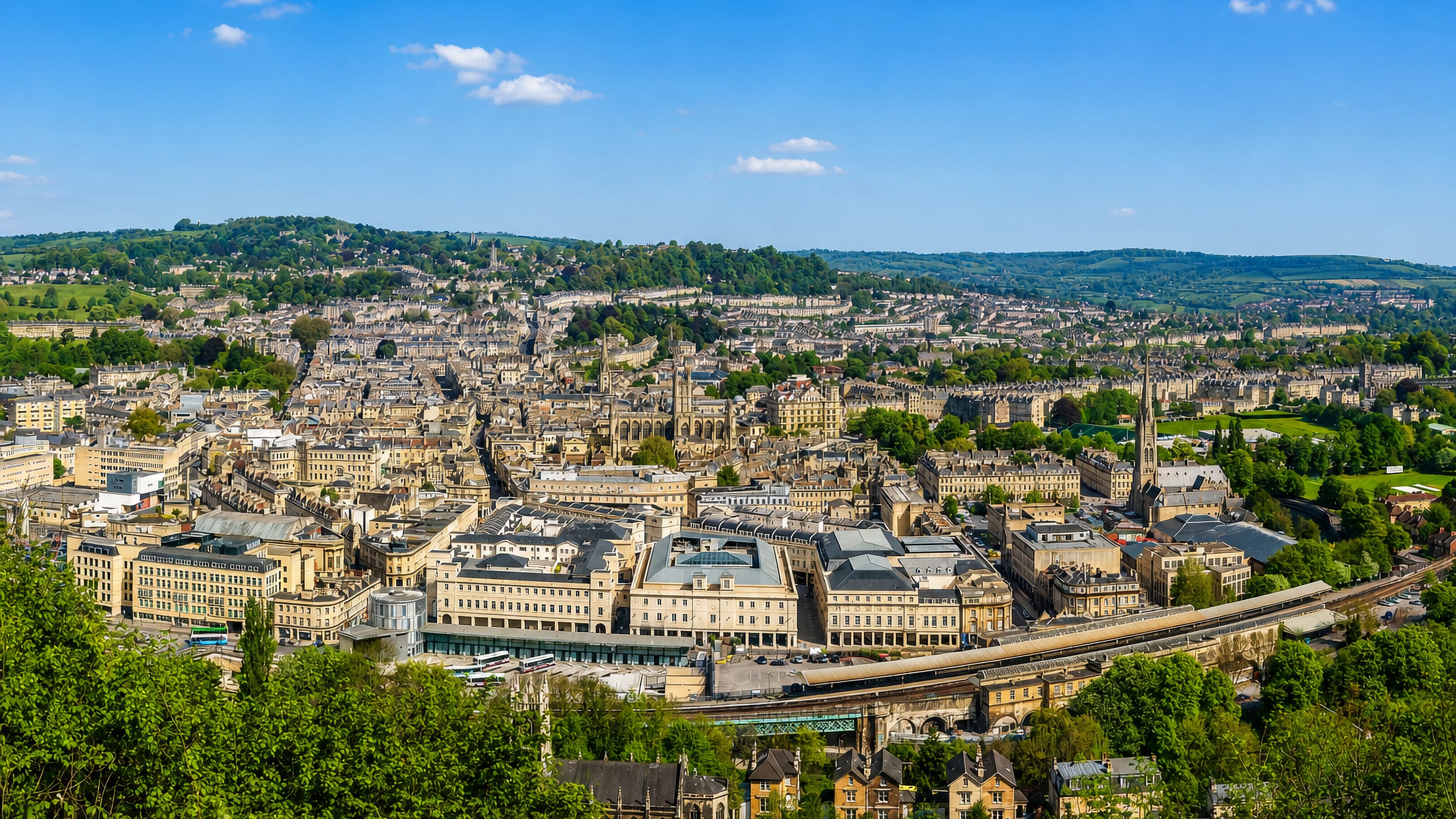
Pale stone terraces curve above the Roman Baths at Bath, a city in England founded as Aquae Sulis in AD 43 and known for No. 1 Royal Crescent.
Hotel links are affiliate links: booking through them may earn us a commission, at no extra cost to you. It never affects how places are ranked. How this works




Where to stay in Bath
The right area depends on your trip — here's what each neighbourhood is best for.

 BathUnited Kingdom
Bathwick
Bathwick is an area of Bath on the far bank of the River Avon from the historic city centre, holding the Holburne Museum and St Mary's Church.Where to stay → BathUnited Kingdom
Larkhall
Larkhall is a residential district of Bath north-east of the city centre, built up from the early 19th century around the Church of St Saviour.Where to stay → BathUnited Kingdom
Combe Down
Combe Down is a village on the outskirts of Bath, England, within Bath and North East Somerset, near Prior Park and Midford Castle.Where to stay → BathUnited Kingdom
Twerton
Twerton is a suburb of Bath in Bath and North East Somerset, and the football club Bath City plays its matches within the district.Where to stay → BathUnited Kingdom
Odd Down
Odd Down is an electoral ward and suburb of Bath, spread west and south of the city centre with the Wansdyke boundary line running through it.Where to stay →Hotel links are affiliate links: booking through them may earn us a commission, at no extra cost to you. It never affects how places are ranked. How this works
Find hotels in Bath
Direct booking searches for these neighbourhoods.
Central baths quarter
Around the Roman Baths and St John's Church, close to the Victoria Art Gallery, the Jane Austen Centre and the Holburne MuseumFind hotels in Central baths quarterThe grandest Georgian architecture and quieter streetsThe upper crescents
The high terraces around No. 1 Royal Crescent and the Herschel Museum of AstronomyFind hotels in The upper crescentsA rural base on the heights around the cityThe outer villages
Toward Bathampton with the Church of St Nicholas, and Southstoke and Englishcombe, near Beckford's Tower and MuseumFind hotels in The outer villagesHotel links are affiliate links: booking through them may earn us a commission, at no extra cost to you. It never affects how places are ranked. How this works
Things to do in Bath
Ranked by global recognition; descriptions from Wikidata (CC0).
Museums & Galleries
6- Roman Baths Heritage
- Holburne Museum Heritage
- Beckford's Tower and Museum Heritage
- No. 1 Royal Crescent Heritage
- American Museum and Gardens Heritage
Show 1 more →
- Victoria Art Gallery Heritage
Churches & Religious Sites
8- The Forum, Bath Heritage
- St John's Church Heritage
- St Michael's Church, Monkton Combe Heritage
- Church of St Nicholas, Bathampton Heritage
- Old Orchard Street Theatre Heritage
Show 3 more →
- St Stephen's Church, Bath Heritage
- Church of St Mary Heritage
- Church of St Saviour Heritage
Castles & Historic Sites
3- Midford Castle Heritage
- Part of the linear boundary known as the Wansdyke 420m south west of Barrowmead Cottage Heritage
- Aquae Sulis
Stadiums & Sports
1- Recreation Ground
Landmarks & Notable Places
8- Prior Park Heritage
- Museum of Bath Architecture Heritage
- No. 39 Bailbrook House Heritage
- 129, Wellsway Heritage
- 5-12, Claremont Place Heritage
Show 3 more →
- Apthorpe Heritage
- Avon House Heritage
- Belmont House Heritage
worth knowingacross 5 categories in Bath
About Bath
What is Bath known for?
Bath is known for the Roman Baths built over its hot springs, and for the pale stone terraces of its Georgian streets. The Romans raised Aquae Sulis here, and its baths survive at the heart of the city. The great curve of No. 1 Royal Crescent stands among the later terraces, and the Jane Austen Centre recalls the writer who lived in the city.
Two ages made it. Roman and Georgian Bath share the same stone.
What are the main landmarks in Bath?
Bath's landmarks span two ages. The Roman Baths stand over the hot springs at the centre, on the site of Aquae Sulis, and No. 1 Royal Crescent shows the finest of the later terraces. St John's Church rises among the central streets.
The Holburne Museum, the Victoria Art Gallery, the Fashion Museum, and the Jane Austen Centre hold the city's collections and its literary memory. The Herschel Museum of Astronomy and Beckford's Tower and Museum complete the set.
What is the history of Bath?
Bath was founded by the Romans as Aquae Sulis, and its story begins in AD 43. The hot springs drew them, and they raised the great Roman Baths and a temple around the water, making the place a spa in the province of Britain. The springs never stopped flowing.
Romans, Saxons, and medieval builders each left their mark, and St John's Church and the older parishes at Bathampton and Englishcombe carry that long history down the centuries around the city. The Georgian age remade Bath in pale stone. Wealthy visitors came to take the waters, and architects laid out the crescents and circuses whose curve No. 1 Royal Crescent still shows.
Jane Austen lived here for a time, and the Jane Austen Centre now records that. The Herschel Museum of Astronomy keeps the house where a great astronomer worked. Collections gathered in the Holburne Museum and the Victoria Art Gallery as the city grew genteel.
The stone unites every age. Above the old core, Beckford's Tower and Museum and the American Museum and Gardens stand on the heights, and the springs that began it all still rise beneath the Roman Baths.
Where is Bath?
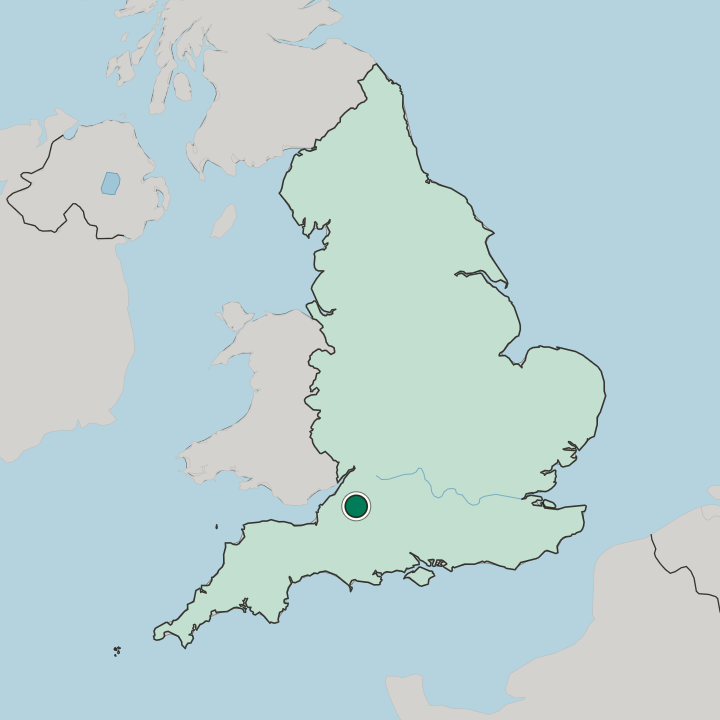
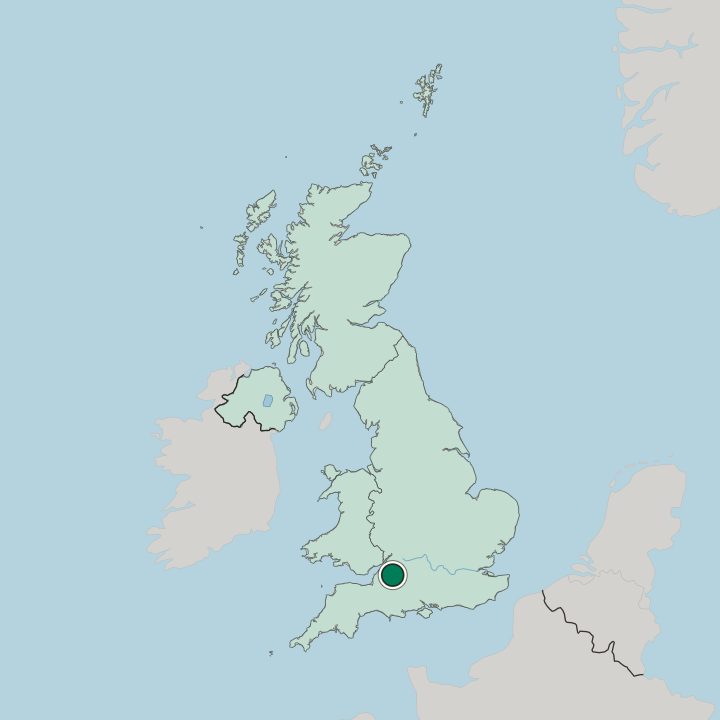
Bath lies in England, in the west of the United Kingdom, a city built across a valley among hills. The old core with the Roman Baths sits low in the valley, and the Georgian crescents climb the slopes above it. Villages ring the heights around the city, among them Bathampton, Southstoke, and Englishcombe.
The ground rises steeply. From the valley floor Bath spreads up the hills that enclose it.
What is the climate of Bath?
Bath has a mild, damp climate, sheltered by the hills that enclose its valley. Winters are cool and grey, with rain and low cloud settling in the valley for long spells while frost lingers on the higher slopes above the city. Summers stay temperate and green.
Warm bright days come and go, and the weather turns often over the hills that ring the valley around Bath.
How do you get to Bath?
Bath is reached by rail and road from London and across the west of England. Trains run in from London and nearby cities to the station at the edge of the old core, close by the river and the centre, and roads wind down into the valley from the surrounding hills. The station sits near the baths.
From there it is a short walk to the Roman Baths, St John's Church, and the Georgian streets at the heart of Bath.
Common questions
What is the best area to stay in Bath?
Central baths quarter: First-time visitors who want the Roman Baths and the museums on the doorstep. The upper crescents: The grandest Georgian architecture and quieter streets. The outer villages: A rural base on the heights around the city.
Good for
More cities in England
Updated October 2026