United Kingdom · England
Where to Stay in Brighton, England
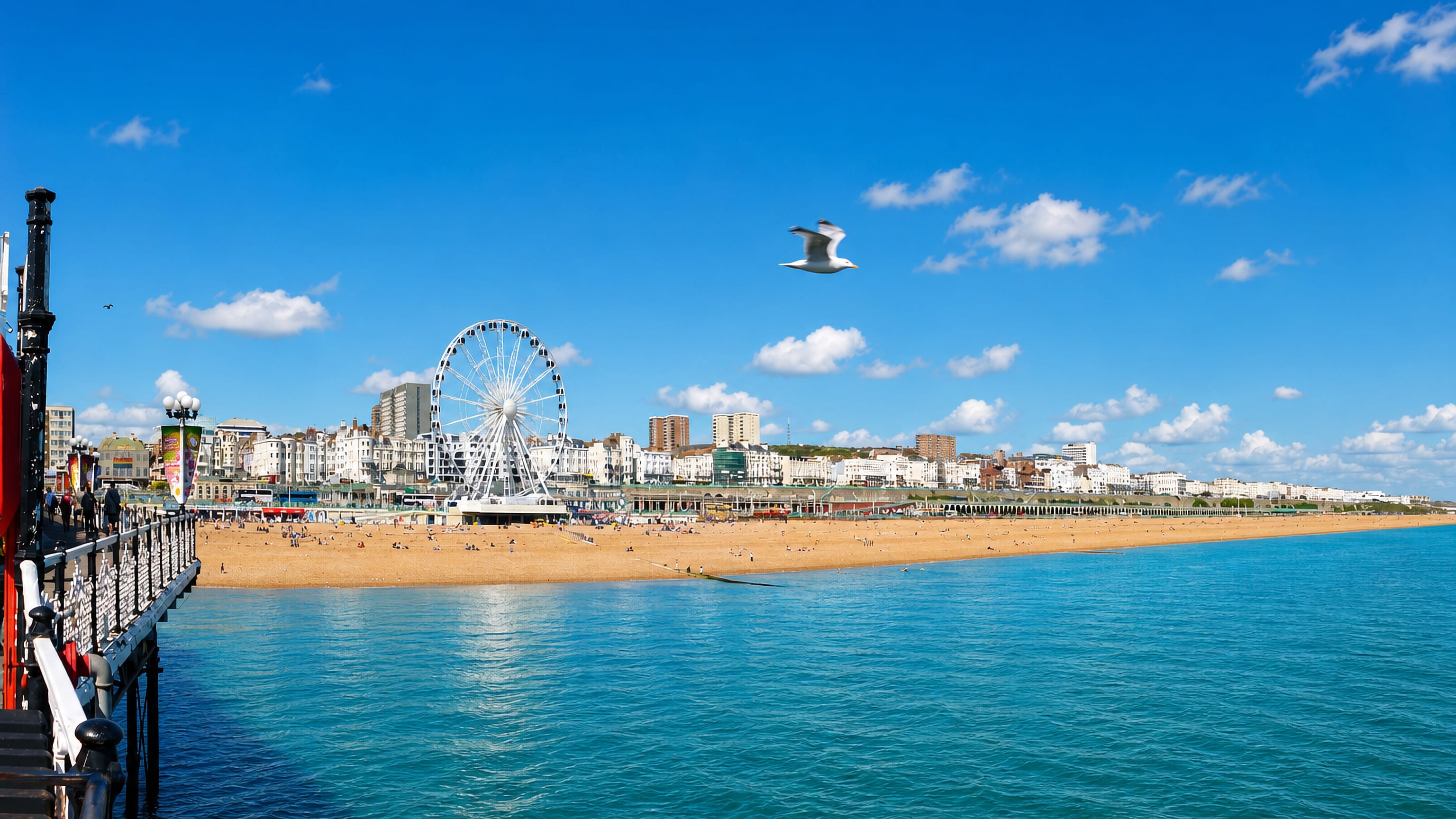
Sea spray blows over the front at Brighton, a seaside resort in East Sussex, England, known for the Royal Pavilion and the long deck of Brighton Pier.
Hotel links are affiliate links: booking through them may earn us a commission, at no extra cost to you. It never affects how places are ranked. How this works


Where to stay in Brighton
Not every neighbourhood fits every trip — here's what each one is good for.

 BrightonUnited Kingdom
Roedean
Roedean is a village within the city of Brighton and Hove, England, lying east of the seaside resort of Brighton.Where to stay → BrightonUnited Kingdom
Aldrington
Aldrington is a residential area of Brighton and Hove, once meadow land along the English Channel west of the old village of Hove.Where to stay →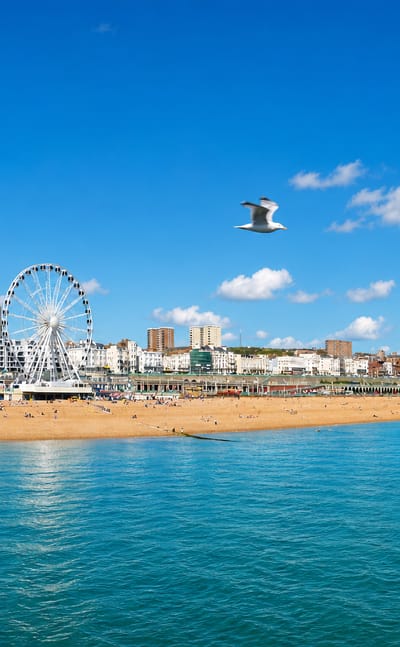 BrightonUnited Kingdom
Coldean
Coldean is a Brighton and Hove suburb built by Brighton Corporation in the 1950s, with Stanmer Church and Stanmer Rural Museum on its doorstep.Where to stay →BrightonUnited KingdomHangleton
Hangleton is a hilltop suburb of Brighton and Hove in East Sussex, where St Helen's Church keeps fabric from the 12th century.Where to stay →Hotel links are affiliate links: booking through them may earn us a commission, at no extra cost to you. It never affects how places are ranked. How this works
Find hotels in Brighton
Direct booking searches for these neighbourhoods.
Seafront and Old Town
The shore around Brighton Pier and the Brighton i360, with Volk's Electric Railway on the shingle and the Royal Pavilion behind the lanesFind hotels in Seafront and Old TownQuieter, greener streets away from the crowded frontPreston Park and the hills
Higher ground toward Preston Park, with St Bartholomew's Church and St Michael's Church among the terracesFind hotels in Preston Park and the hillsA calmer seaside base west along the coastHove
Joined to Brighton as one city, holding the County Cricket Ground, All Saints Church, and the British EngineeriumFind hotels in HoveHotel links are affiliate links: booking through them may earn us a commission, at no extra cost to you. It never affects how places are ranked. How this works
Things to do in Brighton
Ranked by global recognition; descriptions from Wikidata (CC0).
Museums & Galleries
3- Brighton Museum & Art Gallery Heritage
- British Engineerium Heritage
- Stanmer Rural Museum
Churches & Religious Sites
8- St Peter's Church, Brighton Heritage
- Saint Bartholomew's Church Heritage
- St. Nicholas' Church, Brighton Heritage
- St Michael's Church, Brighton Heritage
- St Andrew's Church, Church Road, Hove Heritage
Show 3 more →
- St John the Baptist's Church, Brighton Heritage
- Stanmer Church Heritage
- St Helen's Church, Hangleton Heritage
Castles & Historic Sites
4- Royal Pavilion Heritage
- Frankland Monument Heritage
- Prehistoric linear boundary and Bronze Age bowl barrow in Pudding Bag Wood, 350m south of Upper Lodges Heritage
- Section of Port's Road and barrow on Round Hill, Hangleton Heritage
Stadiums & Sports
1- County Cricket Ground, Hove
Parks & Gardens
1- Brighton Pier Heritage
Landmarks & Notable Places
2- Fife House Heritage
- The Brighton Aquarium And Attached Walls And Piers And Railings And Lamps Heritage
worth knowingacross 6 categories in Brighton
About Brighton
What is Brighton known for?
Brighton is known as a seaside resort on the coast of East Sussex, and it grew famous as a place for sea bathing. The domed Royal Pavilion stands back from the front, and Brighton Pier reaches out over the water. Rising tall above the shore, the Brighton i360 looks down on Volk's Electric Railway, which still runs along the beach.
Brighton owes its rise to the sea. Brighton draws people to its front and its front-facing streets. They stand above the shingle.
What are the main landmarks in Brighton?
Brighton's landmarks run from the domed Royal Pavilion to the deck of Brighton Pier. The Brighton i360 rises high above the front, and Volk's Electric Railway carries passengers along the beach. St Nicholas' Church, the oldest in the town, stands on the rise behind the shore, while St Peter's Church and St Michael's Church mark the streets inland.
The Brighton Museum & Art Gallery and the Booth Museum of Natural History hold the town's collections. The Chapel Royal completes the older core.
What is the history of Brighton?
Brighton began as a fishing settlement on the coast of East Sussex. Old Brighthelmstone was recorded in the Domesday Book of 1086, and evidence of settlement in the area reaches back to the Bronze Age and the Roman and Anglo-Saxon periods. The Old Town grew through the Middle Ages.
Storms and raids battered it. In the early modern years the place languished, its economy weak and its people few, until better roads to London and a fashion for sea bathing began to bring visitors down to the shore. The town rose again as a health resort.
Sea bathing drew crowds who believed the water could cure their ills, and the shore filled with grand seafront building. The Royal Pavilion was raised as a royal retreat by the water, its domes unlike anything else in the town. Volk's Electric Railway later ran along the beach, and Brighton Pier reached out over the waves.
The old church of St Nicholas' Church still watches from the rise above. In time Brighton merged with neighbouring Hove into a single city set along the sea. The resort still lives from the water that first made it.
The shore remains its heart.
Where is Brighton?
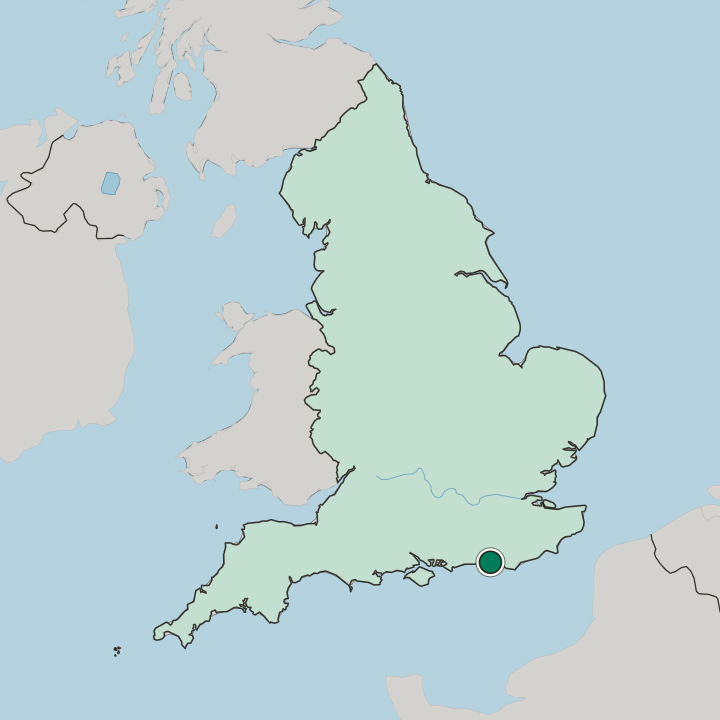
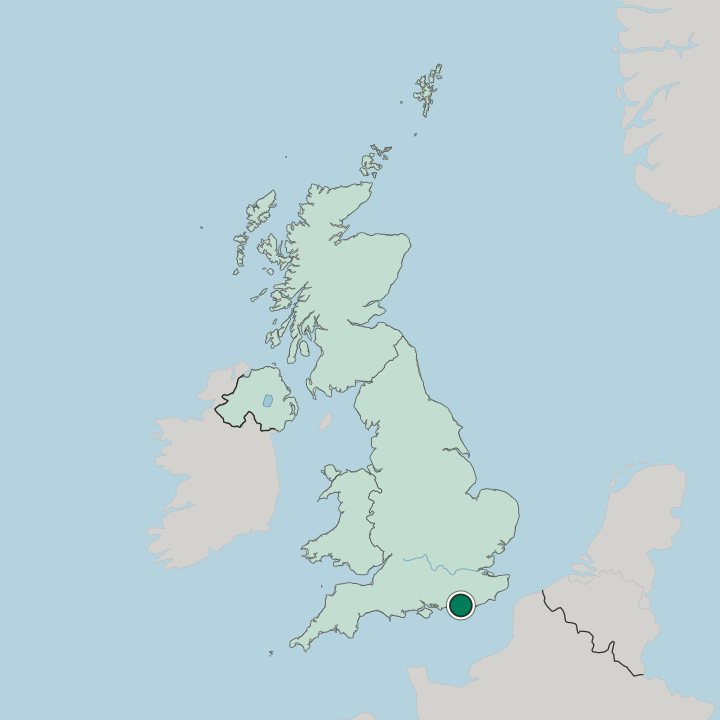
Brighton lies on the coast of East Sussex, in England, a seaside town on the shore south of London. The front runs along the shingle beach, with the Old Town gathered behind it and the streets climbing inland toward Preston Park. Hove adjoins it to the west.
The land rises from the sea. From the shingle at Brighton the town spreads up the slopes that back the shore.
What is the climate of Brighton?
Brighton has a mild maritime climate, tempered by the sea that washes its shingle beach. Winters stay cool rather than cold, with grey skies and rain blowing in off the water along the whole front from the Old Town out to Hove. Summers are warm and bright.
The sea keeps the air soft, and the weather can turn quickly over the shore where Volk's Electric Railway runs.
How do you get to Brighton?
Brighton is reached by rail and road from London and across England. Trains run down from London to the town in about an hour, arriving at the station above the Old Town, and roads bring travellers to the coast of East Sussex. The sea marks the end of the journey.
From the station it is a short walk downhill to the Royal Pavilion, Brighton Pier, and the front.
Common questions
What is the best area to stay in Brighton?
Seafront and Old Town: First-time visitors who want the pier and the Pavilion on the doorstep. Preston Park and the hills: Quieter, greener streets away from the crowded front. Hove: A calmer seaside base west along the coast.
Good for
More cities in England
Updated October 2026