United Kingdom · England
Where to Stay in Cambridge, England
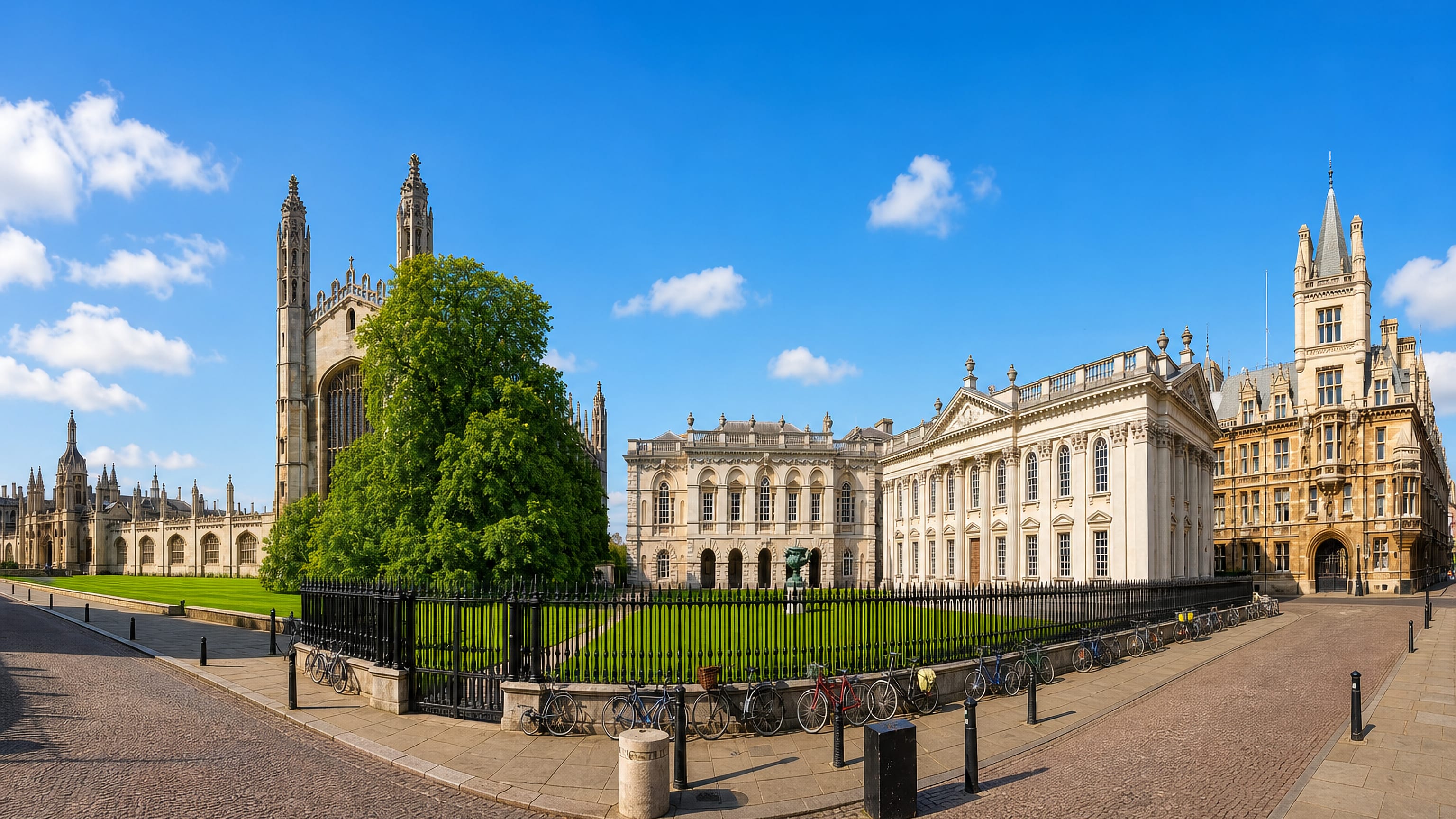
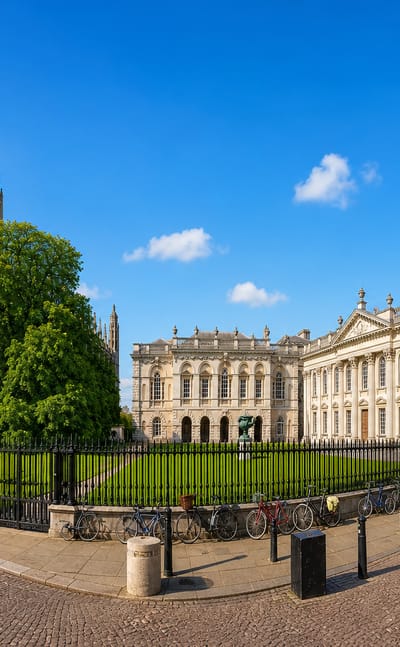
College spires and old stone gather at Cambridge, a university city in England known for Trinity College Chapel and the Fitzwilliam Museum.
Hotel links are affiliate links: booking through them may earn us a commission, at no extra cost to you. It never affects how places are ranked. How this works



Where to stay in Cambridge
Each area has its own feel; here's who each one suits.
 CambridgeUnited Kingdom
Castle
Castle is a suburb and ward of Cambridge, England, named for the former Cambridge Castle that once stood on Castle Mound.Where to stay →CambridgeUnited KingdomNewnham
Newnham is an electoral ward of Cambridge, and the Fitzwilliam Museum, Trinity College Chapel and the Cambridge Corn Exchange all lie near it.Where to stay → CambridgeUnited Kingdom
Arbury
Both a suburb and an electoral ward, Arbury sits in Cambridge within reach of Cambridge Castle, Kettle's Yard and the Museum of Cambridge.Where to stay → CambridgeUnited Kingdom
Romsey Town
Romsey Town is a Cambridge district holding the Cambridge Museum of Technology and the Centre for Computing History.Where to stay → CambridgeUnited Kingdom
King's Hedges
King's Hedges is an electoral ward of Cambridge, England, keeping Chesterton Tower and the Church of St George among its listed buildings.Where to stay → CambridgeUnited Kingdom
Eddington
Eddington is the local centre of the University of Cambridge's North West Cambridge Development, named after the astrophysicist Arthur Eddington.Where to stay → CambridgeUnited Kingdom
Orchard Park
Bridge Road is the street to know. Orchard Park is a district of Cambridge, filed in the record under the county name of Cambridgeshire.Where to stay → CambridgeUnited Kingdom
Cherry Hinton
Cherry Hinton Hall and the Church of St Andrew give Cherry Hinton its two fixed points inside Cambridge, in Cambridgeshire.Where to stay →Hotel links are affiliate links: booking through them may earn us a commission, at no extra cost to you. It never affects how places are ranked. How this works
Find hotels in Cambridge
Direct booking searches for these neighbourhoods.
University core
Trinity College Chapel and the Church of St Mary the Great stand among the colleges, with the Fitzwilliam Museum just south.Find hotels in University corequieter streets past Cambridge CastleChesterton
North of the centre beyond Cambridge Castle, older streets offer a calmer base away from the college crowds.Find hotels in ChestertonHotel links are affiliate links: booking through them may earn us a commission, at no extra cost to you. It never affects how places are ranked. How this works
Things to do in Cambridge
Ranked by global recognition; descriptions from Wikidata (CC0).
Museums & Galleries
3- The David Parr House Heritage
- Fitzwilliam Museum
- Kettle's Yard
Churches & Religious Sites
8- Church of St Mary the Great Heritage
- St Bene't's Church Heritage
- Holy Sepulchre, Cambridge Heritage
- Trinity College Chapel Heritage
- Leper Chapel, Cambridge Heritage
Show 3 more →
- Church of St Mary the Less Heritage
- Emmanuel United Reformed Church, Cambridge Heritage
- Church of St Giles Heritage
Castles & Historic Sites
1- Cambridge Castle Heritage
Stadiums & Sports
3- Cambridge Corn Exchange Heritage
- Parker's Piece
- Bridge Road
Landmarks & Notable Places
8- Abbey House Heritage
- Cherry Hinton Hall Heritage
- Chesterton Tower Heritage
- 31, Madingley Road Heritage
- Spring House Heritage
Show 3 more →
- White House Heritage
- Cory House Heritage
- Shawms Heritage
worth knowingacross 5 categories in Cambridge
About Cambridge
What is Cambridge known for?
Cambridge is known as one of the great university cities of England, its colleges gathered in old stone at the centre. Trinity College Chapel and the Church of St Mary the Great rise among the college courts, while the Fitzwilliam Museum holds one of the country's finest collections. Museums of science and art fill the streets, from Kettle's Yard to the Whipple Museum of the History of Science.
Learning shapes it. The colleges have drawn scholars to Cambridge for centuries.
What are the main landmarks in Cambridge?
Cambridge's landmarks gather around its colleges, its museums, and its old churches. Trinity College Chapel rises among the courts, and the Church of St Mary the Great stands at the city's heart. The museums run deep here.
The Fitzwilliam Museum and Kettle's Yard hold the art, while the Whipple Museum of the History of Science, the Sedgwick Museum of Earth Sciences, the Museum of Zoology, and the Museum of Archaeology and Anthropology carry the University's collections, with the Museum of Classical Archaeology and the New Hall Art Collection alongside. Older stone marks the streets too. The round Holy Sepulchre, St Bene't's Church with its Saxon tower, and the Church of St Botolph date to the medieval town, while Cambridge Castle and the open green of Parker's Piece frame its edges.
What is the history of Cambridge?
Cambridge grew from an ancient river crossing, and a fort once stood on the mound where Cambridge Castle later rose. A small town gathered around the crossing, its early church of St Bene't's Church surviving from those first centuries. Everything changed when scholars settled and the university took root, and college after college was raised in stone until the town became one of the foremost seats of learning in England.
Study made it. The Church of St Mary the Great came to serve as the university church at the centre of college life. Through the centuries the colleges spread their courts and chapels across the town, and Trinity College Chapel rose among the grandest of them.
Great collections followed the scholars, and the Fitzwilliam Museum was built to hold art and antiquities for the city. Museums of science and zoology gathered around the colleges, among them the Sedgwick Museum of Earth Sciences. The old greens, Parker's Piece foremost, kept their open ground.
The university shaped the whole town, and its colleges came to govern the streets, the greens, and the museums that grew up around their courts. Its courts still hold the centre. Cambridge remains a university city of England.
Where is Cambridge?
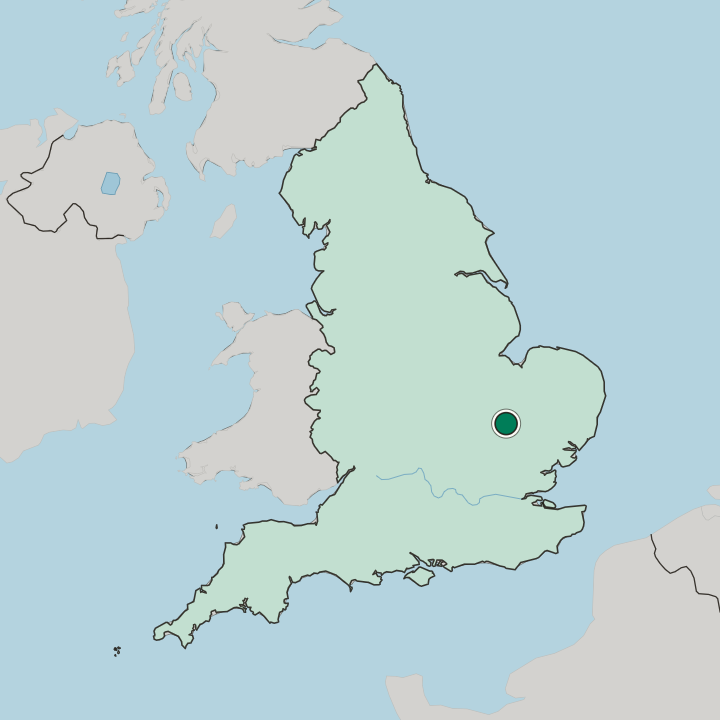
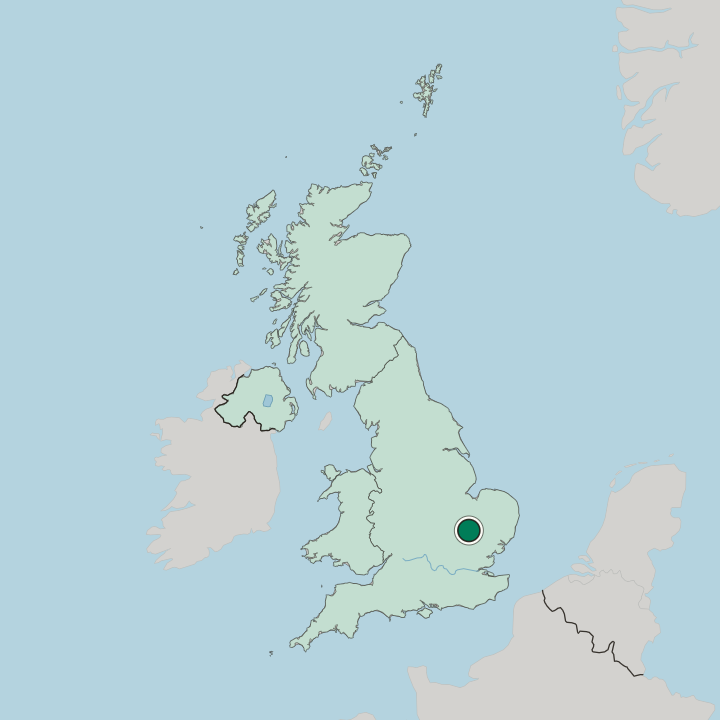
Cambridge stands on low, level ground in England, a compact city gathered around its colleges at an old river crossing. The land is flat and open here, and the greens run right up to the college courts. Parker's Piece lies at its edge.
The centre keeps a small footprint. Beyond the colleges and the museums, Cambridge spreads out gently across the surrounding country of England.
What is the climate of Cambridge?
Cambridge has a mild, dry climate, among the drier parts of England on its low and level ground. Rain falls less here than in the west of the country, and long spells of grey, still weather settle over the flat land around the colleges. Frosts are common in winter.
Summers stay mild and pleasant, while winters run cold and damp across the open country. Snow falls only lightly and rarely lingers on the college courts.
How do you get to Cambridge?
Cambridge sits on the main rail and road routes north of London in England, an easy reach from the capital. Trains run in frequently. The station lies a short way southeast of the college centre, and a motorway passes close to the edge of town for those arriving by road from the surrounding country.
From the station the colleges and the Fitzwilliam Museum stand within walking distance. The old crossing has drawn travellers to Cambridge for centuries.
Common questions
What is the best area to stay in Cambridge?
University core: college courts and chapels on foot. Chesterton: quieter streets past Cambridge Castle.
Good for
More cities in England
Updated October 2026