United Kingdom · England
Where to Stay in Chesterfield, England
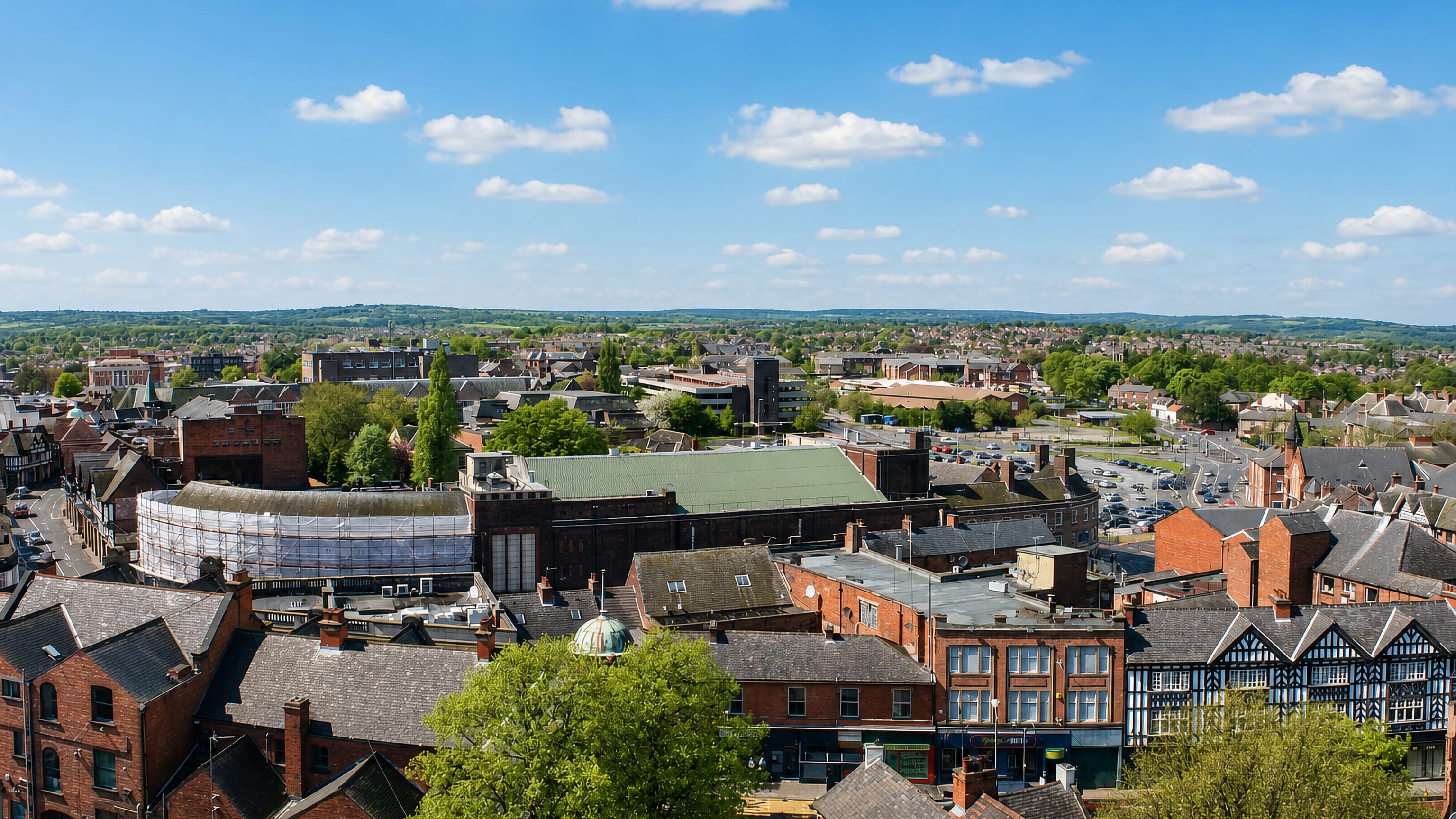
Chesterfield is a Derbyshire market town best known for the twisted spire of the Church of St Mary and All Saints, Chesterfield.
Hotel links are affiliate links: booking through them may earn us a commission, at no extra cost to you. It never affects how places are ranked. How this works




Where to stay in Chesterfield
The right area depends on your trip — here's what each neighbourhood is best for.

 ChesterfieldUnited Kingdom
Whittington Moor
Whittington Moor is a village north of Chesterfield, in Derbyshire, holding Christ Church, Chesterfield and the Parish Church of St John the Evangelist.Where to stay → ChesterfieldUnited Kingdom
Old Whittington
Old Whittington is a district of Chesterfield built around Revolution House, the Parish Church of St Bartholomew and a run of older house names.Where to stay →ChesterfieldUnited KingdomBoythorpe
Boythorpe is a suburb south-west of Chesterfield town centre, holding Queen's Park, the town's cricket ground and Parkside Community School.Where to stay →ChesterfieldUnited KingdomNew Whittington
New Whittington is a village in the Borough of Chesterfield, west of Barrow Hill, with St Barnabas and Springwell House among its named buildings.Where to stay → ChesterfieldUnited Kingdom
Hasland
Hasland is a suburb of Chesterfield in Derbyshire, holding St Paul's Church, Hady House and The Manor House on the ground south of Spital.Where to stay →ChesterfieldUnited KingdomBirdholme
Birdholme is a suburb of Chesterfield lying between Boythorpe and Hasland, with Alma Leisure Park and The Parish Church of Saint Augustine on its ground.Where to stay →ChesterfieldUnited KingdomAshgate
Ashgate is an area in northeast Derbyshire, England, west of the town of Chesterfield. It sits on a hill.Where to stay →Hotel links are affiliate links: booking through them may earn us a commission, at no extra cost to you. It never affects how places are ranked. How this works
Find hotels in Chesterfield
Direct booking searches for these neighbourhoods.
Around the Church of St Mary and All Saints
The market centre under the Church of St Mary and All Saints, Chesterfield, with Stephenson Memorial Hall and The Old Mansion House a few minutes away.Find hotels in Around the Church of St Mary and All SaintsBrampton House and the road west into the Peak DistrictBrampton and Walton
The quieter side of the Borough of Chesterfield, marked by Brampton House, Walton Lodge and Ashgate House, with St Thomas' Church among them. Rooms are few around here — worth securing early.Find hotels in Brampton and WaltonRevolution House and a car for Hardwick HallTowards Revolution House
The outer edge past Revolution House and Hady House, with Park Hall and the Parish Church of St Michael and All Angels beyond the built-up streets. Rooms are few around here — worth securing early.Find hotels in Towards Revolution HouseHotel links are affiliate links: booking through them may earn us a commission, at no extra cost to you. It never affects how places are ranked. How this works
Things to do in Chesterfield
Ranked by global recognition; descriptions from Wikidata (CC0).
Churches & Religious Sites
8- Church of St Mary and All Saints, Chesterfield Heritage
- Holy Trinity Church, Chesterfield Heritage
- St Thomas' Church Heritage
- Church of All Saints Heritage
- St Paul's Church Heritage
Show 3 more →
- United Reformed Church Heritage
- Parish Church of St Bartholomew Heritage
- Parish Church of St John the Evangelist Heritage
Landmarks & Notable Places
8- Park Hall Heritage
- The Manor House Heritage
- The Old House Heritage
- Ashgate House Heritage
- Brampton House Heritage
Show 3 more →
- Dorset House Heritage
- Hady House Heritage
- Hasland Hall School Heritage
worth knowingacross 2 categories in Chesterfield
About Chesterfield
What is Chesterfield known for?
The twisted spire carries the town's reputation. It rises from the Church of St Mary and All Saints, Chesterfield. Hardwick Hall lies a few miles south-east and the Peak District opens to the west, while Revolution House, the Chesterfield Museum and Art Gallery and Stephenson Memorial Hall hold the attractions closer in.
What are the main landmarks in Chesterfield?
One spire outranks the rest. The Church of St Mary and All Saints, Chesterfield carries the twisted one, and Holy Trinity Church, Chesterfield, St Thomas' Church, St Paul's Church, the Church of All Saints, the Church of St Peter, the United Reformed Church and the Parish Church of St Michael and All Angels fill out the ecclesiastical list. Revolution House stands apart.
The Chesterfield Museum and Art Gallery, Stephenson Memorial Hall and Park Hall lead the secular half, with The Old Mansion House, Brampton House, Dorset House, Ashgate House, Walton Lodge and the Printing Workshop - Chapel House behind them.
What is the history of Chesterfield?
Chesterfield was established in 1204. It grew as a market town in Derbyshire from that point, and the Church of St Mary and All Saints, Chesterfield rose with the twisted spire that has carried the name ever since. The Manor House belongs to that centre.
The Old House and The Old Mansion House hold frontages from the same long stretch. Industry followed the market. The town took an industrial character alongside its trading one, and the parishes multiplied with it, Holy Trinity Church, Chesterfield, St Thomas' Church, St Paul's Church, the Church of St Peter and the Parish Church of St John the Evangelist all belong to that spread.
Brampton and Walton were drawn in. Brampton House, Walton Lodge, Ashgate House, Dorset House and Lodge House record the building that came with the change. Revolution House keeps its own name.
It stands among the older survivals outside the centre, with Park Hall and Hady House on the same outer ring, and the Parish Church of St Michael and All Angels marking a parish beyond the built-up streets. Sheffield and Derby closed in. Stephenson Memorial Hall and the Chesterfield Museum and Art Gallery came later, and the Borough of Chesterfield draws the whole arrangement together under one authority.
Where is Chesterfield?
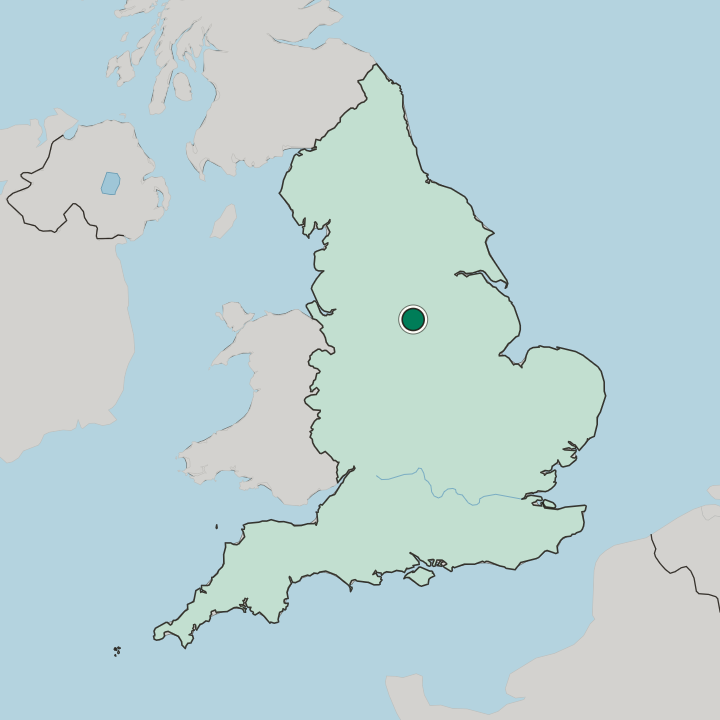
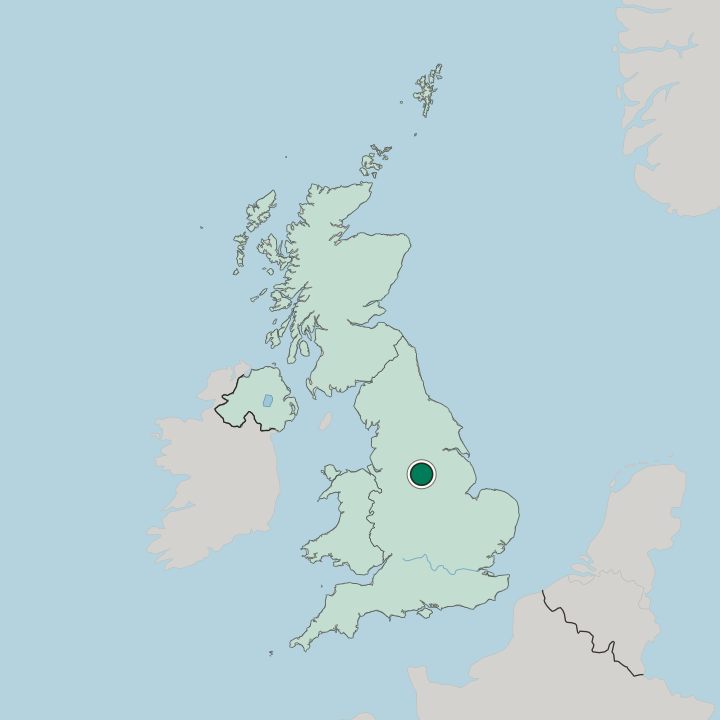
The town owes its site to two rivers. Chesterfield stands at the confluence of the Rivers Rother and Hipper, twenty-four miles north of Derby and eleven miles south of Sheffield, with the Peak District opening to the west. Hardwick Hall lies a few miles south-east.
Brampton, Walton and Hady sit on the borough's edges.
What is the climate of Chesterfield?
The Peak District stands to the west. Chesterfield sits in the temperate band, and the year runs through mild months and short cold ones rather than anything sharp. The rivers stay full.
The Rother and the Hipper carry the rain through the town, and the Chesterfield Museum and Art Gallery and Stephenson Memorial Hall absorb the days when the market streets empty.
How do you get to Chesterfield?
Sheffield and Derby set the approach. Chesterfield lies eleven miles south of Sheffield and twenty-four miles north of Derby, in the county of Derbyshire, so most arrivals come down from one or up from the other along that corridor. The Peak District opens west of the town.
Hardwick Hall wants a car.
Common questions
What is the best area to stay in Chesterfield?
Around the Church of St Mary and All Saints: the twisted spire and the Chesterfield Museum and Art Gallery. Brampton and Walton: Brampton House and the road west into the Peak District. Towards Revolution House: Revolution House and a car for Hardwick Hall.
Good for
More cities in England
Updated October 2026