United Kingdom · England
Where to Stay in Exeter, England
Exeter is a cathedral city on the River Exe in Devon, South West England, and the county town of Devon.
Hotel links are affiliate links: booking through them may earn us a commission, at no extra cost to you. It never affects how places are ranked. How this works


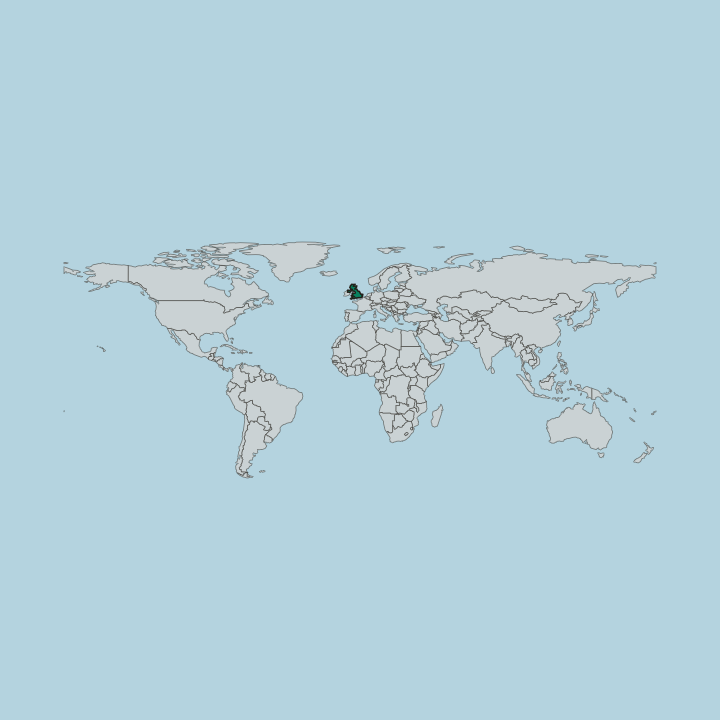
Where to stay in Exeter
One neighbourhood here has its own guide — here's what it is best for.

 ExeterUnited Kingdom
Heavitree
Heavitree is an eastern district of Exeter, a former village outside the city walls and the birthplace of Thomas Bodley and Richard Hooker.Where to stay →Hotel links are affiliate links: booking through them may earn us a commission, at no extra cost to you. It never affects how places are ranked. How this works
Find hotels in Exeter
Direct booking searches for these neighbourhoods.
The walled hill and cathedral core
The high old core ringed by the Exeter city walls, around Rougemont Castle and the Royal Albert Memorial Museum & Art Gallery.Find hotels in The walled hill and cathedral corea riverside base by the old bridgeThe Exe quayside
The restored quay on the River Exe by the Old Exe Bridge and Cricklepit Mill, with cafes and boat trips.Find hotels in The Exe quaysidean easy arrival near Exeter's collegesThe station and university side
The ground by the station and toward the university, near the Bill Douglas Cinema Museum, a short climb below the walled core.Find hotels in The station and university sideHotel links are affiliate links: booking through them may earn us a commission, at no extra cost to you. It never affects how places are ranked. How this works
Things to do in Exeter
Ranked by global recognition; descriptions from Wikidata (CC0).
Museums & Galleries
1- Royal Albert Memorial Museum & Art Gallery Heritage
Churches & Religious Sites
8- St David's Church, Exeter Heritage
- Church of St Mary Steps Heritage
- St Michael and All Angels Church, Mount Dinham, Exeter Heritage
- Church of Saint Michael and All Angels, Heavitree Heritage
- Mary Harris Memorial Chapel of the Holy Trinity Heritage
Show 3 more →
- St Martin's Church Heritage
- St Pancras Church, Exeter Heritage
- St Olave's Church Heritage
Castles & Historic Sites
3- Rougemont Castle Heritage
- Old Exe Bridge Heritage
- Exeter city walls Heritage
Landmarks & Notable Places
3- Southernhay House Heritage
- Tuckers Hall Heritage
- Presentation Of St Mary Convent School Heritage
worth knowingacross 4 categories in Exeter
About Exeter
What is Exeter known for?
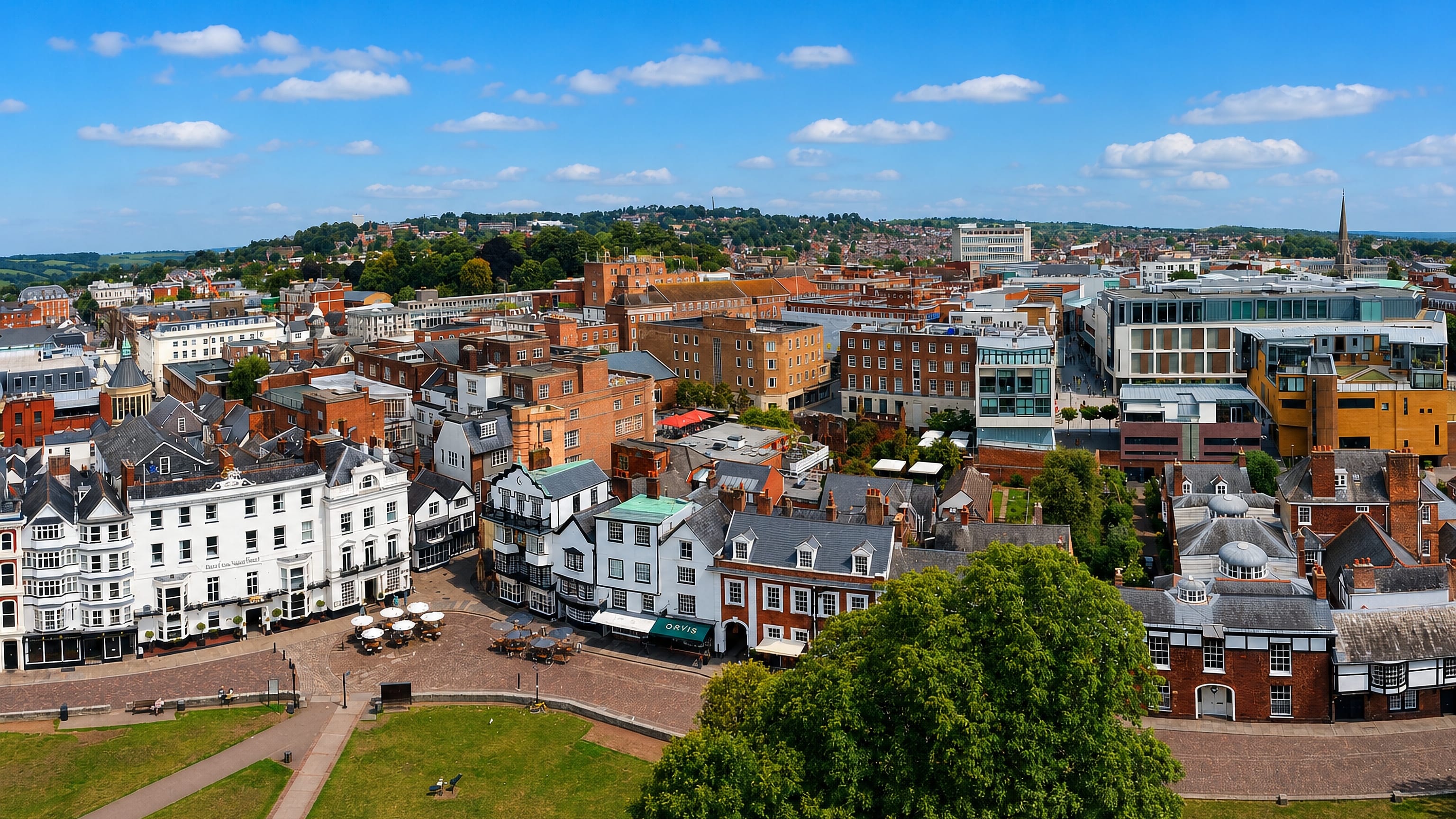
Exeter is Devon's county town. Rougemont Castle sits above the streets on its old red mound, and the Royal Albert Memorial Museum & Art Gallery gathers the region's collections a short walk away below it. Stretches of the Exeter city walls, Roman in origin, still ring the old core.
Down at the water the Old Exe Bridge and the restored Cricklepit Mill mark where the River Exe once drove the town's trade. For its size the place packs a lot in.
What are the main landmarks in Exeter?
Rougemont Castle crowns the old town. Around it survive long runs of the Exeter city walls, first raised by the Romans, and the Royal Albert Memorial Museum & Art Gallery gathers the region's finds within them. Down by the water the Old Exe Bridge and Cricklepit Mill recall the River Exe at work.
Medieval fabric survives elsewhere in St Nicholas Priory, and the Bill Douglas Cinema Museum keeps a stranger collection out by the colleges.
What is the history of Exeter?
Exeter is a Roman foundation. The Romans walled a town here on high ground above the River Exe, and long stretches of those Exeter city walls still stand, among the fullest to survive anywhere in the country. The line they drew has shaped the streets ever since.
After the Romans came the Normans, who threw up Rougemont Castle on the red mound at the town's edge to hold the new country. From that base Exeter grew into the seat of Devon. It became the county town, the administrative centre for the whole south-western peninsula, a role the old records still recall.
Trade came up the Exe to the quay below the walls, where the Old Exe Bridge and the mill wheels at Cricklepit Mill turned on the river's water. St Nicholas Priory served the medieval town from within the walls. Much of that fabric survived the centuries, so the modern city still reads as the layered thing it is, Roman below, Norman above, medieval between.
The Exe runs past it as it always has.
Where is Exeter?
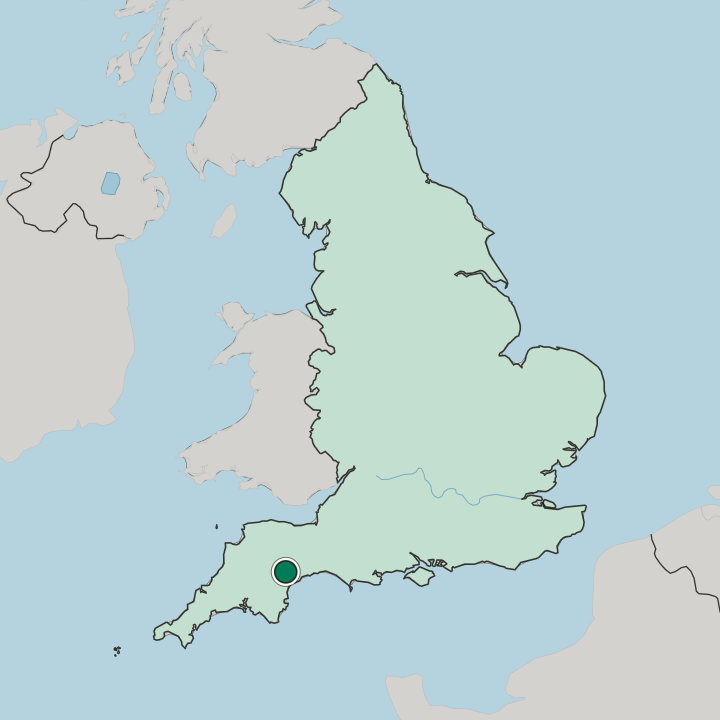
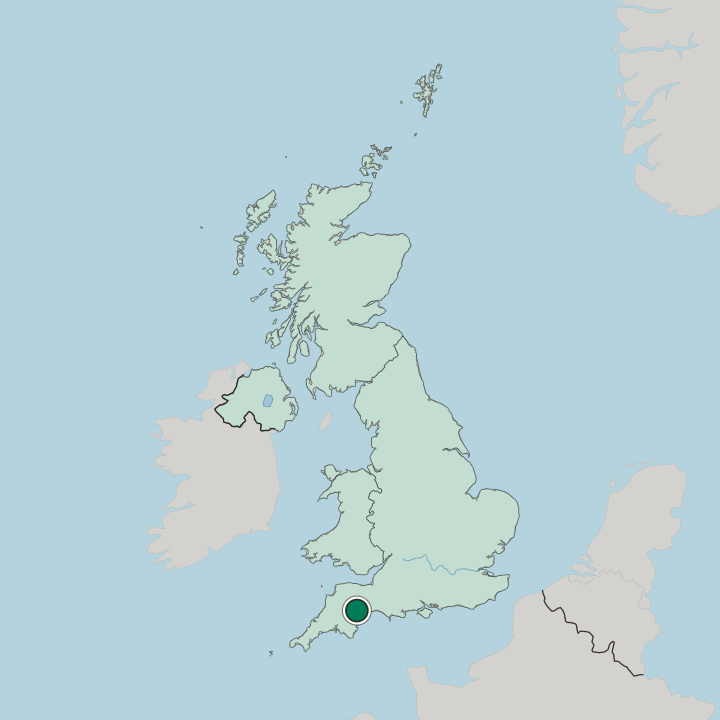
Exeter stands on the River Exe in Devon, South West England, a little way in from where the river reaches the sea. The Exe runs down past the city toward its estuary and the coast beyond. Plymouth lies away to the south-west, Bristol far to the north-east, with Exeter set between them near the neck of the peninsula. The old core sits on high ground above the river's east bank.
Devon spreads around it.
What is the climate of Exeter?
Exeter has a mild and rather wet temperate climate, typical of the south-western peninsula. The nearby sea keeps its winters gentle and its summers cool rather than hot, with hard frost uncommon along the Exe valley. Rain arrives often on the westerly winds off the Atlantic, which reach Devon before much of the rest of the country.
Green stays the dominant colour. The river runs full for most of the year.
How do you get to Exeter?
Exeter gathers the traffic of its corner of the country. Main railway lines run in from Bristol and beyond to the north-east and out toward Plymouth to the south-west, all meeting at the city's stations, so trains from either direction pass through it. Roads down the peninsula funnel through here as well.
Devon narrows past this point. Many travellers pause in Exeter before pushing on into the wider county, and from the stations the walled core above the River Exe is a short way off.
Common questions
What is the best area to stay in Exeter?
The walled hill and cathedral core: monuments and the museum on foot. The Exe quayside: a riverside base by the old bridge. The station and university side: an easy arrival near Exeter's colleges.
Good for
More cities in England
Updated October 2026