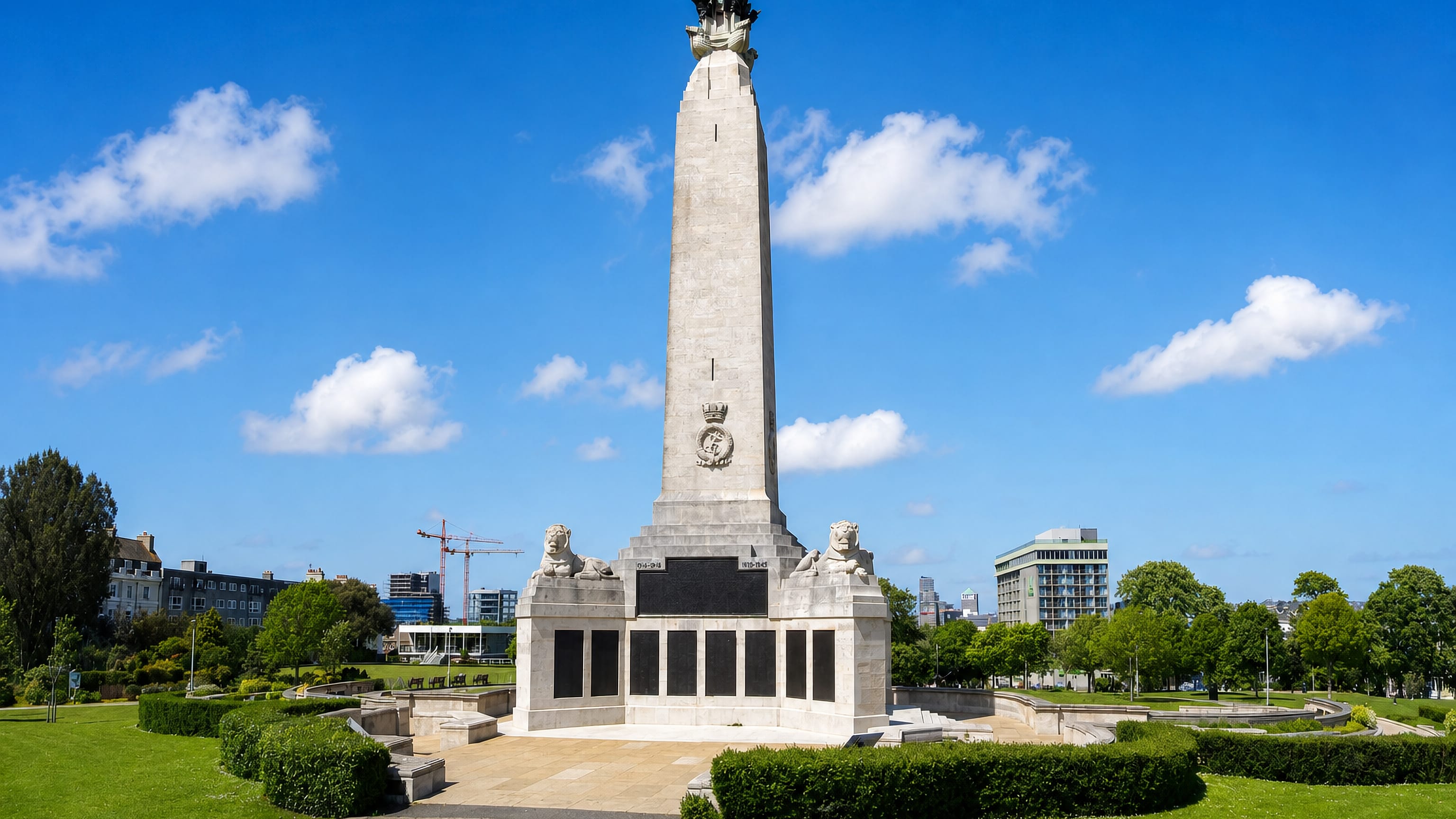
United Kingdom · England
Where to Stay in Plymouth, England
Plymouth is a port city on the south coast of Devon, England, set between the mouths of the Plym and the Tamar below the Royal Citadel.
Hotel links are affiliate links: booking through them may earn us a commission, at no extra cost to you. It never affects how places are ranked. How this works



Where to stay in Plymouth
Not every neighbourhood fits every trip — here's what each one is good for.

 PlymouthUnited Kingdom
Barbican
The Barbican is a district of Plymouth whose record runs from the Royal Citadel and Plymouth Castle to the National Marine Aquarium.Where to stay → PlymouthUnited Kingdom
Pennycomequick
Pennycomequick is an inner suburb of the city of Plymouth, in Devon, standing on the site of a former Devonport prison.Where to stay →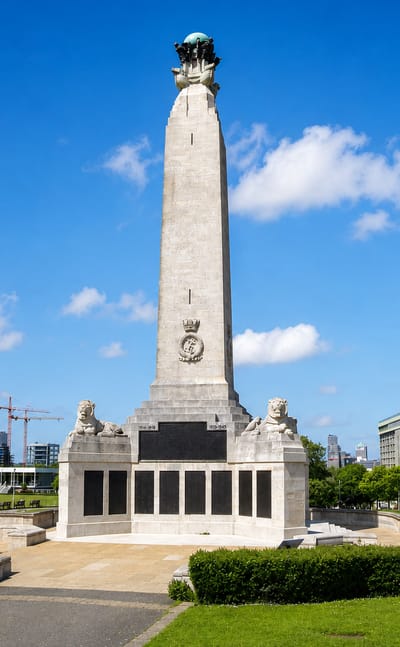 PlymouthUnited Kingdom
West Hoe
West Hoe is an area of Plymouth in Devon, whose listed buildings run from the Firestone Bay artillery tower to the Royal William Victualling Yard.Where to stay → PlymouthUnited Kingdom
Lipson
Lipson is a ward of terraced streets in Plymouth, wrapped around Freedom Fields, the park named for a Civil War battle fought on its ground.Where to stay →PlymouthUnited KingdomMutley
Mutley is a district of Plymouth, its landmarks a trio of churches and a set of named houses that includes Colson House and Mannamead House.Where to stay → PlymouthUnited Kingdom
Stonehouse
Stonehouse, East Stonehouse in full, is one of three towns amalgamated into Plymouth, on the Devon side of the mouth of the Tamar.Where to stay → PlymouthUnited Kingdom
Ford
Ford is a Victorian-built area of Plymouth, in Devon, lying north-west of the city centre between the suburbs of Milehouse and Keyham.Where to stay →PlymouthUnited KingdomPeverell
Peverell is a neighbourhood of Plymouth in the ceremonial county of Devon, and the record fixes Pounds House inside it.Where to stay → PlymouthUnited Kingdom
Cattedown
Cattedown is an inner city suburb of Plymouth beside the River Plym estuary, its name traced to a rocky outcrop said to resemble a cat.Where to stay → PlymouthUnited Kingdom
Mount Wise
Mount Wise is a waterfront estate in Devonport, a mile west of old Plymouth, looking over Plymouth Sound to Mount Edgcumbe.Where to stay →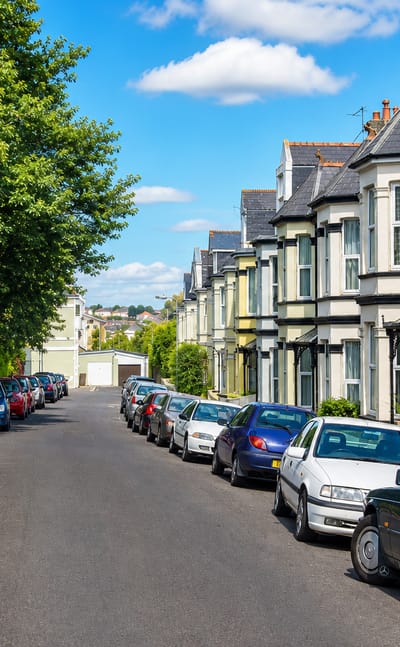 PlymouthUnited Kingdom
Hartley
Hartley is a suburb of Plymouth, in Devon, built on high ground with views out to the sea. The Tavistock Road cuts through it.Where to stay → PlymouthUnited Kingdom
Oreston
Oreston is a Plymouth suburb on the southern bank of the Cattewater, a former village written Horestone on a map of 1591, with a quay and a slipway.Where to stay →All neighbourhoods (25)
 PlymouthUnited Kingdom
North Prospect
North Prospect is an area in Plymouth, with St James the Less and Ham House the only landmarks the record fixes inside it.Where to stay → PlymouthUnited Kingdom
Morice Town
Morice Town is a suburb of Plymouth in Devon, listing the Devonport Naval Heritage Centre, HMS Courageous and the Church of St Aubyn.Where to stay →PlymouthUnited KingdomPennycross
Two buildings carry Pennycross on the record, Manadon House and the Church of St Pancras, in a district of Plymouth, in England.Where to stay →PlymouthUnited KingdomEfford
Efford is a district of Plymouth, fixed in the record by the Church of St Edward King of the West Saxons and by St Paul's Church.Where to stay → PlymouthUnited Kingdom
Laira
Laira names the stretch of the River Plym estuary between the Cattewater and Marsh Mills, and the district of Plymouth beside it.Where to stay →PlymouthUnited KingdomWeston Mill
Weston Mill splits in two along Weston Mill Hill: the old village named in the Domesday Book, and a Victorian half close to Devonport Dockyard.Where to stay →PlymouthUnited KingdomBarne Barton
St Boniface Church and St Paul's Church stand in Barne Barton, an area lying within St Budeaux in the Plymouth part of Devon.Where to stay →PlymouthUnited KingdomKing's Tamerton
A post-war suburb of Plymouth beside St Budeaux, King's Tamerton looks out over the Hamoaze, the wide estuary of the River Tamar.Where to stay →PlymouthUnited KingdomHonicknowle
Once part of Knackersknowle, Honicknowle is a ward of Plymouth hemmed in by West Park, Crownhill, Ham, Whitleigh and Pennycross.Where to stay →PlymouthUnited KingdomEstover
A 1970s council estate grown over an older hamlet, Estover stands five miles out from Plymouth city centre, in the English county of Devon.Where to stay →PlymouthUnited KingdomWhitleigh
Whitleigh belongs to the Budshead ward of Plymouth, with St Chad's Anglican church among its three churches, in a district edged by Southway and Crownhill.Where to stay → PlymouthUnited Kingdom
Ernesettle
Ernesettle carries the name of William Ernstell, a Budshead freeholder who held land here in 1428, long before Plymouth grew out to meet it.Where to stay →PlymouthUnited KingdomSouthway
Buckland Abbey monks walked a route into Plymouth called the South Way, and the housing estate later spread across it took the name Southway.Where to stay →Hotel links are affiliate links: booking through them may earn us a commission, at no extra cost to you. It never affects how places are ranked. How this works
Find hotels in Plymouth
Direct booking searches for these neighbourhoods.
The Hoe and seafront
the open ground under the Royal Citadel facing the water, with the Armada Memorial along the promenadeFind hotels in The Hoe and seafrontvisitors after the historic waterfrontThe old harbour
the lanes around the Elizabethan House Museum and the Old Custom House, the oldest surviving streets of the portFind hotels in The old harbourshopping and the museumsThe city centre
the rebuilt streets inland behind the Hoe, gathered around The Box and Charles ChurchFind hotels in The city centrea quieter base by the waterAcross the Tamar
the Cornish shore by Mount Edgcumbe House, reached by ferry across the mouth of the Tamar. Few places to stay nearby — book ahead.Find hotels in Across the TamarHotel links are affiliate links: booking through them may earn us a commission, at no extra cost to you. It never affects how places are ranked. How this works
Things to do in Plymouth
Ranked by global recognition; descriptions from Wikidata (CC0).
Museums & Galleries
2- Elizabethan House Museum Heritage
- The Box
Churches & Religious Sites
8- Charles Church Heritage
- Plymouth Minster Heritage
- Church of St Andrew, Stoke Damarel Heritage
- Royal Chapel of St Katherine-upon-the-Hoe Heritage
- St Jude's Church Heritage
Show 3 more →
- Church of the Ascension, Crownhill Heritage
- Church of St John the Evangelist Heritage
- Church of St Budeaux Heritage
Castles & Historic Sites
4- Plymouth Castle Heritage
- Scott Memorial Heritage
- Ellis Monument Heritage
- Mount Batten Heritage
Stadiums & Sports
1- The Brickfields
Landmarks & Notable Places
8- Hamoaze House Heritage
- Island House Heritage
- Mount Batten Tower Heritage
- Custom House Heritage
- Old Custom House Heritage
Show 3 more →
- Officers House Number 1 and Attached Walls and Railings, Royal William Victualling Yard Heritage
- Cedar Lawn Summer House Heritage
- Colson House Heritage
worth knowingacross 5 categories in Plymouth
About Plymouth
What is Plymouth known for?
Plymouth is the great naval port of Devon, guarding the water where the Plym and the Tamar reach the sea. Above the harbour the Royal Citadel still crowns the high ground, its ramparts facing the sound. The sea runs through everything here.
Visitors reach the waterfront at the National Marine Aquarium, The Box gathers the city's museums and archives under one roof, and Mount Edgcumbe House looks back across the Tamar from the Cornish shore. Warships and history fill the place, from HMS Courageous to the Armada Memorial on the seafront.
What are the main landmarks in Plymouth?
Plymouth's landmarks gather along the water and the high ground of the Hoe. The Royal Citadel dominates the seafront, a seventeenth-century fortress above the sound, and the Royal Chapel of St Katherine-upon-the-Hoe sits nearby on the open headland. Museums crowd the harbour edge.
The National Marine Aquarium and The Box hold the sea and the archives, the Elizabethan House Museum survives among the old lanes, and Charles Church stands roofless as a war memorial. Mount Batten Tower guards the far side of the sound, and Mount Edgcumbe House looks over from Cornwall.
What is the history of Plymouth?
Plymouth rose as a harbour town where the Plym and the Tamar reach the sea in Devon. Its deep sound and sheltered water made it one of England's foremost naval ports, and fleets sailed from here for centuries. The Royal Citadel set the seal on that role.
Charles II raised the great fortress above the sound in the seventeenth century, its guns facing both the sea and the town, and the dockyards spread west along the Tamar into the districts that grew up around the navy. War reshaped the city more than once. The old harbour kept its Elizabethan House Museum and its narrow lanes, but bombing in the twentieth century gutted the centre, leaving Charles Church a roofless shell kept as a memorial.
Rebuilding drew the modern streets inland behind the Hoe, while The Box now gathers what the city saved of its past. The sea has never let go of Plymouth.
Where is Plymouth?
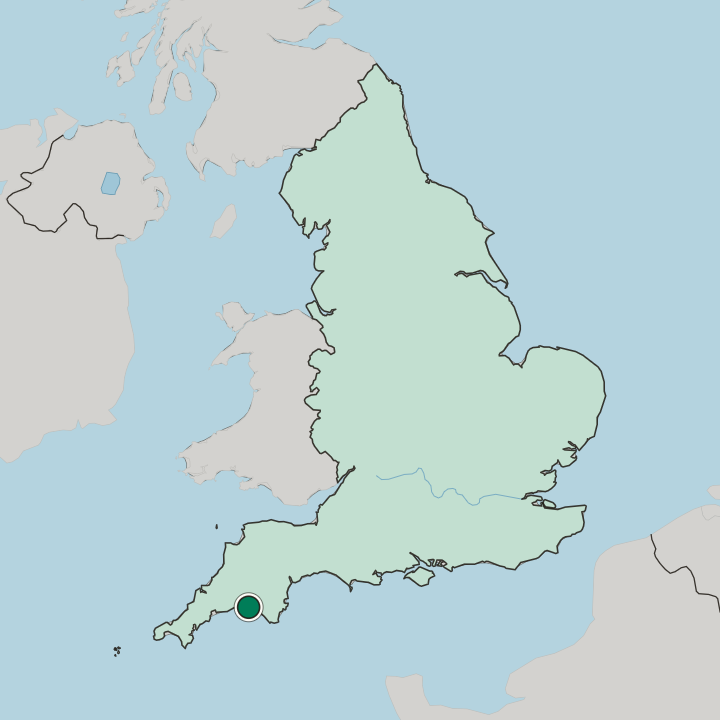
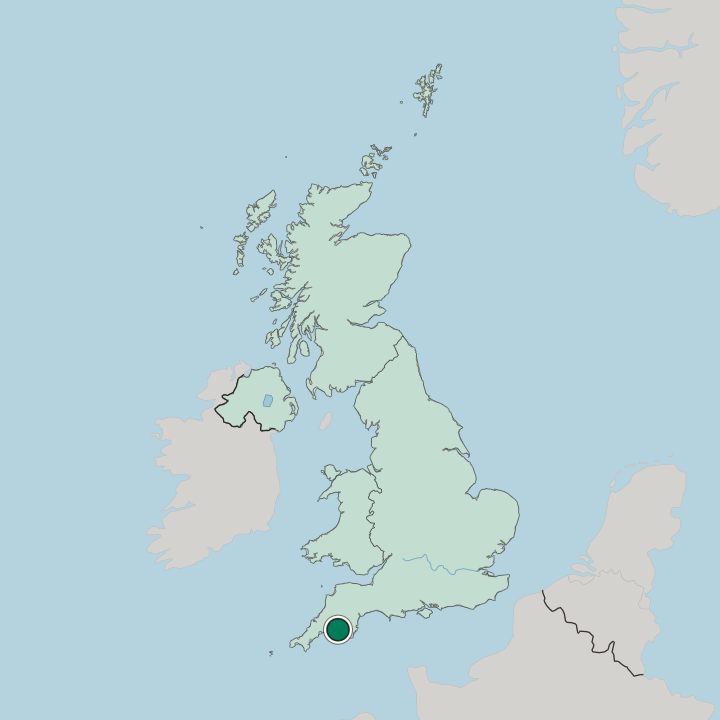
Plymouth stands on the south coast of Devon, England, at the mouth of two rivers. The Plym enters the sea on the eastern side and the Tamar on the west, and between them the sheltered water of the sound opens toward the Channel below the Hoe and the Royal Citadel. The city faces Cornwall across the Tamar. Exeter lies to the north-east and London far to the east, but Plymouth's outlook is set firmly toward the sea and the ships that work its harbour.
What is the climate of Plymouth?
Plymouth has the mild, wet maritime climate of England's south-west coast. The sea keeps its winters gentle and its summers cool, and Atlantic weather rolls in over Devon to bring frequent rain and strong wind off the sound. Hard frost is rare here.
Cloud and shower come through every season, mild air holds late into the year, and the salt weather blows steadily across the Hoe and the exposed water below the Royal Citadel.
How do you get to Plymouth?
Plymouth sits at the far end of the main line into the south-west of England. Trains run down through Devon from London and Exeter to the city's station, tracing the coast for part of the way, and the main road follows the same route west. Rail and road carry most arrivals.
Ferries also sail from the harbour across to France and Spain, and the crossing of the Tamar links the city to Cornwall, but the train from Exeter and London carries the bulk of arrivals to the streets below the Royal Citadel.
Common questions
What is the best area to stay in Plymouth?
The Hoe and seafront: travellers who want the sound at the door. The old harbour: visitors after the historic waterfront. The city centre: shopping and the museums. Across the Tamar: a quieter base by the water.
Good for
More cities in England
Updated October 2026