United Kingdom · England
Where to Stay in Gateshead, England
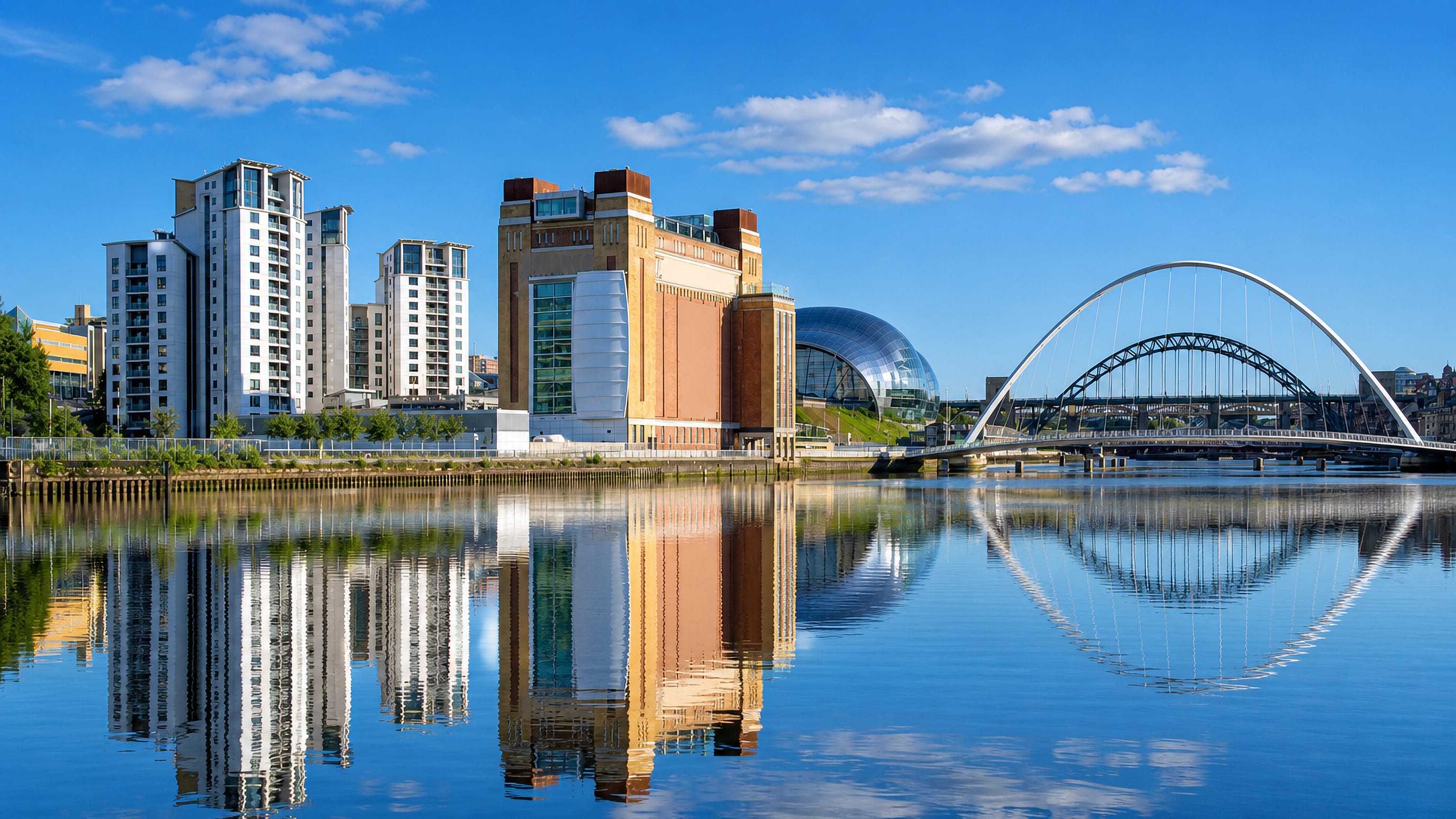
Gateshead stands on the south bank of the River Tyne, opposite Newcastle upon Tyne, and holds the Baltic Centre for Contemporary Art.
Hotel links are affiliate links: booking through them may earn us a commission, at no extra cost to you. It never affects how places are ranked. How this works


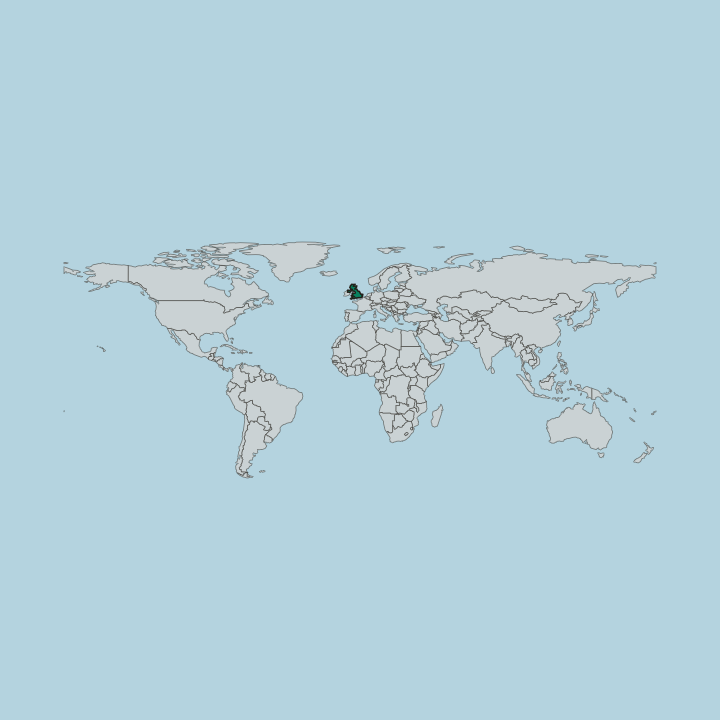
Where to stay in Gateshead
Not every neighbourhood fits every trip — here's what each one is good for.

 GatesheadUnited Kingdom
Bensham
Bensham is a suburban district of Gateshead in Tyne and Wear, a terraced quarter marked out by Christ Church and the Church of St Cuthbert.Where to stay → GatesheadUnited Kingdom
Deckham
Deckham is a district of Gateshead, its short list of buildings led by the Shipley Art Gallery and the Church of St George.Where to stay →GatesheadUnited KingdomWindy Nook
Windy Nook is a district of Gateshead on steep, sloping ground, with the Church of St Alban and Crow Hall among its older names.Where to stay →GatesheadUnited KingdomLobley Hill
Lobley Hill is a district of Gateshead holding the site of Washing Wells Roman Fort, All Saints Church and Cox Close House.Where to stay →GatesheadUnited KingdomLow Fell
Low Fell is a district of Gateshead, its landmarks running from Saltwell Towers to the Church of St Helen across old Gateshead Fell ground.Where to stay →GatesheadUnited KingdomPelaw
Pelaw is a district of Gateshead where the North East Bus Museum keeps company with the Church of St Mary and Christ Church.Where to stay →Hotel links are affiliate links: booking through them may earn us a commission, at no extra cost to you. It never affects how places are ranked. How this works
Find hotels in Gateshead
Direct booking searches for these neighbourhoods.
The Gateshead south bank
The Shipley Art Gallery and the Baltic sit on the same side of the Tyne, so both are walkable from one room.Find hotels in The Gateshead south bankTravellers who want Grey's Monument and the Laing Art Gallery at the doorNewcastle upon Tyne, north bank
The far bank carries the Discovery Museum, Bessie Surtees House and Newcastle upon Tyne Castle within one set of streets.Find hotels in Newcastle upon Tyne, north bankStays that prefer Saltwell Towers and the high inland groundTowards Gateshead Fell
The land climbs away from the Tyne past Saltwell Towers to St John's Church, Gateshead Fell, well back from the galleries. Few places to stay nearby — book ahead.Find hotels in Towards Gateshead FellHotel links are affiliate links: booking through them may earn us a commission, at no extra cost to you. It never affects how places are ranked. How this works
Things to do in Gateshead
Ranked by global recognition; descriptions from Wikidata (CC0).
Museums & Galleries
3- Shipley Art Gallery Heritage
- Baltic Centre for Contemporary Art
- North East Bus Museum
Churches & Religious Sites
8- St John's Church, Gateshead Fell Heritage
- St Joseph's Roman Catholic Church Heritage
- Church of St Mary Heritage
- Church of St Chad Heritage
- Church of St George Heritage
Show 3 more →
- Church of St Helen Heritage
- Church of St Alban Heritage
- Church of St Cuthbert Heritage
Castles & Historic Sites
4- Washing Wells Roman Fort Heritage
- Monument 15 Metres West Of Church Of St Mary Heritage
- Monument To George Hawks Heritage
- Site of Ravensworth coalmill, 600m north east of Ravensworth Castle Heritage
Landmarks & Notable Places
6- Underhill Heritage
- Saltwell Towers Heritage
- Bellevue House Heritage
- Cox Close House Heritage
- Crow Hall Heritage
Show 1 more →
- Field House Heritage
worth knowingacross 4 categories in Gateshead
About Gateshead
Contemporary art and old industry share one riverbank.
What is Gateshead known for?
Gateshead holds the Baltic Centre for Contemporary Art and the Shipley Art Gallery, while Saltwell Towers stands inland and St John's Church, Gateshead Fell carries the name of the high ground behind the town. Newcastle upon Tyne lies opposite. Across the water, the Discovery Museum, the Laing Art Gallery and the Great North Museum: Hancock fall within reach of anyone based on the Gateshead bank of the Tyne.
What are the main landmarks in Gateshead?
The Baltic Centre for Contemporary Art is the building most associated with Gateshead, and the Shipley Art Gallery sits in the same borough with Saltwell Towers standing further inland. St John's Church, Gateshead Fell holds the higher ground. Across the Tyne the list lengthens: Newcastle upon Tyne Castle, Grey's Monument, Bessie Surtees House, the Hatton Gallery, Seven Stories and the Centre for Life all belong to the north bank.
Turbinia joins that same Tyneside inventory.
What is the history of Gateshead?
Gateshead's history runs with the river. For most of its existence the town belonged to County Durham, and only in 1974 was it drawn into the metropolitan county of Tyne and Wear, the framework that still defines the borough. Industry gave it shape.
Work along the Tyne left Gateshead an industrial place, and that inheritance still separates it in character from the civic core standing across the water in Newcastle upon Tyne. Older fabric survives inland, where St John's Church, Gateshead Fell carries the name of the high ground and Saltwell Towers stands away from the riverside streets. The north bank keeps the older stone.
Newcastle upon Tyne Castle, Bessie Surtees House, All Saints' Church and St Andrew's Church all stand there, and Grey's Monument rises among that city's streets, a short distance from the water that divides the two towns. Galleries and museums came afterwards. The Discovery Museum, the Laing Art Gallery, the Great North Museum: Hancock, the Centre for Life and Seven Stories stand on the Newcastle upon Tyne side, while the Baltic Centre for Contemporary Art and the Shipley Art Gallery hold the Gateshead one.
Morden Tower and Burt Hall belong to the same north-bank list.
Where is Gateshead?
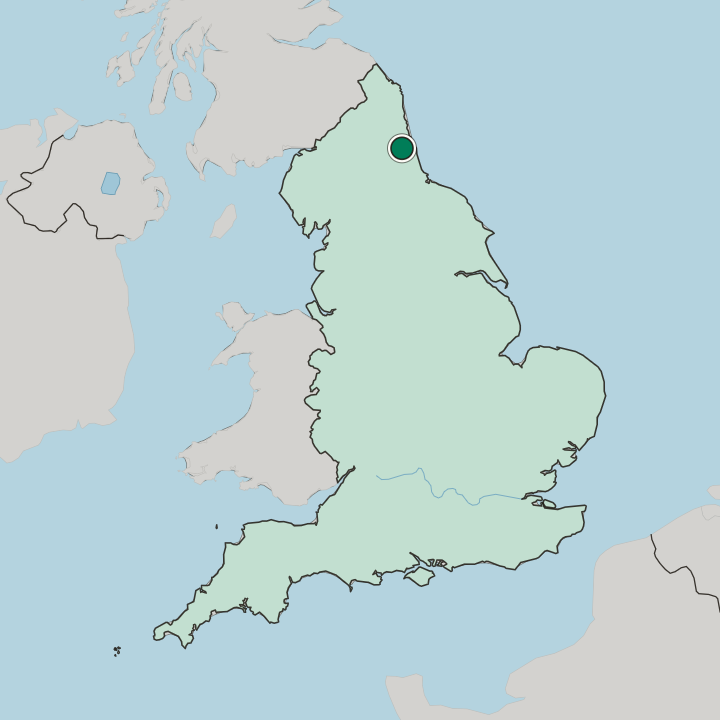
Gateshead occupies the southern bank of the River Tyne inside the metropolitan county of Tyne and Wear, with the ground rising away from the water towards Gateshead Fell. Newcastle upon Tyne holds the far bank. The borough covers a little over twenty square kilometres, so the built streets, the ground around Saltwell Towers and the higher inland edge all lie within a short distance of one another.
County Durham once held it all.
What is the climate of Gateshead?
Cool winters and moderate summers follow from the temperate setting, and cloud arrives over the River Tyne through most months of the year. The valley air holds damp. Newcastle upon Tyne shares the same weather from the north bank.
Wetter spells reach the higher ground towards Gateshead Fell before they clear away down the Tyne, which leaves the riverside streets of Gateshead a little more sheltered than the ridge behind them.
How do you get to Gateshead?
Arrivals reach Gateshead through Newcastle upon Tyne more often than not, since the larger city occupies the north bank of the Tyne directly opposite the borough. The two are barely apart. Inside Tyne and Wear the surrounding towns of the metropolitan county sit close enough that Gateshead falls in the middle of local journeys rather than at their end.
Saltwell Towers and Gateshead Fell mark the inland approach.
Common questions
What is the best area to stay in Gateshead?
The Gateshead south bank: Visitors aiming first at the Baltic Centre for Contemporary Art. Newcastle upon Tyne, north bank: Travellers who want Grey's Monument and the Laing Art Gallery at the door. Towards Gateshead Fell: Stays that prefer Saltwell Towers and the high inland ground.
Good for
More cities in England
Updated October 2026