United Kingdom · England
Where to Stay in Grimsby, England
Grimsby is a fishing port on the south bank of the Humber in Lincolnshire, marked by the Grimsby Dock Tower and its medieval Minster.
Hotel links are affiliate links: booking through them may earn us a commission, at no extra cost to you. It never affects how places are ranked. How this works


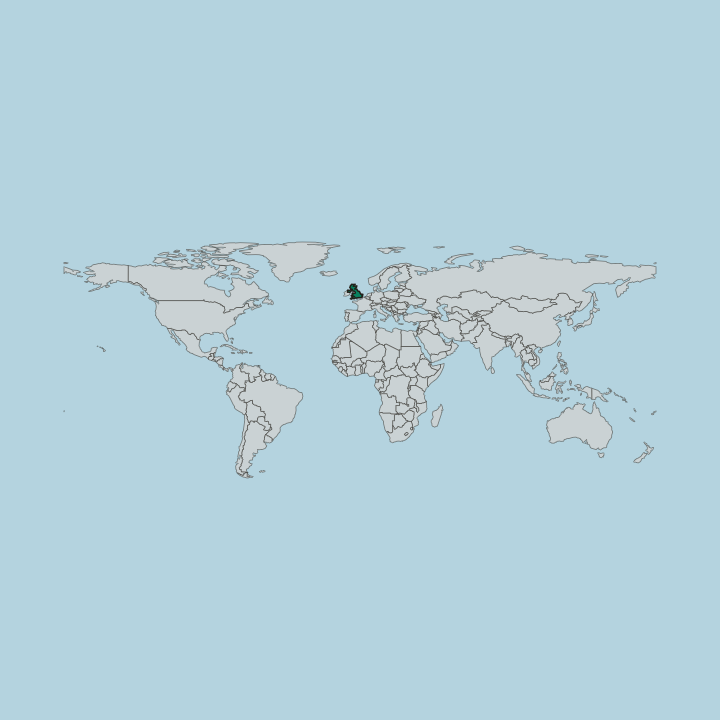
Where to stay in Grimsby
The practical side of choosing where to sleep.
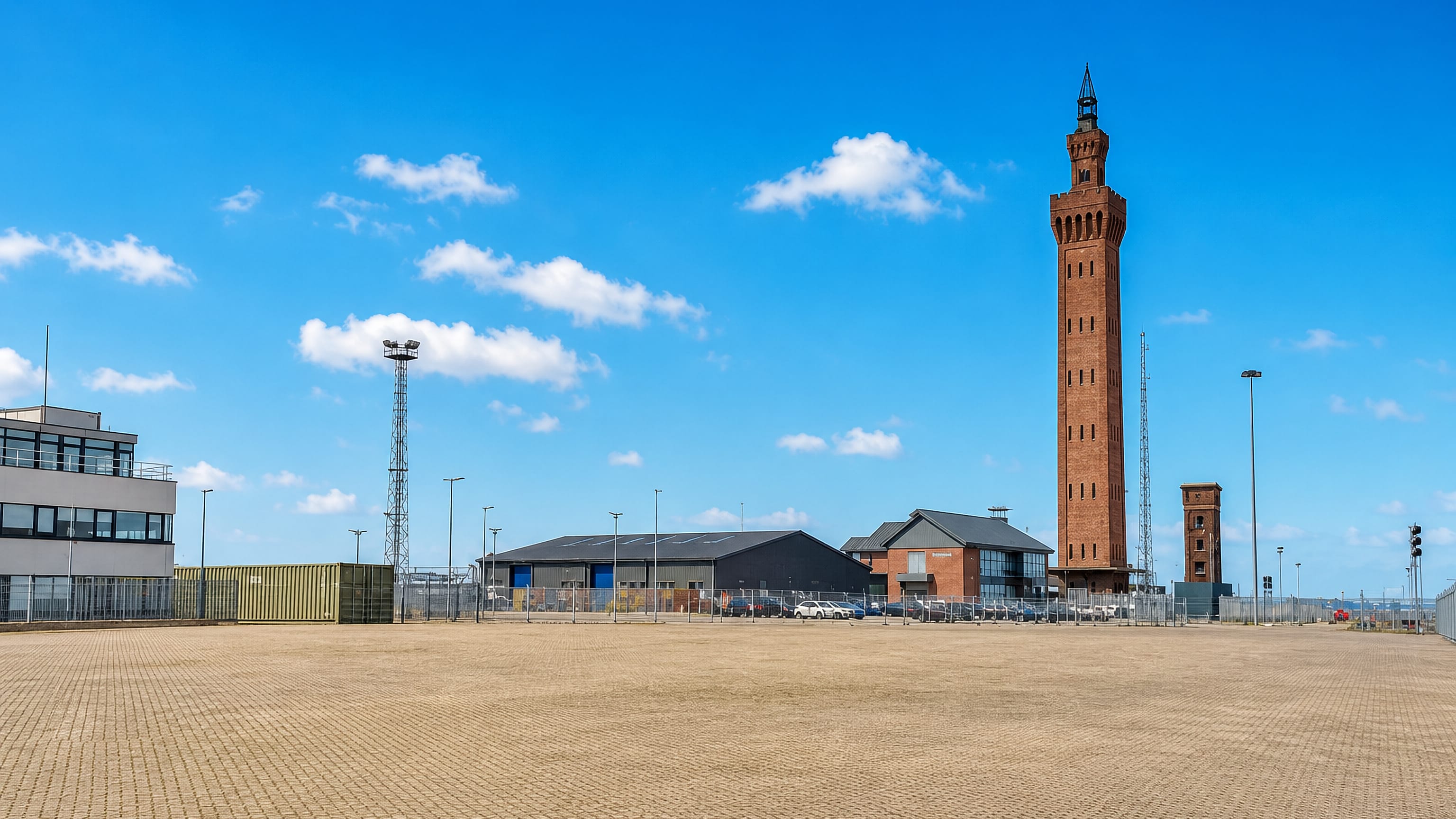
Grimsby Dock Tower marks the working end of town. A room near the docks puts the Grimsby Fishing Heritage Centre, the Ross Tiger and the Hydraulic Accumulator Tower within reach, and it suits you if the port rather than the beach is the reason for coming. The sand lies elsewhere.
Cleethorpes adjoins Grimsby directly to the south-east, so a stay in that seaside town keeps the shore close while leaving the Minster and the museums a short journey away. The old centre holds the churches. Grimsby Minster, St Mary's Church, Grimsby, the Church of St Giles and the Church of St Martin stand among the streets around the Council House, and a base there puts the civic town on your doorstep.
Weelsby Hall lies further out. Cordeaux House, Island House, The Old Vicarage and Worsley House survive in the same older quarter, which gives the inland side of Grimsby more to look at than a port town is usually credited with. Distances out of town are long.
Grimsby stands 33 miles south-east of Hull and 45 miles north-east of Lincoln, so a room here works as a base for North East Lincolnshire rather than for the wider county. The borough has its centre in the town.
Find hotels in Grimsby
Direct booking searches for these neighbourhoods.
By the docks
The Grimsby Dock Tower and the Hydraulic Accumulator Tower stand over this end of the Humber waterfront. Few places to stay nearby — book ahead.Find hotels in By the docksTravellers who want the Minster and the Council House on footAround Grimsby Minster
St Mary's Church, Grimsby, the Time Trap Museum and the Doughty Museum sit within the same civic streets.Find hotels in Around Grimsby MinsterStays that want the seaside next door to a working portCleethorpes
Cleethorpes adjoins Grimsby to the south-east, putting the shore a short way from the Dock Tower.Find hotels in CleethorpesHotel links are affiliate links: booking through them may earn us a commission, at no extra cost to you. It never affects how places are ranked. How this works
Things to do in Grimsby
Ranked by global recognition; descriptions from Wikidata (CC0).
Museums & Galleries
2- Doughty Museum
- Time Trap Museum
Churches & Religious Sites
8- Grimsby Minster Heritage
- St Mary's Church, Grimsby Heritage
- St Augustine of Hippo Grimsby Heritage
- Church of the Holy Trinity and Holy Mary the Virgin Heritage
- Church of St Giles Heritage
Show 3 more →
- Church of St Michael Heritage
- Church of St Nicolas Heritage
- Church of St Peter Heritage
Castles & Historic Sites
1- Grimsby Castle
Landmarks & Notable Places
8- Grimsby Dock Tower Heritage
- Council House Heritage
- Cordeaux House Heritage
- Folly Tower And Gateway Approximately 15 Metres East Of Number 23 Bargate Heritage
- Former Toll House Heritage
Show 3 more →
- Hydraulic Accumulator Tower To West Of The Dock Tower Heritage
- Island House Heritage
- The Old Vicarage Heritage
worth knowingacross 4 categories in Grimsby
About Grimsby
Fish made this port.
What is Grimsby known for?
The Grimsby Fishing Heritage Centre and the Ross Tiger record the industry that worked out of the docks on the Humber, and the Grimsby Dock Tower stands over the same ground. Cleethorpes adjoins it to the south-east. Grimsby Minster, the Time Trap Museum and the Doughty Museum give the town its older civic layer within North East Lincolnshire.
What are the main landmarks in Grimsby?
Grimsby Dock Tower is the town's landmark, with the Hydraulic Accumulator Tower standing to the west of it. Ross Tiger belongs to the same waterfront. Grimsby Minster, St Mary's Church, Grimsby, the Church of the Holy Trinity and Holy Mary the Virgin, the Church of St Nicolas and St Augustine of Hippo Grimsby carry the parish names, and Grimsby Castle appears on the same list of the town's monuments.
The Doughty Museum, the Time Trap Museum and the Grimsby Fishing Heritage Centre hold the collections.
What is the history of Grimsby?
Great Grimsby is the older name. Grimsby Castle and the Church of St Giles belong to that early town, and Grimsby Minster still marks the medieval core on the south bank of the Humber. A folly tower and gateway survive at Bargate.
The Former Toll House, Worsley House, Cordeaux House and Island House come from the streets that grew around the old parish churches. Fishing turned the town into a port. The docks along the Humber carried the fishing trade, and the Grimsby Dock Tower, with the Hydraulic Accumulator Tower to the west of it, was built to work that harbour.
Ross Tiger survives from that era. The Grimsby Fishing Heritage Centre keeps the record of the industry, while the Time Trap Museum and the Doughty Museum cover the rest of the town's past. Administration followed the trade.
Grimsby became the administrative centre of the borough of North East Lincolnshire, with the Council House standing for that role, and the borough falls within the Yorkshire and the Humber region. Cleethorpes grew into it. The two towns form one conurbation on the south-east side, and the country behind them, taking in Weelsby Hall and the Church of St Martin, makes up the rural part of the district.
Where is Grimsby?
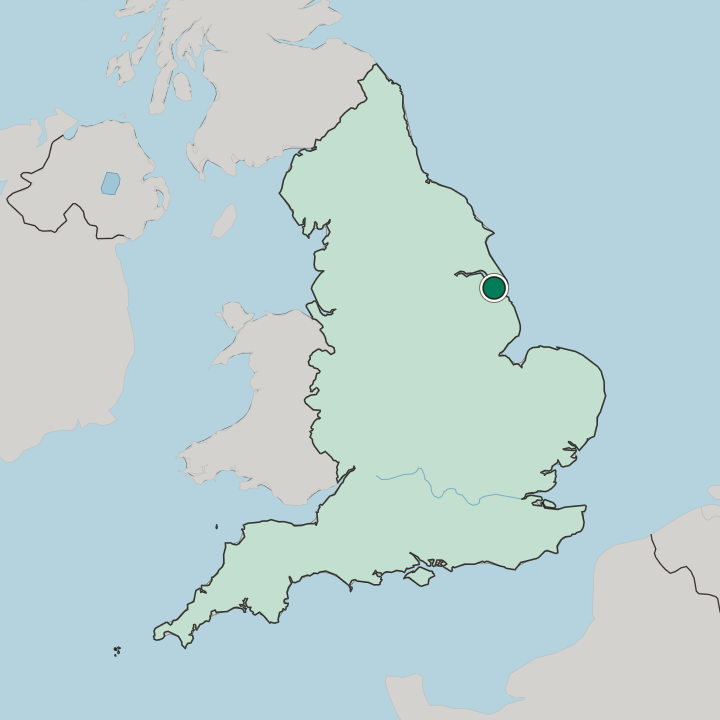
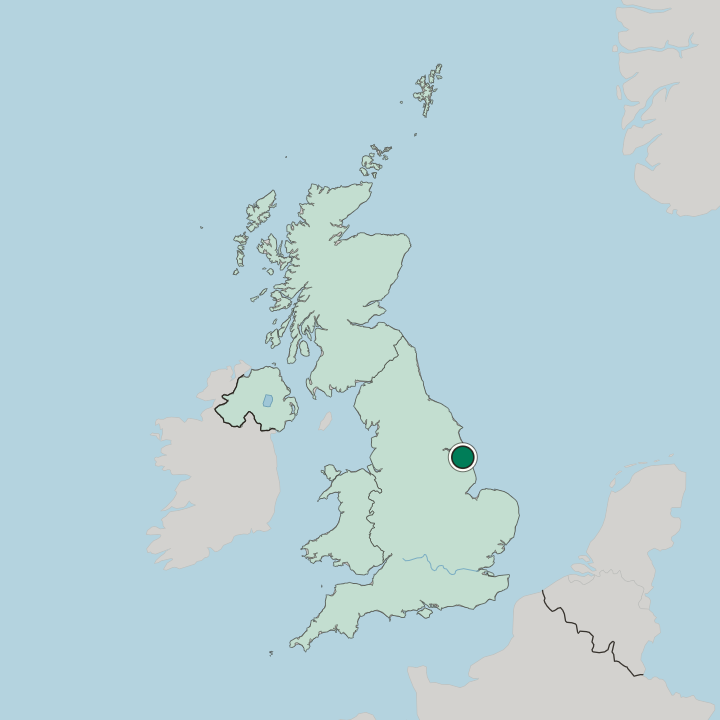
Grimsby stands on the south bank near the mouth of the Humber, which flows out to the North Sea, and the town runs into Cleethorpes directly to the south-east. Lincolnshire lies inland behind it. The borough of North East Lincolnshire covers both the conurbation and the country around it, and the whole district is counted within the Yorkshire and the Humber region.
Grimsby lies 45 miles north-east of Lincoln.
What is the climate of Grimsby?
The North Sea reaches this coast without obstruction, so the air over Grimsby stays cool through the summer and rarely settles into a hard winter. Wind crosses the Humber. Damp weather moves up from the open water, and the flat ground of Lincolnshire behind the town offers little shelter to the docks or to Cleethorpes beside them.
Rain falls in all seasons.
How do you get to Grimsby?
Grimsby lies 33 miles south-east of Hull, 45 miles north-east of Lincoln and 50 miles east of Doncaster, which puts the town at the far end of most approaches. The Humber closes the northern side. Roads from Lincolnshire run in from inland, and Cleethorpes continues the built-up ground to the south-east without a break between the two towns.
Grimsby Dock Tower shows where the port begins.
Common questions
What is the best area to stay in Grimsby?
By the docks: Visitors here for the Ross Tiger and the Grimsby Fishing Heritage Centre. Around Grimsby Minster: Travellers who want the Minster and the Council House on foot. Cleethorpes: Stays that want the seaside next door to a working port.
Good for
More cities in England
Updated September 2026