United Kingdom · England
Where to Stay in Hastings, England
Hastings is a seaside town on the Channel coast of East Sussex, England, its cliff-top castle recalling the Norman conquest of 1066.
Hotel links are affiliate links: booking through them may earn us a commission, at no extra cost to you. It never affects how places are ranked. How this works




Where to stay in Hastings
Not every neighbourhood fits every trip — here's what each one is good for.

 HastingsUnited Kingdom
Blacklands
Blacklands is a district of Hastings marked by Christ Church and The Pilot Field, with the town's castle and museum a short trip away.Where to stay →HastingsUnited KingdomBulverhythe
Bulverhythe, also called West St Leonards and Bo Peep, is a suburb of Hastings set behind a thick sea wall and its Esplanade.Where to stay →HastingsUnited KingdomBaldslow
Baldslow is a district of Hastings whose one recorded landmark is the Lady Mary Montgomerie Monument, standing in the grounds of Beauport Park.Where to stay →Hotel links are affiliate links: booking through them may earn us a commission, at no extra cost to you. It never affects how places are ranked. How this works
Find hotels in Hastings
Direct booking searches for these neighbourhoods.
The Old Town
In the narrow streets below Hastings Castle by the fishing beach, within a walk of the hutsFind hotels in The Old TownStays wanting the promenade and the beachThe seafront
Along the Victorian front west of the pier, facing the ChannelFind hotels in The seafrontHotel links are affiliate links: booking through them may earn us a commission, at no extra cost to you. It never affects how places are ranked. How this works
Things to do in Hastings
Ranked by global recognition; descriptions from Wikidata (CC0).
Museums & Galleries
1- Hastings Contemporary
Churches & Religious Sites
8- St Leonard's Church Heritage
- St Leonards-on-Sea United Reformed Church Heritage
- Church in the Wood Heritage
- Holy Trinity Church, Hastings Heritage
- Christ Church Heritage
Show 3 more →
- St Mary Magdalene's Church, St Leonards-on-Sea Heritage
- All Souls Church, Hastings Heritage
- St John the Evangelist's Church, St Leonards-on-Sea Heritage
Castles & Historic Sites
2- Hastings Castle Heritage
- Lady Mary Montgomerie Monument at Beauport Park, Hastings Heritage
Stadiums & Sports
1- East Sussex Cricket Ground
Landmarks & Notable Places
3- Crown House Heritage
- Old Hastings House Heritage
- 121, All Saints Street Heritage
worth knowingacross 5 categories in Hastings
About Hastings
Hastings is bound to the year 1066.
What is Hastings known for?
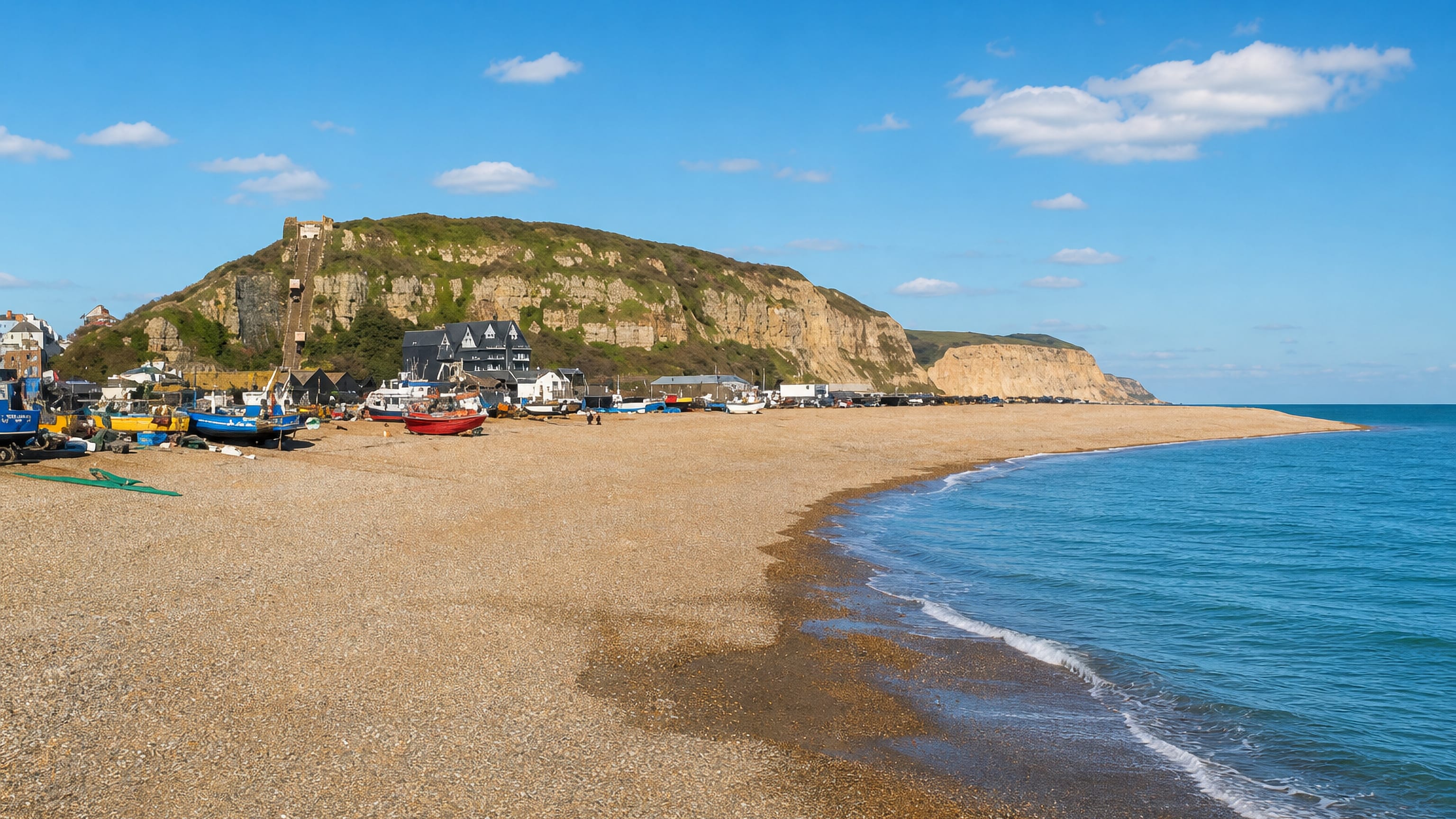
William the Conqueror landed near here and won the battle that took the English crown, and the ruins of Hastings Castle, the first Norman castle in England, still crown the cliff above the sea. Tall black net huts line the fishing beach below. Conquest and the sea mark the town.
What are the main landmarks in Hastings?
Hastings Castle crowns the cliff. Its Norman ruins, the first raised in England, look down on the town and the sea, the great mark of the conquest, above the old fishing beach. Black net huts fill the shore.
The tall wooden huts and the boats crowd the Old Town, while the Hastings Contemporary and the Hastings Fishermen's Museum stand among them.
What is the history of Hastings?
Everything at Hastings turns on 1066. In that year Duke William of Normandy landed on this coast and marched inland, and the great battle that gave him England was fought in the fields nearby. The Normans built at once.
They threw up Hastings Castle on the cliff, the first of their castles in the land, to hold the conquered shore. The town lived by the sea below the ruins. Fishermen launched their boats straight off the shingle beach, as they still do, and raised the tall black net huts that crowd the Old Town by the shore.
Storms and raids battered the port. The sea wore away the harbour and the castle over the centuries, and the French burned the town more than once, but the fishing fleet always returned. In the Victorian age Hastings grew into a seaside resort, and the Hastings Contemporary and the Fishermen's Museum now stand among the old streets.
The castle ruins still watch the sea from the cliff.
Where is Hastings?
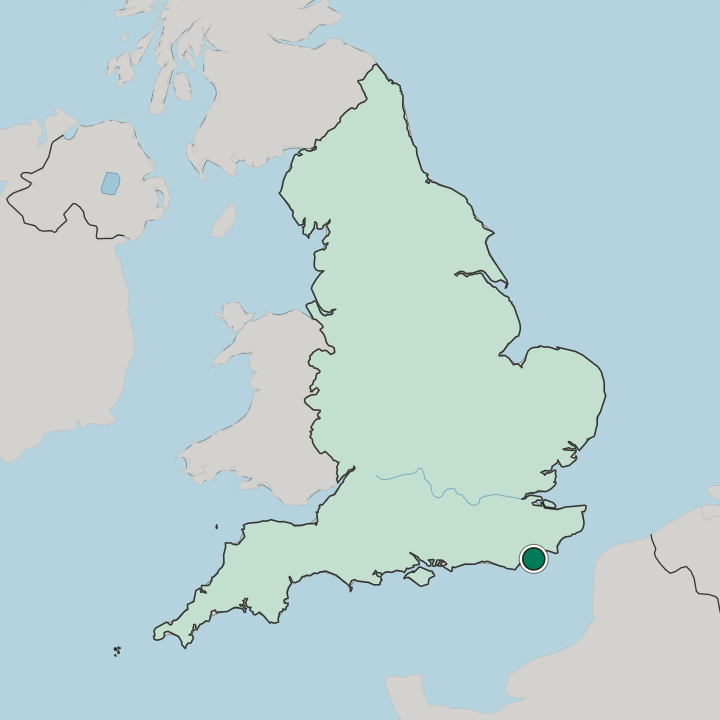
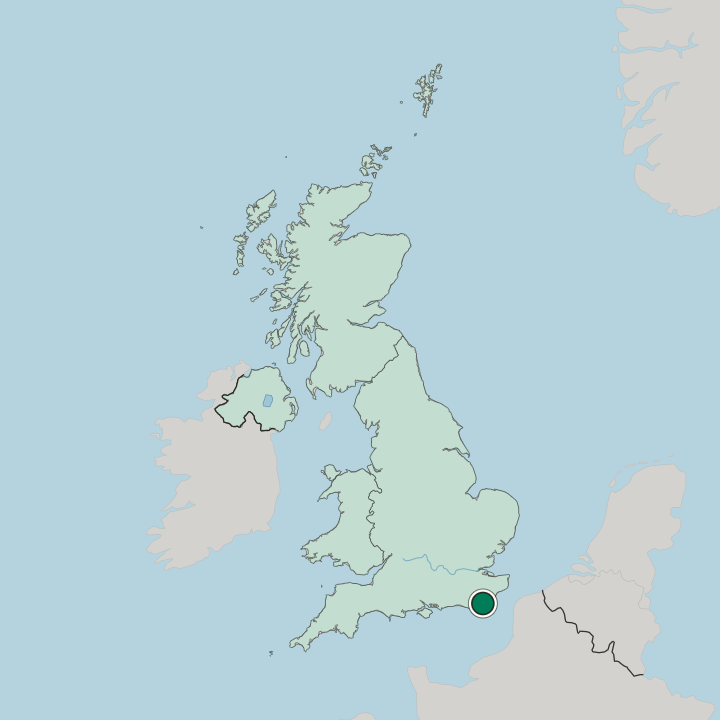
Hastings sits between the cliffs and the Channel. The town spreads along a stretch of the East Sussex coast where green hills and sandstone cliffs meet the sea, its old quarter tucked in a valley by the shore. Steep cliffs rise east and west of the beach.
The Channel opens wide to the south.
What is the climate of Hastings?
Hastings has a mild coastal climate. Soft, wet winters and warm summers follow the seasons of the south coast, and the sea keeps the frost light and the air fresh through the year. Storms drive up the Channel in winter.
The sea softens every season here.
How do you get to Hastings?
Hastings lies on the Sussex coast. Trains run down to the town from London in under two hours, and the coast road links it to Brighton and the Channel ports, while buses reach the villages inland. The old town sits east of the pier.
Most arrive by rail from London.
Common questions
What is the best area to stay in Hastings?
The Old Town: Visitors here for the pubs, galleries, and net huts. The seafront: Stays wanting the promenade and the beach.
Good for
More cities in England
Updated October 2026