United Kingdom · England
Where to Stay in Ipswich, England
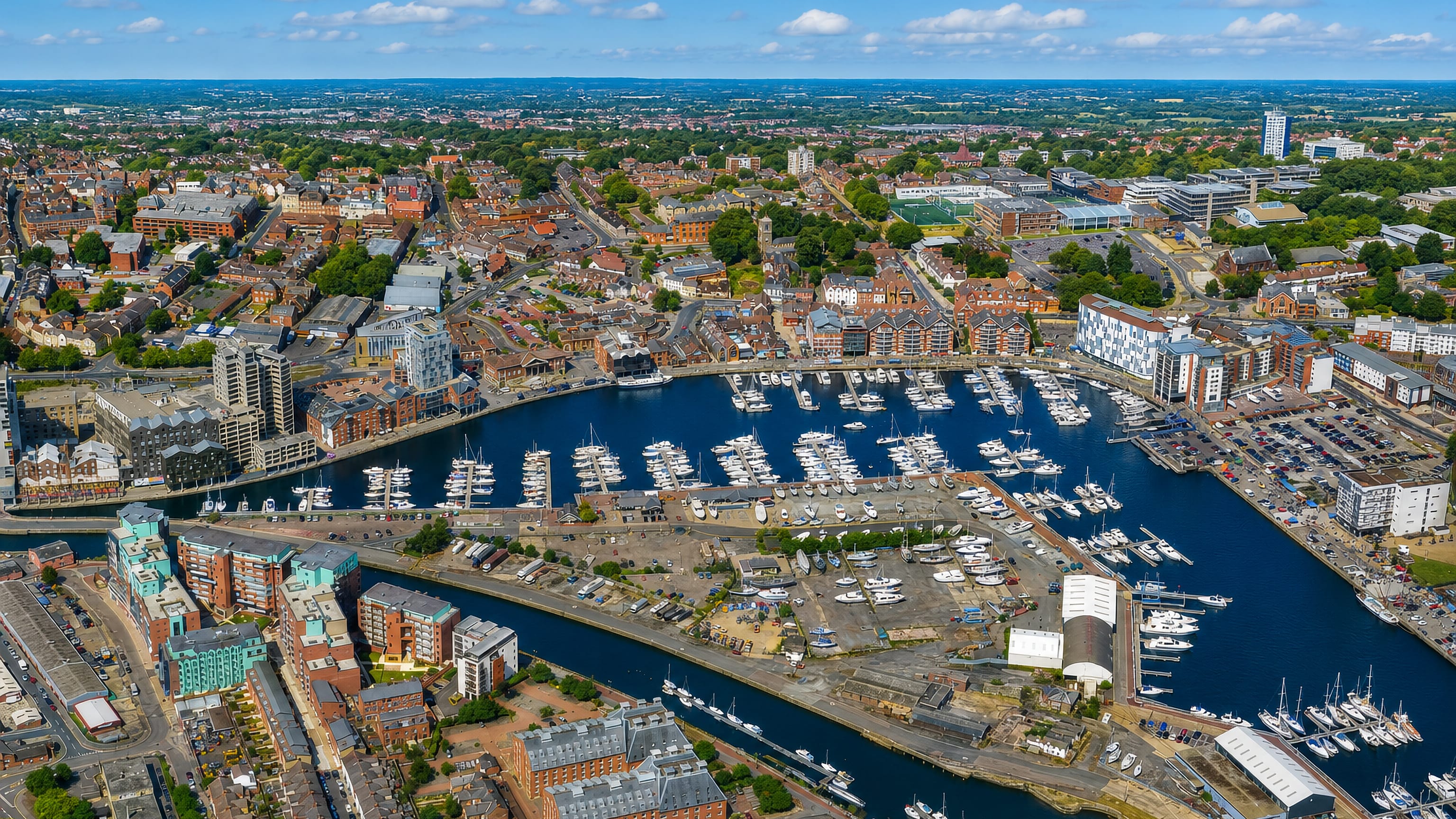
Ipswich is a port town on the River Orwell in Suffolk, England, and the county town of Suffolk in East Anglia.
Hotel links are affiliate links: booking through them may earn us a commission, at no extra cost to you. It never affects how places are ranked. How this works




Where to stay in Ipswich
Where you base yourself shapes the visit — here's the character of each area.
 IpswichUnited Kingdom
Stoke
Stoke is the Ipswich district behind the name of St Mary at Stoke, with Christchurch Mansion, Ipswich Museum and Ancient House on its register.Where to stay →IpswichUnited KingdomMaidenhall
Maidenhall is an Ipswich estate holding Gippeswyk Hall, Goldrood House and the Museum of Knots & Sailors Ropework.Where to stay →IpswichUnited KingdomCalifornia
California is an Ipswich district whose landmarks run from the Clifford Road Air Raid Shelter to Gothic House and St Andrew's Church.Where to stay →IpswichUnited KingdomCastle Hill
Castle Hill is the Ipswich district holding the Castle Hill Roman Villa, the Castle Hill United Reformed Church and the Church of St Mary, Whitton.Where to stay →IpswichUnited KingdomChantry
Chantry is the Ipswich district of St Joseph's College and Belstead House, with St Francis Church and Crane Hall among its other names.Where to stay →IpswichUnited KingdomStoke Park
St Peter's Church and Thorington Hall stand in Stoke Park, an area of Ipswich in the county of Suffolk.Where to stay →IpswichUnited KingdomRacecourse
Racecourse is an area of Ipswich holding Ipswich Racecourse, the Ipswich Transport Museum and St Augustines Church.Where to stay →IpswichUnited KingdomGainsborough
Gainsborough is an area of Ipswich in Suffolk, named after the painter Thomas Gainsborough, who visited the banks of the Orwell here.Where to stay →IpswichUnited KingdomPriory Heath
Priory Heath is a ward of Ipswich in Suffolk, holding the Ipswich Gymnastics Centre and returning three councillors to Ipswich Borough Council.Where to stay →Hotel links are affiliate links: booking through them may earn us a commission, at no extra cost to you. It never affects how places are ranked. How this works
Find hotels in Ipswich
Direct booking searches for these neighbourhoods.
The old town and market
The central streets around the Ancient House, St Mary le Tower and Christchurch Mansion in its park.Find hotels in The old town and marketthe marina and an evening by the waterThe Orwell waterfront
The reworked wet dock on the River Orwell, a marina of bars and rooms by St Mary at the Quay Church.Find hotels in The Orwell waterfronta slower day among the collectionsThe museum streets
The inland streets holding the Ipswich Museum and the Ipswich Transport Museum, back from the quays.Find hotels in The museum streetsHotel links are affiliate links: booking through them may earn us a commission, at no extra cost to you. It never affects how places are ranked. How this works
Things to do in Ipswich
Ranked by global recognition; descriptions from Wikidata (CC0).
Museums & Galleries
3- Ipswich Museum
- Clifford Road Air Raid Shelter
- Museum of Knots & Sailors Ropework
Churches & Religious Sites
8- St Lawrence Church Heritage
- St Mary le Tower Heritage
- Ipswich Blackfriars Heritage
- Church of St Clement Heritage
- Church of St Peter Heritage
Show 3 more →
- Church of St Margaret Heritage
- Saint Mary at the Elms Heritage
- Saint Mary at Stoke Heritage
Castles & Historic Sites
2- Ipswich Castle
- Castle Hill Roman Villa
Stadiums & Sports
3- Ipswich Racecourse
- Ransomes and Reavell Sports Club Ground
- Ipswich Gymnastics Centre
Landmarks & Notable Places
8- Ancient House Heritage
- Belstead House Heritage
- Goldrood House Heritage
- Gippeswyk Hall Heritage
- Crane Hall Heritage
Show 3 more →
- Gothic House Heritage
- Red House Heritage
- St Joseph's College Heritage
worth knowingacross 5 categories in Ipswich
About Ipswich
What is Ipswich known for?
Ipswich is Suffolk's county town and its old port. Ships once worked the quays where the River Orwell narrows toward its estuary, and the town grew rich on the wool and cloth that trade carried out to sea. Christchurch Mansion holds the town's art.
The Tudor house sits in its own park north of the centre and is the best-known building of all. Nearby the Ipswich Museum keeps the older collections, and the medieval Ancient House stands carved and pargeted in the streets, while St Mary le Tower rises as the civic church. History is everywhere here.
What are the main landmarks in Ipswich?
Christchurch Mansion leads the list. The Tudor house holds the town's paintings in a park north of the centre. In the streets below stand the carved Ancient House and the tower of St Mary le Tower, the civic church.
The Ipswich Museum keeps the older collections, while the Ipswich Transport Museum gathers trams and buses on the edge of town. Down by the water St Mary at the Quay Church marks the old port, and the ruins of Ipswich Blackfriars recall a vanished friary.
What is the history of Ipswich?
Ipswich is one of the oldest towns in England. A trading settlement grew on the River Orwell in Anglo-Saxon times, among the first English towns to mint its own coin, and the port carried its wealth from the start. The river made the place.
Trade came up the Orwell to the quays, and the wool and cloth of Suffolk went out the same way, building the county town into the busiest port of East Anglia in its day. The medieval town left its churches and houses behind. The Ancient House and the tower of St Mary le Tower still stand, and the friary of Ipswich Blackfriars survives as ruins near the centre.
In the Tudor age Christchurch Mansion rose in its park, the grand house that now holds the town's art. Roman traces lie under the ground too, at the Castle Hill Roman Villa on the edge of the built-up town. The wet dock was cut beside the Orwell to hold the growing shipping, and the marina there keeps the line of the old port.
The river runs on past it to the sea.
Where is Ipswich?
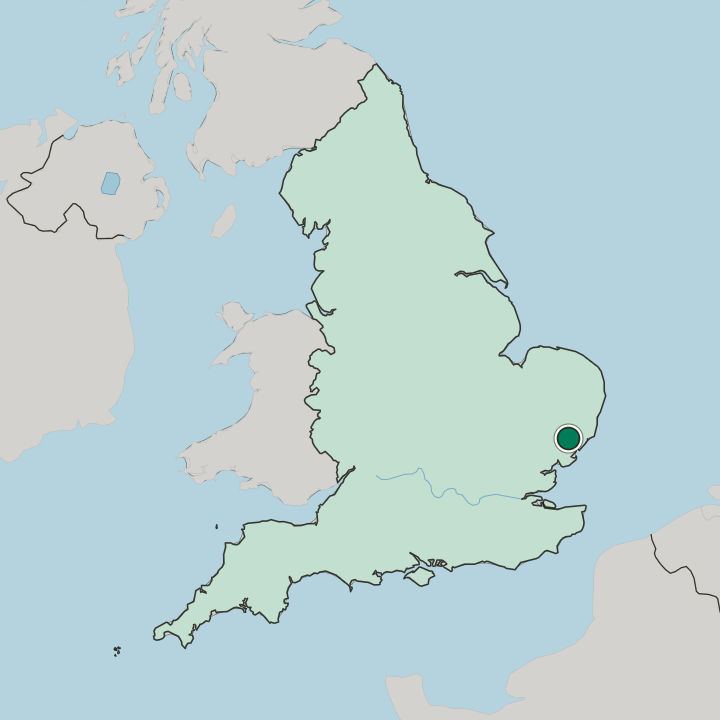
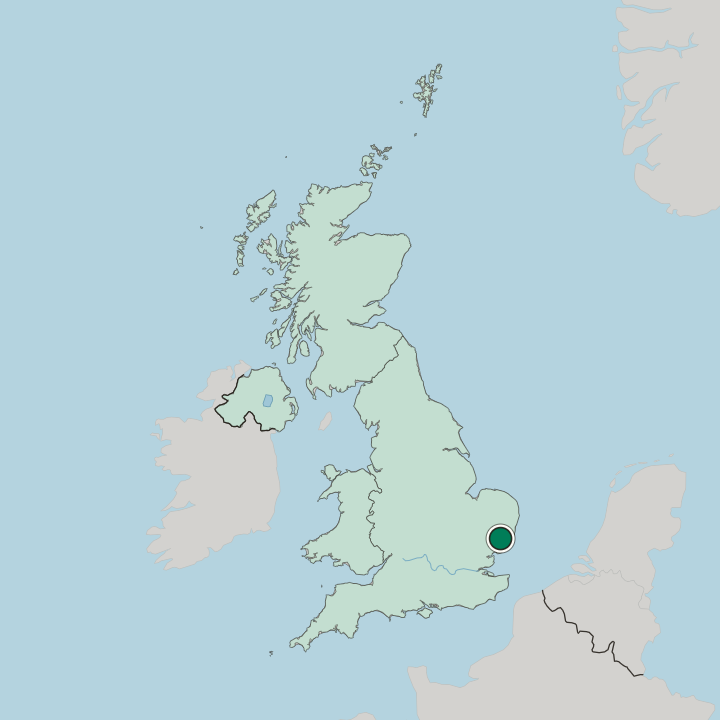
Ipswich stands on the River Orwell in Suffolk, England, at the head of the river's tidal estuary. The Orwell widens below the town into a broad reach that runs down between wooded banks to meet the North Sea. This is East Anglia.
The low country of eastern England spreads around the town, gently rolling and well drained, with Norwich away to the north in the same region. The built-up town reaches out toward Kesgrave and Woodbridge nearby.
What is the climate of Ipswich?
Ipswich has one of the drier, milder climates in the country. East Anglia sits in the lee of the higher land to the west, so less rain reaches the Orwell estuary than falls in the west of England. Winters are cool but seldom harsh, tempered by the nearby North Sea, and summers stay warm rather than hot.
The east coast draws plenty of sun. Sea breezes freshen the town in summer.
How do you get to Ipswich?
Ipswich is the hub of its county. The main railway from London runs up through the town and on into the rest of Suffolk, and its station sits a short walk from the centre. Roads converge here too, gathering traffic from across East Anglia.
For boats, the River Orwell links the town to the North Sea downstream, the route the old port was built on. From the station the market and the waterfront are both easily reached on foot.
Common questions
What is the best area to stay in Ipswich?
The old town and market: the mansion and medieval streets on foot. The Orwell waterfront: the marina and an evening by the water. The museum streets: a slower day among the collections.
Good for
More cities in England
Updated October 2026