United Kingdom · England
Where to Stay in Southampton, England
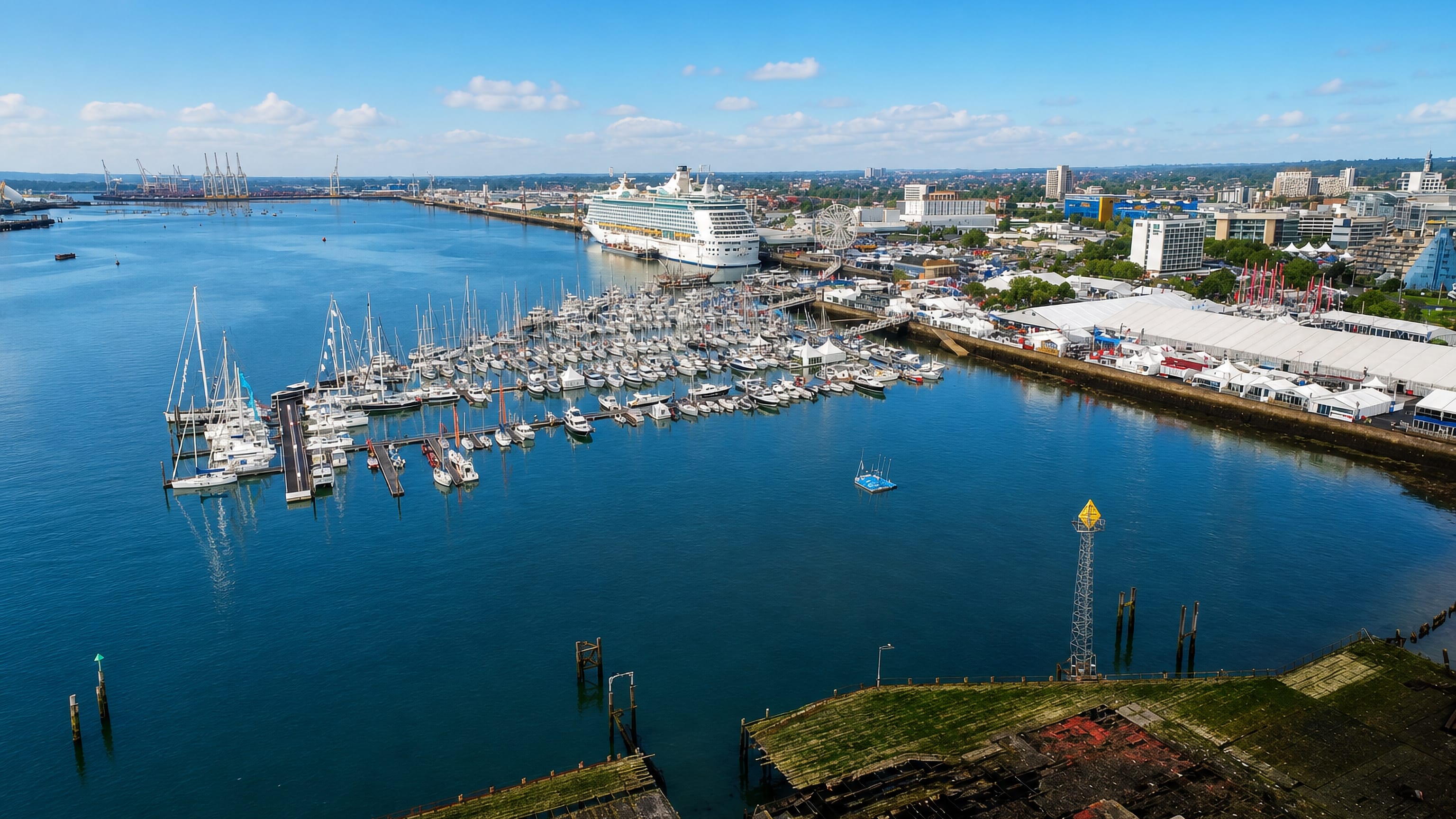
Maritime memory runs deep in Southampton, a port city in England, United Kingdom, known for its Titanic memorials and the SeaCity Museum.
Hotel links are affiliate links: booking through them may earn us a commission, at no extra cost to you. It never affects how places are ranked. How this works




Where to stay in Southampton
One neighbourhood here has its own guide — here's what it is best for.

 SouthamptonUnited Kingdom
Woolston
Woolston sits inside Southampton, its record made up of Solent Sky, the Church of St Mary and a row of listed houses.Where to stay →Hotel links are affiliate links: booking through them may earn us a commission, at no extra cost to you. It never affects how places are ranked. How this works
Find hotels in Southampton
Direct booking searches for these neighbourhoods.
Old Town and walls
The medieval quarter gathers the Tudor House and Garden, the Medieval Merchant's House and God's House Gate and Tower within a walkable blockFind hotels in Old Town and wallsQuieter, greener stays away from the waterfrontHighfield and the northern avenues
Victorian terraces around Highfield Church and the parkland give a calm residential base inland from the memorialsFind hotels in Highfield and the northern avenuesHotel links are affiliate links: booking through them may earn us a commission, at no extra cost to you. It never affects how places are ranked. How this works
Things to do in Southampton
Ranked by global recognition; descriptions from Wikidata (CC0).
Museums & Galleries
1- Southampton City Art Gallery
Churches & Religious Sites
8- St. Mary's Church, Southampton Heritage
- Holyrood Church Heritage
- St. Michael's Church, Southampton Heritage
- St Edmund Church, Southampton Heritage
- St. Mary's Church, South Stoneham Heritage
Show 3 more →
- Highfield Church Heritage
- St Joseph Church, Southampton Heritage
- St Denys Priory Heritage
Castles & Historic Sites
2- Titanic Engineers' Memorial Heritage
- Titanic Musicians' Memorial
Stadiums & Sports
1- County Ground, Southampton
Landmarks & Notable Places
4- South Stoneham House Heritage
- God's House Gate and Tower Heritage
- Cross House Heritage
- The Admiral Sir Lucius Curtis Heritage
worth knowingacross 5 categories in Southampton
About Southampton
What is Southampton known for?
Southampton is known above all as the port from which the Titanic sailed, a link kept alive by the Titanic Engineers' Memorial, the Titanic Musicians' Memorial, and the SeaCity Museum. The city wears its seafaring past openly. Behind the waterfront survive medieval streets, the Tudor House and Garden, and the Medieval Merchant's House, while the steamship SS Shieldhall and the Solent Sky aviation collection carry the story into the age of steam and flight.
What are the main landmarks in Southampton?
Southampton's landmarks trace its life on the water. The SeaCity Museum tells the port's story, and the Titanic Engineers' Memorial and Titanic Musicians' Memorial stand in remembrance nearby. In the old town, the timbered Tudor House and Garden, the Medieval Merchant's House, and God's House Gate and Tower survive from earlier centuries, alongside Holyrood Church and St Denys Priory.
The preserved steamship SS Shieldhall and the Solent Sky aviation museum round out the collection.
What is the history of Southampton?
Southampton grew up as a walled trading port in England, and its medieval prosperity still shows in the old town. Merchants built in stone and timber. The Medieval Merchant's House and the later Tudor House and Garden survive from centuries when wine, wool, and cloth moved through the quays, and the town's defences left behind God's House Gate and Tower and other stretches of wall.
Religious houses such as St Denys Priory once shaped the district around them. The modern city is bound up with the sea. As transatlantic liners made the port their home, Southampton became the departure point for the Titanic, and the disaster struck the town hard, a loss marked by the Titanic Engineers' Memorial and the Titanic Musicians' Memorial and retold in the SeaCity Museum.
The waterfront kept working through the age of the great ships, a period the preserved steamer SS Shieldhall recalls, while the Solent Sky museum records the seaplanes and flying boats once built on these shores. Holyrood Church, gutted in wartime bombing, stands as a memorial to the merchant navy.
Where is Southampton?
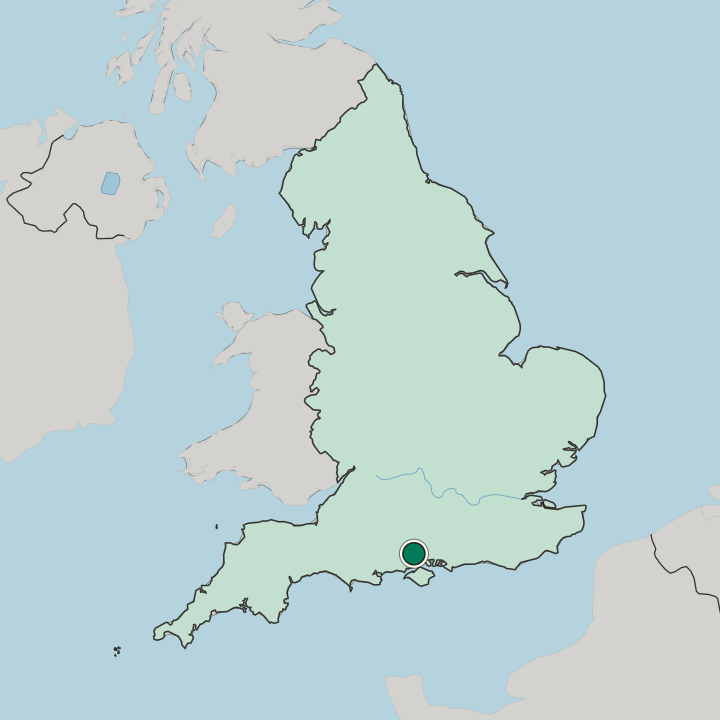
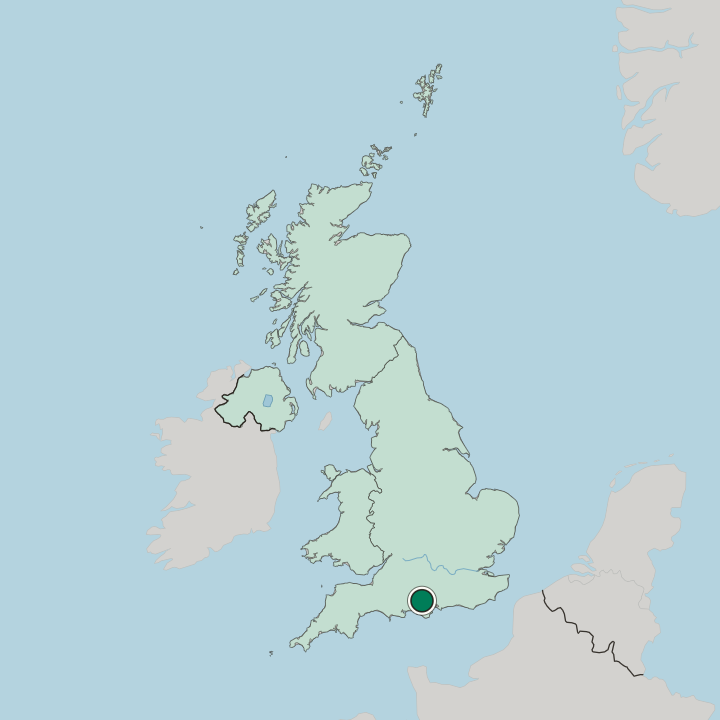
Southampton lies on the coast of southern England, a waterside city shaped by the ships that use its quays. Its historic core sits close to the shore. The medieval walls, the Tudor House and Garden, and the memorials cluster near the waterfront, while Victorian and modern districts, out towards Highfield Church and the parkland, spread inland from the old town across gently rising ground.
What is the climate of Southampton?
Southampton has a mild maritime climate, moderated by the sea on this stretch of the English south coast. Summers are warm and often bright. Winters stay comparatively soft, with frost less biting than inland, though the water keeps the air damp and cloud and rain arrive off the sea in any season.
Spring and autumn bring the changeable, breezy weather familiar along the coast of southern England.
How do you get to Southampton?
Southampton is well connected. Fast trains run from London to its central station, only a short walk from the old town and the SeaCity Museum, and motorways link the city to the wider south of England while its airport lies a little way inland. It is also a working port.
As a departure point for cruises and Channel crossings, Southampton draws many who arrive here by sea rather than by land.
Common questions
What is the best area to stay in Southampton?
Old Town and walls: History-minded visitors near the Tudor House and God's House Tower. Highfield and the northern avenues: Quieter, greener stays away from the waterfront.
Good for
More cities in England
Updated October 2026