United Kingdom · England
Where to Stay in York, England
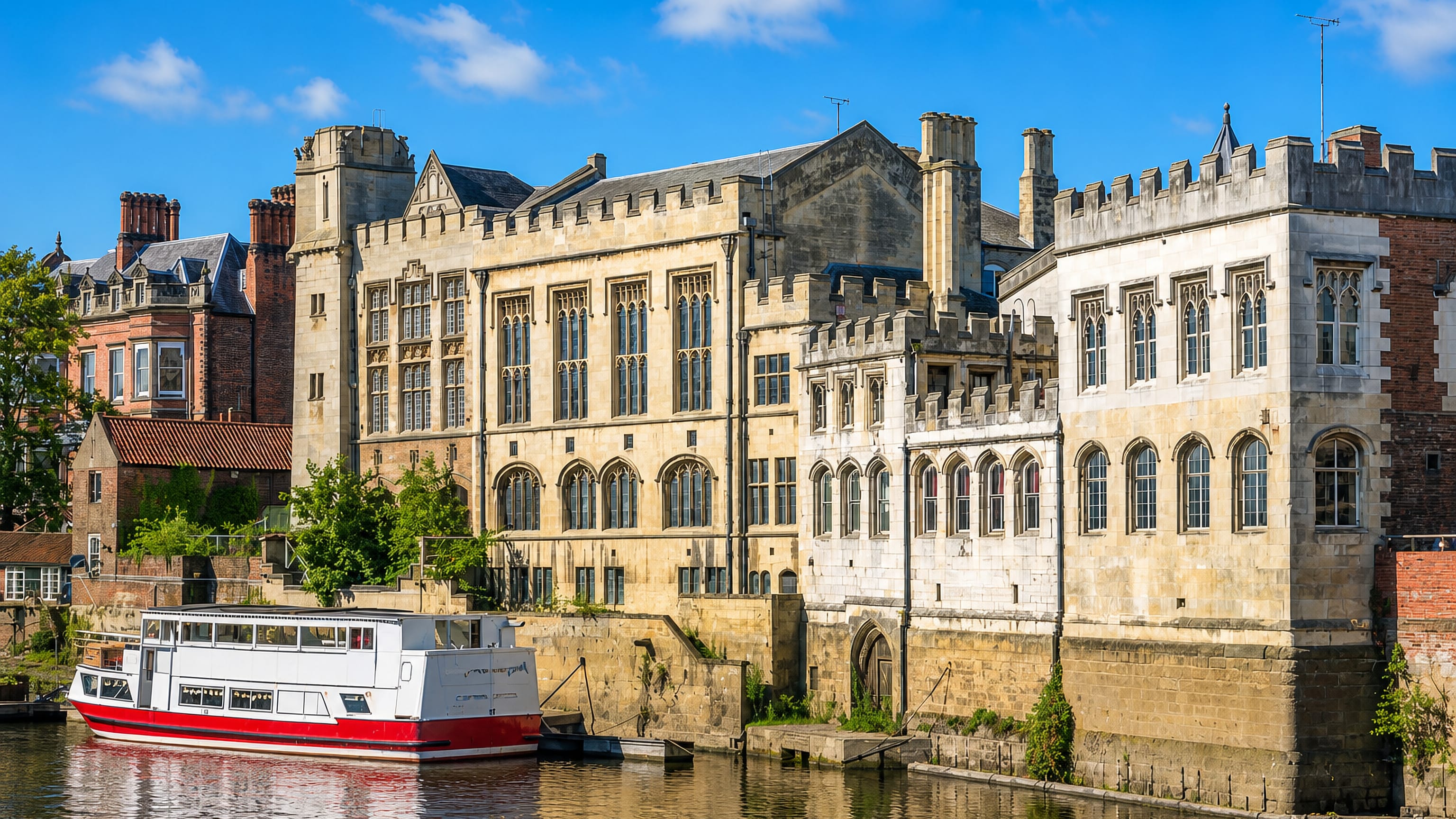
Roman walls ring the old core of York, a cathedral city in England, United Kingdom, known for York Minster and the medieval lane of the Shambles.
Hotel links are affiliate links: booking through them may earn us a commission, at no extra cost to you. It never affects how places are ranked. How this works




Where to stay in York
Where you base yourself shapes the visit — here's the character of each area.

 YorkUnited Kingdom
South Bank
South Bank is a York district of listed houses and parish churches, gathered along Bishopgate Street, The Mount, and Fulford Road.Where to stay → YorkUnited Kingdom
The Groves
The Groves is an inner district of York, a city whose landmark register runs from Roman Eboracum to York Minster.Where to stay → YorkUnited Kingdom
Layerthorpe
Layerthorpe is a district of York, close on the landmark register to Jorvik Viking Centre, Merchant Adventurers' Hall, and York Castle.Where to stay → YorkUnited Kingdom
Tang Hall
Tang Hall is a residential district of York, listed in the record for its parish churches and a handful of older houses rather than for any monument.Where to stay → YorkUnited Kingdom
Dringhouses
Dringhouses is a York suburb in North Yorkshire, bounded by the Knavesmire and the open ground of York Racecourse.Where to stay →Hotel links are affiliate links: booking through them may earn us a commission, at no extra cost to you. It never affects how places are ranked. How this works
Find hotels in York
Direct booking searches for these neighbourhoods.
Within the walls
The cobbled walled core puts the Minster, the Shambles and the Yorkshire Museum gardens within a short walk of your doorFind hotels in Within the wallsRail arrivals and museum visitorsAround the station
Streets by the National Railway Museum and the station let train travellers drop bags and walk straight into the old townFind hotels in Around the stationHotel links are affiliate links: booking through them may earn us a commission, at no extra cost to you. It never affects how places are ranked. How this works
Things to do in York
Ranked by global recognition; descriptions from Wikidata (CC0).
Museums & Galleries
3- York Art Gallery Heritage
- Goddards Heritage
- National Railway Museum
Churches & Religious Sites
8- York Minster Heritage
- Church of Holy Trinity Heritage
- Bar Convent Heritage
- St Michael le Belfrey, York Heritage
- All Saints' Church Heritage
Show 3 more →
- St Olave's Church, York Heritage
- St. Lawrence Parish Church Heritage
- All Saints, Pavement Heritage
Castles & Historic Sites
2- York Castle Heritage
- Eboracum
Parks & Gardens
1- York Museum Gardens Heritage
Landmarks & Notable Places
8- Anglian Tower Heritage
- The Herbert House Heritage
- Petergate House Heritage
- Saint Oswald's Hall Heritage
- Dringhouses Library Heritage
Show 3 more →
- Hollytree House Heritage
- Lamel Beeches Heritage
- Osbaldwick Hall Heritage
worth knowingacross 5 categories in York
About York
What is York known for?
York is known for the towering Gothic bulk of York Minster and for two thousand years of layered settlement. The Romans founded it as Eboracum. Saxons, Vikings, and later builders each left their mark, and the Jorvik Viking Centre reconstructs the Norse town that once stood here.
Visitors also come for the National Railway Museum, the enclosing city walls and their gatehouses, and the crooked medieval frontages of the Shambles.
What are the main landmarks in York?
York's main landmarks cluster tightly inside the medieval walls. York Minster dominates the skyline, one of the largest Gothic cathedrals in northern Europe. Nearby stand York Castle and its surviving Clifford's Tower, the Yorkshire Museum set in York Museum Gardens, and the parish church of St Michael le Belfrey.
The Treasurer's House and the Georgian Fairfax House add domestic grandeur, while the National Railway Museum anchors the collection just west of the walls.
What is the history of York?
York was founded in 71 as the Roman fortress of Eboracum, a base for the legions on the northern frontier. It grew fast. It became one of Roman Britain's chief cities, and when Rome withdrew the settlement passed to Anglian and then Norse hands.
Under Viking rule it became Jorvik, a trading town whose reconstructed streets the Jorvik Viking Centre now presents. The Anglian Tower survives from these unsettled centuries. Medieval York prospered on wool and church power.
The vast York Minster rose over generations, and dozens of parish churches, among them Holy Trinity, Micklegate and St Olave's, filled the walled town within its gates. Merchants raised the timbered frontages that still lean over the Shambles. York Castle guarded the crossing, its later Clifford's Tower the scene of a grim medieval siege.
Georgian builders added elegant houses such as Fairfax House and the Treasurer's House. In the nineteenth century the railway reshaped the city, a story the National Railway Museum keeps, and left York a hub of the northern network within its ancient walls.
Where is York?
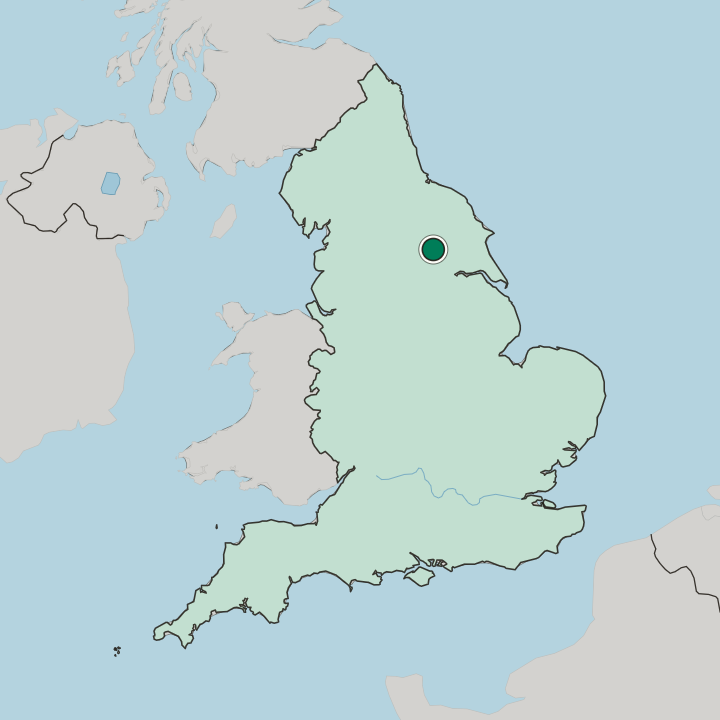
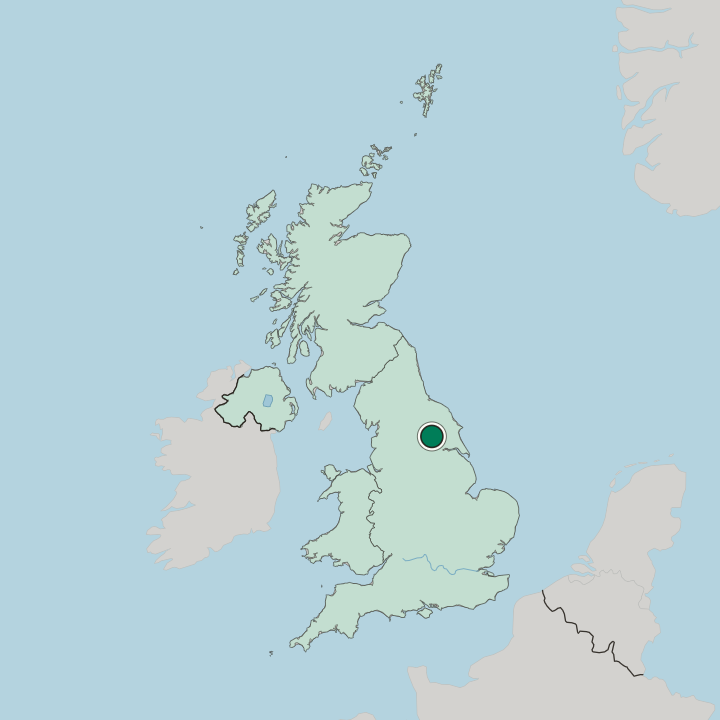
York sits on low ground in England, where its medieval core is wrapped by a near-complete circuit of stone walls. The old town is compact and walkable. Its landmarks, from York Minster to York Castle and the National Railway Museum, lie within or just beyond the gatehouses, and the wider municipal district spreads outward from this tight historic heart across the surrounding vale.
What is the climate of York?
York has a mild, damp maritime climate typical of inland England. Summers are cool and changeable rather than hot. Winters bring grey skies, frost, and occasional snow that settles on the pinnacles of York Minster, while rain can fall in any season.
The low-lying ground around the city has long left it prone to flooding when the surrounding rivers rise.
How do you get to York?
York is easy to reach by rail. It sits on the main line that links London with Edinburgh, and fast trains stop at its grand Victorian station, a short walk from the National Railway Museum and the walls. Long-distance roads feed in from the surrounding motorways.
The compact walled centre is best explored on foot once you arrive, since most of York Minster and the old town lies within the gatehouses.
Common questions
What is the best area to stay in York?
Within the walls: First-timers who want York Minster and the Shambles on the doorstep. Around the station: Rail arrivals and museum visitors.
Good for
More cities in England
Updated October 2026