Italy · Toscana
Where to Stay in Prato, Toscana
Looms made this city. Prato stands west of Florence at the foot of Monte Retaia, seat of its own province in Tuscany.
Hotel links are affiliate links: booking through them may earn us a commission, at no extra cost to you. It never affects how places are ranked. How this works


Where to stay in Prato
Where visitors usually base themselves, and why.
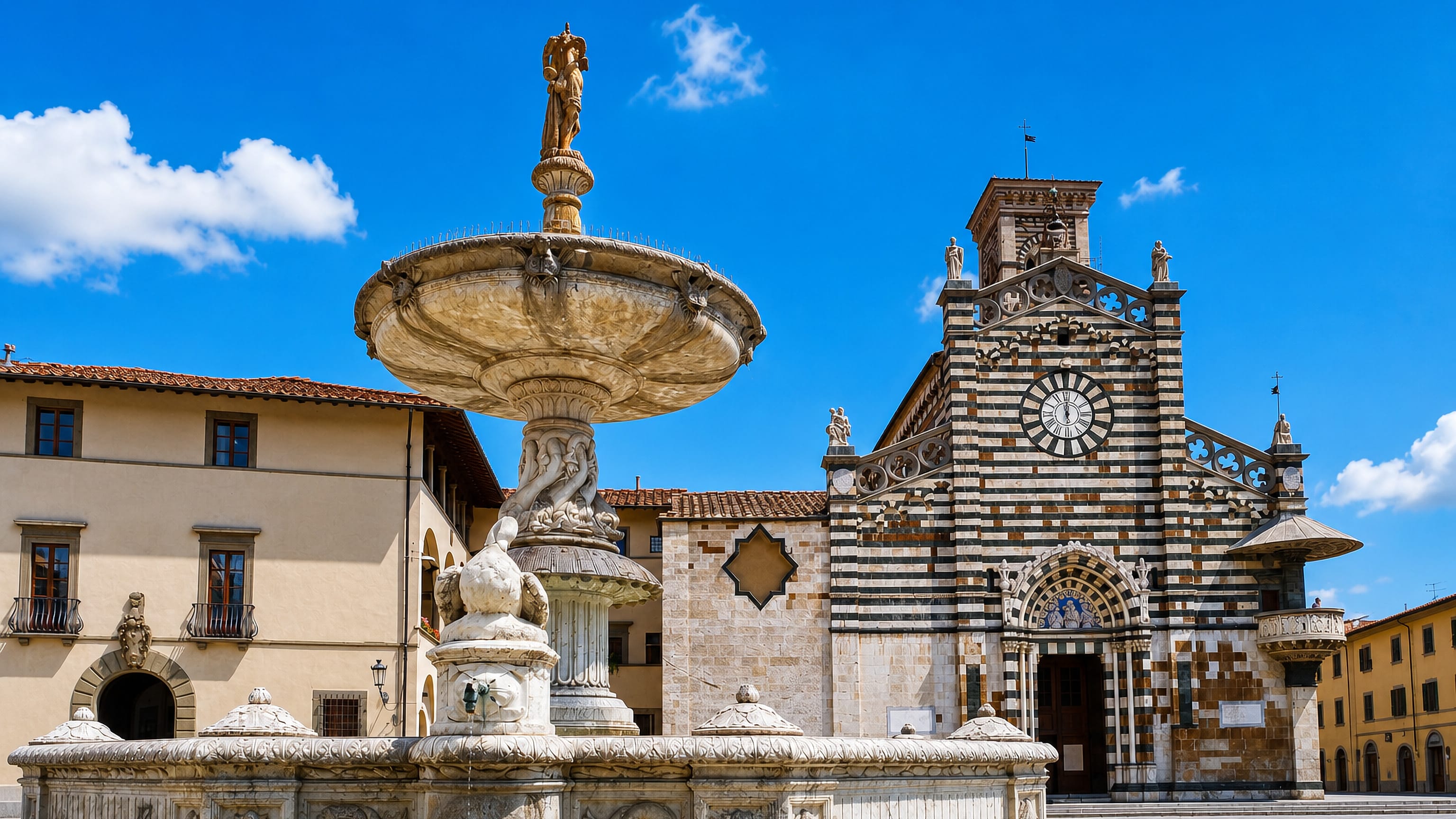
Two monuments split the choice. Rooms near Prato Cathedral put the Museo dell'Opera del Duomo across the same square, with Santa Maria delle Carceri a few streets off and the Textile Museum close enough to reach before breakfast. The castle corner reads differently.
Beds beside the Castello dell'Imperatore face a fortress wall instead of a church front, and Santa Maria delle Carceri stands directly alongside it. Both sit inside the old walls, which is why the walk between them takes minutes rather than a bus, and why the evening trade of the centre stays within reach of either. The Pecci side is the modern option.
Rooms toward the Centro per l'arte contemporanea Luigi Pecci trade medieval streets for newer building, and they sit nearest the roads covering the fifteen-odd kilometres to Florence. Past that, options fall away. San Domenico, Sant'Agostino and San Francesco all stand inside the historic streets, so a central room reaches every one of them on foot, while Monte Retaia closes the view behind the rooftops.
Outlying parishes such as San Pietro a Galciana and San Martino a Gonfienti sit well beyond walking distance. Most visitors do better in the centre.
Find hotels in Prato
Direct booking searches for these neighbourhoods.
The cathedral quarter
Prato Cathedral and its Museo dell'Opera del Duomo share one square, with the Textile Museum and San Francesco a short walk off it.Find hotels in The cathedral quarterrooms that face a fortress wall rather than a church frontBeside the Castello dell'Imperatore
The Castello dell'Imperatore holds this corner of the old centre, and Santa Maria delle Carceri stands immediately alongside its walls. Rooms are few around here — worth securing early.Find hotels in Beside the Castello dell'Imperatorevisitors here for contemporary galleries and the short run to FlorenceToward the Centro per l'arte contemporanea Luigi Pecci
The Centro per l'arte contemporanea Luigi Pecci sits out past the medieval streets, nearest the roads that cover the distance to Florence. Few places to stay nearby — book ahead.Find hotels in Toward the Centro per l'arte contemporanea Luigi PecciHotel links are affiliate links: booking through them may earn us a commission, at no extra cost to you. It never affects how places are ranked. How this works
Things to do in Prato
Ranked by global recognition; descriptions from Wikidata (CC0).
Museums & Galleries
4- Centro per l'arte contemporanea Luigi Pecci Heritage
- Textile Museum Heritage
- Museo dell'Opera del Duomo Heritage
- Centro di scienze naturali Heritage
Churches & Religious Sites
8- Prato Cathedral Heritage
- Santa Maria delle Carceri Heritage
- San Francesco, Prato Heritage
- San Domenico, Prato Heritage
- Madonna del Giglio Heritage
Show 3 more →
- Sant'Agostino, Prato Heritage
- Santa Maria della Pietà Heritage
- San Bartolomeo Heritage
Castles & Historic Sites
1- Castello dell'Imperatore Heritage
worth knowingacross 3 categories in Prato
About Prato
Cloth and biscuits carry the name.
What is Prato known for?
Textile production has run here for generations, and the Textile Museum lays out the looms, fabrics and machinery behind a trade that made Prato the second city of Tuscany after Florence. The biscotto di Prato is the other export. Contemporary art gets its own building: the Centro per l'arte contemporanea Luigi Pecci draws visitors who would otherwise stop only at Prato Cathedral.
What are the main landmarks in Prato?
Prato Cathedral holds the centre, and the Museo dell'Opera del Duomo keeps the works taken from it. Santa Maria delle Carceri answers it. The Castello dell'Imperatore sits nearby as the one secular monument of the group, standing apart from the churches around it.
San Francesco, San Domenico and Sant'Agostino take three more corners of the old streets, while the Textile Museum and the Centro per l'arte contemporanea Luigi Pecci carry the city's other two subjects. Madonna del Giglio is easy to miss.
What is the history of Prato?
Prato's founding year has gone unrecorded. What the record leaves instead is a castle with an emperor in its name, the Castello dell'Imperatore, standing in the old centre as the one fortified building among a great many churches. Prato Cathedral carries the deeper layer.
Its Museo dell'Opera del Duomo now keeps the works that came out of the building, which is the usual sign of a fabric altered often enough that the older pieces had to be moved indoors. Santa Maria delle Carceri stands close by. Cloth is the other thread of the story.
Textile production made the city's name well beyond Tuscany, and the Textile Museum now holds the looms and samples that record it, alongside the biscotto di Prato as the second thing the name travels with. Parish churches carry village names. San Pietro a Galciana, San Pietro a Mezzana, San Martino a Gonfienti and Santa Maria Assunta in Filettole all name places inside the comune's ninety-seven square kilometres rather than streets of the centre, which is how the older countryside still shows on the map.
Prato heads a province of its own. The Centro per l'arte contemporanea Luigi Pecci is the newest institution in the list, and Monte Retaia stands behind all of it, unchanged by any of these arrangements.
Where is Prato?
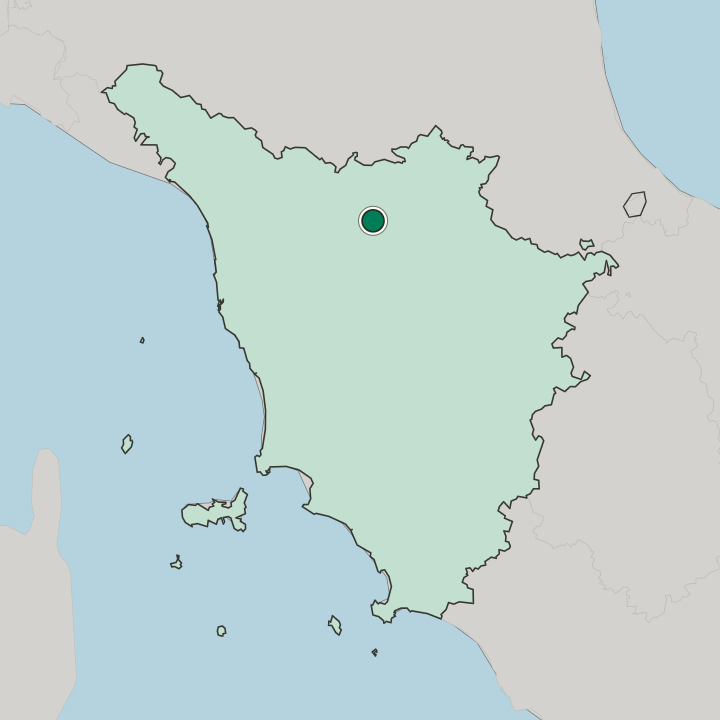
Monte Retaia rises directly behind the city. Prato sits at its foot on low ground, about sixty-five metres up, on the plain that runs west from Florence some fifteen to seventeen kilometres away. The comune covers about ninety-seven square kilometres.
That takes in outlying parishes like Santa Maria Assunta in Filettole and San Martino a Gonfienti as well as the walled centre, and it makes Prato the capital of a province carrying the same name inside Tuscany.
What is the climate of Prato?
Height decides most of it. Prato lies on the plain at roughly sixty-five metres, with Monte Retaia rising directly behind the built-up area, which places the city in a temperate band rather than a mountain one. Florence sits fifteen to seventeen kilometres off across the same low ground.
Only Monte Retaia breaks the flat, so the seasons at Prato Cathedral and the seasons out at San Pietro a Galciana amount to the same thing.
How do you get to Prato?
Florence is the way in. Fifteen to seventeen kilometres separate the two cities across flat ground, so the approach from Florence is short and stays on the plain the whole way. Prato heads its own province.
Roads out of the centre reach the outlying parishes of San Pietro a Mezzana and Santa Maria Assunta in Filettole without leaving the comune, and Monte Retaia marks where that ground ends.
Common questions
What is the best area to stay in Prato?
The cathedral quarter: stays built around the Museo dell'Opera del Duomo and the streets under Prato Cathedral. Beside the Castello dell'Imperatore: rooms that face a fortress wall rather than a church front. Toward the Centro per l'arte contemporanea Luigi Pecci: visitors here for contemporary galleries and the short run to Florence.
Good for
More cities in Toscana
Updated October 2026