Italy · Toscana
Where to Stay in Viareggio, Toscana
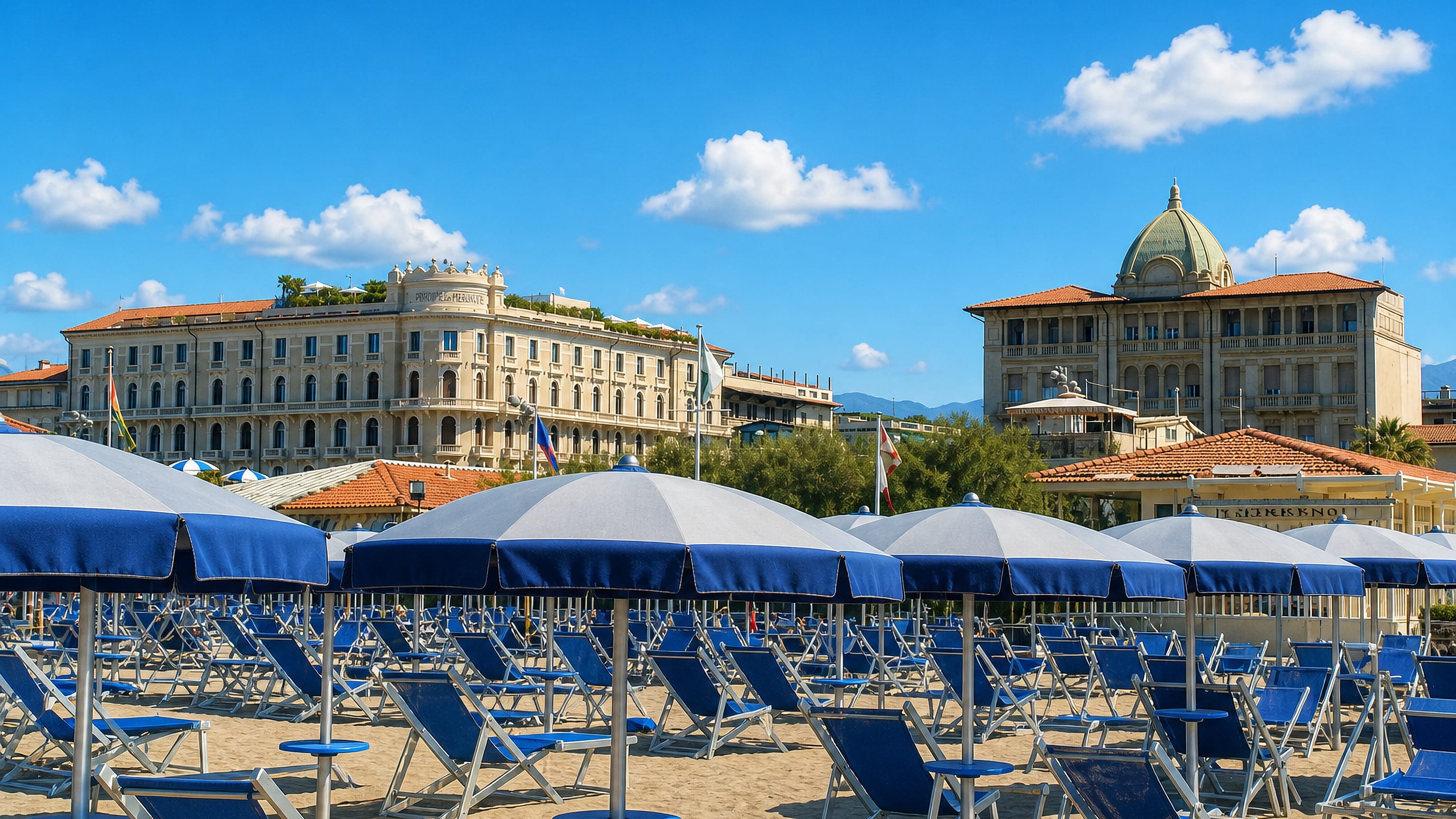
Sand, then the sea. Viareggio spreads behind its beach in Versilia, the second city of the province of Lucca.
Hotel links are affiliate links: booking through them may earn us a commission, at no extra cost to you. It never affects how places are ranked. How this works


Where to stay in Viareggio
The practical side of choosing where to sleep.
The sand fixes the first choice. Rooms along the beach front put the Tyrrhenian Sea across the road, the Chiesina dei Pescatori within reach and the whole resort side of Viareggio at the door, which is what most arrivals want. Torre Matilde offers the alternative.
Beds around that tower sit back from the water among the streets holding Sant'Antonio and the Santissima Annunziata, quieter than the front and closer to ordinary shops. Both are walkable in a small comune. Museums make a third case.
The Musei civici di Villa Paolina, Villa Argentina and the Historic House Museum of Galileo Chini gather enough between them that a stay in their part of town needs no transport at all, and the Galleria d'arte moderna e contemporanea "Lorenzo Viani" adds a fourth room to the same afternoon. Carnival changes the maths. Beds near the Carnival Museum are the ones under pressure when the parade runs, and the Museo della Marineria Alberto Gianni and the Centro Matteucci stay open to anyone who came for something quieter.
Viareggio covers barely thirty-two square kilometres, so a wrong guess costs a walk rather than a journey.
Find hotels in Viareggio
Direct booking searches for these neighbourhoods.
The beach front
The sand runs the length of this edge of Viareggio, and the Chiesina dei Pescatori keeps the fishing town's memory on the same water.Find hotels in The beach fronta base beside the oldest structure Viareggio names rather than the sandAround Torre Matilde
Torre Matilde is the one fortified building the town lists, with Sant'Antonio and the Santissima Annunziata in the same built-up streets.Find hotels in Around Torre Matildevisitors here for the archaeology, the instruments and the Galileo Chini houseThe Villa Paolina museum quarter
The Musei civici di Villa Paolina, Villa Argentina and the Historic House Museum of Galileo Chini put three separate collections in one part of Viareggio. Rooms are few around here — worth securing early.Find hotels in The Villa Paolina museum quarterstays timed to the parade rather than to the bathing seasonNear the Carnival Museum
The Carnival Museum holds the floats and the record of the parade, and the Centro Matteucci sits among the town's other exhibition rooms. Few places to stay nearby — book ahead.Find hotels in Near the Carnival MuseumHotel links are affiliate links: booking through them may earn us a commission, at no extra cost to you. It never affects how places are ranked. How this works
Things to do in Viareggio
Ranked by global recognition; descriptions from Wikidata (CC0).
Museums & Galleries
4- Carnival Museum Heritage
- Galleria d'arte moderna e contemporanea "Lorenzo Viani" (Viareggio, Italy) Heritage
- Musei civici di Villa Paolina - Museo archeologico Alberto Carlo Blanc, Museo degli strumenti musicali Giovanni Ciuffreda e Atelier Alfredo Catarsini Heritage
- Museo della Marineria Alberto Gianni Heritage
Churches & Religious Sites
3- Santissima Annunziata
- Sant'Antonio (Viareggio)
- Chiesina dei Pescatori
Landmarks & Notable Places
1- Torre Matilde Heritage
worth knowingacross 3 categories in Viareggio
About Viareggio
Carnival gives the city its name abroad.
What is Viareggio known for?
The Carnival Museum keeps that tradition indoors all year, while the Galleria d'arte moderna e contemporanea "Lorenzo Viani" holds the painting side and the Museo della Marineria Alberto Gianni the boats. The beach does the rest. Sand runs along the Tyrrhenian Sea front, backed by the villas that turned Viareggio into a resort as well as a fishing town.
What are the main landmarks in Viareggio?
Torre Matilde stands over the older streets. The Carnival Museum and the Museo della Marineria Alberto Gianni hold the two trades, floats and boats, that shaped the town. Villas hold the collections.
Villa Argentina and the Musei civici di Villa Paolina keep archaeology, musical instruments and an atelier between them, while the Historic House Museum of Galileo Chini adds a painter's own rooms. Sant'Antonio, the Santissima Annunziata and the Chiesina dei Pescatori are the churches here. The Monument to the Resistance and Peace stands apart.
What is the history of Viareggio?
The town's origin is undocumented. Torre Matilde is the oldest structure the town names, and a tower of that kind implies a coast that once needed watching rather than one built for visitors. Fishing left its own marks.
The Chiesina dei Pescatori names the fishermen outright, and the Museo della Marineria Alberto Gianni gathers what a working coast produced beside the beach. Villa Argentina and the Musei civici di Villa Paolina belong to that other thread. Painters settled here.
Lorenzo Viani has a gallery under his name and Galileo Chini a house museum under his, which is more artistic infrastructure than a comune of thirty-two square kilometres would normally carry, and the Centro Matteucci adds another exhibition address to the same short list. Carnival built the last layer. The Carnival Museum exists because the parade needed somewhere to keep its floats, and it now stands as the institution most people outside Versilia associate with Viareggio at all.
Monuments record the harder years. The Monument to the Resistance and Peace, the Monument to Campioni and the Monument to the 46th Air Brigade of Pisa are set in the streets, and Viareggio remains the second city of the province of Lucca after Lucca itself.
Where is Viareggio?
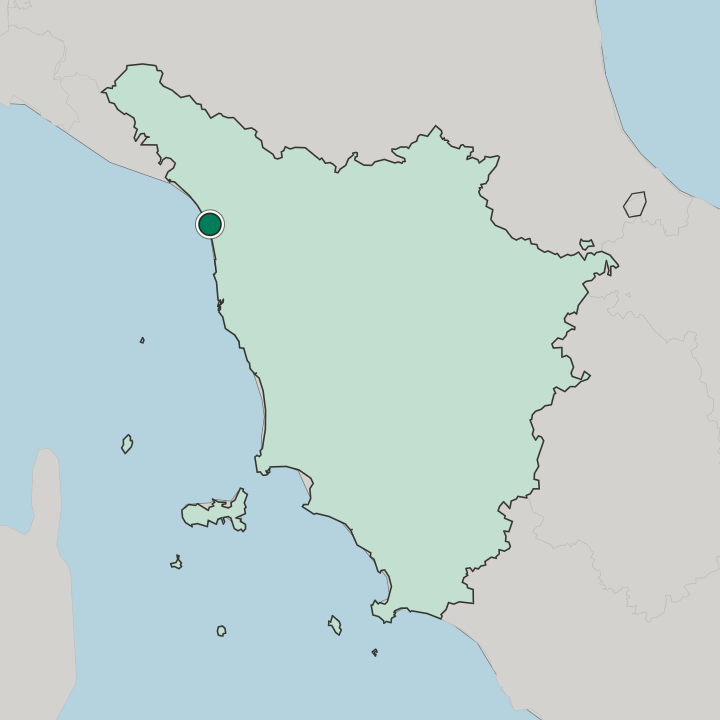
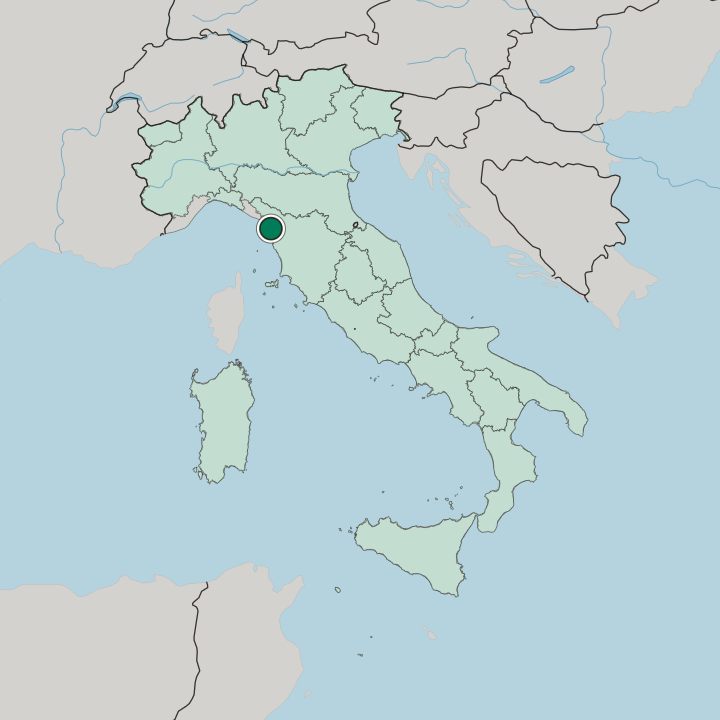
The comune covers about thirty-two square kilometres. Viareggio takes its share of the Tyrrhenian Sea front in Versilia, with hills and farmhouses standing back from the coast where the province of Lucca climbs away from the water. The province of Lucca surrounds it.
Viareggio ranks second in that province after Lucca itself, which leaves it the largest place on this stretch of Versilia coast without being its administrative centre.
What is the climate of Viareggio?
The Tyrrhenian keeps the extremes off. Water on one side and hills on the other keep Viareggio in the temperate band, which is the arrangement that made a beach town possible on this part of the Tyrrhenian Sea. Farmhouses work the ground behind.
Their fields run up into the hills that back the coast, evidence of a growing season the sea keeps from hardening, while the sand below stays the town's summer business.
How do you get to Viareggio?
Lucca is the reference point. Viareggio belongs to that province and comes second in it, so most road and rail approaches are framed against Lucca rather than against Versilia as a whole. Versilia runs along the shore.
Once inside the comune, thirty-two square kilometres is not much ground to cross, and Torre Matilde, the Carnival Museum and the beach front are all reachable without leaving the town.
Common questions
What is the best area to stay in Viareggio?
The beach front: waking with the Tyrrhenian Sea across the road. Around Torre Matilde: a base beside the oldest structure Viareggio names rather than the sand. The Villa Paolina museum quarter: visitors here for the archaeology, the instruments and the Galileo Chini house. Near the Carnival Museum: stays timed to the parade rather than to the bathing season.
Good for
More cities in Toscana
Updated October 2026