Italy · Toscana
Where to Stay in Florence, Toscana
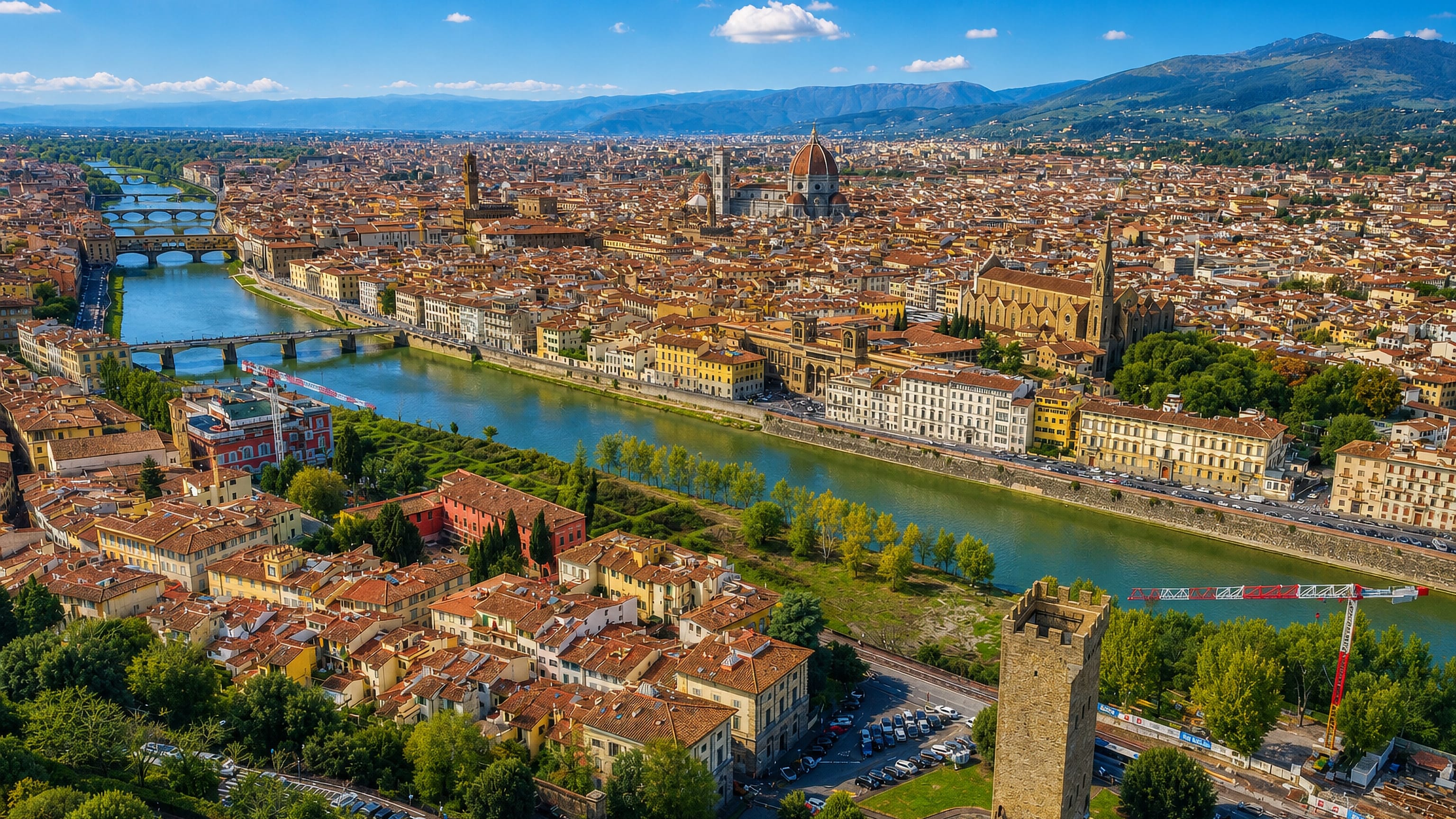
Brunelleschi's dome rules the skyline of Florence, the Tuscan capital on the Arno, known for the Uffizi Gallery and the Ponte Vecchio.
Hotel links are affiliate links: booking through them may earn us a commission, at no extra cost to you. It never affects how places are ranked. How this works


Where to stay in Florence
Where you base yourself shapes the visit — here's the character of each area.

 FlorenceItaly
Novoli
Novoli is a quarter of Florence that belonged to the former comune of Pellegrino until 1865, when the city took it in.Where to stay → FlorenceItaly
Campo di Marte
Campo di Marte forms the second borough of Florence, holding the English Cemetery, San Salvi and the Nelson Mandela Forum.Where to stay → FlorenceItaly
Coverciano
Coverciano is a neighbourhood of Florence whose register is headed by the Museo del Calcio and the church of San Pietro a Varlungo.Where to stay →Hotel links are affiliate links: booking through them may earn us a commission, at no extra cost to you. It never affects how places are ranked. How this works
Find hotels in Florence
Direct booking searches for these neighbourhoods.
Duomo and Piazza della Signoria
Inside the walking triangle of Florence Cathedral, Orsanmichele and Palazzo Vecchio, where the galleries open before the coaches unloadFind hotels in Duomo and Piazza della SignoriaEvenings in the gilders' and mosaicists' quarter below Palazzo PittiOltrarno and Santo Spirito
South-bank workshops, the Boboli Gardens gate and a Santo Spirito square that stays Florentine after darkFind hotels in Oltrarno and Santo SpiritoArrivals off a Frecciarossa who want the platforms in sightSanta Maria Novella
The blocks around the main terminus and the marble front of the Basilica of Santa Maria Novella, a short walk west of the cathedralFind hotels in Santa Maria NovellaWine bars, the leather school and a market that is not aimed at visitorsSanta Croce and Sant'Ambrogio
East of the old grid around the Basilica of Santa Croce, where Florentines still shop at Sant'AmbrogioFind hotels in Santa Croce and Sant'AmbrogioHotel links are affiliate links: booking through them may earn us a commission, at no extra cost to you. It never affects how places are ranked. How this works
Things to do in Florence
Ranked by global recognition; descriptions from Wikidata (CC0).
Museums & Galleries
8- Palazzo Vecchio Heritage
- Palazzo Pitti Heritage
- Galleria dell'Accademia Heritage
- Palazzo Medici Riccardi Heritage
- Bargello National Museum Heritage
Show 3 more →
- Vasari Corridor Heritage
- Museo del Calcio Heritage
- Museum of the Last Supper of Andrea del Sarto Heritage
Churches & Religious Sites
8- Florence Cathedral Heritage
- Basilica of Santa Croce Heritage
- Basilica of Santa Maria Novella Heritage
- Florence Baptistery Heritage
- Basilica of San Lorenzo Heritage
Show 3 more →
- Brancacci Chapel Heritage
- Santo Spirito Heritage
- Santissima Annunziata Heritage
Stadiums & Sports
2- Ippodromo delle Cascine
- Goffredo Nannini swimming pool
Landmarks & Notable Places
2- Giotto's Campanile Heritage
- Loggia dei Lanzi Heritage
worth knowingacross 4 categories in Florence
About Florence
What is Florence known for?
Florence is the city of the Italian Renaissance, capital of Toscana and the seat of the Medici. The Uffizi Gallery holds Botticelli and Leonardo, the Galleria dell'Accademia holds Michelangelo's David, and the ribbed dome Brunelleschi raised over Florence Cathedral still sets the limit no later builder crossed. Goldsmiths work the Ponte Vecchio.
Leather, paper marbling and pietra dura workshops keep the old trades alive in Oltrarno.
What are the main landmarks in Florence?
Florence puts its masterpieces in walking order. Florence Cathedral, Giotto's Campanile and the Florence Baptistery share one paved square, and Ghiberti's bronze doors still face the cathedral steps. Palazzo Vecchio holds the city government.
Its tower looks over Piazza della Signoria and the open arcade of the Loggia dei Lanzi, where the sculpture stands outdoors and unticketed. Across the Arno, Palazzo Pitti opens onto the Boboli Gardens, and the Vasari Corridor reaches it above the shops of the Ponte Vecchio.
What is the history of Florence?
Florence began as a Roman colony. Caesar's veterans took the flat ground where the road north crossed the Arno and called the settlement Florentia, and the street grid around Piazza della Repubblica still follows their surveyors' lines. The Lombards came, then the Franks.
By the twelfth century the commune governed itself, and the wool guild that washed and dyed cloth along the river paid for the first stone bridges. Money made the art. Bankers of the Arte del Cambio lent to popes and kings, the florin became the coin merchants trusted from Bruges to Alexandria, and Dante wrote his exile into the poem that fixed the language of Italy.
Cosimo de' Medici returned from banishment in 1434 and ran the republic without ever holding its highest office; his heirs commissioned Brunelleschi, Donatello and Michelangelo, and Vasari built the Uffizi Gallery to hold the ducal magistracies. The line ended in 1737, and Toscana passed to the Habsburgs. Florence was capital of the Italian kingdom from 1865 to 1871, which cost it the medieval market quarter and gave it the ring boulevards.
The Arno flooded in 1966. Mud reached the Basilica of Santa Croce and drowned the library stacks, and volunteers from across Europe dug the manuscripts out by hand.
Where is Florence?
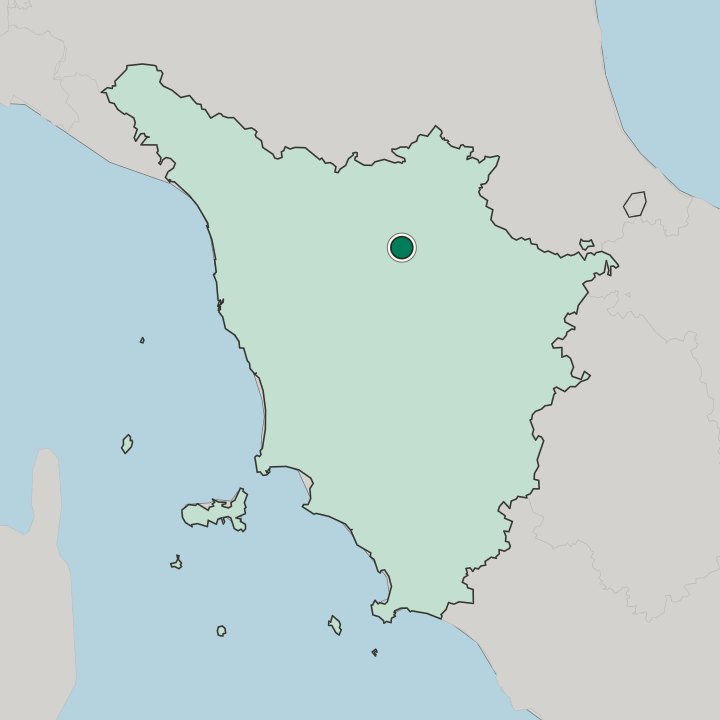
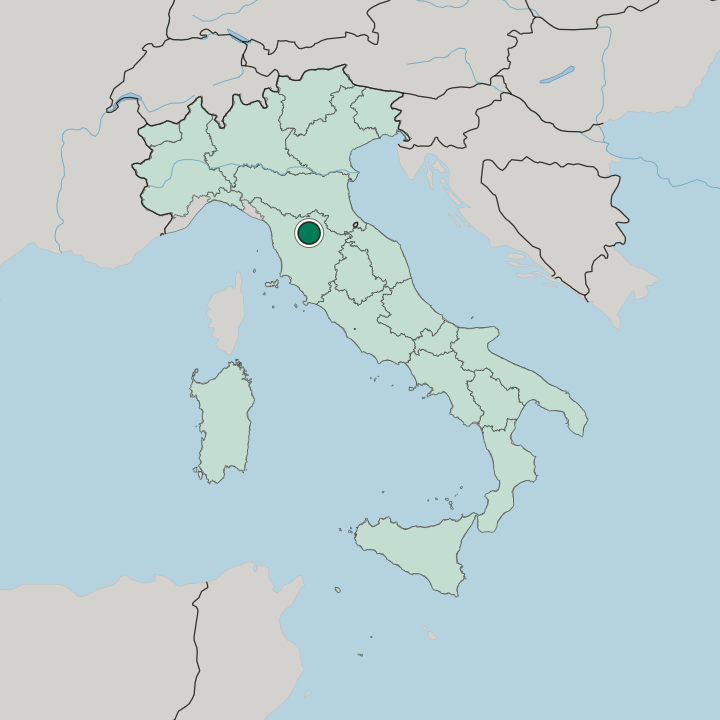
Florence sits in a basin of the Arno in central Italy, ringed by hills on every side. The river runs west through the city under the Ponte Vecchio toward Pisa and the sea. Fiesole looks down from the north-east, the Chianti ridges close the south, and the Apennine passes carry the road to Bologna.
The plain is narrow. Olive terraces and cypress rows begin within sight of the Florence Cathedral dome.
What is the climate of Florence?
Florence bakes in its own basin. The hills that make the setting also seal it: warm air settles over the Arno valley through July and August, and the city holds the heat long after sunset while the coast at Livorno stays breathable. Winters are grey and damp rather than cold, with rain off the Tyrrhenian and fog on the river.
Spring and October are the working seasons. Snow settles on Fiesole, rarely on the Arno.
How do you get to Florence?
Florence sits on the main line between Rome and Milan. Frecciarossa and Italo services call at Firenze Santa Maria Novella, a terminus that puts the platforms a few minutes on foot from the Basilica of Santa Maria Novella and the edge of the old grid. Amerigo Vespucci airport at Peretola takes the short-haul flights, and a tram line runs from it into the centre.
The A1 autostrada passes east of the city, and the Firenze-Pisa-Livorno road follows the Arno to the coast. Driving inside the walls is pointless.
Common questions
What is the best area to stay in Florence?
Duomo and Piazza della Signoria: First visits that want the Uffizi Gallery and the Bargello reachable on foot. Oltrarno and Santo Spirito: Evenings in the gilders' and mosaicists' quarter below Palazzo Pitti. Santa Maria Novella: Arrivals off a Frecciarossa who want the platforms in sight. Santa Croce and Sant'Ambrogio: Wine bars, the leather school and a market that is not aimed at visitors.
Good for
More cities in Toscana
Updated October 2026