Jordan
Muḩāfaz̧at Ma‘ān, Jordan — Towns & Travel Guide
Jordan's largest and emptiest governorate, holding the rose-red city of Petra, the sands of Wadi Rum, and the town of Ma'ān.
Hotel links are affiliate links: booking through them may earn us a commission, at no extra cost to you. It never affects how places are ranked. How this works


Towns & cities in Muḩāfaz̧at Ma‘ān
One town here has its own guide — it links to where to stay.

 Jordan
Ma'an
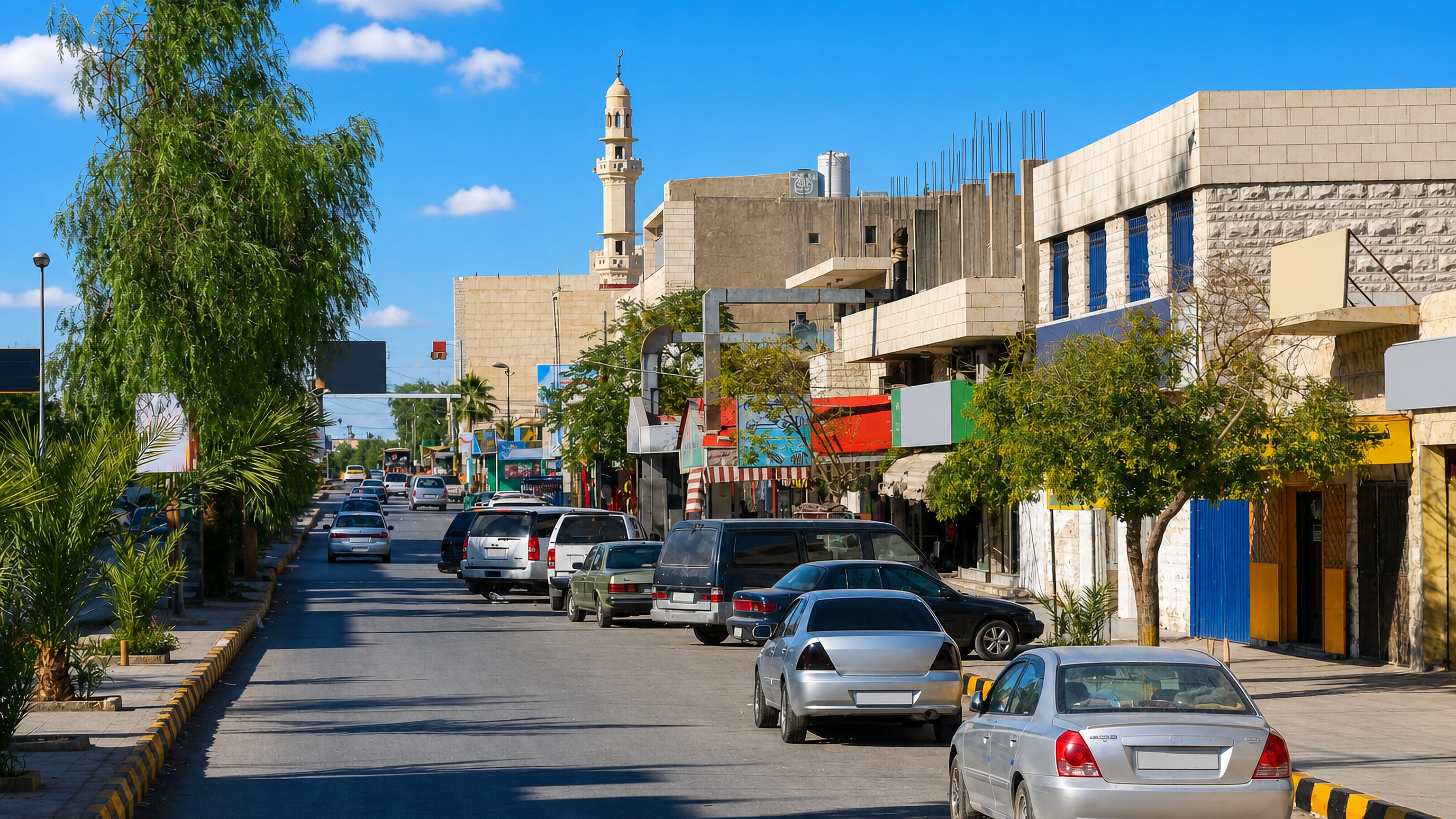
Ma'an is a city of Jordan, capital of the Ma'an Governorate, 218 kilometres south-west of Amman on the Desert Highway.Where to stay →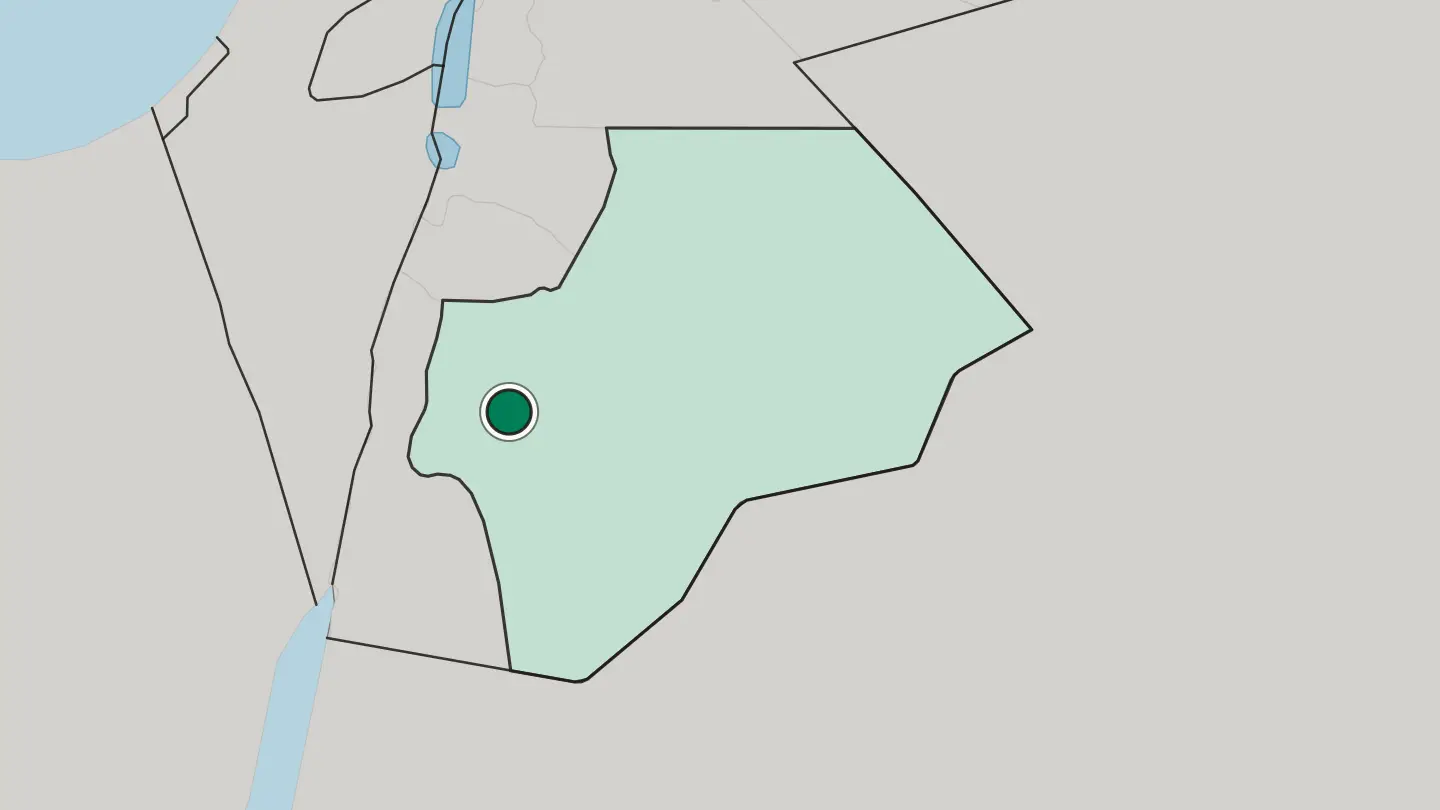
Hotel links are affiliate links: booking through them may earn us a commission, at no extra cost to you. It never affects how places are ranked. How this works
About Muḩāfaz̧at Ma‘ān
Petra is the reason most people come.
What is Muḩāfaz̧at Ma‘ān known for?
The Nabataeans carved its treasury and tombs straight into the sandstone, and the ruins sit above the town of Wadi Musa in the western highlands. South of them stretch the red dunes and sandstone towers of Wadi Rum, where Bedouin camps and guided drives fill the desert. Petra and Wadi Rum.
Between and around those two names lies the widest, driest expanse in the kingdom, running from the Sharah mountains down toward the Saudi border, and the governorate's own capital at Ma'ān is the transport town that ties the routes together.
Where is Muḩāfaz̧at Ma‘ān?
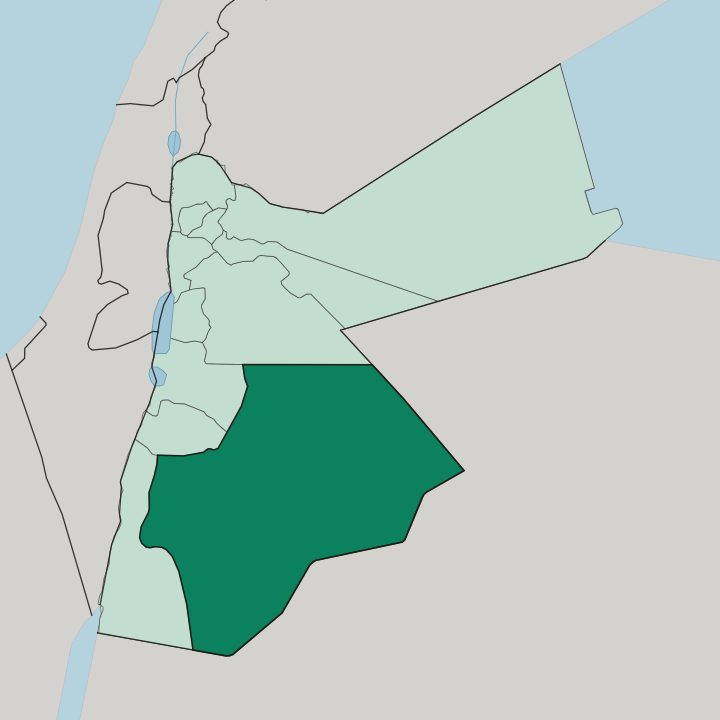
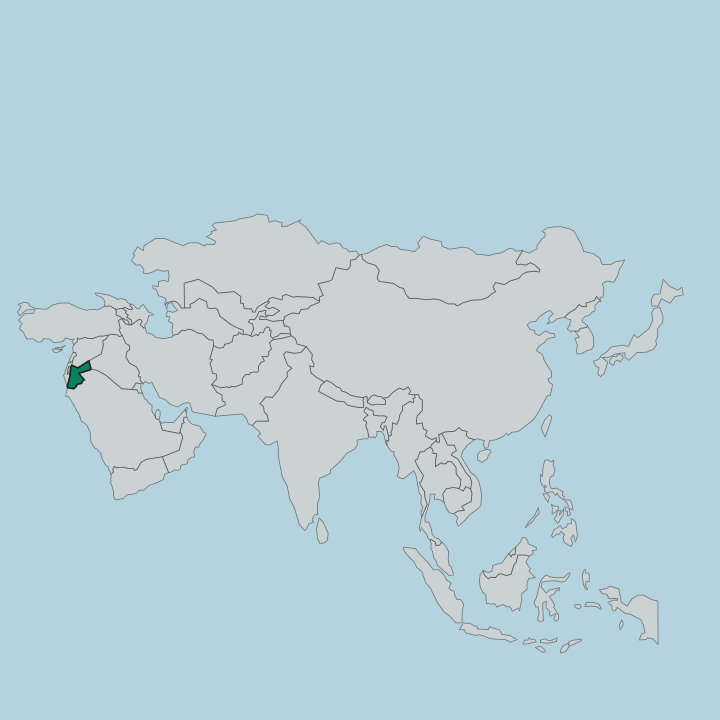
Ma'ān is the largest governorate in Jordan, covering roughly a third of the whole kingdom, and it fills the south. It lies well south of Amman, the capital. Saudi Arabia runs along its eastern and southern edges, a long desert border with no natural line to mark it.
To the west sit the smaller governorates that carry the road down to the Red Sea at Aqaba, and Amman's province closes off the north. The land is not one thing. Along the west the Sharah mountains rise in a highland spine, and it is here, on the wetter slopes above the desert floor, that Petra and the town of Wadi Musa sit.
East and south of that spine the ground falls away into open desert that reaches all the way to the Saudi frontier. Wadi Rum breaks the flat with sandstone towers and granite peaks, some of the tallest in Jordan. The capital, Ma'ān, stands on the desert side, east of the mountains on the Desert Highway.
Water is the scarce thing across all of it. What rain falls gathers on the western heights and drains away fast, and the emptiness of the east is a direct result. This is the least crowded corner of the country.
What is Muḩāfaz̧at Ma‘ān like?
Bedouin life shapes this place more than anything urban. In Wadi Rum the local tribes still run the desert camps and the guiding, and a night there means sweet tea, a fire, and the tribe's own account of the valley they have crossed for generations. That living culture sits on top of a very deep past.
The Nabataeans made Petra a caravan capital, carving temples and tombs into the cliffs, and their aqueducts and script are still legible in the rock. Ma'ān the town has its own reputation, proud and tribal, long a waypoint for pilgrims heading south toward the holy cities. Arabic is the language everywhere, in the local Bedouin dialect of the south.
The old crafts hold on. Guides read the desert, herders keep goats and camels on ground that looks bare to an outsider, and the hospitality is real rather than staged. Petra draws the world, yet the governorate's character is set by the people who live between its famous sites, not the sites alone.
It is a hard land, and the culture is shaped to it.
What is the history of Muḩāfaz̧at Ma‘ān?
The Nabataeans made this the richest desert in the region. From the last centuries BC they built Petra into the capital of a caravan kingdom, cutting its facades into the sandstone, before Rome took the city in the year 106. Empires kept passing.
Much later the Ottomans held the routes south, and their Hejaz Railway ran a line and a station through Ma'ān toward Medina. That railway drew the Arab Revolt to the governorate in the First World War. Petra, Ma'ān, and the Crusader castle at Montréal each mark a different empire that tried to hold this ground.
What is the climate of Muḩāfaz̧at Ma‘ān?
This is desert, and it is dry. The open east and the town of Ma'ān bake through long, hot summers and drop to cold, sometimes freezing nights in winter, taking barely any rain across the year. The western highlands around Petra and the Sharah mountains are the exception, cooler and catching far more rain, enough to green the slopes in spring.
Snow can settle on those heights in a cold winter. Pack for heat by day and real cold after dark.
How do you get to Muḩāfaz̧at Ma‘ān?
Most travellers drive down from Amman. The Desert Highway runs straight south to Ma'ān and on toward Aqaba, and the older King's Highway winds through the western hills past Shoubak to Wadi Musa and Petra. It is a long road either way.
Buses connect Amman with Wadi Musa and Ma'ān daily, though the desert camps of Wadi Rum are reached by four-wheel drive from the highway. Aqaba's airport, just west of the governorate, is the nearest flight for anyone skipping the drive.
Common questions
What is the best area to stay in Muḩāfaz̧at Ma‘ān?
Wadi Musa: reaching Petra's tombs at first light. Wadi Rum: a night under the Wadi Rum sandstone towers. Shoubak: the Crusader castle at Montréal. Ma‘ān: a stop on the road south to Aqaba.
Good for
More regions in Jordan
Updated September 2026