Kazakhstan
Abai Region, Kazakhstan — Towns & Travel Guide
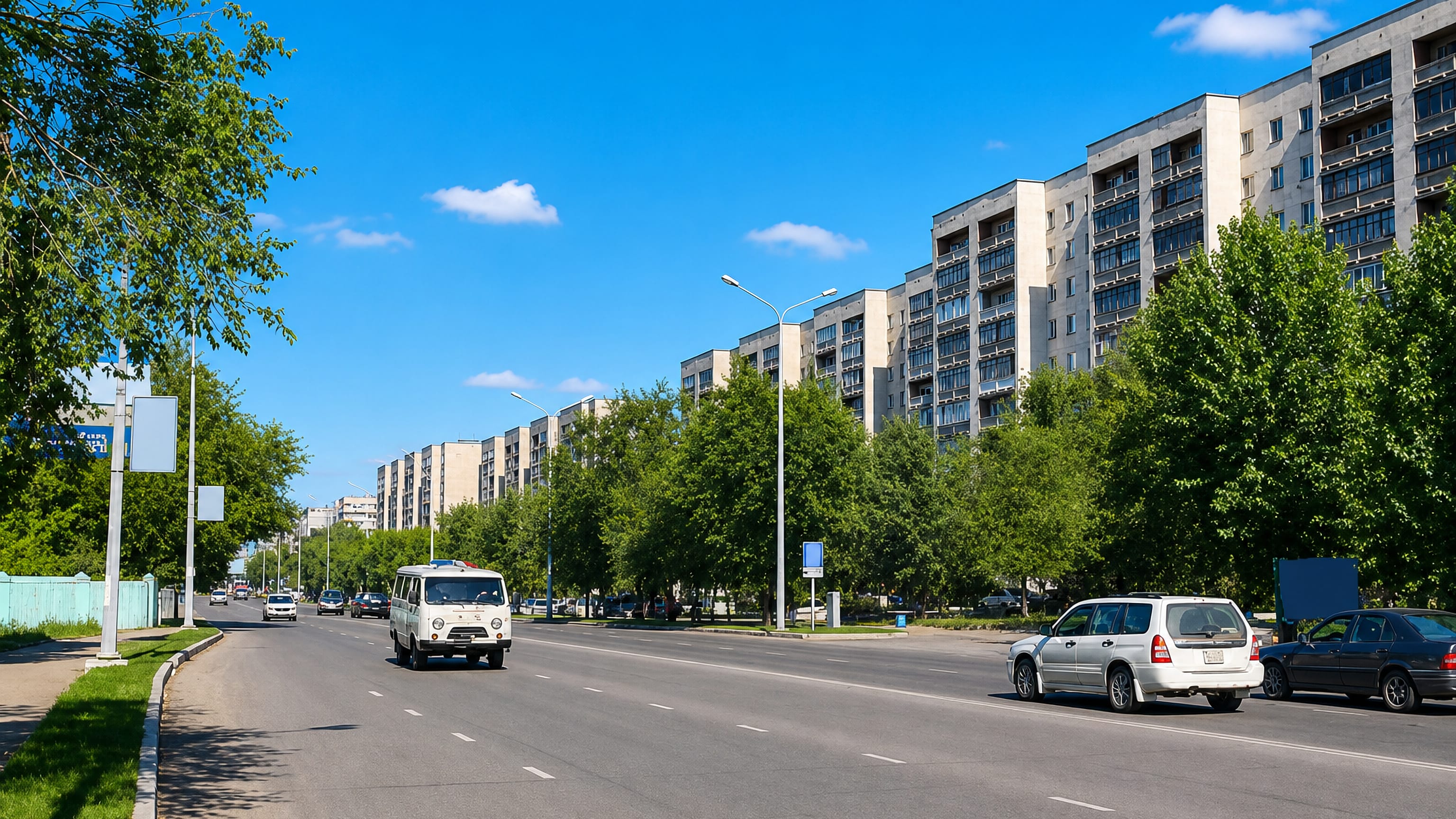
Abai Region spreads across the Irtysh steppe of eastern Kazakhstan, with the old river city of Semey at its heart.
Hotel links are affiliate links: booking through them may earn us a commission, at no extra cost to you. It never affects how places are ranked. How this works


Towns & cities in Abai Region
One town here has its own guide — it links to where to stay.

 Kazakhstan
Semey
Semey is a city of east Kazakhstan on the Irtysh, an old steppe town of poets and exiles, long known as Semipalatinsk, the land of the Kazakh bard Abai.Where to stay →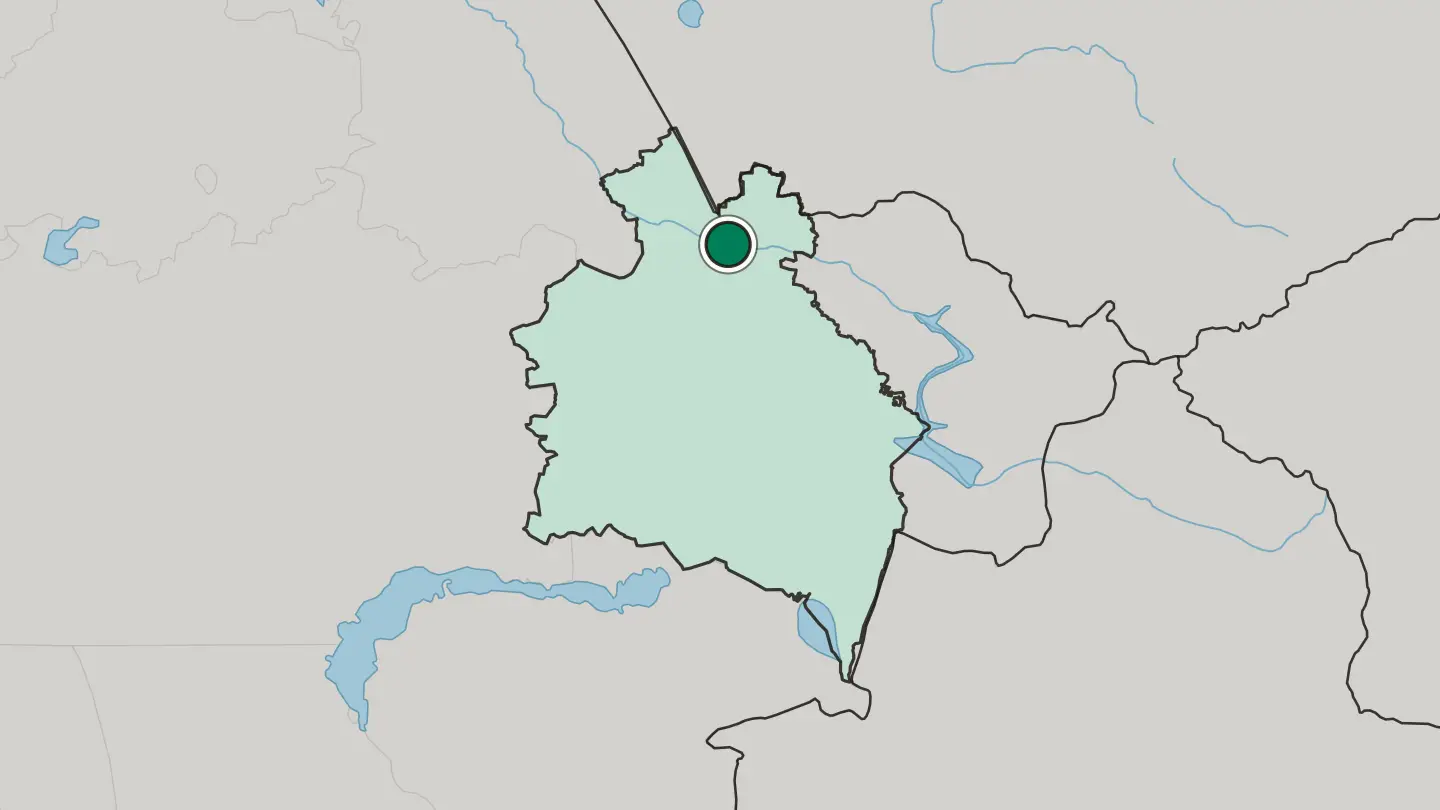
Hotel links are affiliate links: booking through them may earn us a commission, at no extra cost to you. It never affects how places are ranked. How this works
About Abai Region
What is Abai Region known for?
The region carries a poet's name. It honours Abai Qunanbaiuly, the 19th-century writer whose verse shaped modern Kazakh literature, and whose birthplace lies out in the Chingiztau hills of its steppe. Its capital, Semey, sits on both banks of the Irtysh and holds the museum to Abai as well as the house where Fyodor Dostoevsky served part of his Siberian exile.
Just as defining is a harder legacy south of the river, the Semipalatinsk Test Site, where the Soviet Union detonated hundreds of nuclear weapons before the ground fell silent.
Where is Abai Region?
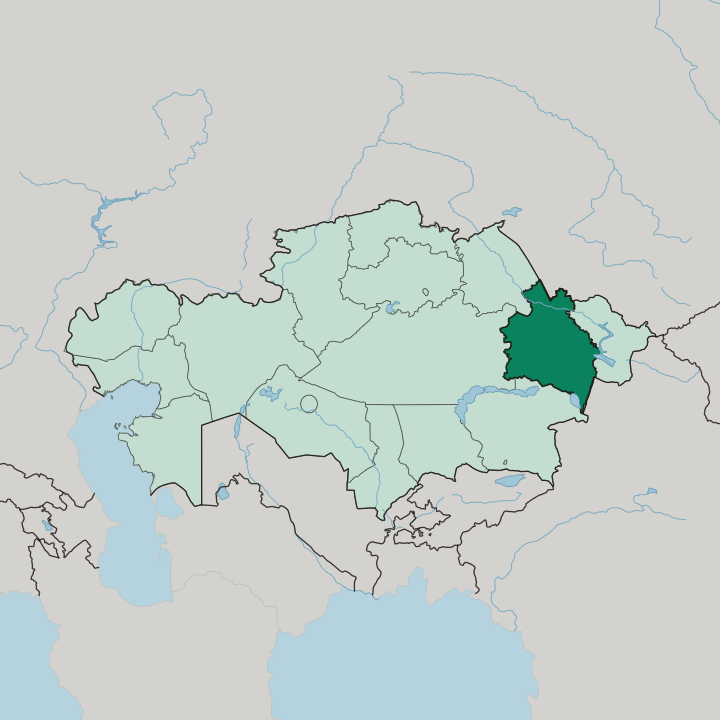
Abai Region occupies a broad slice of eastern Kazakhstan, open steppe running to the horizon in every direction. The Irtysh is its spine. The river enters from the Altai in the east and swings north-west through Semey, cutting a green irrigated valley across an otherwise dry plain before it flows on into Russia and finally joins the Ob.
North of that valley the land carries darker, more fertile soils where grain can grow; south and east it fades into semi-arid desert steppe and low, weathered ranges like the Chingiztau. The region sits against two international borders. Xinjiang in China lies to the east and Russia's Altai Krai to the north, while Pavlodar Region rounds off the north, Karaganda Region the west, and Jetisu Region the south.
It is a big, thinly peopled space. Semey anchors the north on the Irtysh, Ayagoz holds the far south on the rail line, and between them stretch hundreds of kilometres of grazing land and scattered villages. Distances here are measured in half-days, not minutes.
What is Abai Region like?
Culture here begins with one man. Abai Qunanbaiuly was born in these hills, and his poems, translations, and songs turned the spoken Kazakh of the steppe into a written literature read across the whole country. The region took his name for exactly that reason.
Semey guards the largest memorial to him, thousands of manuscripts, belongings, and paintings gathered across a sprawl of halls, and the poet's presence runs through the schools and street names as much as the museum. The city wears a second, unexpected literary badge. Fyodor Dostoevsky spent years of internal exile in Semey after his Siberian prison term, and the house he lodged in is now the only museum to him outside Russia.
Around these two names sits the older culture of the steppe: Kazakh herding traditions, mosques and Orthodox churches standing near one another, and a population that is mostly Kazakh with a long-settled Russian minority. It is a place proud of its writers and quietly marked by a heavier history.
What is the history of Abai Region?
Semey grew from a Russian fort raised beside the Irtysh in 1718, named Semipalatinsk for the ruins of a seven-chambered monastery nearby. It became a merchant town on the caravan roads, and briefly, between 1917 and 1920, the seat of the short-lived Alash Autonomy. Then came the Cold War.
From 1949 the Soviet Union tested nuclear weapons on the steppe south-west of the city, hundreds of blasts over four decades, until protest forced the ground shut in 1991. The region itself is new. It was carved out of East Kazakhstan in 2022 and given the poet's name.
What is the climate of Abai Region?
The climate is sharply continental. Lying deep inland and cut off from any softening sea, this steppe swings between hard extremes, and the two halves of the year barely resemble each other. Winters are long and bitter, with deep frost gripping the Irtysh valley and the open plains for months on end.
Summers turn dry and hot. The Irtysh keeps a ribbon of green through its valley even after the surrounding steppe has burned brown and cracked in the August heat.
How do you get to Abai Region?
Most travellers reach the region through Semey, which has an airport with flights from Almaty and Astana across Kazakhstan. Rail is the other spine. The Turkestan-Siberia Railway runs the length of the steppe through Ayagoz, linking the south toward Almaty, and a separate line carries trains north from Semey across the Irtysh toward Russia.
Roads fan out from the capital to the district towns, but they cover long, empty distances, so plan the day around the drive. From Semey you branch out to everywhere else.
Common questions
What is the best area to stay in Abai Region?
Semey: walking to the Irtysh museums and river bridge. Ayagoz: an overnight on the Turksib railway. Kurchatov: reaching the old nuclear test grounds.
More regions in Kazakhstan
Updated September 2026