Kazakhstan
Shymkent, Kazakhstan — Towns & Travel Guide
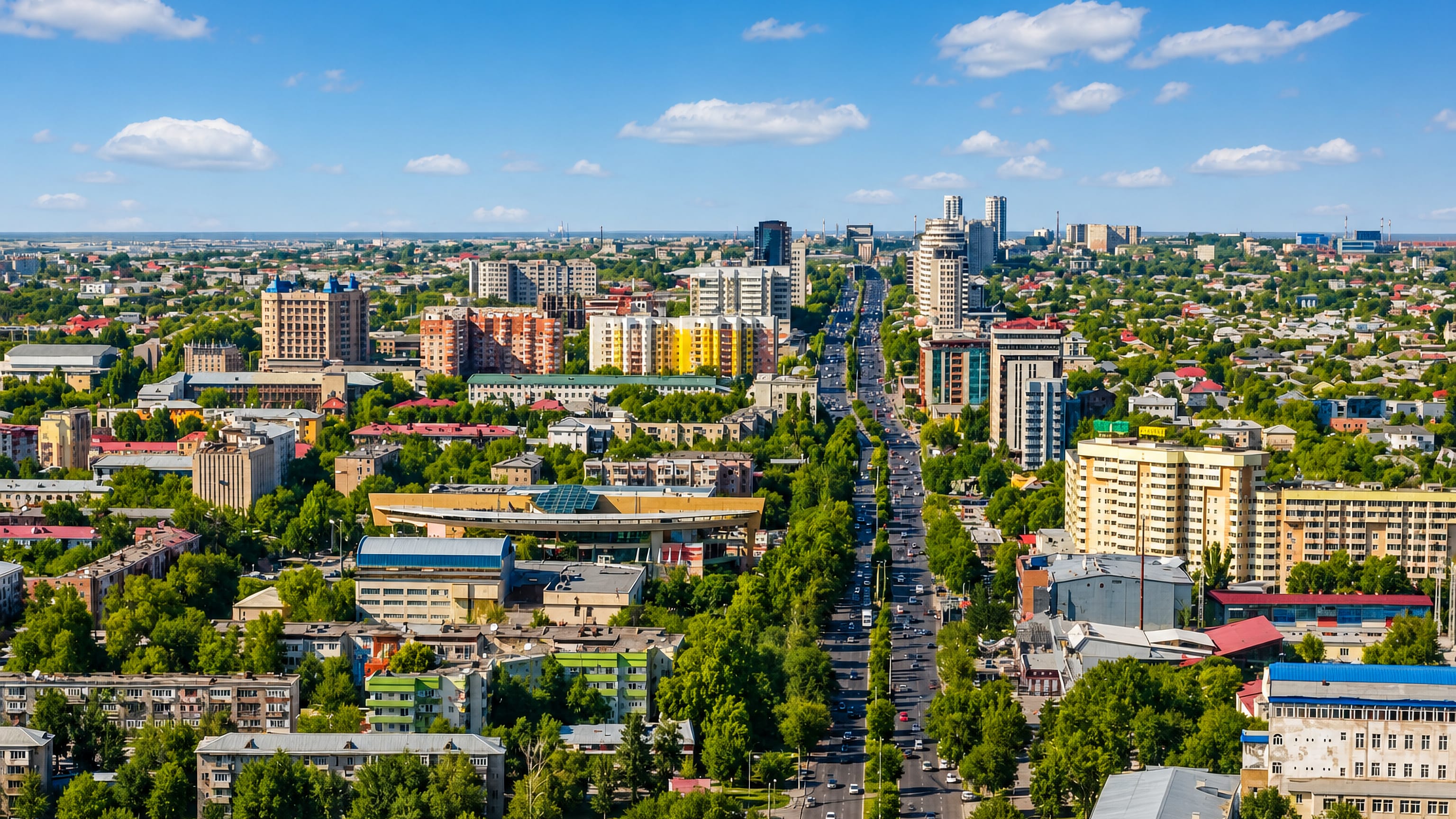
Shymkent is Kazakhstan's third city, a hot southern hub on the old Silk Road below the Karatau ridge.
Hotel links are affiliate links: booking through them may earn us a commission, at no extra cost to you. It never affects how places are ranked. How this works


Towns & cities in Shymkent
One town here has its own guide — it links to where to stay.
 Kazakhstan
Shymkent
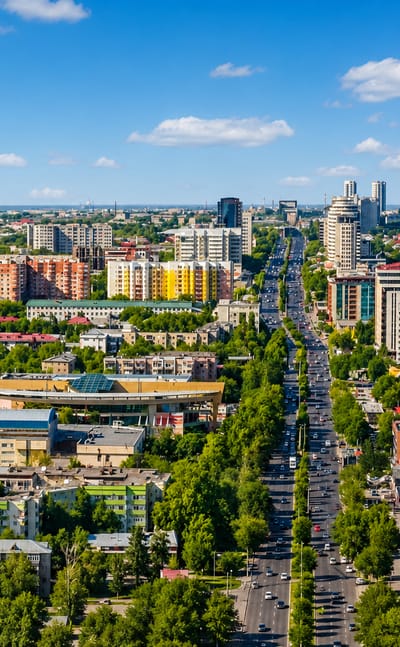
Dry heat hangs over the bazaars of Shymkent, a city in the Kazakh Desert of southern Kazakhstan, known for its old trade routes near the Uzbekistan border.Where to stay →
Hotel links are affiliate links: booking through them may earn us a commission, at no extra cost to you. It never affects how places are ranked. How this works
About Shymkent
What is Shymkent known for?
Shymkent is the largest city in southern Kazakhstan and the third biggest in the country, after Astana and Almaty. The south claims it. It grew up as a caravanserai guarding the older Silk Road town of Sayram, a short way to the east, and that trading past still frames the whole place.
Southerners call it the warmest and most Central Asian of the big cities. Uzbek is spoken in its markets alongside Kazakh, and the food, the bazaars and the unhurried pace all lean toward Tashkent rather than the northern steppe. The restored Citadel and the Zher-Ana stele on Ordabasy Square anchor the centre.
Where is Shymkent?
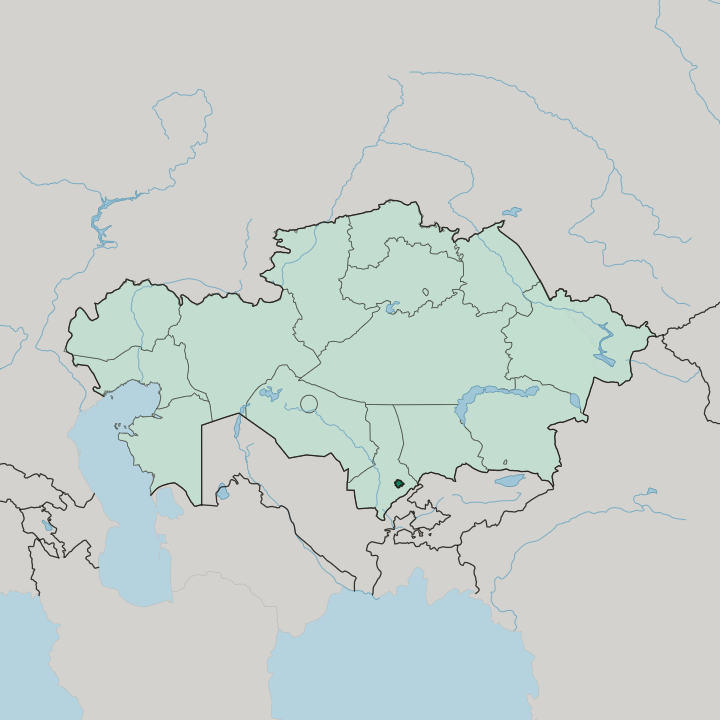
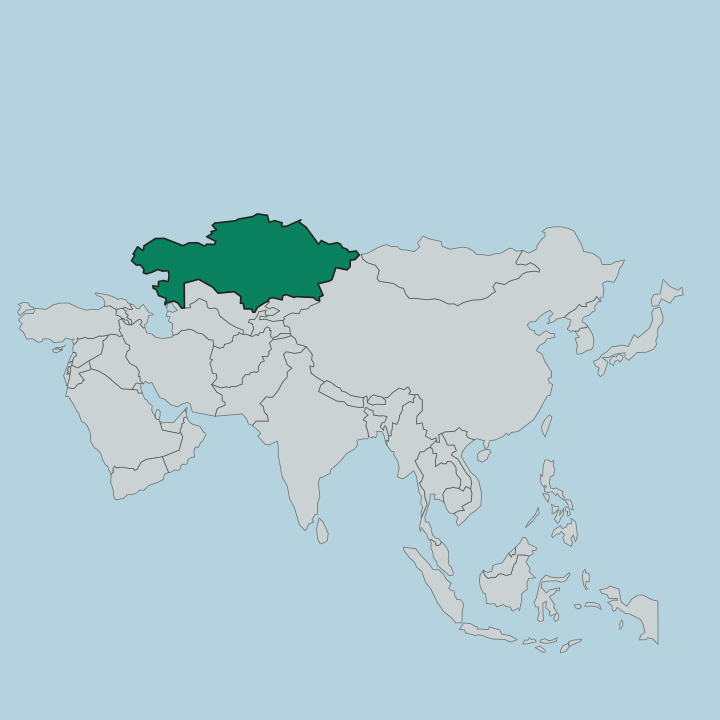
Shymkent sits in the far south of Kazakhstan, close to the border with Uzbekistan. Tashkent lies only a couple of hours south by road, nearer than any large Kazakh city. Almaty is far off to the east, and the capital, Astana, is a long haul north across the steppe.
The city fills the valley of the Sayram River, on a plain that tilts up toward the mountains. To the south rise the ridges of the Western Tian Shan, and the long spine of the Karatau Mountains runs away to the north-west. The land here climbs to roughly half a kilometre above the sea, higher than the flat steppe further north.
The old Silk Road town of Sayram lies a short way east, and Turkistan with its great shrine stands north up the road toward the Syr Darya lowlands. Water shapes the setting. The Koshkar-Ata stream threads under Ordabasy Square in the centre, and snowmelt off the southern ranges feeds the orchards of apricot, walnut and poplar that give the city its green, shaded streets.
That mix of mountain, river and warm plain is why southerners call Shymkent a garden city. It is the meeting point of steppe and range.
What is Shymkent like?
Shymkent wears its southern identity openly. It is the most Central Asian of Kazakhstan's big cities, closer in feel to Tashkent than to the northern capital. Kazakh and Uzbek are both heard in the streets, a legacy of the shared border and the trading centuries that tied this corner to the wider region.
The bazaars are the living centre of that culture. Traders haggle over melons, dried apricots, spices and bolts of cloth much as they did when caravans stopped here on the Silk Road. Street life gathers on the Arbat, the pedestrian stretch of Beibitshilik Avenue lined with buskers, souvenir stalls and tea houses.
Ordabasy Square carries a heavier weight of memory. In 1728 the three Kazakh juzes met on this ground to swear a common defence, and the tall Zher-Ana stele now marks the spot. Shrines matter here too.
Pilgrims still travel out to Sayram and up to the Yasawi mausoleum at Turkistan, and Sufi tradition remains woven through daily life. Food leans generously toward plov, samsa and grilled meat. The southern welcome is warm and unhurried.
What is the history of Shymkent?
Shymkent began in the 12th century as a caravanserai, raised to guard the older Silk Road city of Sayram just to the east. Raiders razed it often. Nomad war-bands and Mongol armies levelled the town more than once, yet the market on the caravan road always pulled it back from the ashes.
In the early 19th century it fell to the Khanate of Kokand, whose fort crowned the citadel hill until Russian troops stormed the place in 1864. Soviet rule turned it into a lead-smelting town. In 2018 Shymkent was named a city of republican significance, ranking it beside Astana and Almaty.
What is the climate of Shymkent?
Shymkent has a hot continental climate, the warmest of Kazakhstan's major cities. Summers are long, dry and fierce, with July afternoons often pushing toward 40 degrees under a hard blue sky, though the low humidity takes some of the sting out of the heat. Winters are short but genuinely cold.
January hovers near freezing, and southern winds can lift it into mild spells before a cold snap drops it well below. Most rain and snow arrive in the cooler months, when spring thunderstorms green the surrounding plain.
How do you get to Shymkent?
Most reach Shymkent by plane. Shymkent International Airport lies a short way north-west of the centre and links the city with Astana, Almaty and a handful of hubs beyond the country. Trains run in from Almaty overnight and cross the nearby border to Tashkent several times a week.
The road down to Tashkent is the quickest land route out, a matter of a couple of hours south to the Uzbek frontier. From the city, buses fan north to Turkistan and east to Sayram for the shrines.
Common questions
What is the best area to stay in Shymkent?
Al-Farabi Square: a first stay near the Arbat and city fountains. The Old Town Citadel: sleeping next to Shymkent's Silk Road core. Sayram: medieval shrines older than Shymkent. Turkistan: a pilgrimage base at the Yasawi mausoleum.
Good for
More regions in Kazakhstan
Updated September 2026