Macau · Macau
Santo António, Macau — Area Guide & Where to Stay
Santo António is the most tightly packed civil parish of the Macau Peninsula, holding the Ruins of St. Paul's and the lanes of San Kio.
Hotel links are affiliate links: booking through them may earn us a commission, at no extra cost to you. It never affects how places are ranked. How this works



Where to stay in Santo António
The practical side of choosing where to sleep.
Rooms cluster in San Kio, an early-built quarter whose lanes run from the Fortaleza do Monte hill out toward Patane and the inner harbour. Reclamation pushed the shoreline west long after those streets were laid, so the water sits further off than it once did, while the walk up to the Ruins of St. Paul's stays short. Beds inside the walled lanes are few. Pátio do Espinho suits you if a walled village behind the ruins matters more than a view over Macau.
Find hotels in Santo António
Direct booking searches for these neighbourhoods.
San Kio
A quarter of the parish, its lanes running from the Fortaleza do Monte hill across to the Patane side.Find hotels in San KioSleeping inside a walled village behind the ruinsPátio do Espinho
A walled village split into two halves behind the Ruins of St. Paul's, settled by Japanese Catholics in the 17th century. Rooms are few around here — worth securing early.Find hotels in Pátio do EspinhoHarbour-side quiet at a remove from the Historic Centre of MacauPatane
The inner-harbour edge of the parish, adjoining San Kio and running north toward Nossa Senhora de Fátima. Few places to stay nearby — book ahead.Find hotels in PataneHotel links are affiliate links: booking through them may earn us a commission, at no extra cost to you. It never affects how places are ranked. How this works
About Santo António
What are the main landmarks in Santo António?
The Ruins of St. Paul's stand here. They are one of the twenty-odd listed locations that together make up the Historic Centre of Macau. Fortaleza do Monte crowns the hill beside them, looking down over San Kio.
Pátio do Espinho, a walled village, lies directly behind the façade, split into a northern and a southern half by the street that climbs the slope.
What is the history of Santo António?
Old city wall ruins still edge the ground below the Ruins of St. Paul's. Japanese Catholics settled Pátio do Espinho in the 17th century, and the walled village has kept its two halves either side of that slope through every rebuilding since. San Kio came up early on this side of the peninsula, and reclamation later carried the shoreline out past it.
Patane took its name from a pear-shaped hill. Macau passed to Chinese rule in 1999.
Where is Santo António?
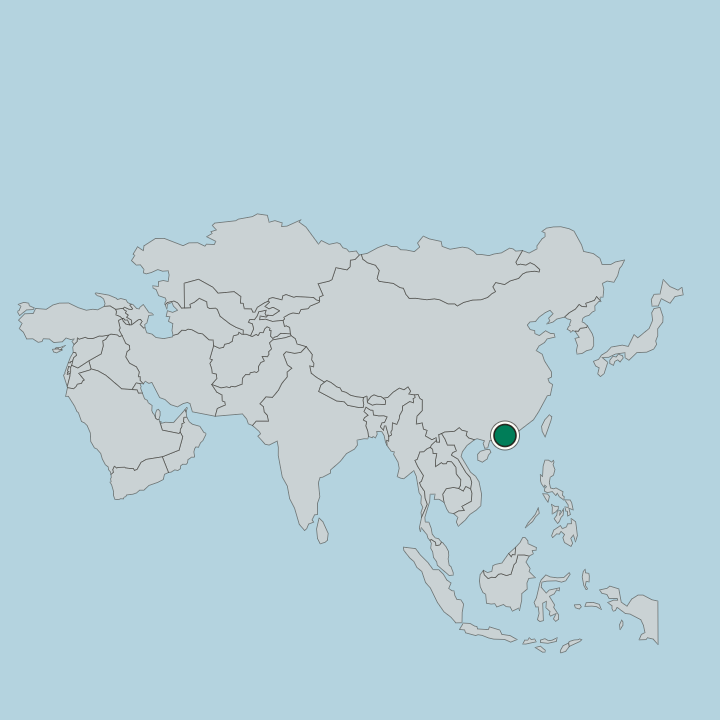
Santo António covers about 1.1 square kilometres of the Macau Peninsula, meeting Nossa Senhora de Fátima along the north, São Lázaro to the east and Sé to the south.
Common questions
What is the best area to stay in Santo António?
San Kio: Street-level Macau a short climb below the Ruins of St. Paul's. Pátio do Espinho: Sleeping inside a walled village behind the ruins. Patane: Harbour-side quiet at a remove from the Historic Centre of Macau.
Good for
More areas in Macau
Updated October 2026