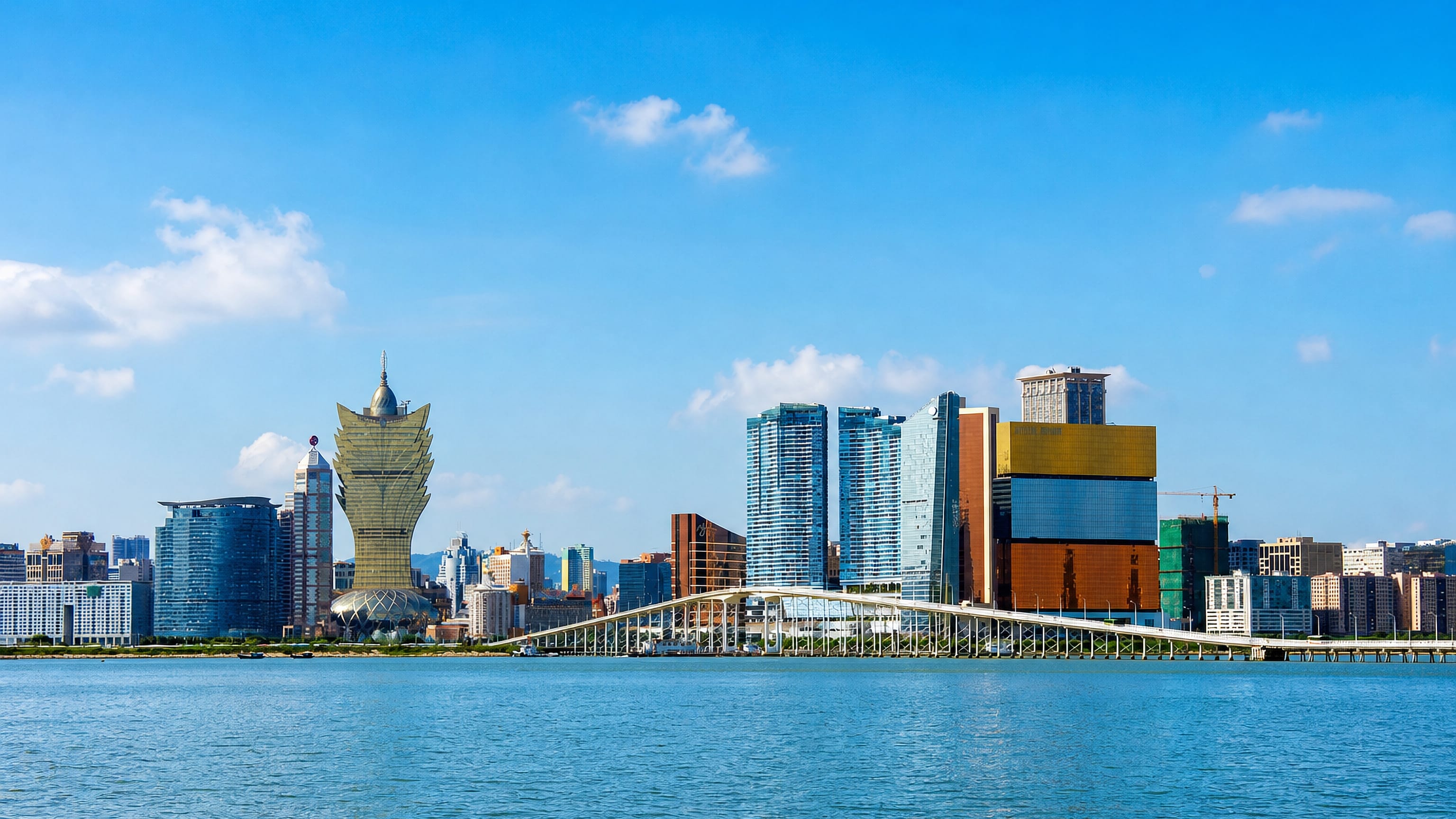
Macau
Where to Stay in Macau
Baroque facades rise over tiled squares in Macau, a Special Administrative Region on the Pearl River estuary, known for the Ruins of St. Paul's.
Hotel links are affiliate links: booking through them may earn us a commission, at no extra cost to you. It never affects how places are ranked. How this works



Where to stay in Macau
Where you base yourself shapes the visit — here's the character of each area.
 MacauMacauIsland calm on the wooded southern slopes
Coloane
The greenest, quietest of the islands, Coloane trades the crowded peninsula for wooded slopes above the estuary.Coloane →MacauMacauHistoric Centre of Macau
The Historic Centre of Macau is the UNESCO-listed old quarter of the peninsula, running from the Ruins of St. Paul's down to the A-Ma Temple.Where to stay →MacauMacauFai Chi Kei
Fai Chi Kei is a district of Macau in the Nossa Senhora de Fátima parish, on ground that began as a sandbank off the peninsula.Where to stay →MacauMacauSão Lourenço
São Lourenço is the parish at the southwest end of the Macau Peninsula, named for Lawrence of Rome and built around St Lawrence's Church.Where to stay →MacauMacauPátio do Espinho
Pátio do Espinho is the largest walled village left in the Santo António parish of Macau, on the slope behind the Ruins of St. Paul's.Where to stay →MacauMacauSanto António
Santo António is the most tightly packed civil parish of the Macau Peninsula, holding the Ruins of St. Paul's and the lanes of San Kio.Where to stay →MacauMacauPovoação do Chunambeiro
Povoação do Chunambeiro is a vanished village east of São Lourenço on the Península de Macau, gone from the official record since 1910.Where to stay →MacauMacauNossa Senhora de Fátima
Nossa Senhora de Fátima is the northernmost and largest civil parish of the Macau Peninsula, covering Areia Preta, Iao Hon and Fai Chi Kei.Where to stay →MacauMacauSão Lázaro
São Lázaro is the smallest civil parish of Macau, a pocket of the central-east peninsula ringed by Santo António, Sé and Nossa Senhora de Fátima.Where to stay →MacauMacauSé
Sé is Macau's cathedral parish, the second largest on the Macau Peninsula, reaching from Senado Square east to Guia Hill.Where to stay →MacauMacauCheok Ka Village
Cheok Ka Village is Taipa's last old village, a three-century settlement of lanes and temples under the former University of Macau campus.Where to stay →MacauMacauFreguesia de Nossa Senhora do Carmo
Freguesia de Nossa Senhora do Carmo is Macau's largest parish, covering most of Taipa and running through to Hengqin Island in mainland China.Where to stay →All neighbourhoods (25)
MacauMacauSeac Pai Van
Seac Pai Van is an area on the northeastern side of Coloane, south of the Cotai Strip, in the Macau parish of São Francisco Xavier.Where to stay →MacauMacauCotai
Cotai is a strip of reclaimed land in Macau that has joined the islands of Taipa and Coloane into one since 2005.Where to stay →MacauMacauLai Chi Vun
Lai Chi Vun is a village in southwest Coloane, Macau, named for its lychees and its bowl-shaped bay, beside the territory's largest surviving shipyards.Where to stay →MacauMacauSão Francisco Xavier
São Francisco Xavier is the Macau parish whose boundary is drawn around the whole island of Coloane.Where to stay →MacauMacauKá Hó Village
Ká Hó Village is an old Hakka settlement on Coloane, out beyond the built-up side of Macau, with Ká Hó Bay to the north.Where to stay →MacauMacauAreia Preta
Areia Preta is an industrial and residential district in the north-east of the Macau peninsula, built on a bay that has been filled since the 1930s.Where to stay →MacauMacauBarra
Barra is the harbour-mouth quarter of Macau, the ground around the A-Ma Temple where the Macau Peninsula narrows to its southern end.Where to stay →MacauMacauHipódromo
Hipódromo, or Hipódromo, is a quarter in the north-east of the Macau Peninsula, inside the parish of Nossa Senhora de Fátima.Where to stay →MacauMacauHác Sá Village
Hác Sá Village is a small fishing settlement in south-eastern Coloane, set back from Hác Sá Beach and cut off from the urban side of Macau.Where to stay →MacauMacauIao Hon
Iao Hon is a neighbourhood at the northern end of the Macau peninsula, between Areia Preta and the Portas do Cerco.Where to stay →MacauMacauPatane
Patane, or Patane, is a slope-and-shore quarter of the Macau Peninsula, running from Lam Mau Tong down to the trees of Camoes Garden.Where to stay →MacauMacauPovoação de Sam Ka
Povoação de Sam Ka is a Taipa village in Macau, named for its three founding surnames and held between Avenida Dr. Sun Yat-Sen and Lakeside Building.Where to stay →MacauMacauSan Kio
San Kio is an older quarter of Macau, built around the Three Lamps junction at the geometric centre of the Macau Peninsula.Where to stay →Hotel links are affiliate links: booking through them may earn us a commission, at no extra cost to you. It never affects how places are ranked. How this works
Find hotels in Macau
Direct booking searches for these neighbourhoods.
Macau Peninsula
The oldest streets thread from Senado Square and the Leal Senado Building up to the Ruins of St. Paul's and Fortaleza do Monte. Beds are limited here, so book early.Find hotels in Macau PeninsulaVillage-grain shophouse lanes near the Cotai zoneTaipa
Reached by the Governor Nobre de Carvalho Bridge, Taipa keeps old shophouses beside the reclaimed Cotai zone.Find hotels in TaipaHotel links are affiliate links: booking through them may earn us a commission, at no extra cost to you. It never affects how places are ranked. How this works
Things to do in Macau
Ranked by global recognition; descriptions from Wikidata (CC0).
Museums & Galleries
2- Macao Science Center
- Museum of Macau
Churches & Religious Sites
8- Ruins of St. Paul's UNESCO
- A-Ma Temple UNESCO
- St. Dominic's Church UNESCO
- St. Joseph's Seminary and Church UNESCO
- Igreja da Sé UNESCO
Show 3 more →
- St Lawrence's Church UNESCO
- Na Tcha Temple Heritage
- Capela de São Francisco Xavier Heritage
Castles & Historic Sites
2- Fortaleza do Monte UNESCO
- Guia Fortress Heritage
Landmarks & Notable Places
1- Santa Casa da Misericórdia UNESCO
worth knowingacross 4 categories in Macau
About Macau
What is Macau known for?
Macau is known for a dense weave of Portuguese and Chinese heritage packed onto the Pearl River estuary. Near the water, the A-Ma Temple keeps its incense-dark halls. The cobbled expanse of Senado Square opens onto the Leal Senado Building.
Stone stairs climb to the Ruins of St. Paul's. Its skyline mixes tiled church roofs with the towers of Hotel Lisboa Macau, a pairing found nowhere quite like it across the wider Historic Centre of Macau.
What are the main landmarks in Macau?
The main landmarks in Macau ring the Macau Peninsula and its two southern islands. The Ruins of St. Paul's crown a stone stairway above the old town, and below it Fortaleza do Monte guards the Museum of Macau. Senado Square fronts the Leal Senado Building and St. Dominic's Church.
Guia Fortress rises on its hill. The A-Ma Temple, the Dom Pedro V Theatre, and the Portas do Cerco gate complete a compact circuit that threads the Historic Centre of Macau from peninsula to shore.
What is the history of Macau?
Macau grew from a Portuguese trading settlement on the Pearl River estuary into one of Asia's oldest points of contact between Europe and China. Portuguese merchants established themselves on the peninsula in the sixteenth century, and the port became a hinge for trade running between Lisbon, Goa, and the ports of the South China Sea. Churches followed the traders.
The Ruins of St. Paul's, the surviving facade of a great seventeenth-century Jesuit college church, still marks that missionary era, and St. Dominic's Church, the Dom Pedro V Theatre, and the Old Protestant Cemetery all date from the long centuries of the colony. Fortifications shaped the town as much as faith did. Fortaleza do Monte and Guia Fortress command the high ground above the harbour, while the Portas do Cerco gate long marked the land boundary toward Zhuhai.
The A-Ma Temple predates the European arrival and gave the place its name. In 1999 the territory was returned to Chinese rule and became a Special Administrative Region, and its blend of Portuguese and Chinese fabric earned the Historic Centre of Macau recognition as a protected heritage ensemble spanning peninsula and shore.
Where is Macau?
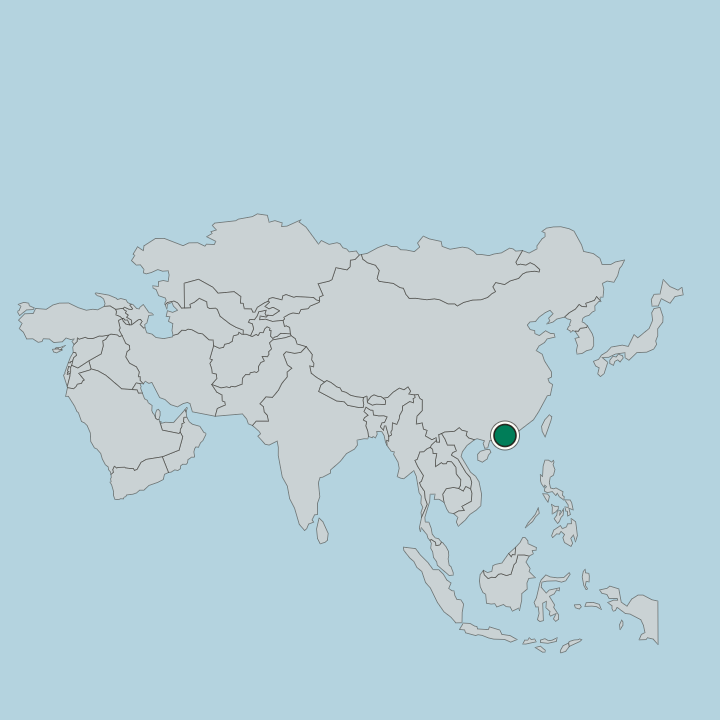
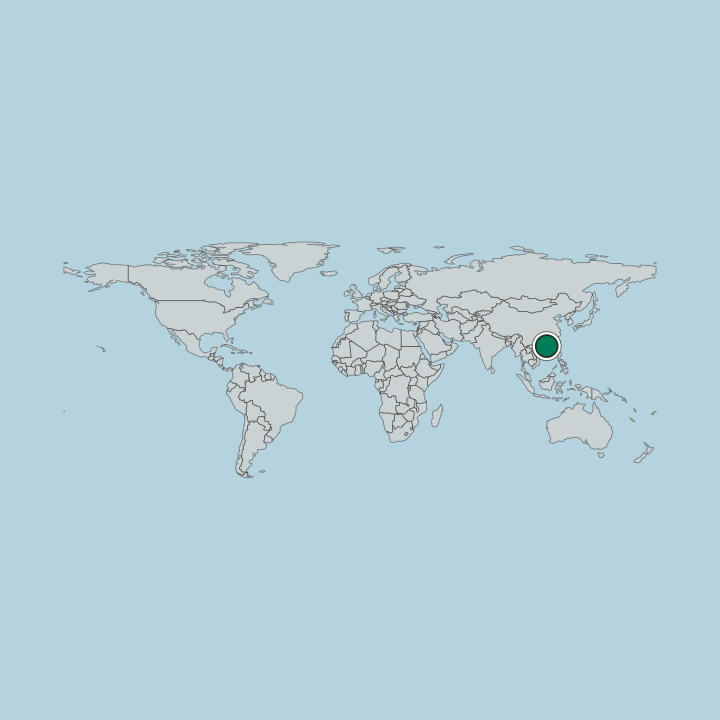
Macau sits on the western side of the Pearl River estuary. It comprises the Macau Peninsula and the islands of Taipa and Coloane, with the reclaimed Cotai zone filling the gap between them and the river running out toward the South China Sea beyond. The territory borders Zhuhai to the north and west across the Portas do Cerco boundary.
Hong Kong lies east. Low hills carry Guia Fortress and Fortaleza do Monte above a tightly built, low-lying shore in this humid subtropical corner of the coast.
What is the climate of Macau?
Macau has a humid subtropical climate shaped by the South China Sea and the monsoon. Summers are long, hot, and wet, when moist maritime air brings heavy rain and the season's typhoons can sweep in off the Pearl River estuary. Winters stay mild and drier.
The estuary keeps the peninsula and the islands of Taipa and Coloane warm year-round, with spring bringing humid, overcast spells before the heat of the summer settles over the shore.
How do you get to Macau?
Air, sea, and land all serve Macau. Macau International Airport sits on reclaimed land off Taipa and handles regional flights across the Pearl River estuary and the wider South China coast. Ferries cross from Hong Kong to the peninsula's terminals, a long-standing link between the two Special Administrative Regions.
Overland, the Portas do Cerco gate carries road traffic to and from Zhuhai. The Governor Nobre de Carvalho Bridge ties the peninsula to Taipa, so onward travel to Coloane and the reclaimed Cotai zone stays quick once you arrive.
Common questions
What is the best area to stay in Macau?
Macau Peninsula: First-time visitors who want the Historic Centre of Macau on foot. Taipa: Village-grain shophouse lanes near the Cotai zone. Coloane: Island calm on the wooded southern slopes.
Good for
Updated September 2026