Poland · Greater Poland Voivodeship · Poznań
Kotowo, Poznań — Area Guide & Where to Stay
Clay pits hold water north of ulica Kotowo, the axis of Kotowo, a brickmakers' part of Poznań that gave the Kotówka stream its name.
Hotel links are affiliate links: booking through them may earn us a commission, at no extra cost to you. It never affects how places are ranked. How this works


Where to stay in Kotowo
The practical side of choosing where to sleep.
Kotowo keeps one hotel on its own ground: Hotel Kortowo, open at ulica Kotowo 62 since 2005, with tennis courts and a restaurant beside it. The rest is houses and old farmsteads. Twentieth-century single- and multi-family building stands next to the last strips of arable land, which business and services keep taking.
Buses run the axis north to Górczyn, where trams take over for the ride into central Poznań, and ulica Głogowska carries the other direction down to the A2 at the Poznań Komorniki junction. Stay here if you arrive by car and want the motorway nearer than the market square.
Things to do in and around Poznań
Ranked by global recognition; descriptions from Wikidata (CC0).
Museums & Galleries
2- Luboń Żabikowo Heritage
- Muzeum Martyrologiczne w Żabikowie
Churches & Religious Sites
3- Saint Barbara Church in Luboń Heritage
- Saint John Bosco church in Luboń
- Saint Andrew Bobola church in Poznań
Castles & Historic Sites
1- Znicz Pamięci Pokoju w Luboniu
worth knowingacross 3 categories in and around Poznań
About Kotowo
What are the main landmarks in Kotowo?
Kotowo keeps no listed monument. The marks that fix it are working ones: the Szachty clay pits left by the brickworks, the Kotówka rising beside ulica Wandy Modlibowskiej, and the viaduct carrying ulica Opłotki over the A2. Staw Rozlany, one of the flooded pits, lies on the line where Kotowo, Rudnicze and Świerczewo meet.
The churches and memorials nearest to Kotowo belong to neighbours: Fort IX at ulica Skalna and the Mater Ecclesiae church are both in Świerczewo, and the Muzeum Martyrologiczne w Żabikowie stands in Luboń, over the city line to the east.
What is the history of Kotowo?
Kotowo was built on brickmaking. Its works went up in the construction boom at the turn of the nineteenth and twentieth centuries, when parts of Twierdza Poznań were dismantled and the city needed material; they supplied Poznań until the last of them closed in the 1990s. The digging left the pits called Szachty, which the city placed under ecological protection in the 1970s.
Kotowo sat inside the Grunwald district between 1954 and 1990, and on 21 December 2000 the city council created the Osiedle Fabianowo-Kotowo that governs it with Fabianowo and Rudnicze.
Where is Kotowo?
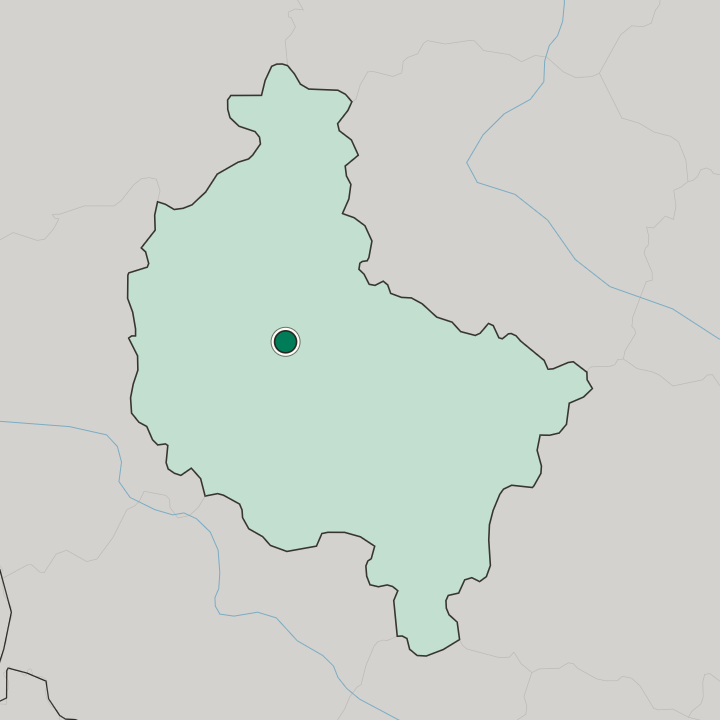
Kotowo lies south of Górczyn, between ulica Głogowska and Żabikowo in Luboń, with the Szachty pits along its northern edge and the A2 crossing the south.
Good for
More areas in Poznań
Updated October 2026