Poland · Greater Poland Voivodeship · Poznań
Ostroróg, Poznań — Area Guide & Where to Stay
Ostroróg is Władysław Czarnecki's wedge of low interwar houses in Poznań, monument-listed since 1982, between ulica Grochowska and ulica Marcelińska.
Hotel links are affiliate links: booking through them may earn us a commission, at no extra cost to you. It never affects how places are ranked. How this works


Where to stay in Ostroróg
The practical side of choosing where to sleep.
Ostroróg was drawn for houses and gardens, so its streets carry front hedges rather than hotel doors. Trams leave from ulica Grunwaldzka. The nearest rooms stand north over ulica Marcelińska on ulica Sierakowska, south down ulica Grochowska, and east around ulica Władysława Reymonta and ulica Stanisława Wyspiańskiego on Łazarz, each within a walk or a single ride from the Ostroroga tram stop.
Pick it if you want an interwar grid and a short ride, not a lobby at the door.
Things to do in and around Poznań
Ranked by global recognition; descriptions from Wikidata (CC0).
Museums & Galleries
3- Fort VII concentration camp
- The Enigma Cipher Center
- Mieszkanie-Pracownia Kazimiery Iłłakowiczówny
Churches & Religious Sites
2- Kościół Najświętszego Zbawiciela w Poznaniu Heritage
- Saint Nicholas Orthodox church in Poznań
Castles & Historic Sites
3- Imperial Castle in Poznań Heritage
- Poznańskie Krzyże
- Adam Mickiewicz Monument in Poznań
Nature & Outdoors
2- Wilson Park in Poznań Heritage
- Sołacz Park Heritage
Parks & Gardens
1- Botanical garden in Poznań Heritage
worth knowingacross 5 categories in and around Poznań
About Ostroróg
What are the main landmarks in Ostroróg?
The listing here covers a plan, not a monument. Ostroróg entered the register of monuments in 1982, in a single decision that also took in Ostrów Tumski, Śródka, Stare Miasto, Łazarz, Sołacz, and Wilda. Ulica Jana Ostroroga runs the length of the wedge, just over four hundred metres from ulica Grunwaldzka up to ulica Marcelińska, and modernist frontages face ulica Zakręt along the eastern edge.
Jerzy Pertek wrote at ulica Zakręt 12. The Izba Pamięci Jerzego Pertka opened in his flat in 1992 and closed in 2004, when the maritime writer's desk and library went to the Biblioteka Raczyńskich.
What is the history of Ostroróg?
Władysław Czarnecki drew Ostroróg at the end of the 1920s as a peripheral estate reaching past Aleja Okrężna, and it soon became one of the more sought-after addresses in Poznań. The tram came in 1934 and ended here. Passengers for Abisynia walked the last muddy kilometre of ulica Grunwaldzka until an extension opened on the final day of 1936.
Nazi Germany then seized the estate. German trustees took the houses and passed them to Baltic German settlers. Grunwald held Ostroróg from 1954 to 1990, the northern half became Osiedle Jana Ostroroga in 2009, and that unit merged into Osiedle Stary Grunwald at the start of 2011.
Where is Ostroróg?
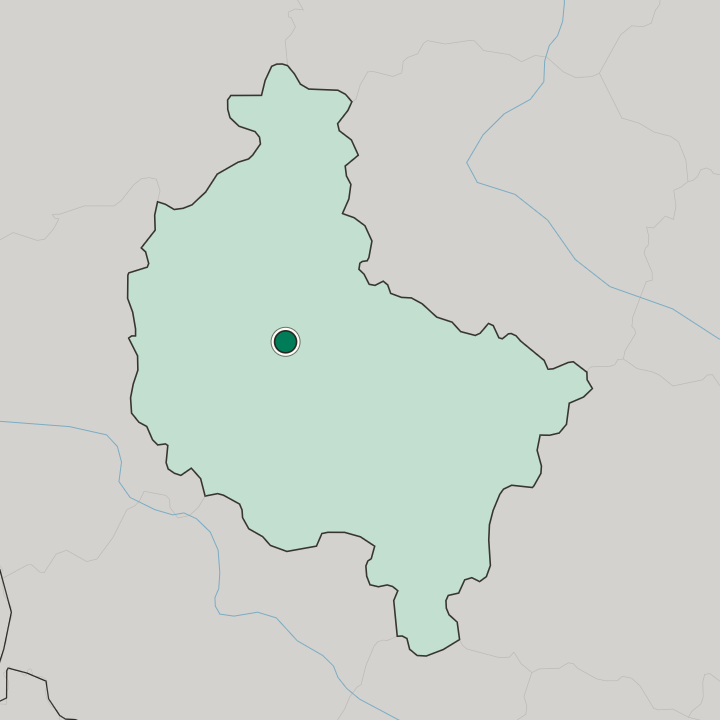
Ostroróg is a wedge west of the Poznań centre, closed by ulica Marcelińska, ulica Grunwaldzka, ulica Grochowska, and the plot backs along ulica Zakręt.
Good for
More areas in Poznań
Updated October 2026