Poland
Warmian-Masurian Voivodeship, Poland — Towns & Travel Guide
Warmian-Masurian Voivodeship is Poland's lake country in the northeast, over 2,000 Masurian lakes around the capital Olsztyn.
Hotel links are affiliate links: booking through them may earn us a commission, at no extra cost to you. It never affects how places are ranked. How this works


Towns & cities in Warmian-Masurian Voivodeship
Pick a town or city — each links to where to stay.
 Poland
Olsztyn
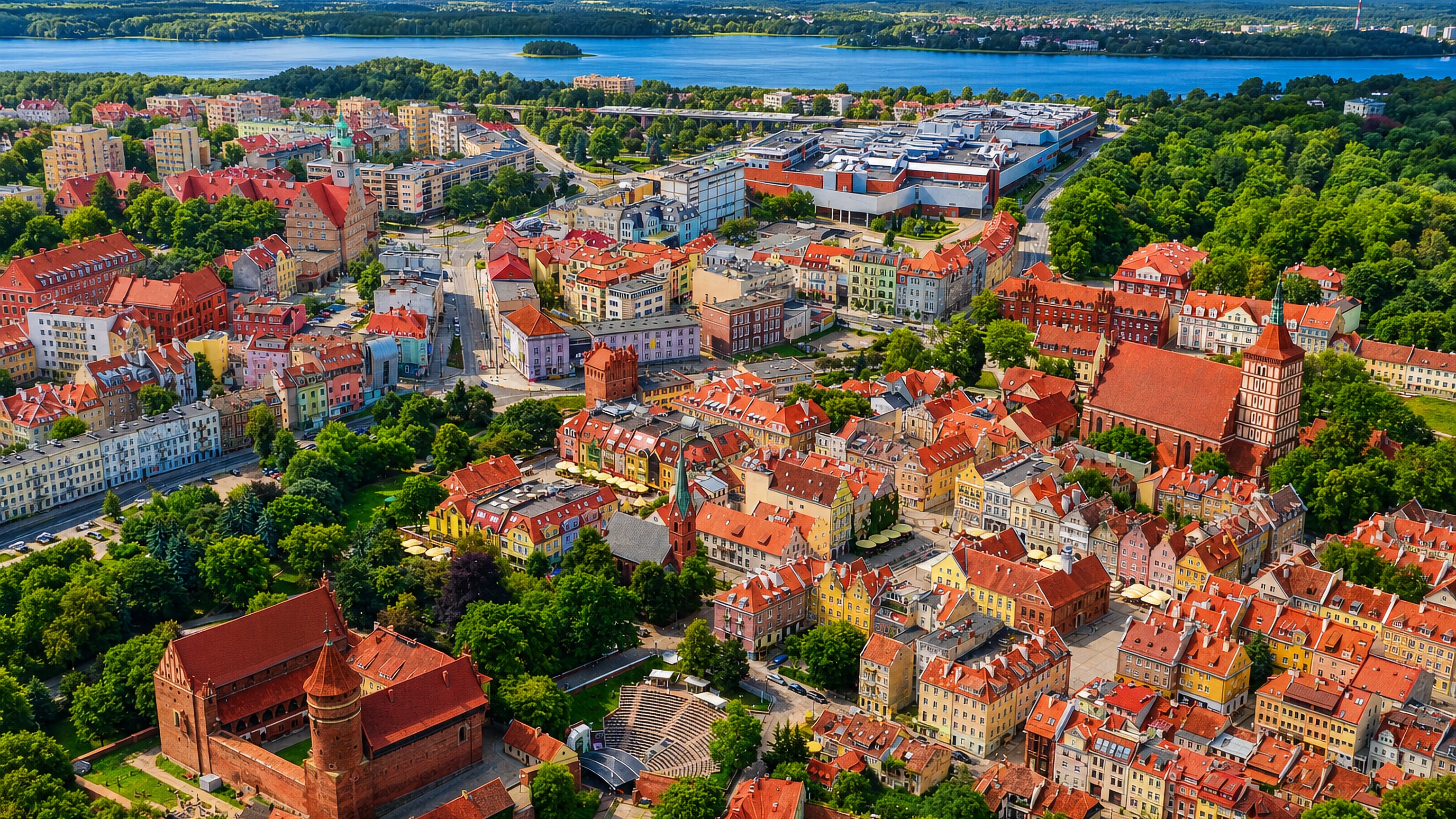
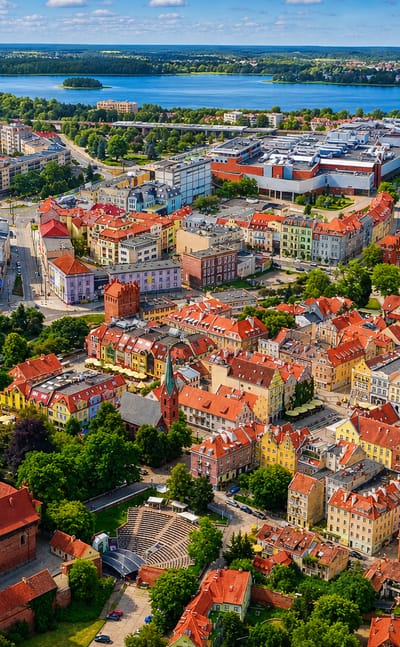
The Łyna River threads Olsztyn, a Gothic-cored city in northern Poland ringed by Masurian lakes, capital of the Warmian-Masurian Voivodeship.Where to stay →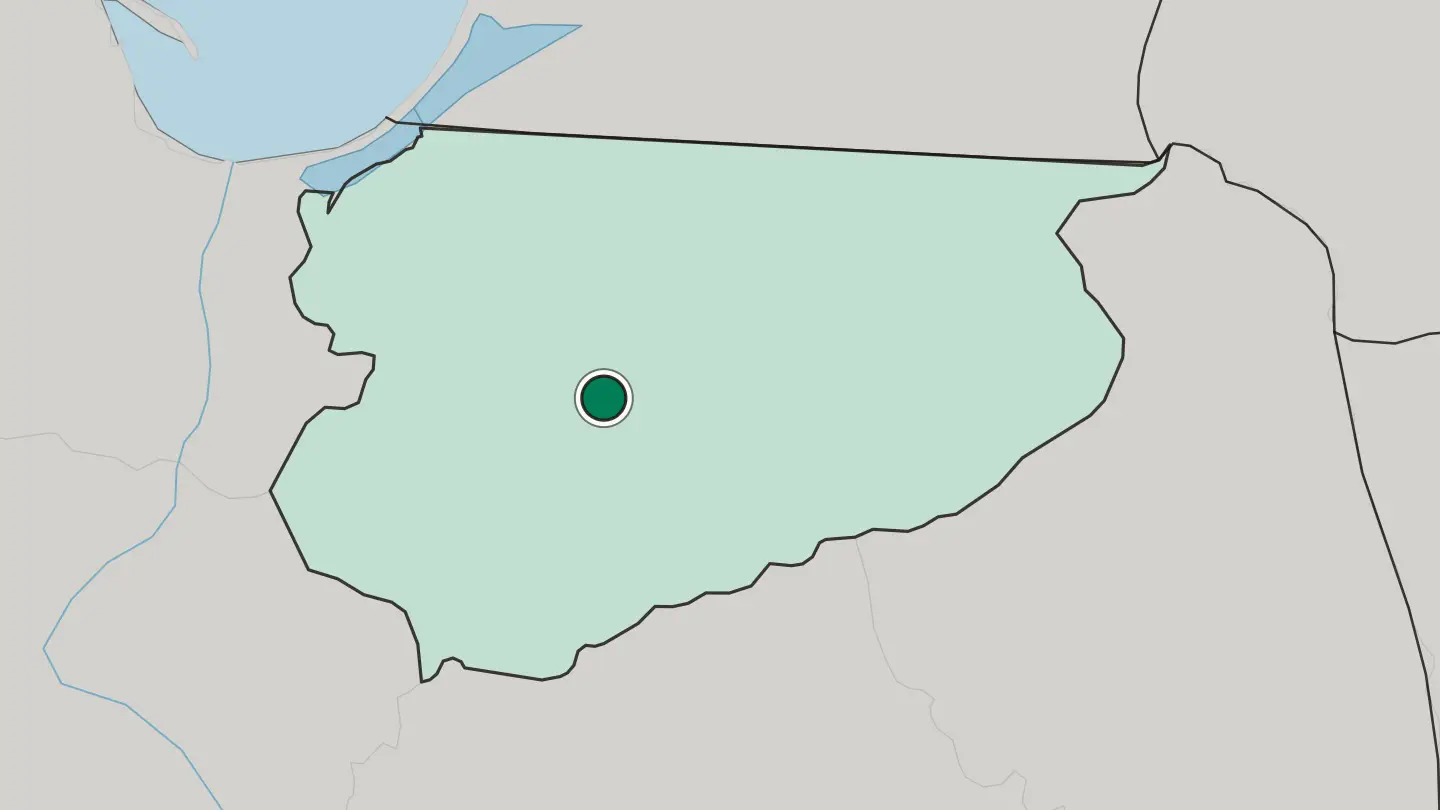
 Poland
Elbląg
Elbląg is an old Hanseatic city in northern Poland near the Vistula Lagoon, famous for its canal of ship railways.Where to stay →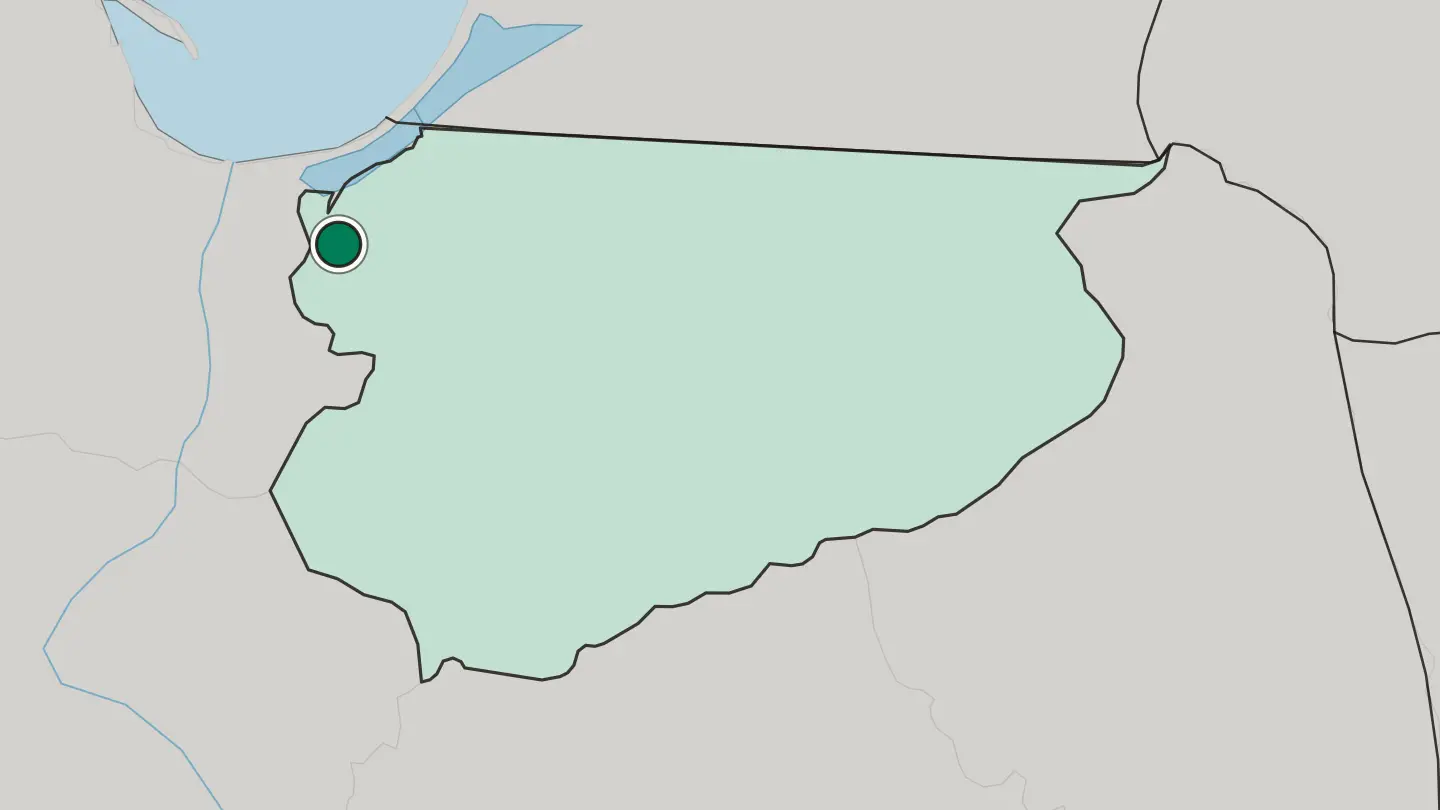
 Poland
Ełk
Ełk stands on the shore of Ełk Lake in Masuria, the largest city of that lake country and the seat of Ełk County.Where to stay →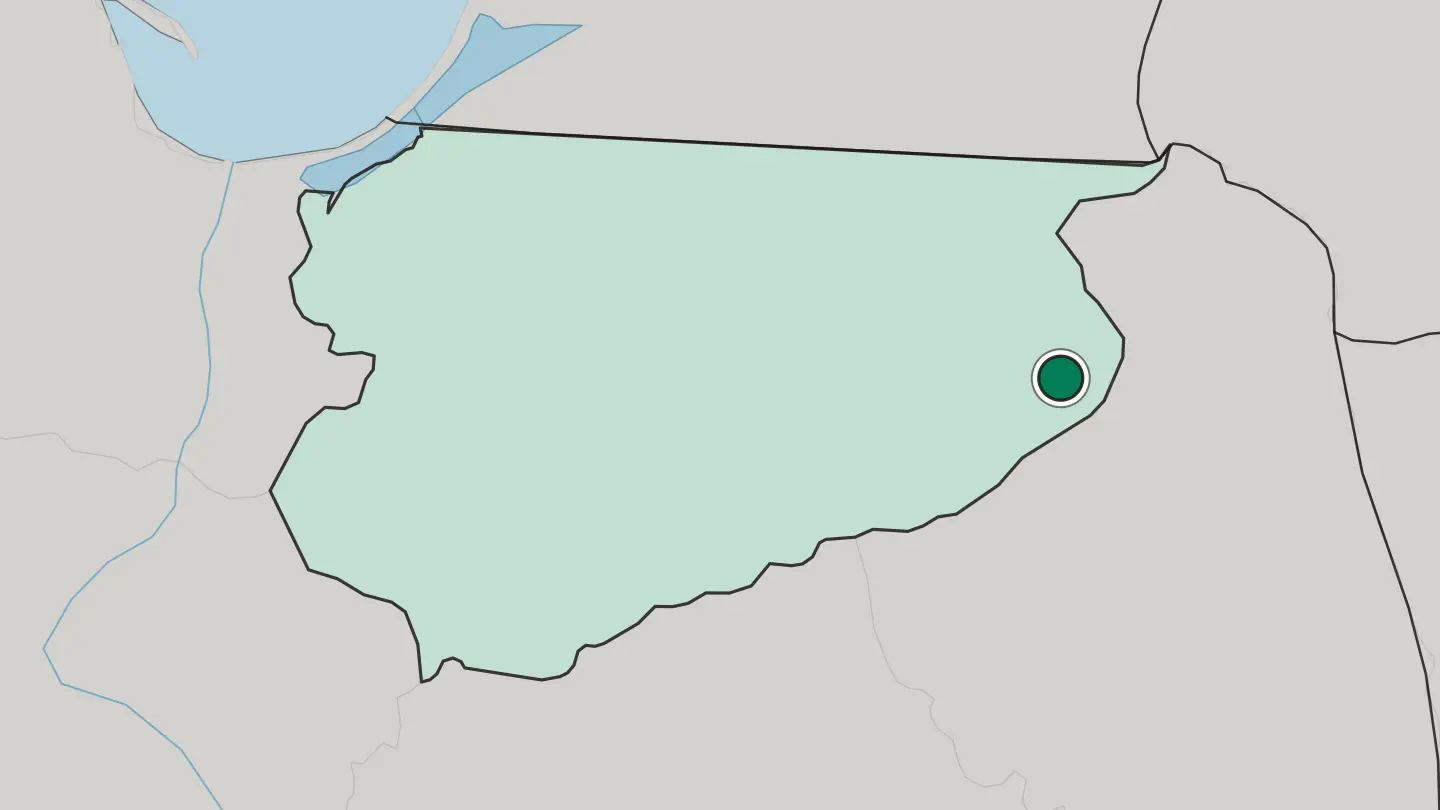
Hotel links are affiliate links: booking through them may earn us a commission, at no extra cost to you. It never affects how places are ranked. How this works
About Warmian-Masurian Voivodeship
Water is the draw.
What is Warmian-Masurian Voivodeship known for?
The Masurian Lake District sprawls across the province with more than 2,000 lakes, linked by canals that let a boat cross from one to the next without ever touching shore. Śniardwy and Mamry, the two largest lakes in Poland, both sit here, and summer sailors fill harbours at Giżycko and Mikołajki. The name pairs two old lands, Warmia in the west and Masuria in the east. Olsztyn, the capital, anchors it all.
Where is Warmian-Masurian Voivodeship?
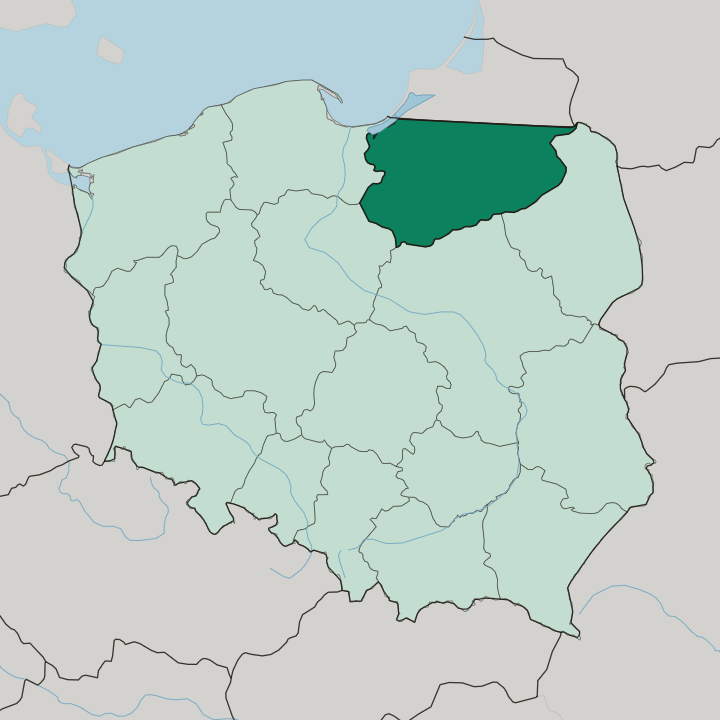
The province fills the northeastern corner of Poland. Its northern edge runs along the border with the Russian exclave of Kaliningrad, and away to the northwest the Vistula Lagoon opens toward the Baltic Sea. Ice shaped everything else.
Retreating glaciers left a churned surface of moraine hills, forest, and hollows that filled with water, and that legacy is the Masurian Lake District, more than 2,000 lakes scattered across the east. Śniardwy and Mamry, the largest lakes in the country, both lie within it, ringed by reed beds and pine. Warmia occupies the western half around Olsztyn, gentler and more farmed. Masuria spreads east and south into the deeper lake and forest country.
Elbląg sits out west near the Vistula Lagoon, close to where the land meets the coast. The interior is quiet, low, and green. Canals thread the bigger lakes together into a single navigable chain, so a boat can travel much of the province by water alone, and that connected waterscape is what sets the region apart from anywhere else in Poland.
What is Warmian-Masurian Voivodeship like?
Two histories still show on the ground here. Warmia, in the west, was for centuries an ecclesiastical principality ruled by its prince-bishops, and their red-brick castles survive at Lidzbark Warmiński, Reszel, and Olsztyn. Masuria carries a different past.
Polish settlers from Masovia gave the land its name, and under Prussian rule it took on a largely Protestant character while Warmia stayed Catholic. That religious seam runs through the villages to this day. The astronomer Nicolaus Copernicus belongs to this landscape.
He served as a canon of the Warmian chapter and did much of his observing at Frombork, on the Vistula Lagoon, where his cathedral tomb still draws visitors. Beyond the history, the everyday culture is rural and outdoor: fish smoked and served fresh from the lakes, agrotourism farms taking in summer guests, sailing clubs and kayak liveries. Polish is the language spoken throughout.
Life here bends toward the water for a good part of the year.
What is the history of Warmian-Masurian Voivodeship?
Old Prussian tribes held it first. During the Northern Crusade the Teutonic Order conquered them and, in 1243, carved out the Bishopric of Ermland that became Warmia. Polish and Lithuanian forces broke the Order at the Battle of Grunwald in 1410, and after later wars Warmia passed to the Kingdom of Poland while Masuria stayed a fief.
Prussia annexed the whole area in the eighteenth century, and it lay inside East Prussia until 1945. The modern Warmian-Masurian Voivodeship was drawn up in 1999.
What is the climate of Warmian-Masurian Voivodeship?
This is the coldest corner of Poland. Its climate is continental, set well back from any warming ocean, so the winters here bite harder and last longer than almost anywhere else in the country. Frost and snow settle over the lakes for weeks, and the smaller ones freeze hard enough for ice fishing and skating.
Then summer flips it. Warm, green weather draws sailing crowds to Giżycko and Mikołajki from late spring into August. September stays pleasant once the peak thins.
How do you get to Warmian-Masurian Voivodeship?
Most travellers drive in. The region's own gateway is Olsztyn-Mazury Airport near Szymany, which handles a handful of seasonal and low-cost routes rather than a full schedule, so many visitors instead fly to Gdańsk or Warsaw and continue overland. Trains and roads reach Olsztyn, Elbląg, and the lake towns from both cities.
Once you arrive, a car earns its keep, because the villages, harbours, and castles lie scattered and the countryside is thin on public transport. On the water, the connected lakes become their own road.
Common questions
What is the best area to stay in Warmian-Masurian Voivodeship?
Olsztyn: a city base near the Warmian castles. Mikołajki: the heart of the Masurian sailing routes. Giżycko: yacht harbours and canal crossings. Elbląg: the Vistula Lagoon and the western approach.
Good for
More regions in Poland
Updated September 2026