Poland
West Pomeranian Voivodeship, Poland — Towns & Travel Guide
West Pomeranian Voivodeship is Poland's Baltic north-west corner, where the Oder meets the sea at Szczecin.
Hotel links are affiliate links: booking through them may earn us a commission, at no extra cost to you. It never affects how places are ranked. How this works


Towns & cities in West Pomeranian Voivodeship
Pick a town or city — each links to where to stay.
 Poland
Szczecin
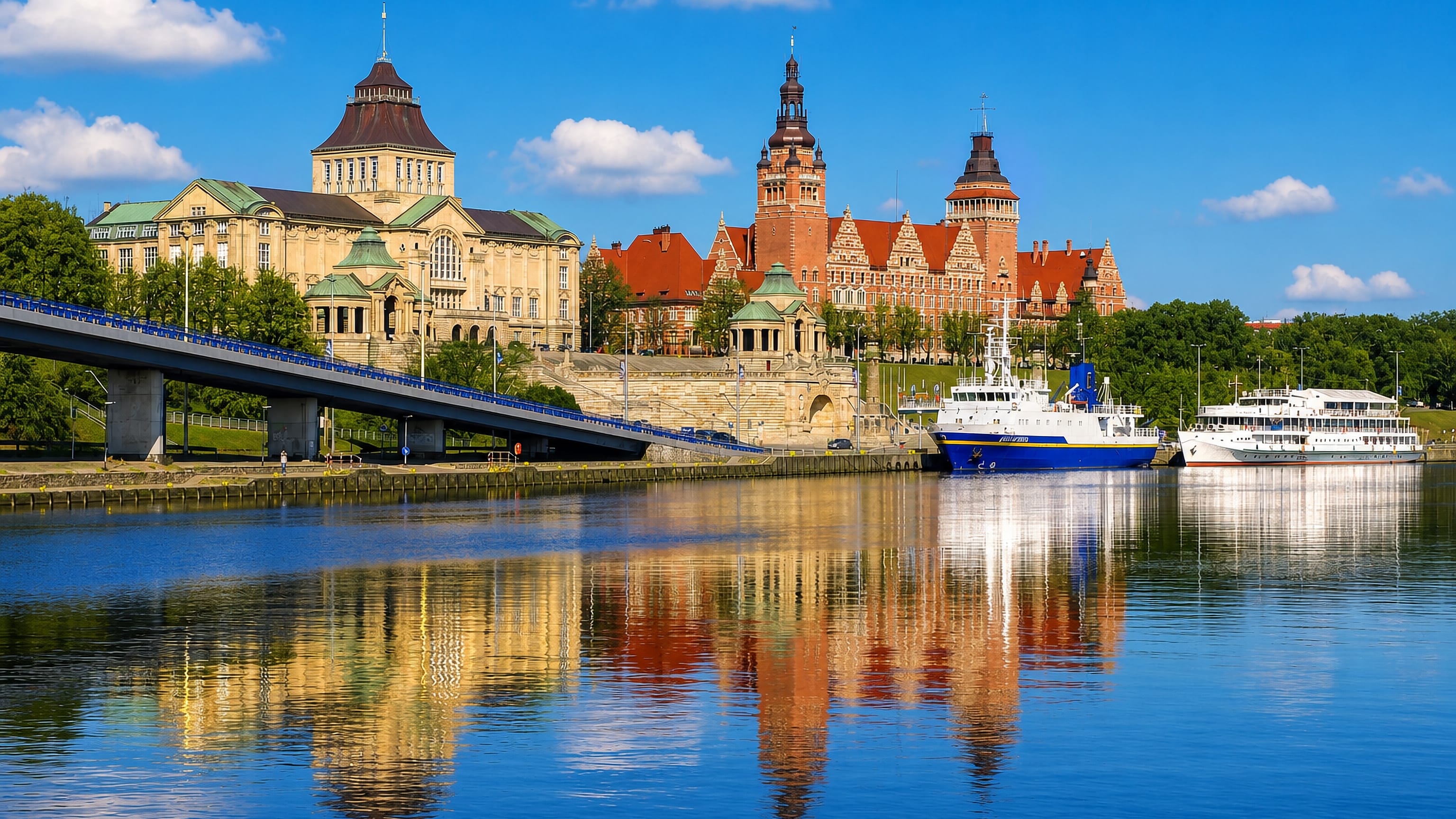
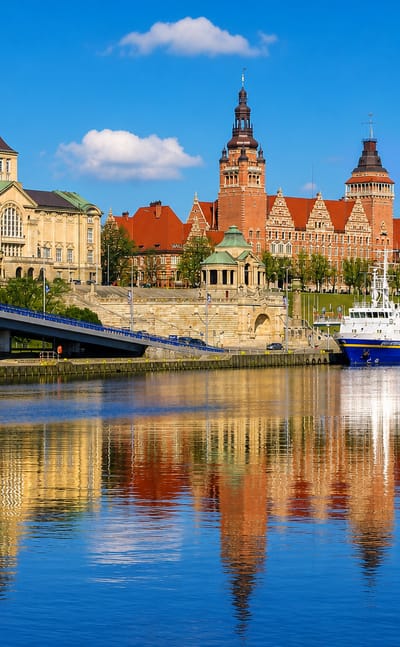
Ships work the Oder at Szczecin, the largest city of northwestern Poland and capital of West Pomeranian Voivodeship, a seaport known for its Ducal Castle.Where to stay →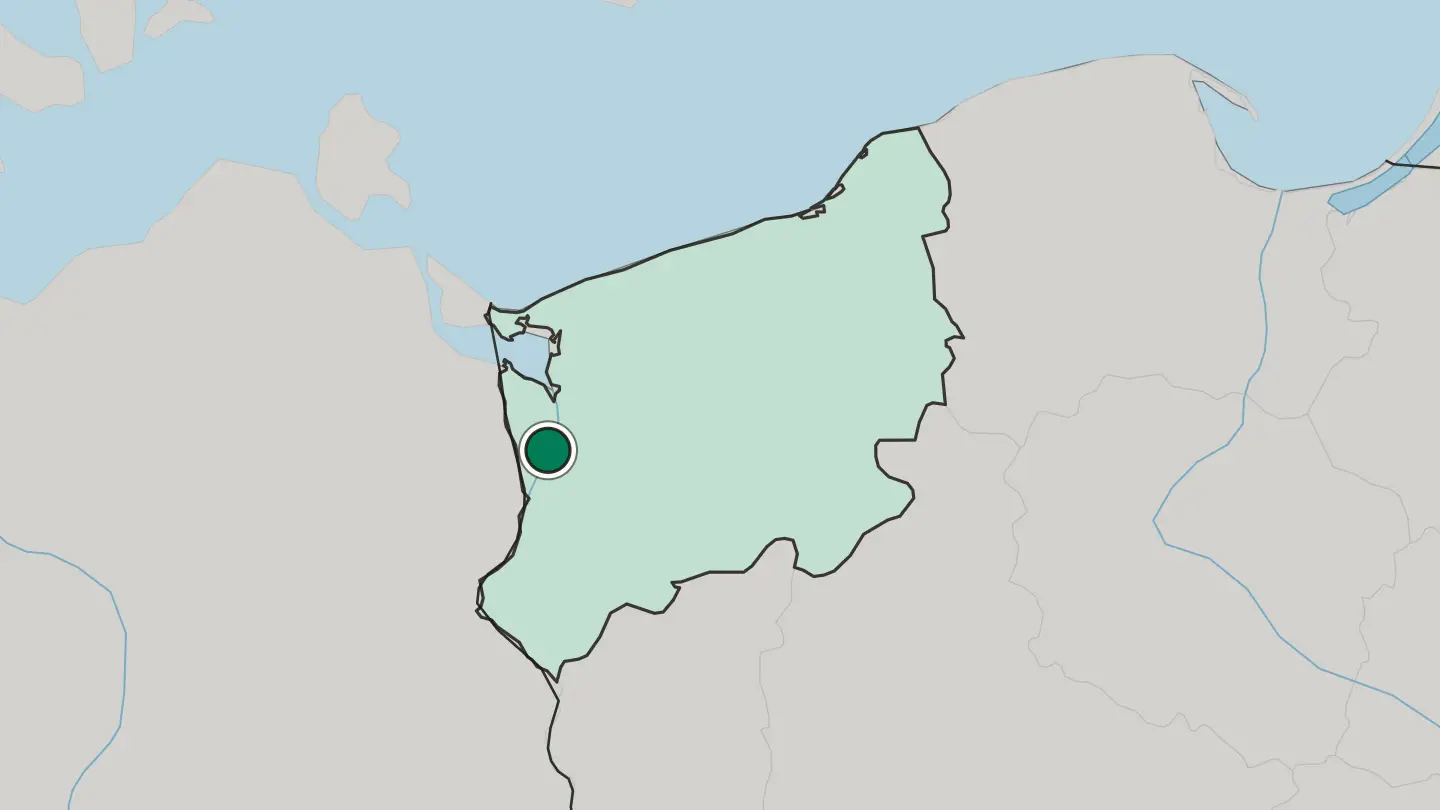
 Poland
Koszalin
Koszalin is a West Pomeranian city on the Dzierżęcinka, inland from the Baltic Sea, with a Gothic cathedral and Góra Chełmska rising behind it.Where to stay →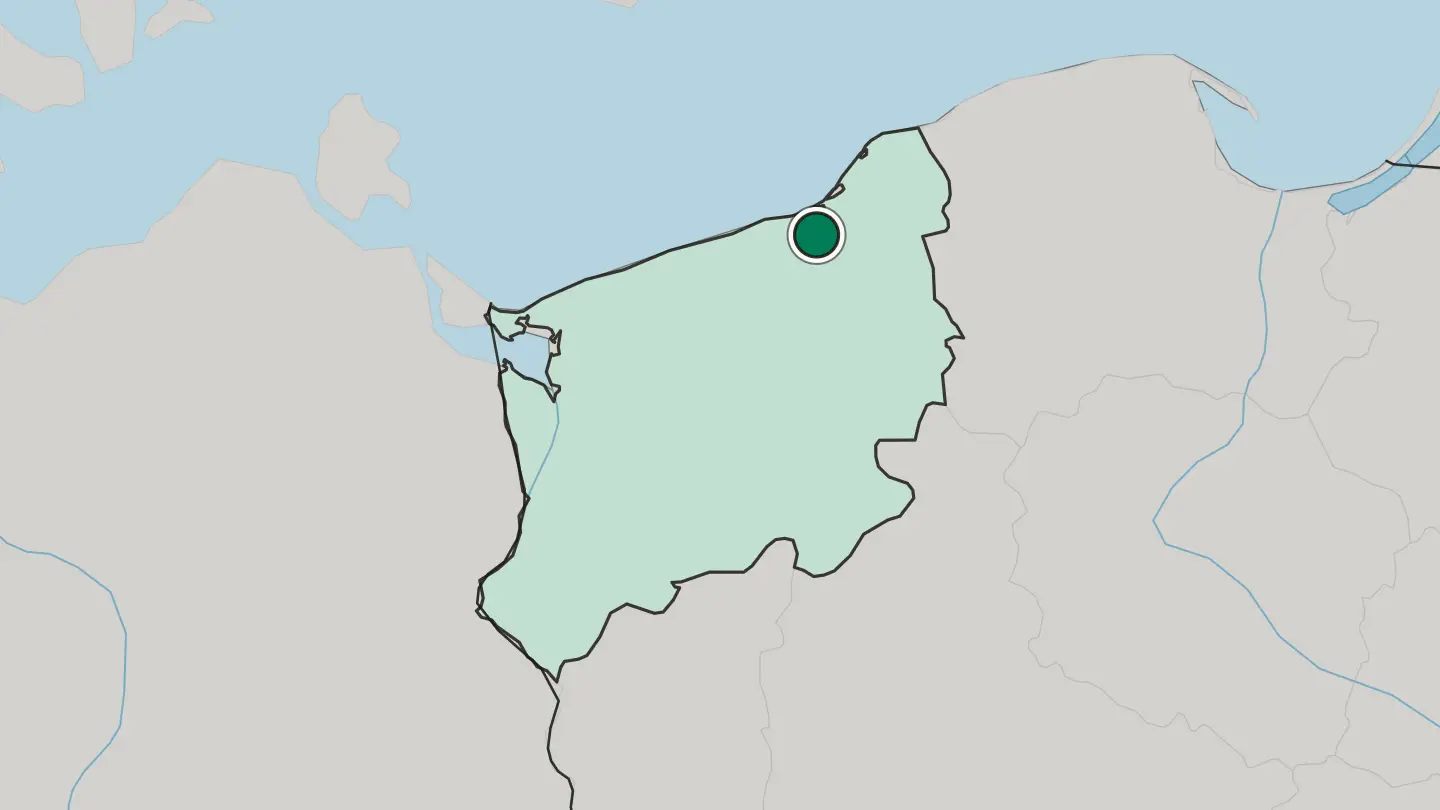
 Poland
Stargard
Stargard stands on the Ina in the West Pomeranian Voivodeship, ringed by brick walls whose gates and towers still carry their medieval names.Where to stay →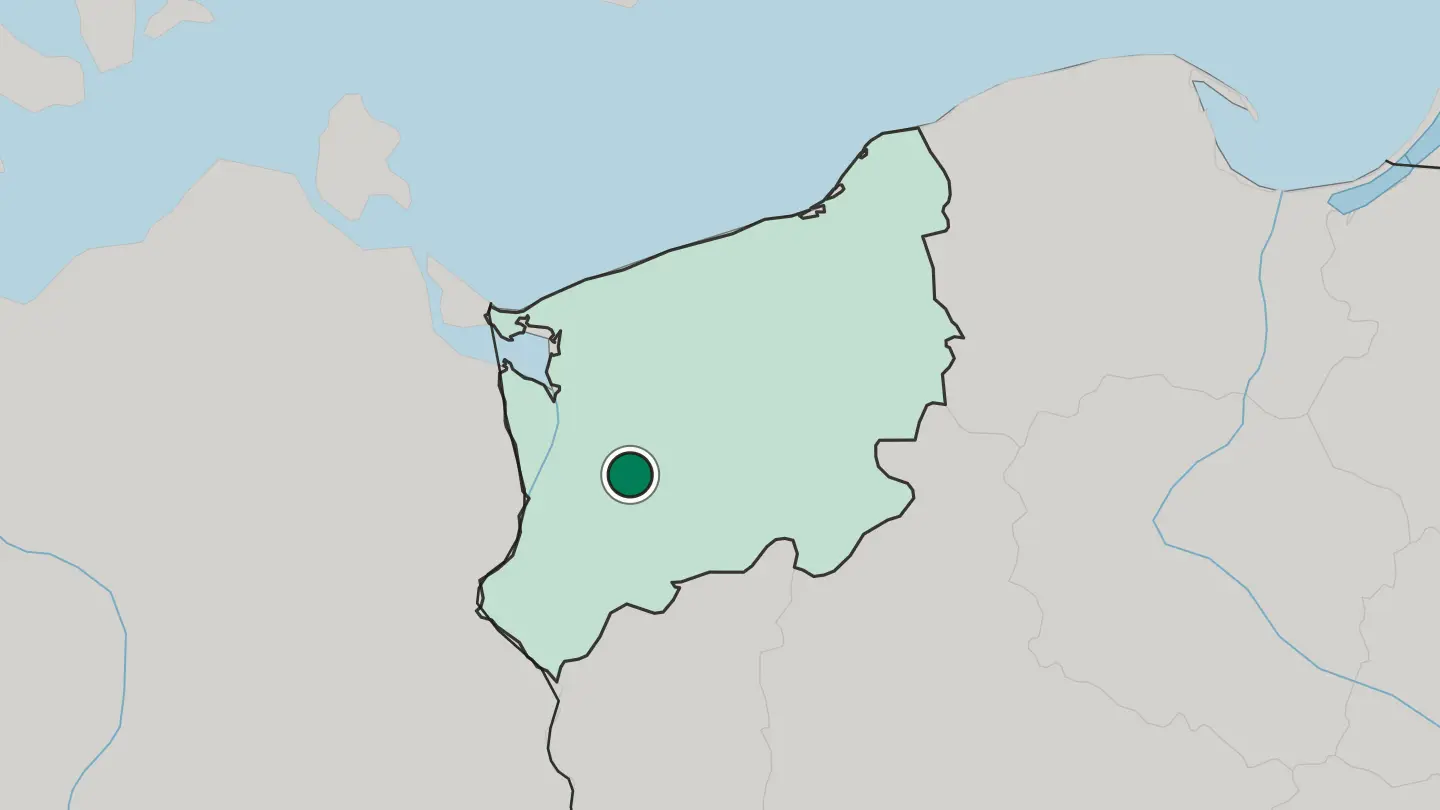
Hotel links are affiliate links: booking through them may earn us a commission, at no extra cost to you. It never affects how places are ranked. How this works
About West Pomeranian Voivodeship
What is West Pomeranian Voivodeship known for?
This is Poland's Baltic shore. Szczecin, its capital, sits inland on the Oder where the river spreads into the Szczecin Lagoon before reaching the sea. The coast draws most visitors, with spa towns such as Kołobrzeg and the island resorts around Świnoujście strung along wide sand beaches.
Behind the dunes lie beech forests, lakes and two national parks. Germany begins just to the west, and the region carries the name of historical Pomerania, once ruled by the dukes of the House of Griffin.
Where is West Pomeranian Voivodeship?
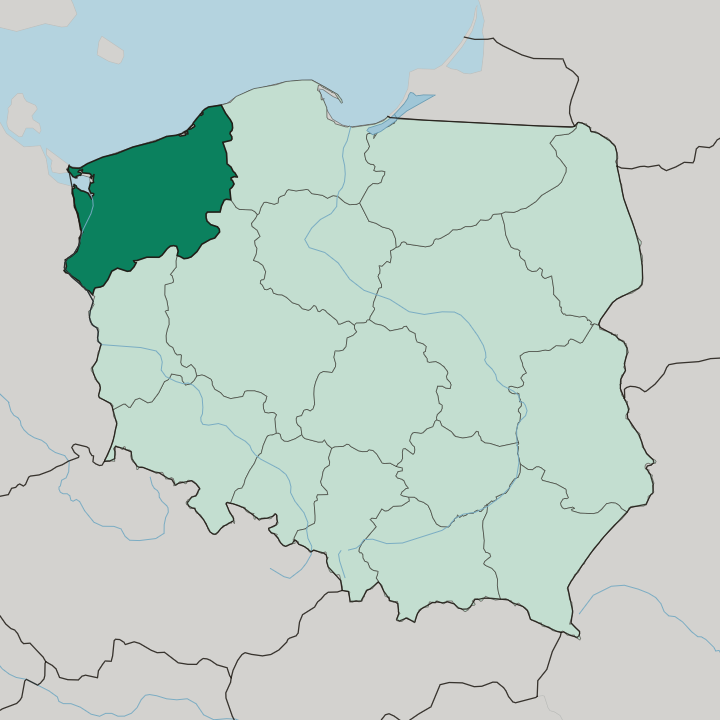
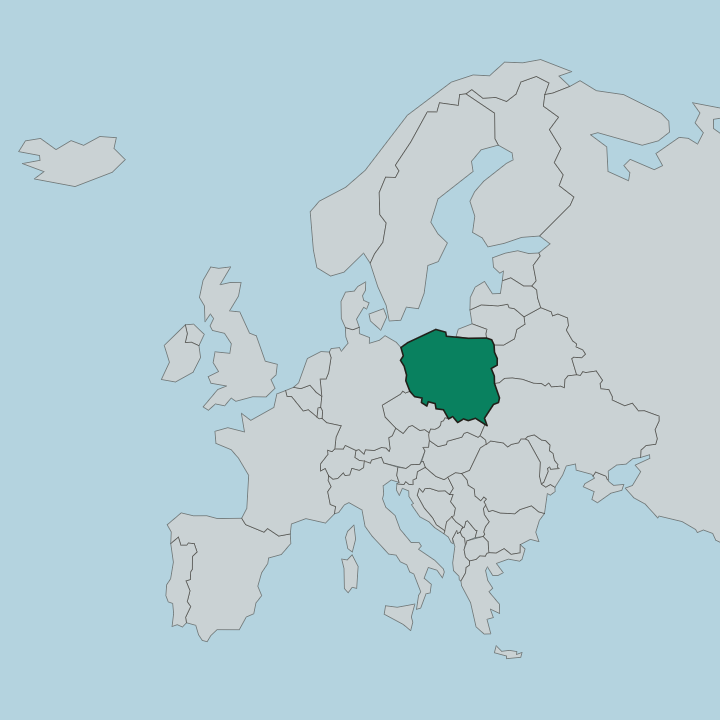
West Pomeranian Voivodeship fills the north-western corner of Poland, on the Baltic Sea. The Baltic forms its whole northern edge, a coastline of some 185 kilometres of dunes and sand beaches. Germany lies to the west, where the German states of Mecklenburg-Western Pomerania and Brandenburg meet the region across the Oder.
The Oder is the region's spine. It flows north through Szczecin, splits around several river islands, then widens into the broad Szczecin Lagoon before three branches carry it out to the Bay of Pomerania and the open Baltic. Two islands, Usedom and Wolin, screen the lagoon from the sea and split the outflow.
Wolin is the larger, a wooded island of moraine cliffs that fall straight to the water. Inland, the country rolls. Glaciers left a low landscape of beech forest, ribbon lakes and scattered morainic hills, drained by the Drawa and other rivers running south toward the Oder.
It is among the greenest of Poland's regions, and one of its least crowded. Szczecin stands well inland from the coast, closer to Berlin than to the resort beaches, at the point where the river turns from a working waterway into a lagoon. Neighbouring Polish regions lie to the east and south.
The sea, the river and the German border together fix the region's shape.
What is West Pomeranian Voivodeship like?
The region wears two histories at once. Its towns were German-speaking Pomerania until 1945, and its Polish present was built afterward, when new settlers arrived and old cities were rebuilt from the ruins of the war. That double past shows in the streets.
Brick Gothic churches and the Griffin dukes' castle in Szczecin stand beside plain post-war housing, and old German names survive under the Polish ones. The Baltic sets the everyday rhythm. Fishing boats work out of the coastal towns, and herring cooked in the local Szczecin and Kołobrzeg styles is a fixture of the table here.
Spa culture runs deep along this shore. The brine and healing muds found in the 19th century turned Kołobrzeg, Świnoujście and inland Połczyn-Zdrój into cure resorts, and people still come to take the waters. The old Slavic past is worked hard too, most visibly at the summer Viking festival on Wolin island, where the coast's early trading settlements are re-enacted.
Polish is the language throughout the region. German is heard often near the border and in the resort towns, where visitors cross over from just across the Oder. This is a coast that lives by the season, quiet in winter and full in the warm months.
The forests and lakes inland draw walkers and cyclists away from the crowded sand. Together the sea, the spas and the mixed Pomeranian past give the region its character.
What is the history of West Pomeranian Voivodeship?
West Slavs settled this coast in the early Middle Ages, and its early towns grew as Baltic trading posts. For centuries the land was the heart of the Duchy of Pomerania, ruled from Szczecin by the dukes of the House of Griffin until that line died out in 1637. Swedes, Prussians and then the German Empire held Pomerania in turn.
The whole region became Polish only in 1945, after the Second World War redrew the border along the Oder and its German population left for the west. But the name is old. The modern voivodeship was drawn up in 1999, taking the title of the Pomeranian land it covers.
What is the climate of West Pomeranian Voivodeship?
The Baltic softens the weather here. This is the mildest, most maritime corner of Poland, with cooler summers and less bitter winters than the country's interior. Rain falls through the year rather than in one season, and the sea keeps the coast changeable.
Summer is short but reliable enough to fill the beaches at Kołobrzeg and the Wolin resorts. Sea breezes take the edge off the warmest days on the coast, while the forests and lakes inland run a touch warmer and stiller. Grey, blustery spells off the Baltic are part of the year.
How do you get to West Pomeranian Voivodeship?
Szczecin is the way in. The region's own airport lies at Goleniów, north of the city, but many visitors fly into Berlin and cross the nearby German border by road or rail instead. Trains link Szczecin with Berlin, Poznań and Warsaw, and a coastal line runs out to the seaside towns.
The Oder and the Szczecin Lagoon make the region a working seaport, with ferries sailing from Świnoujście across the Baltic to Sweden. On the ground, road and rail tie Szczecin to the resort beaches along the coast.
Common questions
What is the best area to stay in West Pomeranian Voivodeship?
Szczecin: the inland capital and its river port. Kołobrzeg: a Baltic spa break. Świnoujście: the island resorts by the German border. Wolin island: beaches beside a national park.
Good for
More regions in Poland
Updated September 2026