Romania
Caraş-Severin, Romania — Towns & Travel Guide
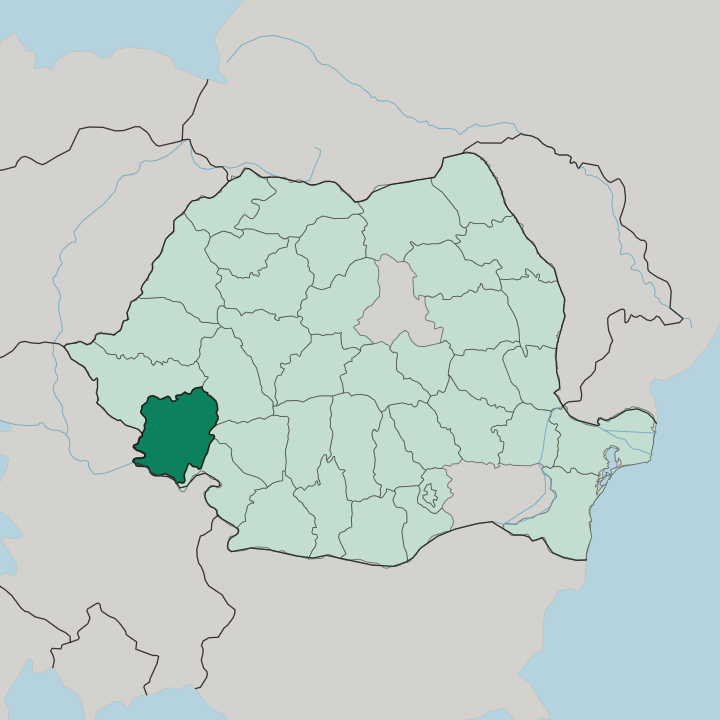
Banat country, bordering Serbia. Caraş-Severin holds Reșița as its seat and reaches into Transylvania at its far north-eastern corner.
Hotel links are affiliate links: booking through them may earn us a commission, at no extra cost to you. It never affects how places are ranked. How this works


Towns & cities in Caraş-Severin
One town here has its own guide — it links to where to stay.

 Romania
Reşiţa
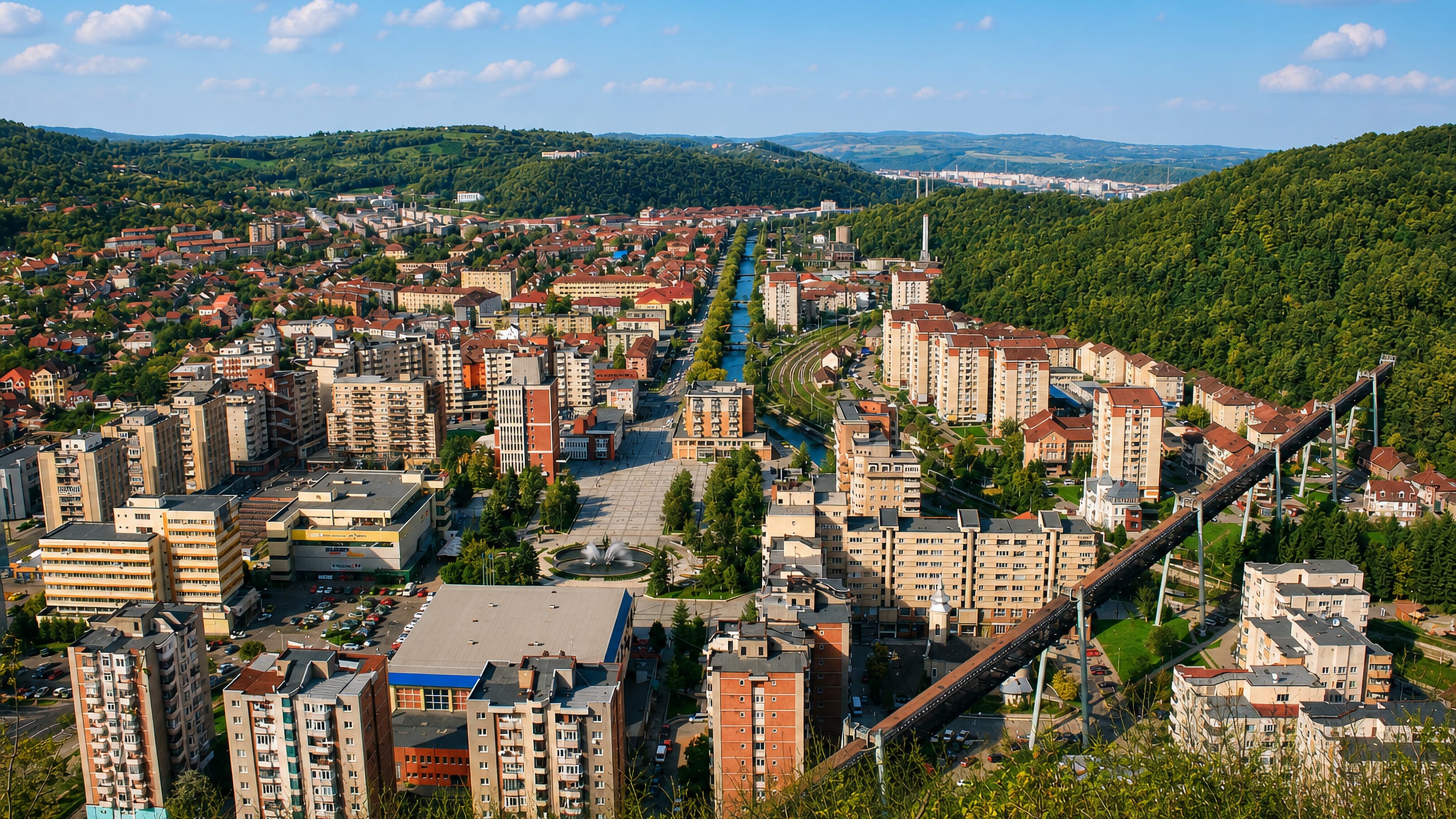
Reşiţa, capital of Caraș-Severin County in the Banat, dates from 1673 and keeps a steam locomotive museum among its industrial fabric.Where to stay →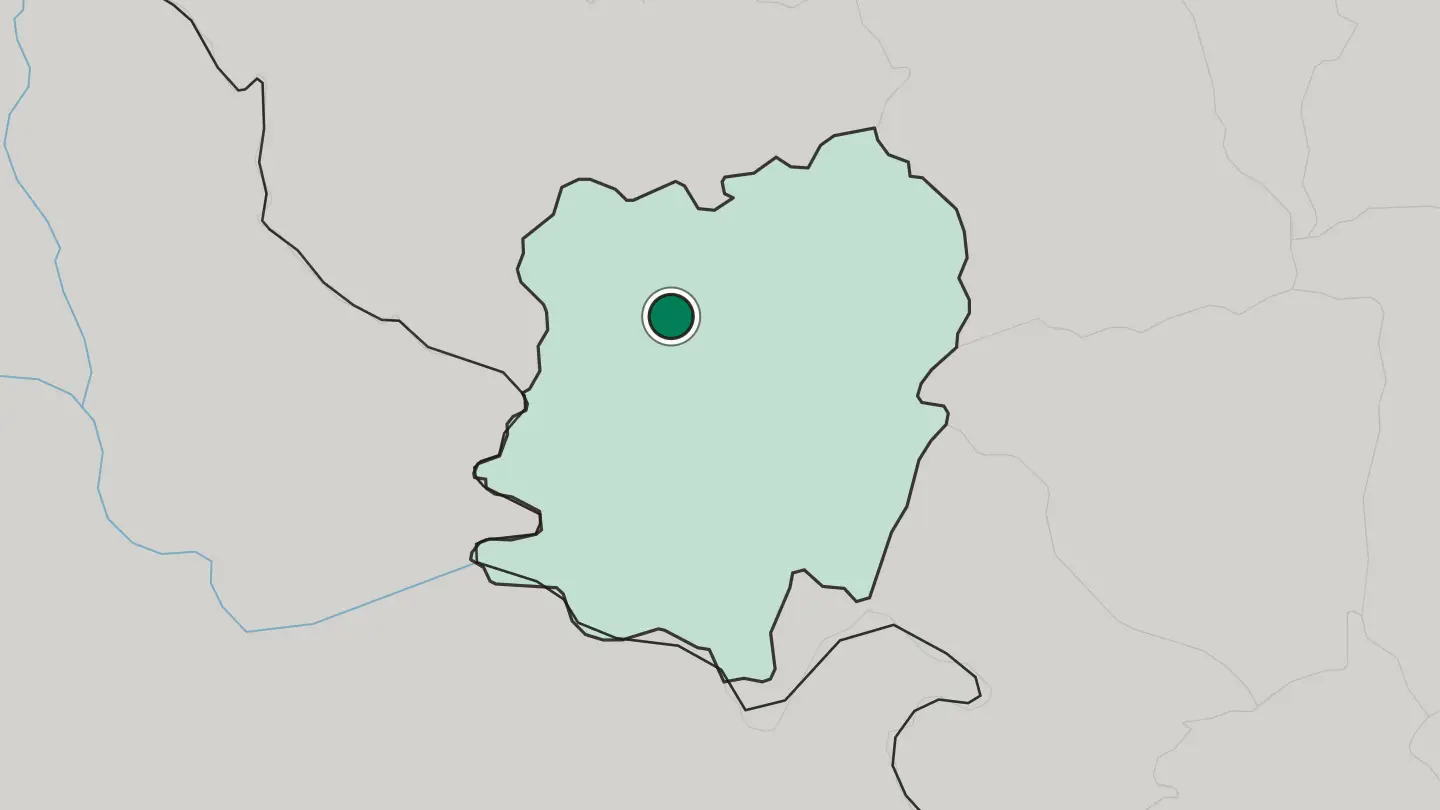
Hotel links are affiliate links: booking through them may earn us a commission, at no extra cost to you. It never affects how places are ranked. How this works
About Caraş-Severin
The Banat is the frame.
What is Caraş-Severin known for?
Most of Caraş-Severin lies inside that historical region, while a scatter of villages in its north-eastern corner are counted instead with Transylvania, and the county line runs against the frontier with Serbia. Reșița carries the administrative weight. The county also sits inside the Danube-Criș-Mureș-Tisa Euroregion, a cross-border grouping that ties it to neighbours beyond Romania.
Where is Caraş-Severin?
Two historical regions divide the ground. The greater part of Caraş-Severin belongs to the Banat, and only a small number of villages in the north-east are reckoned part of Transylvania instead, which makes the county a boundary case between two of the older provinces of Romania. That split is inherited, not drawn.
Reșița sits at the centre of the arrangement as county seat. The border does real work here. Caraş-Severin runs against the frontier with Serbia, and the county's membership of the Danube-Criș-Mureș-Tisa Euroregion formalises what that edge already implies: the ties leading outward from this corner are as much lateral as they are towards the interior.
Four rivers name that grouping. The Danube, the Criș, the Mureș, and the Tisa are the waters the euroregion is built around, and the arrangement gathers territory on more than one side of the international line. As an administrative unit the county dates to 1919.
Its outline has held since, and Reșița has kept the seat throughout, so the map of Caraş-Severin still resembles the one drawn a century ago. Temperate through and through. Neither the Banat side of the county nor the villages counted with Transylvania departs from that band, and the whole territory shares a single inland character rather than splitting into contrasting climates.
What is Caraş-Severin like?
Banat identity comes first. The greater part of Caraş-Severin reads itself through that province rather than through Transylvania, even though the county keeps villages counted with the latter, and the distinction still shapes how people here describe where they are from. Romanian is the working language.
It is spoken across the county, from Reșița out to the smallest settlements near the frontier with Serbia. A border county collects more than one influence. Caraş-Severin has faced Serbia across an international line for as long as the modern county has existed, and the Danube-Criș-Mureș-Tisa Euroregion gives that proximity an institutional form by grouping districts on either side of it.
Cooperation is the stated point. Cultural and civic ties run through the arrangement alongside the practical ones, so the county's outlook is not confined to the interior of Romania. Reșița concentrates what institutions there are.
The county seat carries the museums, offices, and public bodies that a territory of this size supports, while the Banat villages and the north-eastern Transylvanian ones hold the older, quieter layer of life. That contrast is the county in miniature. One town does the administrative work and the rest of Caraş-Severin keeps the rural pattern that the Banat and Transylvania have both long carried.
What is the history of Caraş-Severin?
Caraş-Severin took its present form in 1919. The territory it covers is older than the county line by centuries, since the Banat existed as a province long before the modern administrative map was drawn, and the villages now attached in the north-east belonged to Transylvania under earlier arrangements. Reșița became the seat.
The frontier with Serbia has framed the county throughout, and Romania later folded that edge into the Danube-Criș-Mureș-Tisa Euroregion.
What is the climate of Caraş-Severin?
Temperate, and inland in feel. Caraş-Severin sits in the northern temperate band with the Banat interior around it, so the seasons answer to that inland ground rather than to any coast, and the villages counted with Transylvania in the north-east feel it most sharply. Reșița reads the same way.
Heat and snow both arrive without the moderation a shoreline would bring.
How do you get to Caraş-Severin?
Reșița is the arrival point. Roads into Caraş-Severin come across the Banat to the county seat, and traffic from the other direction crosses the international border the county shares with Serbia. There is no shortcut.
The north-eastern villages counted with Transylvania are the furthest from Reșița, and anyone heading out to them is looking at the longest drive the county offers.
Common questions
What is the best area to stay in Caraş-Severin?
Reșița: Travellers wanting the Caraş-Severin county seat as a single base. The Banat villages: Slow days on the Banat side of Caraş-Severin. The Transylvanian corner: Reaching the villages Caraş-Severin counts with Transylvania.
More regions in Romania
Updated September 2026