
Romania
Bacău, Romania — Towns & Travel Guide
Bacău is a county of eastern Romania, where the Bistrița joins the Siret below the Carpathian foothills of Moldavia.
Hotel links are affiliate links: booking through them may earn us a commission, at no extra cost to you. It never affects how places are ranked. How this works


Towns & cities in Bacău
One town here has its own guide — it links to where to stay.

 Romania
Bacău
Bacău, first recorded in 1399, is the Romanian city that gives Bacău County its name and holds its museums and older churches.Where to stay →
Hotel links are affiliate links: booking through them may earn us a commission, at no extra cost to you. It never affects how places are ranked. How this works
About Bacău
What is Bacău known for?
Bacău is Moldavia's industrial heartland. Refineries, chemical plants and food works cluster around Onești and the county town, and that working character sets the county apart from its rural neighbours. The Symbolist poet George Bacovia was born in the city of Bacău and gave the place its literary fame.
West of the towns the land climbs into the Eastern Carpathians, where the mineral springs of Slănic-Moldova draw people to take the waters.
Where is Bacău?
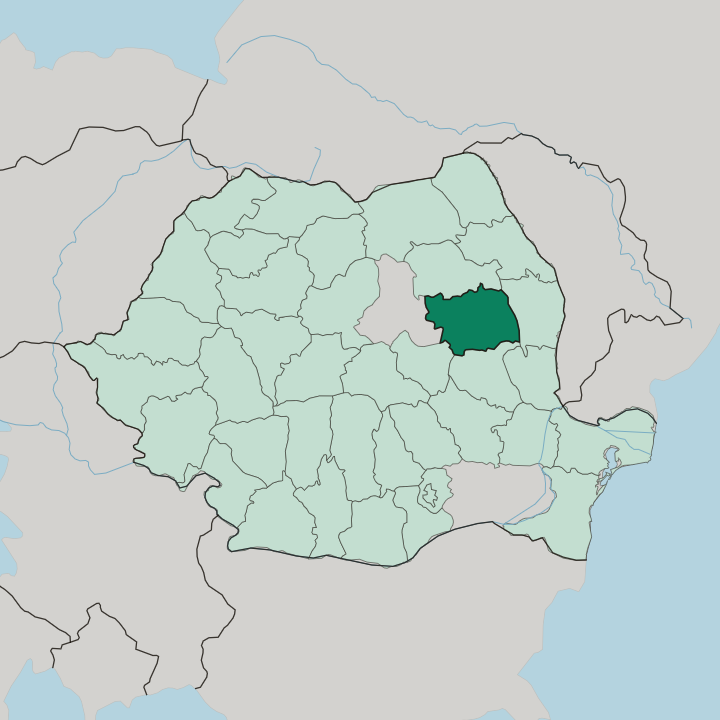
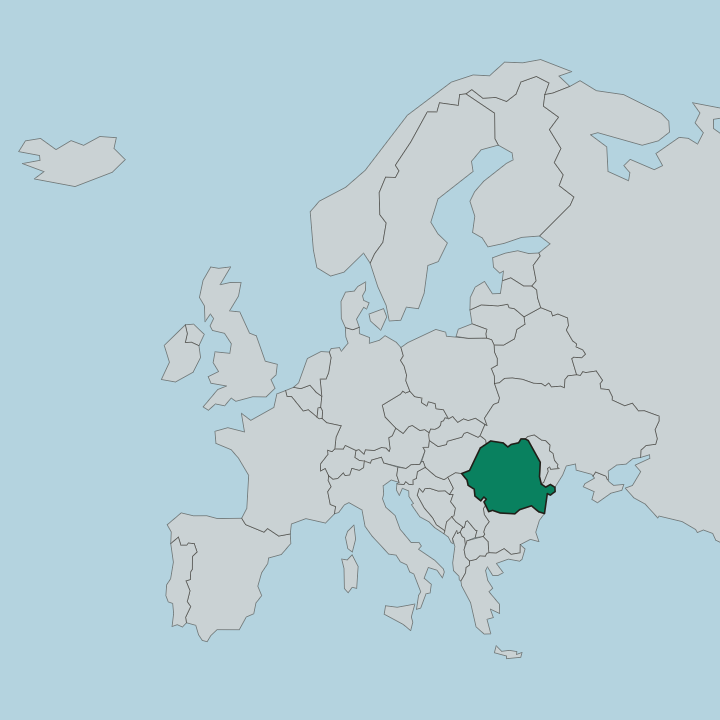
Bacău lies in Western Moldavia, the north-eastern part of Romania between the Carpathian arc and the river plains. The Siret is its spine. That river runs the length of the county from north to south down the middle, and the lowest ground follows its valley.
Down the western edge the land rises into the Eastern Carpathians, and two mountain valleys carry the old roads over into Transylvania. The Bistrița comes down out of the mountains from the north-west and joins the Siret near the county town. The Trotuș drains the south-western hills, gathering the Oituz and other streams before it too reaches the Siret.
Between the rivers the county spreads out as a patchwork of terraced valleys, low farmed hills and forested Carpathian ridges that climb steadily toward the western passes. Bucharest lies well to the south, across the Romanian plain. It all drains one way. Everything runs southeast toward the Siret and, beyond it, the Danube.
What is Bacău like?
Two of Romania's best-known poets came from the city of Bacău. George Bacovia, the country's foremost Symbolist, was born there in 1881, and his memorial house keeps his manuscripts and furniture. That literary inheritance still shapes how the county names its institutions and its festivals.
The county town carries the cultural weight for the whole of Bacău. It holds the Mihail Jora Athenaeum with its philharmonic orchestra, a dramatic theatre named for Bacovia, and a puppet theatre for the children. Folk tradition runs strong in the villages.
Each winter a festival of Moldavian winter customs gathers folk performers from across the surrounding region, with masks, songs and old ritual dances. The common language is Romanian. Away from the town the Carpathian villages keep their own crafts and their own calendar of feasts.
What is the history of Bacău?
The town of Bacău was first recorded in 1408, named among the customs points of the Principality of Moldavia. A century on, Stephen III of Moldavia built a princely residence and an Orthodox church here, and trade along the Siret grew the settlement into a crafts and market centre. Salt and oil came later.
Under communism the county became the most industrialised in Moldavia, and the refineries and chemical works of that era still define its towns.
What is the climate of Bacău?
Bacău has a humid continental climate, shaped by its inland position east of the Carpathians. Winters are cold and dry along the Siret valley, summers warm and prone to afternoon rain. The mountains matter.
Up in the Eastern Carpathians toward Slănic-Moldova the air stays cooler and wetter than on the plain, and snow lingers far longer on the western ridges than it ever does in the lowland towns.
How do you get to Bacău?
Most visitors arrive through George Enescu International Airport, on the edge of the county town, which links Bacău to Bucharest and to several European cities. The railway is the other main route, with Bacău a stop on the trunk line up the Siret valley through Moldavia. Roads follow the same corridor.
From the west, the mountain passes over the Trotuș carry traffic in from Transylvania.
Good for
More regions in Romania
Updated September 2026