Romania
Timiş, Romania — Towns & Travel Guide
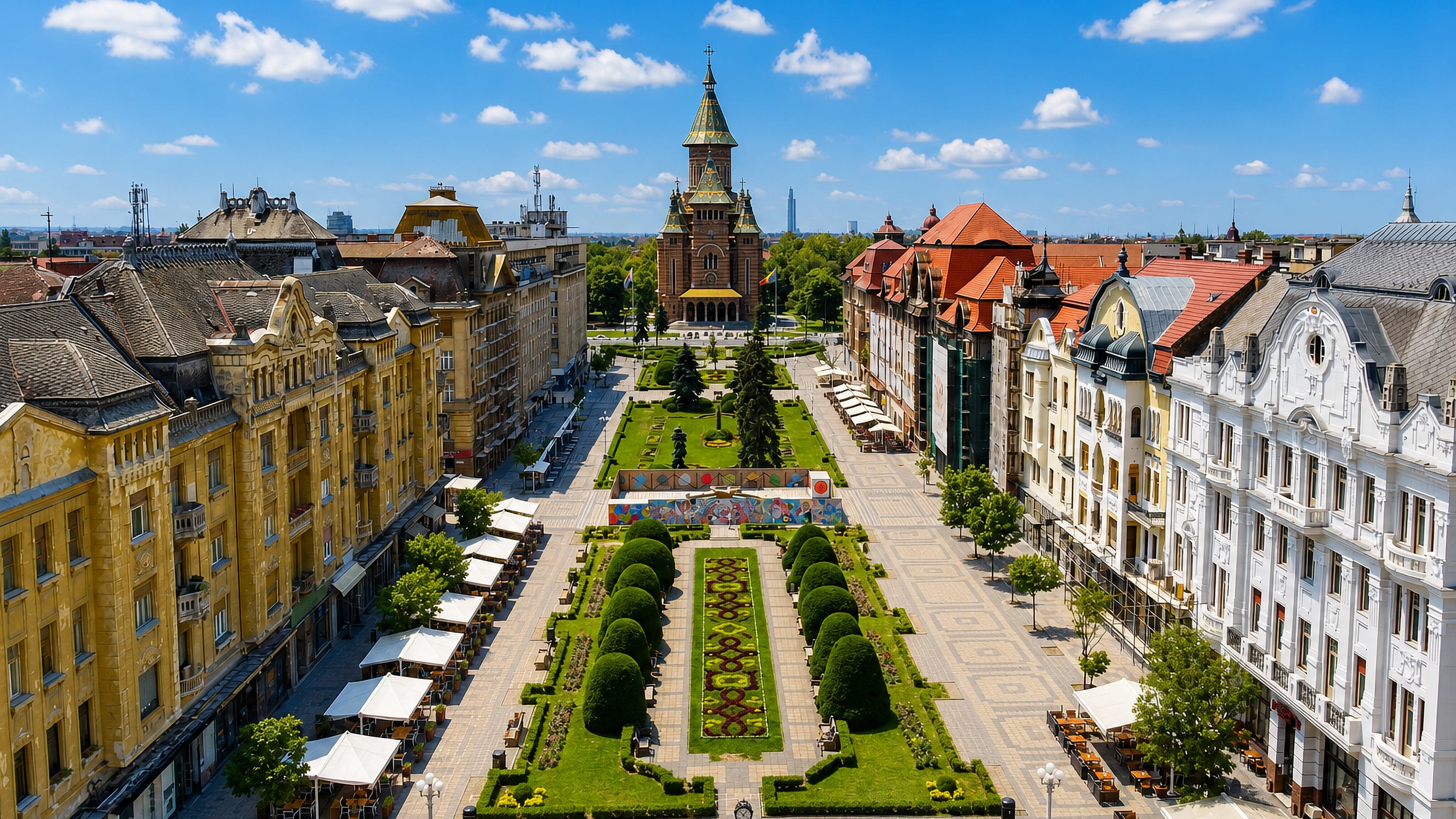
Timiș is Romania's largest county, spread across the Banat plain in the far west, with Baroque Timișoara at its heart.
Hotel links are affiliate links: booking through them may earn us a commission, at no extra cost to you. It never affects how places are ranked. How this works


Towns & cities in Timiş
One town here has its own guide — it links to where to stay.

 Romania
Timişoara
Timișoara is the seat of Timiș County in the Banat, a city of squares holding the National Museum of Banat and the Piarist Church.Where to stay →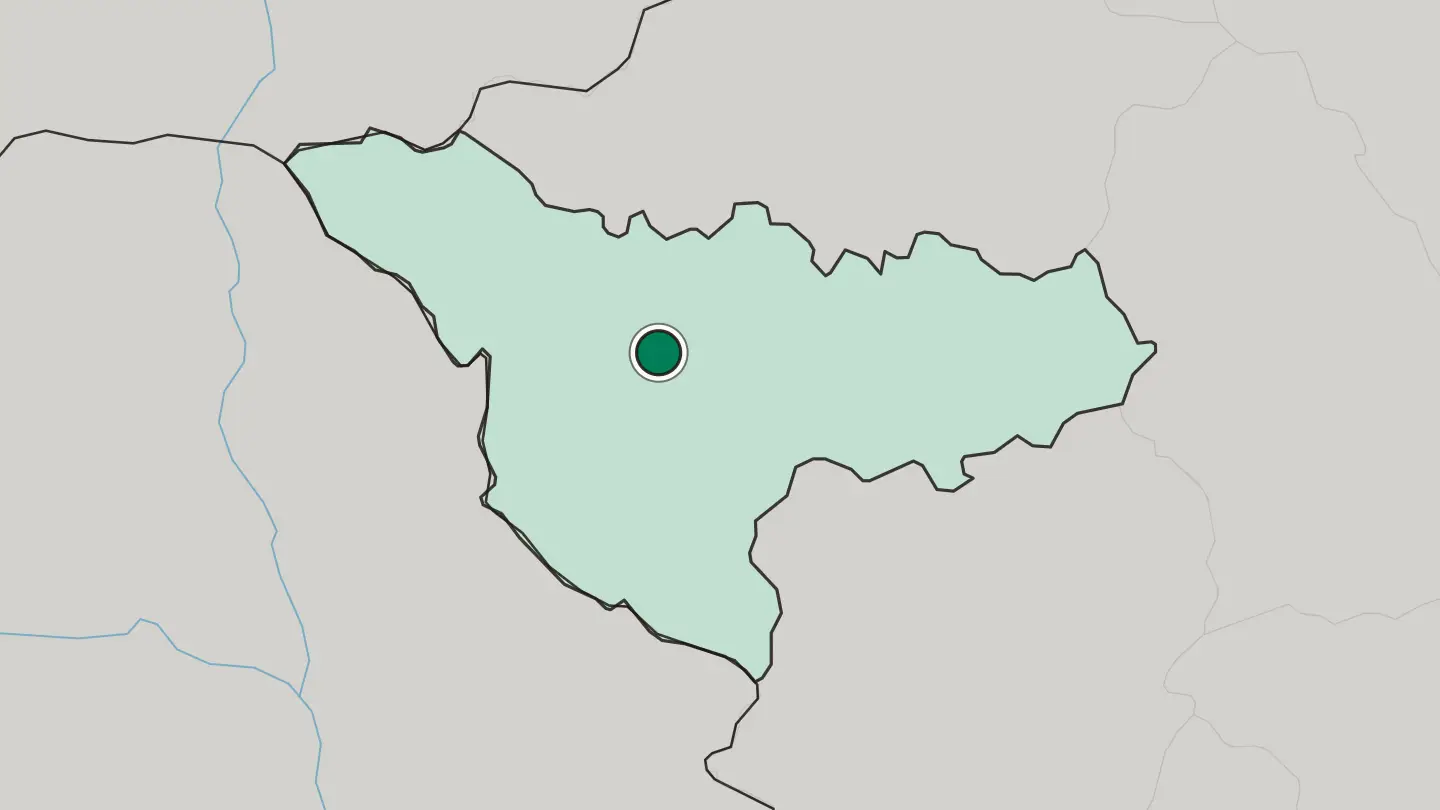
Hotel links are affiliate links: booking through them may earn us a commission, at no extra cost to you. It never affects how places are ranked. How this works
About Timiş
What is Timiş known for?
Timiș is the westernmost county of Romania, and the largest by land area. Timișoara defines it. The county seat wears the nickname "Little Vienna" for the Viennese Baroque façades that line its squares, and it carried the title of European Capital of Culture in 2023.
Beyond the city the land flattens into the Banat plain, drained by the Timiș and Bega rivers that gave the county its name. Hungary lies to the west, Serbia to the south-west.
Where is Timiş?
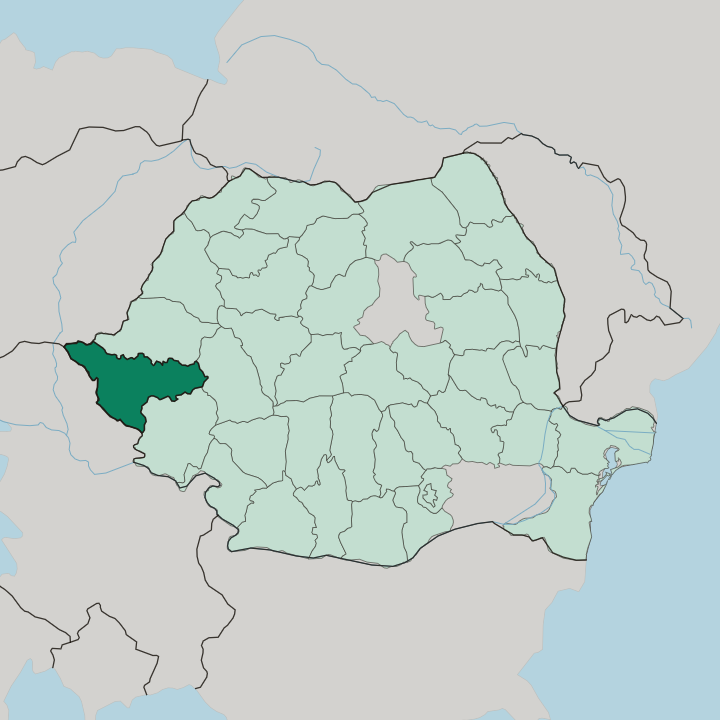
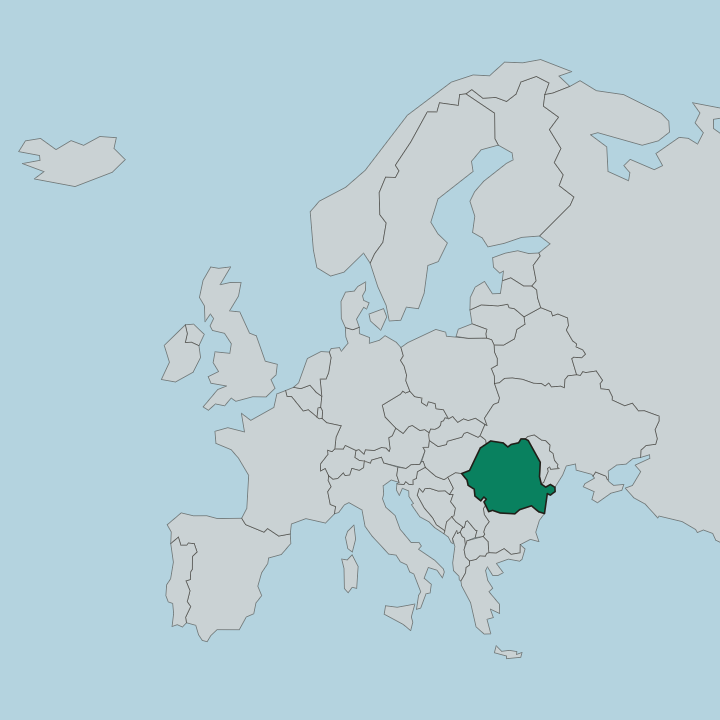
Timiș fills the far west of Romania, pressed against the borders with Hungary and Serbia in the historical region of Banat. It is the country's largest county. The land tilts from east to west.
In the eastern extremity rise the Poiana Ruscă Mountains, an outlier of the Southern Carpathians, and the ground steps down through the Lipova Hills before it opens out. West of the hills lies the Banat plain, the Romanian edge of the great Pannonian Plain that stretches on into Hungary and Serbia. Two rivers shape that lowland.
The Timiș runs south-westward across the whole county toward Serbia, where it joins the Danube near Pančevo, and it is old enough that the Romans knew it as the Tibiscus. The Bega threads through Timișoara itself, canalised as it crosses the city, then drifts on to meet the Tisza in the Serbian Banat. Between the two rivers the plain is flat, fertile and wide.
The county takes its name from the Timiș, the river the Banat has long called its spine. Little of the county sits far from moving water.
What is Timiş like?
The Banat has always been mixed, and Timiș wears that mixing openly. Timișoara alone counts more than thirty cultural communities, Romanians and Germans and Hungarians and Serbs foremost among them. The German thread runs deep.
Banat Swabians were settled across the plain through the eighteenth century, invited by the Habsburgs to farm and build, and their villages, churches and family names still mark the countryside. That layered inheritance is why the county seat feels less like the rest of Romania and more like a stray corner of Central Europe. The three great squares of Timișoara hold it together.
Piața Unirii, the Baroque heart, faces both a Roman Catholic and a Serbian Orthodox church across the same cobbles, a small map of who lived here. Music and theatre run strong, and the city keeps separate Romanian, German and Hungarian stages under one opera roof. In 2023 Timișoara held the title of European Capital of Culture, and the year turned the Bega canal and the old quarters into an open stage.
Parks matter here too. Timișoara is called the city of parks for the green ribbon that follows the water. The culture is not a museum piece.
It is spoken in several languages at once, on ordinary streets.
What is the history of Timiş?
Timișoara first appears in the record in 1212, as a royal castrum on the Banat frontier. Habsburg rule remade it. After the Ottomans were pushed out, the eighteenth century brought Swabian colonists, drained marshes and the Baroque town that still stands.
Then came December 1989. The protest that toppled Romania's communist regime began in Timișoara, on the streets around a pastor's church, before it spread to Bucharest and brought the whole system down. The county's story turns on that single winter week.
What is the climate of Timiş?
Timiș has a moderate continental climate, softened by air that reaches the Banat plain from both the Atlantic to the west and the Mediterranean to the south-west. Heat builds through the Banat summer. Out on the plain July commonly pushes past 21 degrees, while winters stay milder than the Romanian average because the mountains sit far to the east.
Most of the county is lowland, so the weather is plain weather, warm and open rather than alpine. Rain falls across the year rather than in one drenching season.
How do you get to Timiş?
Most travellers fly into Traian Vuia International Airport, the main hub for western Romania, set on the plain a short way north-east of Timișoara. It is named for a Banat-born aviation pioneer. From the terminal a bus runs into the city in under half an hour, ending near the Maria Theresia bastion.
Rail links Timișoara east toward Lugoj and on into the rest of the country, and the Hungarian and Serbian borders are both close by road.
Common questions
What is the best area to stay in Timiş?
Timișoara: first-time Banat visitors who want the Little Vienna squares on foot. Lugoj: travellers wanting small-town quiet on the Timiș away from the city.
Good for
More regions in Romania
Updated September 2026