
Romania
Braşov, Romania — Towns & Travel Guide
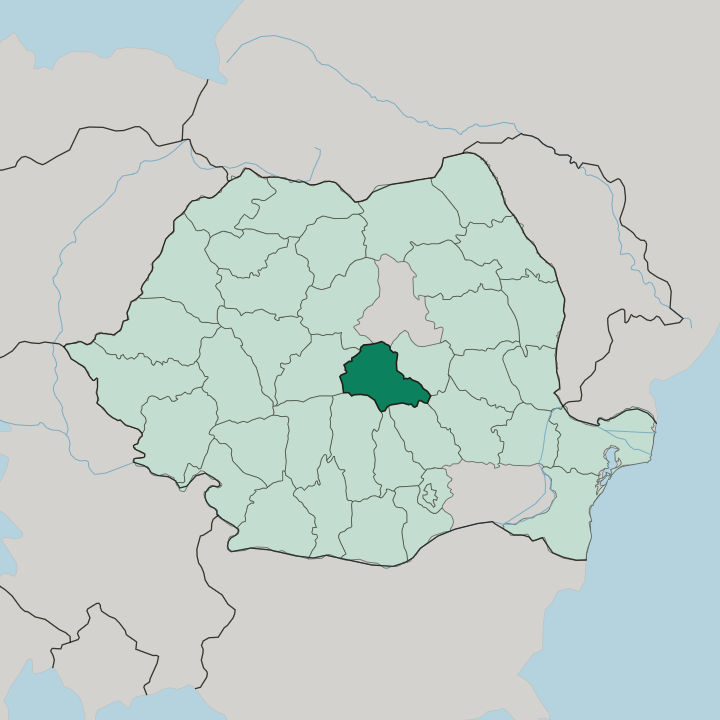
Braşov is a county of central Romania in Transylvania, where the Southern and Eastern Carpathians meet around the Ţara Bârsei plain.
Hotel links are affiliate links: booking through them may earn us a commission, at no extra cost to you. It never affects how places are ranked. How this works


Towns & cities in Braşov
One town here has its own guide — it links to where to stay.

 Romania
Braşov
Braşov stands under the Carpathian Mountains in Transylvania, its Old Town built around the Black Church and the Council House since 1234.Where to stay →
Hotel links are affiliate links: booking through them may earn us a commission, at no extra cost to you. It never affects how places are ranked. How this works
About Braşov
What is Braşov known for?
Braşov is best known for its Saxon-founded capital of the same name, a walled medieval town cupped by mountains at the head of the Ţara Bârsei. The Black Church anchors it. That Gothic hall, raised by the town's German community and scorched dark in the great fire of 1689, stands beside the old Council Square below the wooded cone of Tâmpa.
South of the city the Carpathians close in fast, and Poiana Braşov, the country's best-known ski resort, sits in the pines above it. Bran Castle guards the pass beyond.
Where is Braşov?
Braşov sits at the inner elbow of the Carpathians, in the south-east of Transylvania, where the Southern and Eastern ranges of the great mountain arc swing together. Mountains make the county. They rise on almost every side and take up far more of it than any lowland does, so the land is highland first and plain second.
At its centre lies the Ţara Bârsei, a broad depression ringed by peaks, and the county seat stands at its edge under the wooded cone of Tâmpa. To the west runs the wall of the Făgăraş, the highest of the Romanian Carpathians. South of the seat crowd the Bucegi, the Piatra Craiului and the Postăvarul massif, a knot of limestone and conglomerate that carries the ski runs and the castle roads.
The Olt is the county's main river. It gathers the streams off the northern slopes and swings west through Făgăraş toward Sibiu, draining the plain the mountains enclose. Northward the ground eases at last into the rolling Transylvanian tableland, its low hills a relief after the peaks.
Bran Castle keeps the old pass to Wallachia in the south. High rock and enclosed plain make the county, in that order.
What is Braşov like?
For centuries this was a German town in a Romanian land. Saxon settlers, called in by the Hungarian kings, built the walled capital they knew as Kronstadt and made it the richest trading seat of Transylvania, growing wealthy on the cloth and metalwork carried over the mountain passes into Wallachia and Moldavia. That merchant past is written into the stone.
The Black Church, the great Gothic hall the community raised over nearly a century, still dominates the old town, and the bastions and gates the guilds paid for ring what was once one of the strongest walled towns in the region. Reform came early here. Johannes Honterus turned the town Lutheran and set up the first printing press in Transylvania, and the Saxons kept their own church and schools long after.
The mountains shape the culture as much as the merchants did. Poiana Braşov made the county the home of Romanian skiing, and the Bran and Râşnov castles below draw the summer crowds toward the peaks. Romanian, Saxon German and Hungarian threads run through the villages of the plain.
It is a county that trades on both its walls and its heights.
What is the history of Braşov?
Braşov's story starts with a fortress at a mountain gate. In 1211 the Teutonic Knights, settled in the Ţara Bârsei by King Andrew II of Hungary, raised the stronghold that grew into Kronstadt, the crown town first named in the records of 1234. Saxon merchants made it rich, and by 1397 King Sigismund let them wall the whole seat in stone against the Ottoman advance.
The Reformation reached the walls next, when Johannes Honterus carried Lutheran teaching and the first Transylvanian printing press into the town. The modern county lines were drawn around that seat in the twentieth century. One walled town holds the whole thread.
What is the climate of Braşov?
Braşov has a humid continental climate, sharpened by the mountains that ring it. Altitude does the sorting. The Ţara Bârsei floor around the county seat sees warm, thundery summers and hard, snowy winters, while the Făgăraş and Bucegi heights above run far colder and hold their snow into late spring.
Snow lies on the plain for much of the winter, which is exactly why Poiana Braşov built its runs here. The high peaks are always the cold half.
How do you get to Braşov?
Braşov now has an airport of its own at Ghimbav, the first built in Romania in half a century, which opened to scheduled flights in 2023 and put the county within reach without the long drive north from Bucharest. Trains matter more still. The main line from Bucharest climbs the Prahova valley through the mountains and reaches the county seat in a few hours, the same route that carries skiers up to the passes.
Road follows the valley alongside it. Once you are in, the mountains are the slow part.
Common questions
What is the best area to stay in Braşov?
Braşov: a first visit to Braşov county. Poiana Braşov: the ski slopes above the city. Bran and Râşnov: the castle country toward Piatra Craiului. Făgăraş: the Olt valley and the high Făgăraş.
Good for
More regions in Romania
Updated September 2026